[1] MARSOOL MDM, VORA N, MARSOOL ADM, et al. Ulcerative colitis: Addressing the manifestations, the role of fecal microbiota transplantation as a novel treatment option and other therapeutic updates. Dis Mon. 2023;69(11):101606.
[2] LE BERRE C, HONAP S, PEYRIN-BIROULET L. Ulcerative colitis. Lancet. 2023;402(10401):571-584.
[3] ZHANG C, ZHANG J, ZHANG Y, et al. Identifying neutrophil-associated subtypes in ulcerative colitis and confirming neutrophils promote colitis-associated colorectal cancer. Front Immunol. 2023;14:1095098.
[4] DU L, HA C. Epidemiology and Pathogenesis of Ulcerative Colitis. Gastroenterol Clin North Am. 2020;49(4):643-654.
[5] KRUGLIAK CLEVELAND N, TORRES J, RUBIN DT. What Does Disease Progression Look Like in Ulcerative Colitis, and How Might It Be Prevented? Gastroenterology. 2022;162(5):1396-1408.
[6] GAJENDRAN M, LOGANATHAN P, JIMENEZ G, et al. A comprehensive review and update on ulcerative colitis. Dis Mon. 2019;65(12):100851.
[7] NAKASE H, SATO N, MIZUNO N, et al. The influence of cytokines on the complex pathology of ulcerative colitis. Autoimmun Rev. 2022; 21(3):103017.
[8] WEI J, CHEN C, FENG J, et al. MUC2 mucin O-glycosylation interacts with enteropathogenic Escherichia coli to influence the development of ulcerative colitis based on the NF-kB signaling pathway. J Transl Med. 2023;21(1):793.
[9] KOBAYASHI T, SIEGMUND B, LE BERRE C, et al. Ulcerative colitis. Nat Rev Dis Primers. 2020;6(1):74.
[10] GROS B, KAPLAN GG. Ulcerative Colitis in Adults: A Review. JAMA. 2023; 330(10):951-965.
[11] FUDMAN DI, MCCONNELL RA, HA C, et al. Modern Advanced Therapies for Inflammatory Bowel Diseases: Practical Considerations and Positioning. Clin Gastroenterol Hepatol. 2025;23(3):454-468.
[12] YOO JH, DONOWITZ M. Intestinal enteroids/organoids: A novel platform for drug discovery in inflammatory bowel diseases. World J Gastroenterol. 2019;25(30):4125-4147.
[13] LANNAGAN TR, JACKSTADT R, LEEDHAM SJ, et al. Advances in colon cancer research: in vitro and animal models. Curr Opin Genet Dev. 2021;66:50-56.
[14] WATANABE S, KOBAYASHI S, OGASAWARA N, et al. Transplantation of intestinal organoids into a mouse model of colitis. Nat Protoc. 2022; 17(3):649-671.
[15] BOBER Z, AEBISHER D, OLEK M, et al. Multiple Cell Cultures for MRI Analysis. Int J Mol Sci. 2022;23(17):10109.
[16] XIANG T, WANG J, LI H. Current applications of intestinal organoids: a review. Stem Cell Res Ther. 2024;15(1):155.
[17] JENSEN LH, ROGATTO SR, LINDEBJERG J, et al. Precision medicine applied to metastatic colorectal cancer using tumor-derived organoids and in-vitro sensitivity testing: a phase 2, single-center, open-label, and non-comparative study. J Exp Clin Cancer Res. 2023;42(1):115.
[18] YUAN M, JIN T, WU J, et al. IAA-miR164a-NAC100L1 module mediates symbiotic incompatibility of cucumber/pumpkin grafted seedlings through regulating callose deposition. Hortic Res. 2023;11(2):uhad287.
[19] XU T, LI X, ZHAO W, et al. SF3B3-regulated mTOR alternative splicing promotes colorectal cancer progression and metastasis. J Exp Clin Cancer Res. 2024;43(1):126.
[20] 雷颖,徐恩伟,白中元,等.利用小鼠结肠类器官预测化疗药物肠道不良反应的研究[J].中国肿瘤临床,2024,51(9):447-453.
[21] LUO H, GUO M, LI M, et al. Protective Effect of Rosavin Against Intestinal Epithelial Injury in Colitis Mice and Intestinal Organoids. J Inflamm Res. 2024;17:6023-6038.
[22] SAYED IM, EI-HAFEEZ AAA, MAITY PP, et al. Modeling colorectal cancers using multidimensional organoids. Adv Cancer Res. 2021;151:345-383.
[23] ALIPOURGIVI F, MOTOLANI A, QIU AY, et al. Genetic Alterations of NF-κB and Its Regulators: A Rich Platform to Advance Colorectal Cancer Diagnosis and Treatment. Int J Mol Sci. 2023;25(1):154.
[24] DOU Y, PIZARRO T, ZHOU L. Organoids as a Model System for Studying Notch Signaling in Intestinal Epithelial Homeostasis and Intestinal Cancer. Am J Pathol. 2022;192(10):1347-1357.
[25] MARTINEZ-SILGADO A, YOUSEF YENGEJ FA, PUSCHHOF J, et al. Differentiation and CRISPR-Cas9-mediated genetic engineering of human intestinal organoids. STAR Protoc. 2022;3(3):101639.
[26] SUGIMOTO S, KOBAYASHI E, KANAI T, et al. In Vivo Intestinal Research Using Organoid Transplantation. Keio J Med. 2022;71(4):73-81.
[27] 陈嘉琪,史秀丽,黄雪云,等.结肠类器官培养体系的构建研究进展[J].实用医学杂志,2023,39(17):2159-2163.
[28] IZADPARAST F, RIAHI-ZAJANI B, YARMOHAMMADI F, et al. Protective effect of berberine against LPS-induced injury in the intestine: a review. Cell Cycle. 2022;21(22):2365-2378.
[29] LI Q, VON EHRLICH-TREUENSTATT V, SCHARDEY J, et al. Gut Barrier Dysfunction and Bacterial Lipopolysaccharides in Colorectal Cancer. J Gastrointest Surg. 2023;27(7):1466-1472.
[30] ZHU H, TONG S, CUI Y, et al. Tanshinol alleviates ulcerative colitis by promoting the expression of VLDLR. Drug Dev Res. 2021;82(8):
1258-1268.
[31] IZADPARAST F, RIAHI-ZAJAN B, YARMOHAMMADI F, et al. Protective effect of berberine against LPS-induced injury in the intestine: a review. Cell Cycle. 2022;21(22):2365-2378.
[32] DENG L, HE S, LI Y, et al. Identification of Lipocalin 2 as a Potential Ferroptosis-related Gene in Ulcerative Colitis. Inflamm Bowel Dis. 2023; 29(9):1446-1457.
[33] BROOKS P, ZUR BRUEGGE T, BOYLE EC, et al. CD14 and ALPK1 Affect Expression of Tight Junction Components and Proinflammatory Mediators upon Bacterial Stimulation in a Colonic 3D Organoid Model. Stem Cells Int. 2020;2020:4069354.
[34] SOUZA RF, CAETANO MAF, MAGALHAES HIR, et al. Study of tumor necrosis factor receptor in the inflammatory bowel disease. World J Gastroenterol. 2023;29(18):2733-2746.
[35] YAO D, DAI W, DONG M, et al. MUC2 and related bacterial factors: Therapeutic targets for ulcerative colitis. EBioMedicine. 2021;74:103751.
[36] CANDELLI M, FRANZA L, PIGNATARO G, et al. Interaction between Lipopolysaccharide and Gut Microbiota in Inflammatory Bowel Diseases. Int J Mol Sci. 2021;22(12):6242.
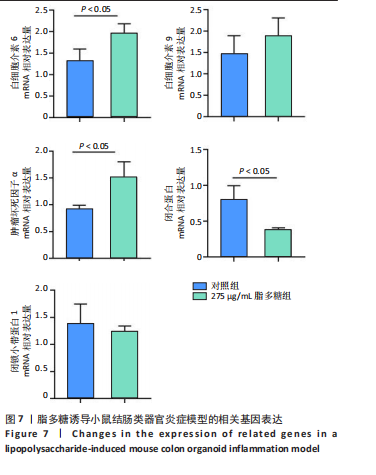
[37] SHAHINI A, SHAHINI A. Role of interleukin-6-mediated inflammation in the pathogenesis of inflammatory bowel disease: focus on the available therapeutic approaches and gut microbiome. J Cell Commun Signal. 2023;17(1):55-74.
[38] ZHAO Y, LUAN H, JIANG H, et al. Gegen Qinlian decoction relieved DSS-induced ulcerative colitis in mice by modulating Th17/Treg cell homeostasis via suppressing IL-6/JAK2/STAT3 signaling. Phytomedicine. 2021;84:153519.
[39] HIRANO T. IL-6 in inflammation, autoimmunity and cancer. Int Immunol. 2021;33(3):127-148.
[40] SCHREIBER S, ADEN K, BERNARDES JP, et al. Therapeutic Interleukin-6 Trans-signaling Inhibition by Olamkicept (sgp130Fc) in Patients With Active Inflammatory Bowel Disease. Gastroenterology. 2021;160(7):2354-2366.e11.
[41] SON A, BARAL I, FALDUTO GH, et al . Locus of (IL-9) control: IL9 epigenetic regulation in cellular function and human disease. Exp Mol Med. 2024; 56(6):1331-1339.
[42] BICK F, BLANCHETOT C, LAMBRECHT BN, et al. A reappraisal of IL-9 in inflammation and cancer. Mucosal Immunol. 2025;18(1):1-15.
[43] TIAN L, LI Y, ZHANG J, et al. IL-9 promotes the pathogenesis of ulcerative colitis through STAT3/SOCS3 signaling. Biosci Rep. 2018;38(6):1-11.
[44] MATUSIEWICZ M, NEUBAUER K, BEDNARZ-MISA I, et al. Systemic interleukin-9 in inflammatory bowel disease: Association with mucosal healing in ulcerative colitis. World J Gastroenterol. 2017;23(22):4039-4046.
[45] KANG ZP, JIN J, JIANG QQ,et al. [Effect of Sishen Pills and its split prescriptions on Tfr/Tfh9/Tfh17 cells in colitis mice]. Zhongguo Zhong Yao Za Zhi. 2022;47(5):1300-1306.
[46] TATIYA-APHIRADEE N, CHATUPHONPRASERT W, JARUKAMJORN K. Immune response and inflammatory pathway of ulcerative colitis. J Basic Clin Physiol Pharmacol. 2018;30(1):1-10.
[47] NASCIMENTO RPD, MACHADO APDF, GALVEZ J, et al. Ulcerative colitis: Gut microbiota, immunopathogenesis and application of natural products in animal models. Life Sci. 2020;258:118129.
[48] LIU C, YAN X, ZHANG Y, et al. Oral administration of turmeric-derived exosome-like nanovesicles with anti-inflammatory and pro-resolving bioactions for murine colitis therapy. J Nanobiotechnology. 2022;20(1):206.
[49] CUI L, GUAN X, DING W, et al. Scutellaria baicalensis Georgi polysaccharide ameliorates DSS-induced ulcerative colitis by improving intestinal barrier function and modulating gut microbiota. Int J Biol Macromol. 2021;166:1035-1045.
[50] WU J, NIU J, LI M, et al. Keratin 1 maintains the intestinal barrier in ulcerative colitis. Genes Genomics. 2021;43(12):1389-1402.
[51] ZHOU W, ZHANG H, HUANG L, et al. Disulfiram with Cu2+ alleviates dextran sulfate sodium-induced ulcerative colitis in mice. Theranostics. 2023;13(9):2879-2895.
[52] YU X, LI X, XU Y, et al. Resveratrol ameliorates ulcerative colitis by upregulating Nrf2/HO1 pathway activity: Integrating animal experiments and network pharmacology. Mol Med Rep. 2024;29(5):77.
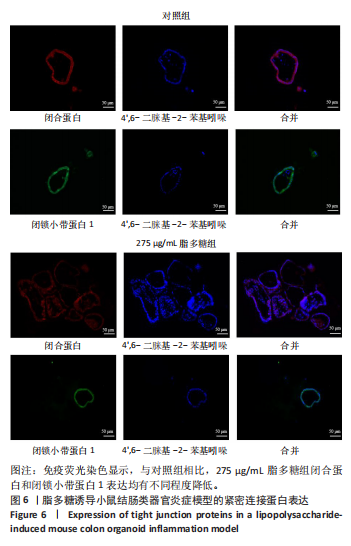
[53] KUO WT, ODENWALD MA, TURNER JR, et al. Tight junction proteins occludin and ZO-1 as regulators of epithelial proliferation and survival. Ann N Y Acad Sci. 2022;1514(1):21-33.
[54] CAPALDO CT. Claudin Barriers on the Brink: How Conflicting Tissue and Cellular Priorities Drive IBD Pathogenesis. Int J Mol Sci. 2023; 24(10):8562.
[55] ABDULQADIR R, ENGERS J, AL-SADI R. Role of Bifidobacterium in Modulating the Intestinal Epithelial Tight Junction Barrier: Current Knowledge and Perspectives. Curr Dev Nutr. 2023;7(12):102026.
[56] ARUMUGAM P, SAHA K, NIGHOT P. Intestinal Epithelial Tight Junction Barrier Regulation by Novel Pathways. Inflamm Bowel Dis. 2025;31(1):259-271.
[57] LI H, YE XF, SU YS, et al. Mechanism of Acupuncture and Moxibustion on Promoting Mucosal Healing in Ulcerative Colitis. Chin J Integr Med. 2023;29(9):847-856.
[58] HUANG S, ZHANG S, CHEN L, et al. Lipopolysaccharide induced intestinal epithelial injury: a novel organoids-based model for sepsis in vitro. Chin Med J (Engl). 2022;135(18):2232-2239.
[59] KATSANDEGWAZA B, HORSNELL W, SMITH K. Inflammatory Bowel Disease: A Review of Pre-Clinical Murine Models of Human Disease. Int J Mol Sci. 2022;23(16):9344.
[60] EICHELE DD, KHARBANDA KK. Dextran sodium sulfate colitis murine model: An indispensable tool for advancing our understanding of inflammatory bowel diseases pathogenesis. World J Gastroenterol. 2017;23(33):6016-6029.
[61] WALTER J, ARMET AM, FINLAY BB, et al. Establishing or Exaggerating Causality for the Gut Microbiome: Lessons from Human Microbiota-Associated Rodents. Cell. 2020;180(2):221-232.
[62] ALMEQDADI M, MANA MD, ROPER J, et al. Gut organoids: mini-tissues in culture to study intestinal physiology and disease. Am J Physiol Cell Physiol. 2019;317(3):C405-C419.
|