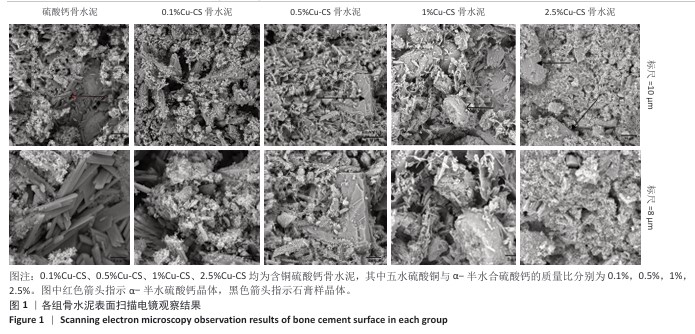
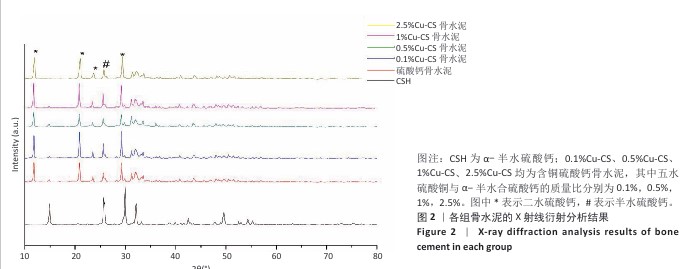
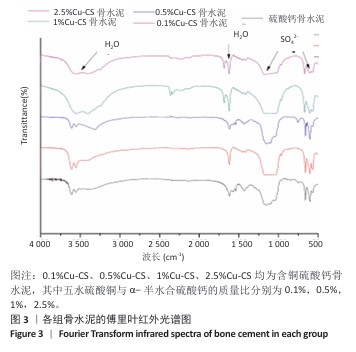
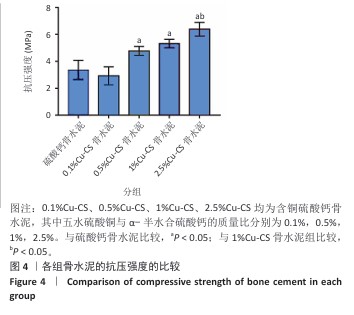
[1] KURIEN T, PEARSON RG, SCAMMELL BE. Bone graft substitutes currently available in orthopaedic practice: the evidence for their use. Bone Joint J. 2013;95-B:583-597.
[2] LUN DX, LI SY, LI NN, et al. Limitations and modifications in the clinical application of calcium sulfate. Front Surg. 2024;11:1278421.
[3] KELLY CM, WILKINS RM, GITELIS S, et al. The use of a surgical grade calcium sulfate as a bone graft substitute: results of a multicenter trial. Clin Orthop Rel Res. 2001;382:42-50.
[4] ORSINI M, ORSINI G, BENLLOCH D, et al. Comparison of calcium sulfate and autogenous bone graft to bioabsorbable membranes plus autogenous bone graft in the treatment of intrabony periodontal defects: a split-mouth study. J Periodontol. 2001;72(3):296-302.
[5] SHI X, WU Y, NI H, et al. Antibiotic-loaded calcium sulfate in clinical treatment of chronic osteomyelitis: a systematic review and meta-analysis. J Orthop Surg Res. 2022;17(1):104.
[6] GANGOLLI R, PUSHALKAR S, BEUTEL BG, et al. Calcium Sulfate Disks for Sustained-Release of Amoxicillin and Moxifloxacin for the Treatment of Osteomyelitis. Materials (Basel). 2024;17(16):4086.
[7] STEADMAN W, CHAPMAN PR, SCHUETZ M, et al. Local Antibiotic Delivery Options in Prosthetic Joint Infection. Antibiotics (Basel). 2023;12(4):752.
[8] SHAH KN, KAMAL RN. Bone Graft Substitutes-What Are My Options? Hand Clin. 2024;40(1):13-23.
[9] CEN C, WANG C, ZHANG Y, et al. Osteoimmunomodulation unveiled: Enhancing bone regeneration with 3D-printed PLLA/β-TCP/CS scaffolds. Colloids Surf B Biointerfaces. 2025;252:114674.
[10] ZHANG X, CHEN Y, FU J, et al. An injectable pH neutral bioactive glass-based bone cement with suitable bone regeneration ability. J Orthop Translat. 2022; 36:120-131.
[11] GERARD C, BORDELEAU LJ, BARRALET J, et al. The stimulation of angiogenesis and collagen deposition by copper. Biomaterials. 2010;31:824-831.
[12] CONFORTI RA, DELSOUC MB, ZORYCHTA E, et al. Copper in Gynecological Diseases. Int J Mol Sci. 2023;24(24):17578.
[13] FINNEY L, VOGT S, FUKAI T, et al. Copper and angiogenesis: unravelling a relationship key to cancer progression. Clin Exp Pharmacol Physiol. 2009; 36(1):88-94.
[14] BARRALET J, GBURECK U, HABIBOVIC P, et al. Angiogenesis in calcium phosphate scaffolds by inorganic copper ion release. Tissue Eng Part A. 2009; 15(7):1601-1609.
[15] KONG N, LIN K, LI H, et al. Synergy effects of copper and silicon ions on stimulation of vascularization by copper-doped calcium silicate. J Mater Chem B. 2014;2(8):1100-1110.
[16] LI Y, WANG Y, DING Y, et al. A Double Network Composite Hydrogel with Self-Regulating Cu(2+)/Luteolin Release and Mechanical Modulation for Enhanced Wound Healing. ACS Nano. 2024;18(26):17251-17266.
[17] LI Y, LU Y, QIU B, et al. Copper-containing titanium alloys promote angiogenesis in irradiated bone through releasing copper ions and regulating immune microenvironment. Biomater Adv. 2022;139:213010.
[18] SALVO J, SANDOVAL C. Role of copper nanoparticles in wound healing for chronic wounds: literature review. Burns Trauma. 2022;10:tkab047.
[19] YANG J, HUANG Z, TAN J, et al. Copper ion/gallic acid MOFs-laden adhesive pomelo peel sponge effectively treats biofilm-infected skin wounds and improves healing quality. Bioact Mater. 2023;32:260-276.
[20] NOORI A, HOSEINPOUR M, KOLIVAND S, et al. Synergy effects of copper and L-arginine on osteogenic, angiogenic, and antibacterial activities. Tissue Cell. 2022;77:101849.
[21] GARIMELLA A, GHOSH SB, BANDYOPADHYAY-GHOSH S. Biomaterials for bone tissue engineering: achievements to date and future directions. Biomed Mater. 2024;5;20(1).doi: 10.1088/1748-605X/ad967c.
[22] SANTORO A, VOTO A, FORTINO L, et al. Bone Defect Treatment in Regenerative Medicine: Exploring Natural and Synthetic Bone Substitutes. Int J Mol Sci. 2025; 26(7):3085.
[23] KNABE C, HOUSHMAND A, BERGER G, et al. Effect of rapidly resorbable bone substitute materials on the temporal expression of the osteoblastic phenotype in vitro. J Biomed Mater Res Part A. 2008;84:856-868.
[24] SHERIDAN GA, FALK DP, FRAGOMEN AT, et al. Calcium sulfate in the management of osteomyelitis: A systematic review and meta-analysis of comparative studies. Medicine (Baltimore). 2022;101(45):e31364.
[25] TAYSHETYE RS, BHOLA N, DESHPANDE N, et al. Efficacy of calcium sulfate dihydrate as a bone graft substitute in odontogenic cystic defects of jaws following enucleation: A clinical study. Natl J Maxillofac Surg. 2023;14(1):125-129.
[26] ZALEWSKA J, VIVCHARENKO V, BELCARZ A. Gypsum-Related Impact on Antibiotic-Loaded Composite Based on Highly Porous Hydroxyapatite—Advantages and Disadvantages. Int J Mol Sci. 2023;24(24):17178.
[27] BOHNER M. New hydraulic cements based on alpha-tricalcium phosphate-calcium sulfate dihydrate mixtures. Biomaterials. 2004;25(4):741-749.
[28] ISHIKAWA K, ASAOKA K. Estimation of ideal mechanical strength and critical porosity of calcium phosphate cement. J Biomed Mater Res. 1995; 29(12):1537-1543.
[29] LIOLIOU MG, PARASKEVA CA, KOUTSOUKOS PG, et al. Calcium sulfate precipitation in the presence of water-soluble polymers. J Colloid Interface Sci. 2006;303(1):164-170.
[30] LIAN X, XU R, LIU S, et al. The preparation and study on properties of calcium sulfate bone cement combined tuning silk fibroin nanofibers and vancomycin-loaded silk fibroin microspheres. J Biomed Mater Res B Appl Biomater. 2022; 110(3):564-572.
[31] WANG S, WANG F, CHE J, et al. Study on the Performance and Mechanism of Cement Solidified Desulfurization Manganese Residue. Materials (Basel). 2023; 16(11):4184.
[32] LUN DX, LI SY, LI NN, et al. Limitations and modifications in the clinical application of calcium sulfate. Front Surg. 2024;11:1278421.
[33] ISHIKAWA K, MIYAMOTO Y, TAKECHI M, et al. Effects of neutral sodium hydrogen phosphate on setting reaction and mechanical strength of hydroxyapatite putty. J Biomed Mater Res. 1999;44(3):322-329.
[34] WU F, SONG C, ZHEN G, et al. Exosomes derived from BMSCs in osteogenic differentiation promote type H blood vessel angiogenesis through miR-150-5p mediated metabolic reprogramming of endothelial cells. Cell Mol Life Sci. 2024;81(1):344.
[35] ZENG Y, FU BM. Angiogenesis and Microvascular Permeability. Cold Spring Harb Perspect Med. 2025;15(1):a041163.
[36] XU Z, LIU G, LIU P, et al. Hyaluronic acid-based glucose-responsive antioxidant hydrogel platform for enhanced diabetic wound repair. Acta Biomater. 2022; 147:147-157.
[37] STROCCHI R, ORSINI G, IEZZI G, et al. Bone regeneration with calcium sulfate: evidence for increased angiogenesis in rabbits. J Oral Implantol. 2002;28(6): 273-278.
[38] ZHAO Q, NI Y, WEI H, et al. Ion incorporation into bone grafting materials. Periodontol 2000. 2024;94(1):213-230.
[39] KONG R, SUN G. Targeting copper metabolism: a promising strategy for cancer treatment. Front Pharmacol. 2023;14:1203447.
[40] SHENG H, GU J, HUANG Y, et al. Cuproptosis-related signature predicts prognosis and indicates tumor immune infiltration in bladder cancer. Transl Androl Urol. 2024;13(10):2280-2293.
[41] CONFORTI A, FRANCO L, MILANINO R, et al. Copper metabolism during acute inflammation: studies on liver and serum copper concentrations in normal and inflamed rats. Br J Pharmacol. 1983;79(1):45-52.
[42] FORD ES. Serum copper concentration and coronary heart disease among US adults. Am J Epidemiol. 2000;151(12):1182-1188.
[43] QIU L, DING X, ZHANG Z, et al. Copper is required for cobalt-induced transcriptional activity of hypoxia-inducible factor-1. J Pharmacol Exp Ther. 2012;342(2):561-567.
[44] HUANG Y, CHEN Y, CHENG G, et al. A TA/Cu2+ Nanoparticle Enhanced Carboxymethyl Chitosan-Based Hydrogel Dressing with Antioxidant Properties and Promoting Wound Healing. Int J Nanomedicine. 2024;19:231-245. |