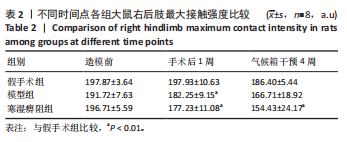
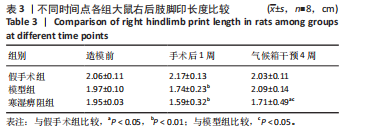
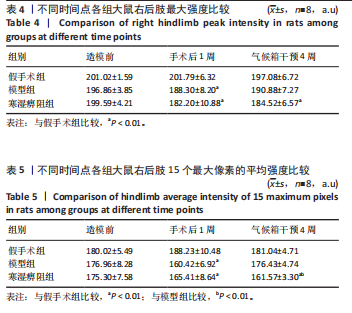
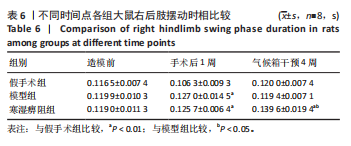
[1] HUNTER DJ,MARCH L,CHEW M.Osteoarthritis in 2020 and beyond: a lancet commission. Lancet. 2020;396(10264):1711-1712.
[2] CROSS M, SMITH E, HOY D, et al. The global burden of hip and kneeosteoarthritis: estimates from the global burden of disease 2010 study. Ann Rheum Dis. 2014;73(7):1323-1330.
[3] GELBER AC. Knee Osteoarthritis. Ann Intern Med. 2024;177(9):ITC129-ITC144.
[4] 中华中医药学会.膝骨关节炎中西医结合诊疗指南(2023年版)[J].中医正骨,2023,35(6):1-10.
[5] 彭旭,熊华章,杨继滨,等.不同膝骨关节炎模型兔的构建方法:合理选择及特点[J].中国组织工程研究,2018,22(28):4550-4556.
[6] 朱志恒,丁佳滢,曹昱,等.磐龙玉热疗对风寒湿痹型膝骨关节炎抗炎镇痛作用的实验研究[J].中国中医骨伤科杂志,2025,33(5):1-5+12.
[7] LU HY, WU JJ, SHEN J, et al. Altered Brain Functional and Effective Connectivity Induced by Electroacupuncture in Rats Following Anterior Cruciate Ligament Transection. J Pain Res. 2024;17:2495-2505.
[8] ZHAO Z, GENG P, AN M, et al. Days 7 to 14 May Represent an Optimal Window for Stem Cell-Based Treatment in a Rat Model of Anterior Cruciate Ligament Transection-Induced Posttraumatic Osteoarthritis. Am J Sports Med. 2025;53(7):1629-1640.
[9] NEUMANN M, WANG Y, KIM S, et al. Assessing gait impairment following experimental traumatic brain injury in mice. J Neurosci Methods. 2009;176(1): 34-44.
[10] MIYAMOTO S, NAKAMURA J, OHTORI S, et al. Pain-related behavior and the characteristics of dorsal-root ganglia in a rat model of hip osteoarthritis induced by mono-iodoacetate. J Orthop Res. 2017;35(7):1424-1430.
[11] 摆雪,马鑫文,田育魁,等.培元通痹膏摩法治疗膝骨关节炎随机对照研究[J].中国中西医结合杂志,2025,45(4):397-403.
[12] JIANG P, ZHOU X, YANG Y, et al. Pectolinarigenin targeting FGFR3 alleviates osteoarthritis progression by regulating the NF-κB/NLRP3 inflammasome pyroptotic pathway. Int Immunopharmacol. 2024;140:112741.
[13] 欧梁,卢敏,张永辉,等.基于“虚、瘀、毒”病机理论的膝痹病病证结合模型的建立及评价[J].中国实验动物学报,2023,31(5): 590-597.
[14] 方肇勤,卢文丽.辨证论治实验方法学: 实验小鼠诊法与辨证[M].上海: 上海科学技术出版社,2006:110-112.
[15] 吕智桢,孔令军,程艳彬,等.基于CatWalk评价脊柱推拿干预慢性下腰痛模型大鼠步态行为[J].中华中医药杂志,2022,37(6):3475-3479.
[16] 郭蕾,张赫,刘俊昌,等.薄荷油叠加气候箱建立阳虚寒凝型膝痹模型兔[J].中国组织工程研究,2020,24(23):3696-3701.
[17] SLUIJS JA, GEESINK RG, LINDEN AJ, et al.The reliability of the Mankin score for osteoarthritis. J Orthop Res. 1992;10(1):58-61.
[18] 吴振华,王楚宁,周琦,等.南昌海昏侯刘贺墓出土医针研究[J].中国针灸, 2025,45(6):861-866.
[19] 马纪龙,刘洋,谢兴文,等.川芎活性成分治疗膝关节炎药理研究进展[J].中国骨质疏松杂志,2025,31(2):236-241.
[20] 张辉,吕树泉,苏秀海.基于“其在皮者,汗而发之”辨治痛性糖尿病周围神经病变[J].河北中医药学,2022,37(4):10-13.
[21] 王玉文,朱民顺,梁龙,等.张建华以膝痹舒联合丁锷外用方治疗膝骨关节炎经验[J].成都中医药大学学报,2025,48(2):65-69.
[22] 孙效容,苏丹,贵文娟,等.手术诱导大鼠中重度膝骨关节炎模型的建立与评价[J].实验动物与比较医学,2024,44(6):597-604.
[23] 武晏屹,白明,田硕,等.基于中西医临床病症特点的膝骨关节炎动物模型分析[J].中国中药杂志,2020,45(11):2481-2485.
[24] 聂亦然,罗欢,姜磊,等.基于《伤寒论》与临床数据挖掘的“病-证-方”知识获取模型研究[J].江西中医药大学学报,2025,37(3): 40-47+52.
[25] 闫海琳,吕文亮,徐婧,等.基于方证相应在病证结合模式下探讨脾胃湿热证生物学内涵[J].世界科学技术-中医药现代化,2025,27(6):1501-1508.
[26] 刘鸿达,孔玲,孙晖,等.方证代谢组学理论及方法的形成和发展[J].中草药,2025,56(8):2629-2637.
[27] 王瑾茜,蔺晓源,刘侃,等.冠心病气虚血瘀证病证结合大鼠模型的建立研究[J].中国实验动物学报,2020,28(5):602-609.
[28] 张译心,王鑫,刘博,等.2型糖尿病气阴两虚病证结合动物模型的制备及评价指标的建立[J].中国实验动物学报,2021,29(2):219-229.
[29] 杨威,郭斯印,易志勇,等.膝骨关节炎病证结合动物模型的研究进展[J].中国比较医学杂志,2021,31(3):139-143.
[30] 胡俊雄.基于PI3K/AKT信号通路探讨九味健步饮干预膝骨关节炎大鼠模型IL-6作用机制的研究[D].南宁:广西中医药大学,2024.
[31] 摆雪,张洪平,刘俊昌,等.石膏铁丝固定法建立兔膝痹模型[J].中国组织工程研究,2016,20(18):2603-2608.
[32] 刘振峰,方锐,艾力江·阿斯拉,等.肾虚血瘀型膝骨性关节炎大鼠模型的建立[J].中国组织工程研究,2013,17(2):270-274.
[33] 何兴鹏,郑利钦,李鹏飞,等.两种肾虚证型去势模型大鼠骨小梁微观结构及骨代谢的差异[J].中国组织工程研究,2022,26(23):3768-3772.
[34] 杨会珍, 胡广, 苗兰, 等. 肾上腺素致慢性血瘀证大鼠模型的血浆代谢组学研究 [J]. 中国中医基础医学杂志,2022,28(2): 205-209.
[35] 谢宏哲, 彭伟军, 易荣宾.补肾祛寒治尪汤治疗膝骨性关节炎(肾虚血瘀证 ) 大鼠的作用及机制探讨[J]. 中药药理与临床,2023,39(3):19-25.
[36] 陈文超,周然,王永辉,等.骨灵膏及其拆方制剂对骨关节炎氧化损伤及低氧诱导因子的作用[J].世界中西医结合杂志,2014,9(6):651-655.
[37] 王滢婷,杨向炎.针刺循经筋近端阿是穴配合热敏灸治疗肱骨外上髁炎的疗效及对肘关节功能的影响[J].浙江中医杂志,2025,60(6):539-540.
[38] 吴洋.循经取穴推拿配合针灸干预对腰椎间盘突出症患者疼痛程度、腰椎功能恢复的影响[J].现代诊断与治疗,2024,35(10):1449-1451.
[39] ZHANG S, CHEN L, ZHANG C, et al. Osteoking exerts proosteogenic and antiadipogenic effects in promoting bone fracture healing via EGF/EGFR/HDAC1/Wnt/βcatenin signaling. Int J Mol Med. 2025;55(5):75.
[40] 刘海潮,王浩,王诗忠,等. 点按脾经合穴对急性钝挫伤大鼠骨骼肌炎症因子及钙离子稳态的影响[J].中国组织工程研究,2023,27(20):3123-3128.
[41] MASOCHA W, PARVATHY SS. Assessment of weight bearing changes and pharmacological antinociception in mice with LPS-induced monoarthritis using the Catwalk gait analysis system. Life Sci. 2009;85(11-12):462-469.
[42] 张苏雅.恒古骨伤愈合剂促进大鼠骨折愈合的作用特点和机制研究[D].广州:广州中医药大学,2024.
[43] 黄于婷,陈佳彦,郑林遥,等.电针对腓肠肌急性钝挫伤大鼠步态及肌卫星细胞增殖分化的影响[J].中国针灸,2023,43(9):982-989.
[44] 林志刚,王建珠,赵娣,等.推拿按揉法对坐骨神经慢性压迫性损伤模型大鼠步态及腓肠肌的影响[J].中华中医药杂志,2020,35(2):927-931.
[45] RITTER J, MENGER M, HERATH SC, et al. Translational evaluation of gait behavior in rodent models of arthritic disorders with the CatWalk device - a narrative review. Front Med (Lausanne). 2023;10:1255215.
[46] TIMOTIUS IK, ROELOFS RF, RICHMOND-HACHAM B, et al. CatWalk XT gait parameters: a review of reported parameters in pre-clinical studies of multiple central nervous system and peripheral nervous system disease models. Front Behav Neurosci. 2023;17:1147784.
[47] XU C, WANG Y, NI C, et al. Histone modifications and Sp1 promote GPR160 expression in bone cancer pain within rodent models. EMBO Rep. 2024;25(12):5429-5455.
[48] PEREIRA JE, COSTA LM, CABRITA AM, et al. Methylprednisolone fails to improve functional and histological outcome following spinal cord injury in rats. Exp Neurol. 2009;220(1):71-81.
[49] 王世杰,张文贤,王欢,等.基于不同证型膝骨关节炎软骨组织的病理形态学研究[J].中国医药导报,2024,21(36):7-12.
[50] 徐梅,徐莲薇.徐莲薇治疗痛经特色[J].中医文献杂志,2021,39(3):58-60.
[51] 赵松阳,徐辉,郑玉宽.经筋理论指导下的针刀松解术联合热敏灸治疗早中期膝骨关节炎临床研究[J].新中医,2023,55(16):157-163.
[52] 王如意,李璐,郭宇辰,等.基于中医状态学理论建构防治膝骨关节炎的策略[J].江西中医药,2025,56(4):11-14.
[53] 何花,孙绍裘,董大立.孙绍裘基于“清湿袭虚,病起于下”论治膝关节骨性关节炎经验[J].湖南中医药大学学报,2025,45(3):558-562.
|