Chinese Journal of Tissue Engineering Research ›› 2026, Vol. 30 ›› Issue (31): 8122-8134.doi: 10.12307/2026.421
Previous Articles Next Articles
Gene expression regulatory network and molecular mechanism involved in odontogenic differentiation of human dental pulp stem cells-derived induced pluripotent stem cells
Rong Qiong, Guo Yu, Wang Tingting, Tan Xiaobing
- Center of Stomatology, The First People’s Hospital of Yunnan Province, Affiliated Hospital of Kunming University of Science and Technology, Kunming 650032, Yunnan Province, China
-
Online:2026-11-08Published:2026-05-23 -
Contact:Tan Xiaobing, MS, Chief physician, Center of Stomatology, The First People’s Hospital of Yunnan Province, Affiliated Hospital of Kunming University of Science and Technology, Kunming 650032, Yunnan Province, China -
About author:Rong Qiong, MD, Associate chief physician, Center of Stomatology, The First People’s Hospital of Yunnan Province, Affiliated Hospital of Kunming University of Science and Technology, Kunming 650032, Yunnan Province, China -
Supported by:National Natural Science Foundation of China, No. 82160178 (to TXB); National Natural Science Foundation of China, No. 82560185 (to RQ)

CLC Number:
Cite this article
Rong Qiong, Guo Yu, Wang Tingting, Tan Xiaobing. Gene expression regulatory network and molecular mechanism involved in odontogenic differentiation of human dental pulp stem cells-derived induced pluripotent stem cells[J]. Chinese Journal of Tissue Engineering Research, 2026, 30(31): 8122-8134.
share this article
Add to citation manager EndNote|Reference Manager|ProCite|BibTeX|RefWorks
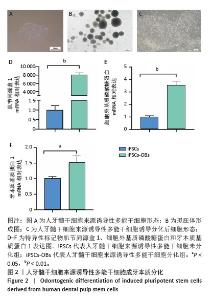
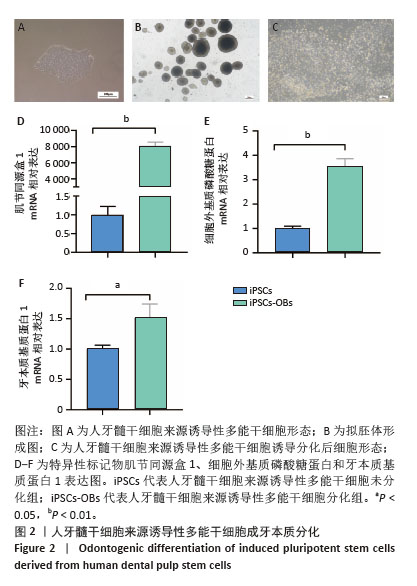
2.1 人牙髓干细胞来源诱导性多能干细胞成牙本质分化 人牙髓干细胞来源诱导性多能干细胞呈现致密的圆形克隆,边缘清晰、集落内部细胞形态均一、核质比大(图2A),悬浮培养形成球体(图2B),诱导第3天克隆边缘逐渐立方化,第7-10天大部分变为立方形(图2C),qPCR证实分化细胞特异性标记物肌节同源盒1、细胞外基质磷酸糖蛋白和牙本质基质蛋白1表达显著上调(P < 0.05)(图2D-F)。 "

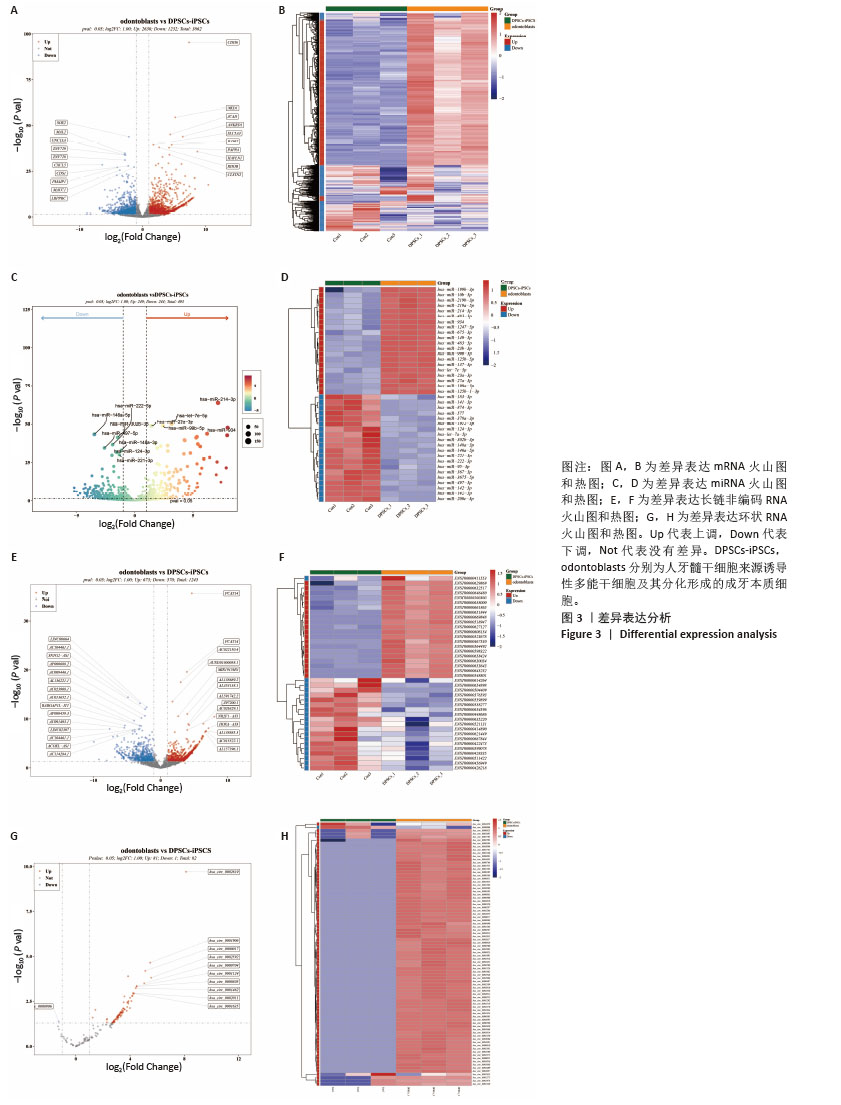
2.2 差异表达基因筛选 共获得3 862个差异表达mRNA(2 630个上调、1 232个下调,图3A,B),493个差异表达miRNA(249个上调,244个下调,图3C,D),1 245个差异表达长链非编码RNA(675个上调,570个下调,图3E,F)和82个差异表达环状RNA(81个上调,1个下调,图3G,H)。"
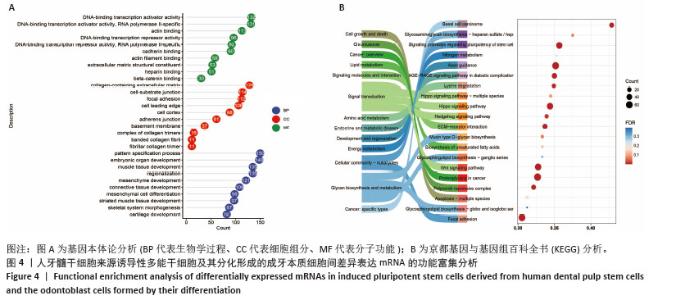
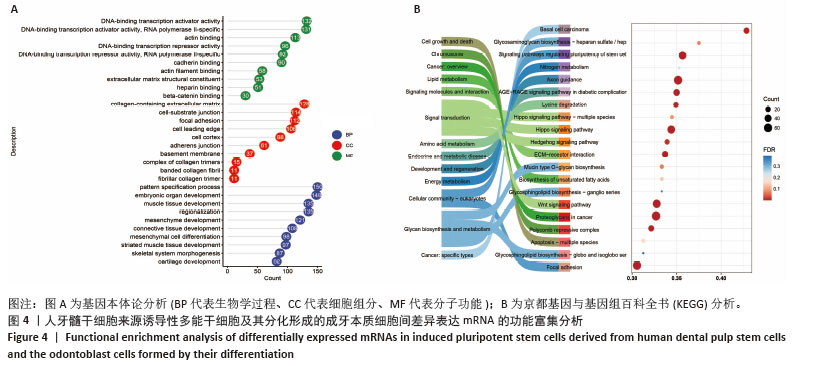
2.3 差异表达mRNA富集分析 共获得1 069条GO通路(生物过程951条、分子功能45条、细胞组成73条)和335条KEGG通路(P < 0.05)。GO生物过程分析发现差异表达mRNA主要富集于“胚胎器官发育”“区域化”“间质发育”等;GO细胞组成分析显示在“含胶原细胞外基质”“局灶黏附”“细胞前缘”等部位显著富集;GO分子功能则集中在“DNA结合转录激活因子活性”“肌动蛋白结合”等方面(图4A)。KEGG分析表明差异表达mRNA富集于 “发育与再生”“细胞群落-真核生物”“信号转导”“Wnt信号通路”和“细胞外基质-受体互作”等通路(图4B)。GO富集的“含胶原细胞外基质”与KEGG“细胞外基质-受体互作”通路相呼应,提示细胞外基质重构在成牙本质分化中的作用;GO“胚胎器官发育”与KEGG“Wnt信号通路”联动,进一步支持该通路在牙本质形成中的调控地位。 "
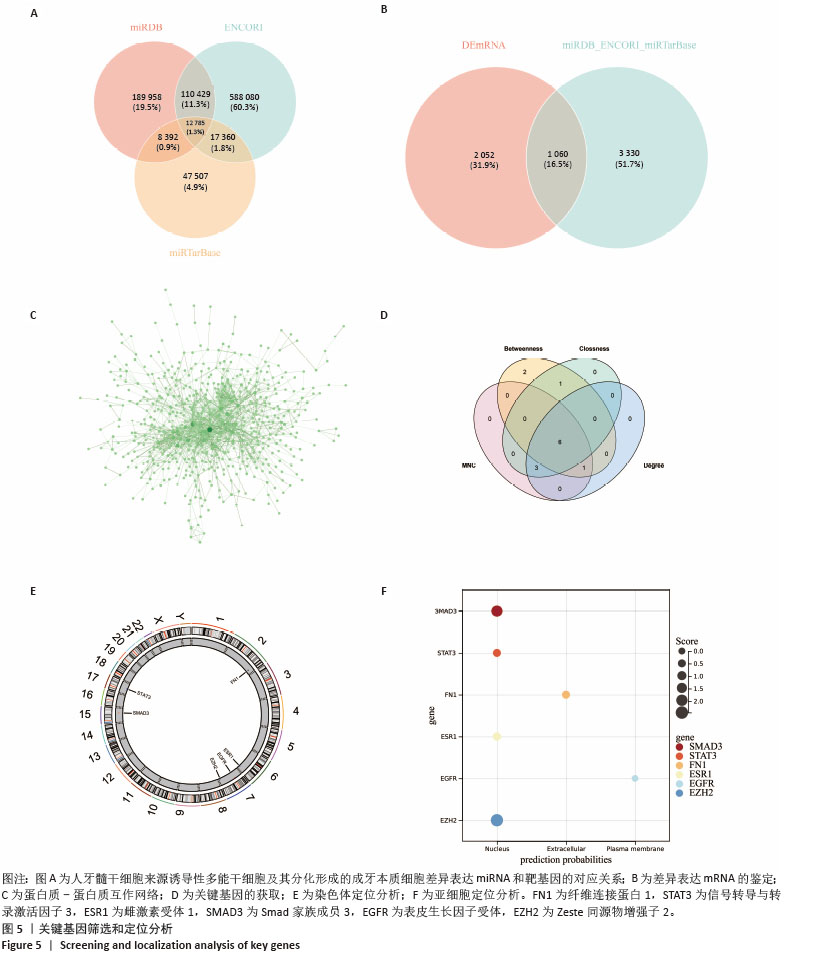
2.4 关键基因筛选和定位分析 共发现12 785个mRNA受到493个差异表达miRNA调控,与3 863个差异表达miRNA交集获得1 060个差异表达mRNA(图5A,B),图5C展示的是差异表达mRNA的蛋白质-蛋白质相互作用网络,包括332个节点和3 434条边,最终选择6个为关键基因:纤维连接蛋白1(FN1)、雌激素受体1(ESR1)、Smad家族成员3(SMAD3)、信号转导与转录激活因子3(STAT3)、表皮生长因子受体(EGFR)和Zeste同源物增强子2(EZH2)(图5D)。染色体定位分析显示纤维连接蛋白1、雌激素受体1、Smad家族成员3和信号转导与转录激活因子3分别位于染色体2,6,15,17上,表皮生长因子受体和Zeste同源物增强子2位于染色体7上(图5E);亚细胞定位分析发现Smad家族成员3、信号转导与转录激活因子3、雌激素受体1和Zeste同源物增强子2可能在胞核中发挥作用,纤维连接蛋白1和表皮生长因子受体分别位于胞外膜和质膜(图5F)。 "
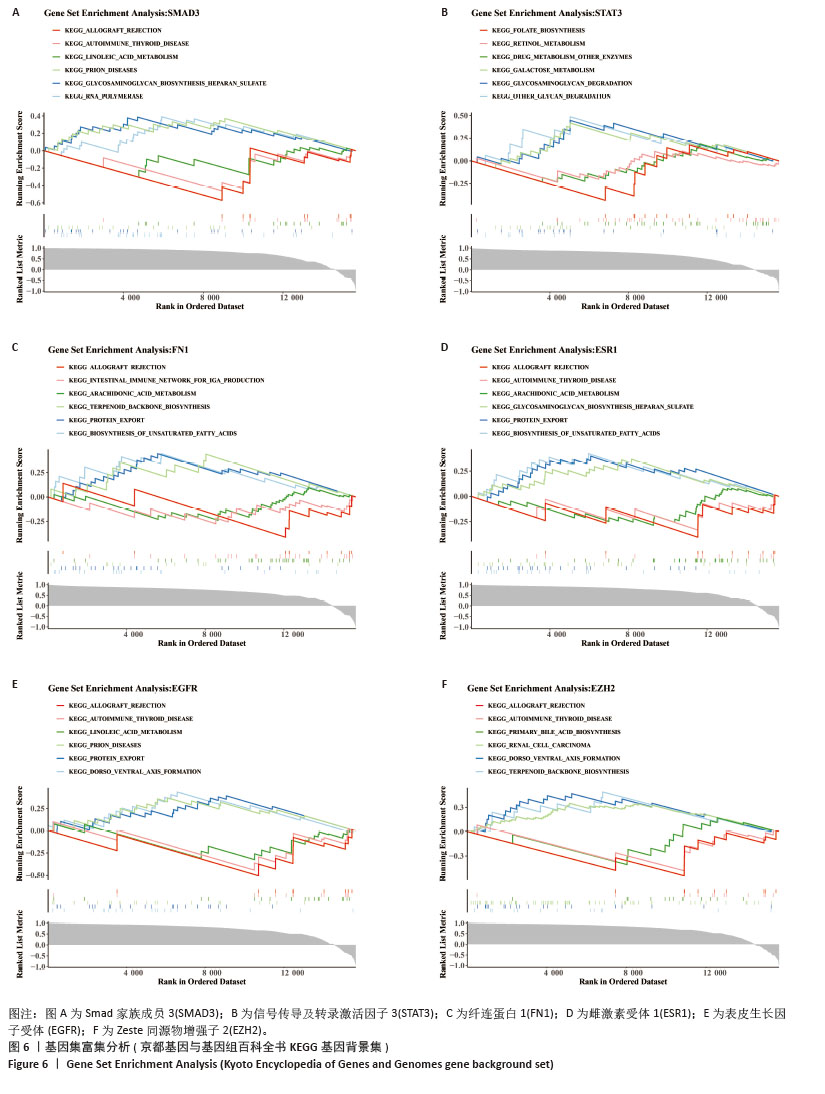
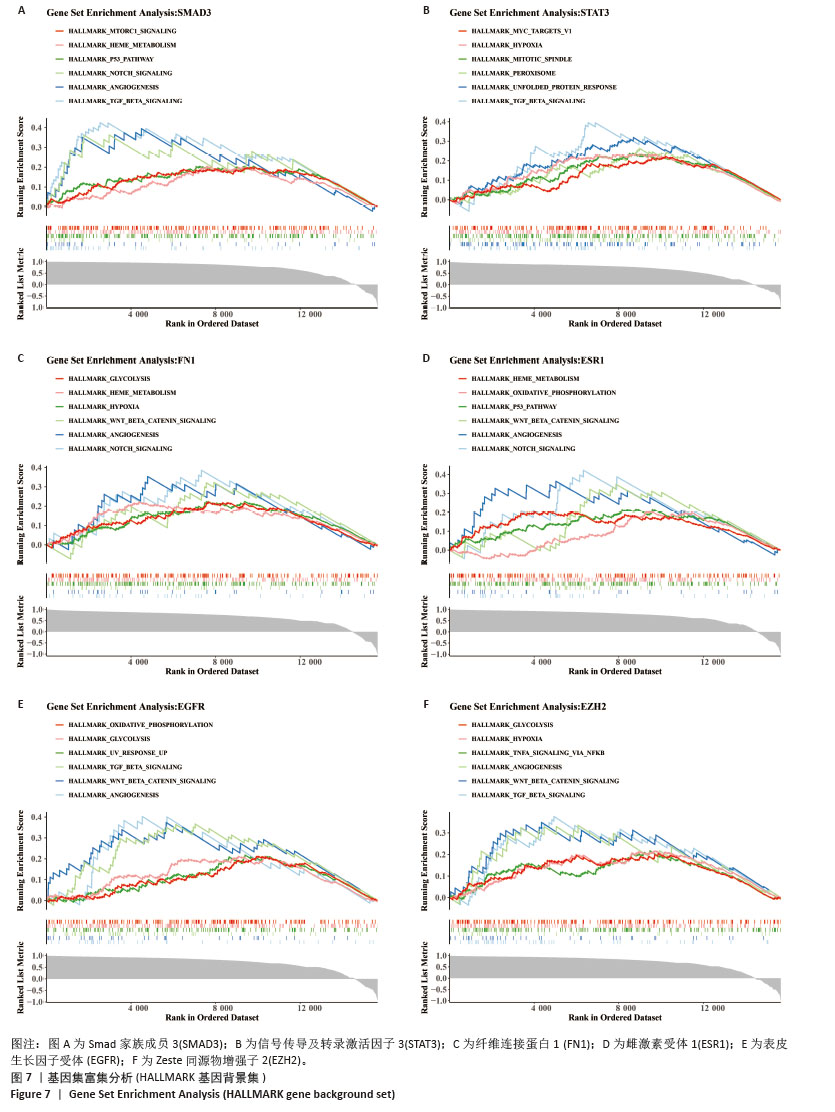
2.5 基因集富集分析 KEGG分析显示6个关键基因主要富集于“转化生长因子β信号通路”“泛素介导的蛋白水解”“RNA降解”“细胞周期”等通路。纤维连接蛋白1、雌激素受体1、Smad家族成员3、表皮生长因子受体、Zeste同源物增强子2还参与“Wnt信号通路”“花生四烯酸代谢”等途径(图6A-F)。HALLMARK基因集分析进一步发现这些基因主要富集于“转化生长因子β信号通路”“未折叠蛋白反应”“E2F靶标”“ 过氧化物酶体增殖物激活受体信号通路”和“有丝分裂纺锤体”等关键通路(图7A-F),提示这些基因可能通过转化生长因子β信号通路在牙髓干细胞来源诱导性多能干细胞成牙本质分化过程中发挥重要作用。 "
"
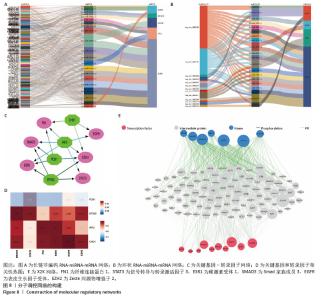
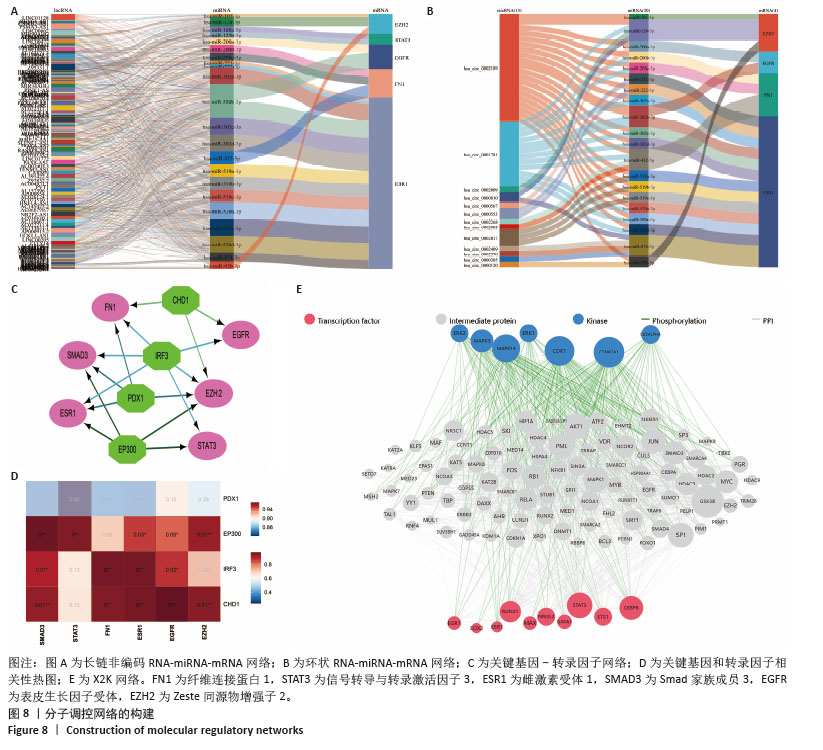
2.6 分子调控网络的构建 长链非编码RNA-miRNA-mRNA网络包含5个关键基因(纤维连接蛋白1、雌激素受体1、信号传导及转录激活因子3、表皮生长因子受体、Zeste同源物增强子2)、22个差异表达miRNA和144个差异表达长链非编码RNA(图8A);环状RNA-miRNA-mRNA网络包含4个关键基因(纤维连接蛋白1、雌激素受体1、表皮生长因子受体、Zeste同源物增强子2)、20个差异表达miRNA和13个差异表达环状RNA(图8B),结果显示miR-302、miR-519和miR-520家族是雌激素受体1的主要调控因子;LINC01128、AL139287.1等长链非编码RNA和circ_0002189、circ_0001781等环状RNA通过miR-200b-3p和miR-200c-3p调节纤维连接蛋白1的表达,而LINC02593、AL513327.2等长链非编码RNA和circ_0001781、circ_0002009等环状RNA通过miR-124-3p调节Zeste同源物增强子2的表达。 2.7 转录因子的预测结果 转录因子预测分析表明, 6个关键基因共有4个上游转录因子,分别是染色质域解旋酶DNA 结合蛋白 1(CHD1)、干扰素调节因子3(IRF3)、E1A结合蛋白P300(EP300)、胰腺和十二指肠同源盒1(PDX1)。其中,干扰素调节因子3是6个关键基因的调节因子,EZH2同时受到4个转录因子的调节(图8C)。此外,3个转录因子(染色质域解旋酶DNA结合蛋白 1、干扰素调节因子3和E1A结合蛋白P300)与6个关键基因存在较强相关性(图8D),X2K网络显示了排名前7的蛋白激酶和前10的转录因子(图8E)。 "
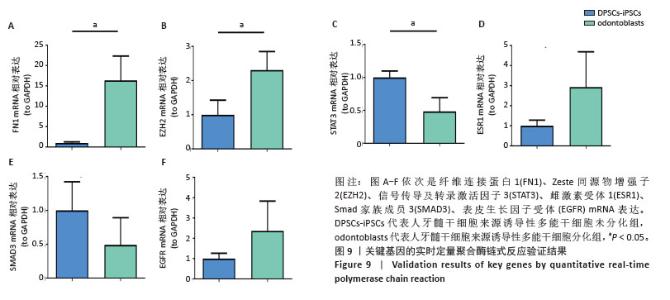
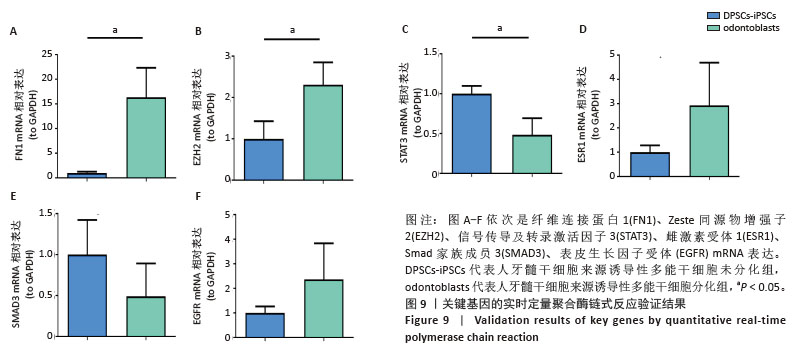
2.8 qRT-PCR验证结果 与牙髓干细胞来源诱导性多能干细胞相比,分化成牙本质细胞的纤维连接蛋白1和Zeste同源物增强子2表达显著升高(P < 0.05),信号转导与转录激活因子3表达显著降低(P < 0.05),而雌激素受体1、Smad家族成员3和表皮生长因子受体的表达无显著差异(P > 0.05)(图9A-F)。 "
| [1] LIU C, YU J, LIU B, et al. BACH1 regulates the proliferation and odontoblastic differentiation of human dental pulp stem cells. BMC Oral Health. 2022; 22(1):536. [2] LUO X, FENG W, HUANG S, et al. Odontoblasts release exosomes to regulate the odontoblastic differentiation of dental pulp stem cells. Stem Cell Res Ther. 2023;14(1):176. [3] NANIWA K, HIROSE K, USAMI Y, et al. Fam20C overexpression in odontoblasts regulates dentin formation and odontoblast differentiation. J Mol Histol. 2023;54(4):329-347. [4] ALZER H, ALSOLEIHAT F. Odontoblasts or odontocytes, expression of stem cells markers and differentiation markers among human adult odontoblasts. Saudi Dent J. 2024;36(6):894-898. [5] LEE M, LEE YS, SHON WJ, et al. Physiologic dentin regeneration: its past, present, and future perspectives. Front Physiol. 2023;14:1313927. [6] CHEN Z, WU W, ZHENG C, et al. KLF6 facilitates differentiation of odontoblasts through modulating the expression of P21 in vitro. Int J Oral Sci. 2022;14(1):20. [7] LI Y, LIN Y, GUO J, et al. CREB3L1 deficiency impairs odontoblastic differentiation and molar dentin deposition partially through the TMEM30B. Int J Oral Sci. 2024;16(1):59. [8] HAMANO S, SUGIURA R, YAMASHITA D, et al. Current application of iPS cells in the dental tissue regeneration. Biomedicines. 2022;10(12):3269. [9] KIM JH, YANG J, KI MG, et al. Differentiation of Human-induced Pluripotent Stem Cell-derived Dental Stem Cells through Epithelial-Mesenchymal Interaction. Stem Cells Dev. 2024;33(7-8):189-199. [10] PAN H, YANG Y, XU H, et al. The odontoblastic differentiation of dental mesenchymal stem cells: molecular regulation mechanism and related genetic syndromes. Front Cell Dev Biol. 2023;11:1174579. [11] AMIR M, JEEVITHAN L, BARKAT M, et al. Advances in regenerative dentistry: a systematic review of harnessing Wnt/β-catenin in dentin-pulp regeneration. Cells. 2024;13(13):1153. [12] YOSHIDA R, KOBAYASHI K, ONUMA K, et al. Enhancement of differentiation and mineralization of human dental pulp stem cells via TGF-β signaling in low-level laser therapy using Er:YAG lasers. J Oral Biosci. 2025;67(1):100617. [13] BAI Y, CHENG X, LIU X, et al. Transforming growth factor-β1 promotes early odontoblastic differentiation of dental pulp stem cells via activating AKT, Erk1/2 and p38 MAPK pathways. J Dent Sci. 2023;18(1):87-94. [14] KULTHANAAMONDHITA P, KORNSUTHISOPON C, CHANSAENROJ A, et al. Notch signaling regulates mineralization via microRNA modulation in dental pulp stem cells. Oral Dis. 2024;30(7):4547-4557. [15] SHANKAR N, NATH U. Advantage looping: gene regulatory circuits between microRNAs and their target transcription factors in plants. Plant Physiol. 2024;196(4):2304-2319. [16] DONG F, ZHENG L, YANG G. Construction of a TF-miRNA-mRNA regulatory network for diabetic nephropathy. Arch Esp Urol. 2024;77(1):104-112. [17] NAZKI FH, BRACKEN CP. Regulation and dysregulation of microRNA - transcription factor axes in differentiation and neuroblastoma. Cell Mol Life Sci. 2025;82(1):304. [18] MEESUK L, KHEOLAMAI P, TANTRAWATPAN C, et al. Improvement of osteogenic differentiation in umbilical cord-derived human mesenchymal stem cells through specific MiRNA inhibition. Sci Rep. 2025;15(1):28485. [19] HARDIN LT, ABID N, VANG D, et al. miRNAs mediate the impact of smoking on dental pulp stem cells via the p53 pathway. Toxicol Sci. 2024;200(1): 47-56. [20] ZENG K, LI W, KANG Q, et al. miR-342-5p inhibits odonto/osteogenic differentiation of human dental pulp stem cells via targeting Wnt7b. Oral Dis. 2023;29(5):2107-2116. [21] ZHANG W, YUAN X. MicroRNA-20a elevates osteogenic/odontoblastic differentiation potential of dental pulp stem cells by nuclear factor-κB/p65 signaling pathway via targeting interleukin-8. Arch Oral Biol. 2022; 138:105414. [22] WENG Y, XIAO Y, SHI Y, et al. A single-cell transcriptomic atlas of human stem cells from apical papilla during the committed differentiation. Int Endod J. 2025;58(2):305-321. [23] SATAM H, JOSHI K, MANGROLIA U, et al. Next-generation sequencing technology: current trends and advancements. Biology (Basel). 2023; 12(7):997. [24] TAN X, DAI Q, GUO T, et al. Efficient generation of transgene- and feeder-free induced pluripotent stem cells from human dental mesenchymal stem cells and their chemically defined differentiation into cardiomyocytes. Biochem Biophys Res Commun. 2018;495(4):2490-2497. [25] XIE H, DUBEY N, SHIM W, et al. Functional odontoblastic-like cells derived from human iPSCs. J Dent Res. 2018;97(1):77-83. [26] HU Q, BIAN Q, RONG D, et al. JAK/STAT pathway: Extracellular signals, diseases, immunity, and therapeutic regimens. Front Bioeng Biotechnol. 2023;11:1110765. [27] CHAN L, LU J, FENG X, et al. Loss of Stat3 in Osterix+ cells impairs dental hard tissues development. Cell Biosci. 2023;13(1):75. [28] WANG J, ZHU Y. FOXA1 knockdown alleviates inflammation and enhances osteogenic differentiation of periodontal ligament stem cells via STAT3 pathway. J Orthop Surg Res. 2024;19(1):814. [29] ZHAO B, YU X, SHI J, et al. A stepwise mode of TGFβ-SMAD signaling and DNA methylation regulates naïve-to-primed pluripotency and differentiation. Nat Commun. 2024;15(1):10123. [30] QIU W, SUN Q, LI N, et al. Superoxide dismutase 2 scavenges ROS to promote osteogenic differentiation of human periodontal ligament stem cells by regulating Smad3 in alveolar bone-defective rats. J Periodontol. 2024;95(5):469-482. [31] BI R, SUN Y, XIANG L, et al. TGF-β1/Smad3 signaling is required to alleviate fluoride-induced enamel hypomineralization. Biol Trace Elem Res. 2024; 202(2):569-579. [32] LIU S, YAN X, GUO J, et al. Periodontal ligament-associated protein-1 knockout mice regulate the differentiation of osteoclasts and osteoblasts through TGF-β1/Smad signaling pathway. J Cell Physiol. 2024;239(3):e31062. [33] XIE B, HE X, GUO Y, et al. Cyclic tensile stress promotes osteogenic differentiation via upregulation of Piezo1 in human dental follicle stem cells. Hum Cell. 2024;37(6):1649-1662. [34] GAO S, ZHAO YM, GE LH. Nuclear factor I-C expression pattern in developing teeth and its important role in odontogenic differentiation of human molar stem cells from the apical papilla. Eur J Oral Sci. 2014;122(6):382-390. [35] DALTON CJ, LEMMON CA. Fibronectin: Molecular structure, fibrillar structure and mechanochemical signaling. Cells. 2021;10(9):2443. [36] TRAGOONLUGKANA P, PRUKSAPONG C, ONTONG P, et al. Fibronectin and vitronectin alleviate adipose-derived stem cells senescence during long-term culture through the AKT/MDM2/P53 pathway. Sci Rep. 2024; 14(1):14242. [37] KIM H, WILLIAMS SJ, COLOMBO JS. Characterization of fibronectin-adherent, non-fibronectin-adherent, and explant-derived human dental pulp stem cell populations. Dent J (Basel). 2025;13(4):159. [38] OKAJCEKOVA T, STRNADEL J, POKUSA M, et al. A comparative in vitro analysis of the osteogenic potential of human dental pulp stem cells using various differentiation conditions. Int J Mol Sci. 2020;21(7):2280. [39] WANG P, TIAN H, ZHANG Z, et al. EZH2 regulates lipopolysaccharide-induced periodontal ligament stem cell proliferation and osteogenesis through TLR4/MyD88/NF-κB pathway. Stem Cells Int. 2021;2021: 7625134. [40] CHENG M, ZHOU Q. Targeting EZH2 ameliorates the LPS-inhibited PDLSC osteogenesis via Wnt/β-catenin pathway. Cells Tissues Organs. 2020; 209(4-6):227-235. [41] CHEN Y, PETHO A, GANAPATHY A, et al. DPP an extracellular matrix molecule induces Wnt5a mediated signaling to promote the differentiation of adult stem cells into odontogenic lineage. Sci Rep. 2024;14(1):26187. [42] XU C, XIE X, WU Y, et al. Bone or tooth dentin: the TGF-β signaling is the key. Int J Biol Sci. 2024;20(9):3557-3569. [43] WU Y, ZHU W, WANG L, et al. Vdr mediates Wnt signaling pathway to regulate odontoblasts differentiation during dentin apposition. Eur J Pharmacol. 2025;991:177333. [44] ZHANG R, LIN J, LIU Y, et al. Transforming growth factor-β signaling regulates tooth root dentinogenesis by cooperation with Wnt signaling. Front Cell Dev Biol. 2021;9:687099. [45] KUZNETSOVA AV, POPOVA OP, DANILOVA TI, et al. Effects of ECM components on periodontal ligament stem cell differentiation under conditions of disruption of Wnt and TGF-β signaling pathways. J Funct Biomater. 2025;16(3):94. [46] LUO B, ZHENG R, SHI C, et al. DACT2 modulates atrial fibrillation through TGF/β and Wnt signaling pathways. Heliyon. 2024;10(16):e36050. [47] YUAN H, LIAO X, HU D, et al. Back to the origin: mechanisms of circRNA-directed regulation of host genes in human disease. Noncoding RNA. 2024;10(5):49. [48] SUN S, ZOU Y, XU N, et al. Long non-coding RNA ATB expedites non-small cell lung cancer progression by the miR-200b/fibronectin 1 axis. J Clin Lab Anal. 2023;37(4):e24822. [49] ZHU Y, HUANG C, ZHANG C, et al. LncRNA MIR200CHG inhibits EMT in gastric cancer by stabilizing miR-200c from target-directed miRNA degradation. Nat Commun. 2023;14(1):8141. [50] WANG L, ZHU Y, ZHANG N, et al. The multiple roles of interferon regulatory factor family in health and disease. Signal Transduct Target Ther. 2024; 9(1):282. [51] HU L, XU Y, ZHANG QS, et al. IL-6/STAT3 axis is hijacked by GCRV to facilitate viral replication via suppressing type Ⅰ IFN signaling. Fish Shellfish Immunol. 2024;149:109564. [52] EDSBÄCKER E, SERVISS JT, KOLOSENKO I, et al. STAT3 is activated in multicellular spheroids of colon carcinoma cells and mediates expression of IRF9 and interferon stimulated genes. Sci Rep. 2019;9(1):536. |
| [1] | Liu Kexin, , Hao Kaimin, Zhuang Wenyue, , Li Zhengyi. Autophagy-related gene expression in pulmonary fibrosis models: bioinformatic analysis and experimental validation [J]. Chinese Journal of Tissue Engineering Research, 2026, 30(5): 1129-1138. |
| [2] | Wen Xing, Li Mengmeng, Jia Feiyang, Qu Mengjian, Sun Guanghua, Liu Jing, Huang Xiarong, Zhong Peirui, Wang Jinling, Zhou Jun. Transcriptomic analysis of the mechanism of electroacupuncture in alleviating early synovial inflammation in a rat model of knee osteoarthritisbr# [J]. Chinese Journal of Tissue Engineering Research, 2026, 30(35): 9198-9205. |
| [3] | Chen Cai, Hong Zhongyuan, Deng Huaidong, Zeng Qin, Chen Jiancong. Therapeutic targets for knee osteoarthritis: identification via a bioinformatics approach [J]. Chinese Journal of Tissue Engineering Research, 2026, 30(34): 8878-8888. |
| [4] | Yang Wenji, Dai Zhu. Applications and research advances of single-cell RNA sequencing in diseases of knee joint tissues [J]. Chinese Journal of Tissue Engineering Research, 2026, 30(31): 8237-8246. |
| [5] | Deng Siyu, Chen Zhongyuan, Jiang Jinghang, Guo Yi, Zheng Jie, Wang Honghong, Wang Yifu, Mo Zengnan, Jiang Yonghua. Single-cell transcriptomic analysis of somatostatin receptor-mediated regulation of adrenal corticosteroid synthesis [J]. Chinese Journal of Tissue Engineering Research, 2026, 30(31): 8181-8189. |
| [6] | Peng Shijing, Jiang Tong, Zhao Wenjie, Wang Hui, Yang Wenqing, Kan Dongfang. Transcriptomic analysis of potential targets of protocatechualdehyde in treatment of atherosclerosis [J]. Chinese Journal of Tissue Engineering Research, 2026, 30(28): 7297-7306. |
| [7] | Yang Wenyan, Wang Huayu, Yang Like, Pang Xue, Wang Yutao. Biomarkers for diabetic foot ulcers: single-cell transcriptomics bioinformatics analysis and experimental validation [J]. Chinese Journal of Tissue Engineering Research, 2026, 30(22): 5694-5706. |
| [8] | Qiu Xuedi, Guo Chao, He Jiayue, Zhou Zheng. Single-cell sequencing data identifies differentially expressed genes and immune cell subtypes in periodontitis patients [J]. Chinese Journal of Tissue Engineering Research, 2026, 30(19): 4949-4964. |
| [9] | Cao Lifang, Chen Tao, Shou Jiayin, Fan Fangfang. Hot spot and current status of single-cell RNA sequencing in stroke field [J]. Chinese Journal of Tissue Engineering Research, 2026, 30(13): 3446-3457. |
| [10] | Zhao Yingxin, Lang Tong, Meng Lingbing, Gao Yuxia. Causal relationship between diabetes mellitus and hypertrophic cardiomyopathy: information analysis based on the GWAS database [J]. Chinese Journal of Tissue Engineering Research, 2026, 30(11): 2933-2948. |
| [11] | Yu Manya, Cui Xing. Contribution and interaction of various cells in bone marrow microenvironment to exosomal circular RNA associated with multiple myeloma bone disease [J]. Chinese Journal of Tissue Engineering Research, 2026, 30(1): 101-110. |
| [12] | Sun Yuting, Wu Jiayuan, Zhang Jian. Physical factors and action mechanisms affecting osteogenic/odontogenic differentiation of dental pulp stem cells [J]. Chinese Journal of Tissue Engineering Research, 2025, 29(7): 1531-1540. |
| [13] | Kang Linzhi, Liu Zhenshuai, Wei Jiaxu, Chang Na, Zhu Dacheng. Inhibitory effects of sinomenine hydrochloride in T-cell acute lymphoblastic leukemia CEM cells and transcriptomic analysis [J]. Chinese Journal of Tissue Engineering Research, 2025, 29(31): 6674-6680. |
| [14] | Ye Xing, Liu Renyi. Effects of voluntary exercise on molecular expression profiles in the hippocampus of mice: a gene expression profile analysis based on the GEO database [J]. Chinese Journal of Tissue Engineering Research, 2025, 29(24): 5237-5244. |
| [15] | Liu Kexin, Ma Chao, Liu Kai, Hao Maochen, Wang Xingru, Meng Lingting, Dong Mei, Wang Jianzhong . Screening and validation of glucose metabolism genes in osteoarthritis [J]. Chinese Journal of Tissue Engineering Research, 2025, 29(20): 4181-4189. |
| Viewed | ||||||
|
Full text |
|
|||||
|
Abstract |
|
|||||