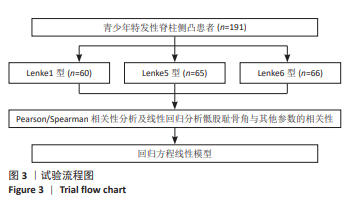
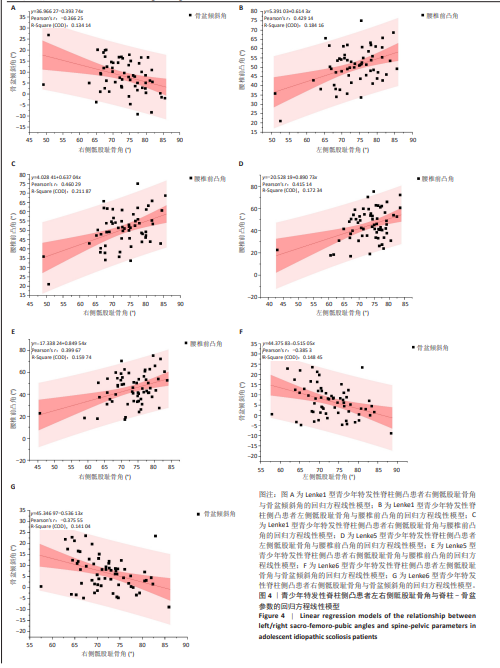
骶股耻骨角作为骨盆倾斜角的冠状位替代指标,它在青少年特发性脊柱侧凸不同Lenke分型中的关联特征尚未明确,这限制了骶股耻骨角在分型化评估中的临床应用。此次研究针对Lenke1、5、6型临床常见青少年特发性脊柱侧凸亚型,系统分析骶股耻骨角与腰椎前凸角、骨盆倾斜角的相关性及量化关系,明确三者间存在分型特异性关联模式。骶股耻骨角并非孤立测量指标,其变化与脊柱-骨盆整体平衡紧密相关,并且该关联性随主弯位置不同呈现差异化特征,为解析不同亚型青少年特发性脊柱侧凸的脊柱-骨盆代偿生物力学机制提供新视角,也为临床个体化康复干预及畸形评估提供实践参考。
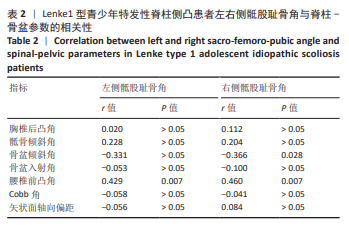
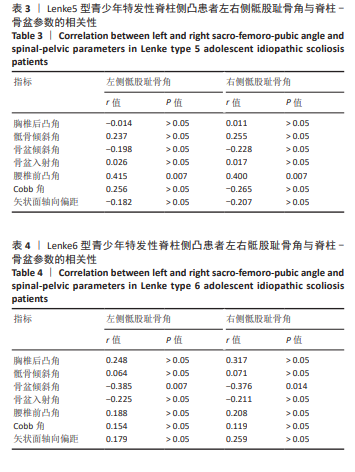
3.1 Lenke1、5型青少年特发性脊柱侧凸患者骶股耻骨角与腰椎前凸的正向关联及生物力学意义 此次研究发现,Lenke1型(主胸弯)与Lenke5型(主腰弯)青少年特发性脊柱侧凸患者双侧骶股耻骨角均与腰椎前凸呈显著正向相关(Lenke1型:r=0.429,P=0.007;Lenke5型:r=0.400-0.415,P=0.007),一元回归分析进一步量化二者关联强度(Lenke1型左侧:y=5.39+0.61x,R²=0.18;Lenke5型左侧:y=-20.53+0.89x,R²=0.17),该结果具有重要生物力学意义。腰椎前凸角作为维持矢状面平衡的核心参数,其变化直接影响骨盆倾斜状态,SEYEDHOSEINPOOR等[15]、KATZOURAKI等[16]的研究已证实重力负荷可影响髋骨倾斜,进而诱发腰椎前凸代偿性改变。此次研究显示骶股耻骨角与腰椎前凸角的正相关关系,本质上反映了腰椎前凸角增大时骨盆倾向于前倾,使骶骨平台更趋水平、耻骨联合前移,最终导致骶股耻骨角同步增大,这也支持了骶股耻骨角作为评估骨盆前倾程度潜在指标的临床价值。
值得注意的是,Lenke1型青少年特发性脊柱侧凸患者除双侧骶股耻骨角与腰椎前凸角相关外,右侧骶股耻骨角与骨盆倾斜角呈负相关(r=-0.366,P=0.007),而Lenke5型青少年特发性脊柱侧凸患者双侧骶股耻骨角均与骨盆倾斜角无显著关联,这种差异与骨盆代偿的对称性及主弯部位的影响密切相关。HASEGAWA等[17]提出盆单元为塑性骨,其形态可随生长及力学环境变化而改变,尤其在肌肉不平衡状态下易发生结构性变形。HAN等[14]研究亦表明,胸椎畸形对骨盆冠状位失衡影响显著,骨盆的倾斜与旋转本质上是脊柱侧弯的代偿性表现。此次研究中Lenke1型青少年特发性脊柱侧凸患者仅右侧骶股耻骨角与骨盆倾斜角相关的结果,印证了这种代偿的非对称性即主胸弯引发的躯干失衡,可能导致骨盆在整体后旋代偿(骨盆倾斜角增大,即骨盆后倾以纠正矢状面失衡)的同时前部结构呈现单侧特异性调整,使右侧骶股耻骨角与骨盆倾斜角呈反向关联,这一复杂代偿机制有待后续三维研究进一步验证。
3.2 不同Lenke分型青少年特发性脊柱侧凸患者骶股耻骨角与骨盆倾斜角关联的差异性及临床启示 在青少年特发性脊柱侧凸患者中,与Lenke1、5型患者形成鲜明对比,Lenke6型(主胸腰弯/腰弯)患者双侧骶股耻骨角均与骨盆倾斜角呈显著负相关(r=-0.376至-0.385,P < 0.05),而与腰椎前凸无显著关联,提示不同Lenke分型对骨盆代偿策略的影响存在本质差异。颈椎、胸椎、腰椎是椎体旋转的三大核心节段,而骨盆被认为是脊柱侧凸的第四旋转平面[18]。Lenke6型青少年特发性脊柱侧凸的结构性主弯跨越胸、腰两段,易引发更复杂的躯干失代偿,使得骨盆以整体后旋作为首要代偿机制,此时骶股耻骨角的变化更直接响应于骨盆后倾(骨盆倾斜角增大),呈现反向关联,而非单纯受局部腰椎前凸变化调控,这种关联模式的差异凸显了主弯部位及范围对脊柱-骨盆代偿路径的主导性影响。
具体而言,Lenke6型青少年特发性脊柱侧凸主弯累及胸腰段这一脊柱力线传导枢纽,其畸形易破坏脊柱-骨盆协同关系,导致腰椎柔韧性下降,代偿负荷完全转移至骨盆,表现为双侧骶股耻骨角与骨盆倾斜角的反向关联(回归方程:左侧y=44.38-0.52x,R²=0.15;右侧y=45.35-0.54x,R²=0.14),即骨盆倾斜角增大(骨盆后倾)时,骶股耻骨角同步减小,这是骨盆整体后旋的直接几何表现。Lenke1型青少年特发性脊柱侧凸仅右侧骶股耻骨角与骨盆倾斜角相关,与胸段主弯引发的单侧代偿及骨盆非对称调整相呼应;而Lenke5型青少年特发性脊柱侧凸的骶股耻骨角与骨盆倾斜角无关联,推测其腰段主弯的代偿以腰椎前凸角调整为核心,骨盆矢状位参数(骨盆倾斜角)的参与度较低,这也与该分型骶股耻骨角仅与腰椎前凸角相关的结果一致。
这种分型特异性关联对临床干预具有重要指导价值:对于Lenke6型青少年特发性脊柱侧凸患者,可通过冠状位骶股耻骨角快速预测骨盆倾斜角(无需依赖高质量矢状位X射线片),为术前评估提供便捷手段,尤其适用于体位偏移或设备限制导致矢状位数据缺失的场景;Lenke1型青少年特发性脊柱侧凸患者需关注右侧骶股耻骨角与骨盆倾斜角的关联,术前评估时需结合双侧参数综合判断骨盆代偿状态;Lenke5型青少年特发性脊柱侧凸患者则应重点监测腰椎前凸变化,通过干预腰椎柔韧性延缓畸形进展。
3.3 回归模型的临床应用价值及局限性 此次研究针对各分型中有显著相关性的变量,构建分型特异性一元回归模型,量化了腰椎前凸角、骨盆倾斜角对骶股耻骨角的影响效应,为临床精准评估提供量化工具。尽管所有模型R²值较低(0.13-0.21),仅能解释骶股耻骨角变异的13%-21%,提示骶股耻骨角大小由骨骼发育差异、软组织张力、肌肉力量平衡、椎体旋转程度等多因素共同决定[19-21],但各模型的斜率特征仍具有重要临床启示。
其中,Lenke5型青少年特发性脊柱侧凸患者骶股耻骨角与腰椎前凸角的回归方程斜率达0.85-0.89,意味着腰椎前凸每增加1°,骶股耻骨角预期增加约0.9°,提示腰段主弯患者中腰椎前凸变化对骨盆前部姿态的影响更为显著。这一结果提示临床矫形干预时,若计划通过调整腰椎前凸角恢复矢状面平衡,需预判腰椎前凸角对骶股耻骨角的连带增大效应,避免盲目追求腰椎前凸角与骨盆入射角的匹配而破坏骨盆前部姿态稳定性[22]。Lenke1型青少年特发性脊柱侧凸患者右侧骶股耻骨角与骨盆倾斜角的回归方程为y=36.97-0.39x,为理解主胸弯患者骨盆代偿性旋转提供了量化视角,明确骨盆后倾(骨盆倾斜角增大)时,右侧骶股耻骨角同步降低的关联规律。Lenke6型青少年特发性脊柱侧凸患者骶股耻骨角与骨盆倾斜角的回归方程斜率为-0.52至-0.54,进一步印证该分型下骨盆整体旋转的主导代偿地位,与Lenke1、5型青少年特发性脊柱侧凸患者的局部腰椎驱动模式形成鲜明对比。此外,此次研究各分型骶股耻骨角与骨盆倾斜角/腰椎前凸的相关性(r=0.36-0.43)低于BLONDEL等[5]报道的健康人群骶股耻骨角-骨盆倾斜角相关性(r=0.74),并且回归模型解释力偏低,这一差异源于青少年特发性脊柱侧凸患者脊柱畸形对骨盆生物力学环境的复杂重塑,提示临床需建立分型特异性骶股耻骨角参考标准,不可直接沿用健康人群参数。
3.4 研究的缺点与不足 该研究存在一定局限性:未纳入性别分层分析,而性别可影响骨盆形态,未来需扩大样本量,探讨性别与Lenke分型的交互作用;仅基于冠矢状位参数分析,缺乏三维影像数据,无法全面评估脊柱-骨盆-下肢链的立体代偿机制。
未来研究可聚焦三方面:扩大样本量,纳入性别、侧弯严重程度多维度分析,优化回归模型;结合三维影像技术,深入解析不同Lenke分型骨盆代偿的立体生物力学机制;开展前瞻性研究,验证骶股耻骨角在术前规划及术后疗效评估中的应用价值。
综上所述,Lenke1、5、6型青少年特发性脊柱侧凸患者骶股耻骨角与脊柱-骨盆参数的关联存在明确分型特异性,
Lenke1、5型以骶股耻骨角与腰椎前凸正向关联为主,Lenke6型以骶股耻骨角与骨盆倾斜角双侧负关联为特征。该研究构建的分型特异性回归模型,明确了骶股耻骨角在不同亚型中的评估价值,为青少年特发性脊柱侧凸的分型个体化干预提供了解剖参数依据,也填补了骶股耻骨角在特定Lenke分型中应用研究的空白。
中国组织工程研究杂志出版内容重点:人工关节;骨植入物;脊柱;骨折;内固定;数字化骨科;组织工程