中国组织工程研究 ›› 2026, Vol. 30 ›› Issue (26): 6892-6898.doi: 10.12307/2026.253

• 材料生物相容性 material biocompatibility • 上一篇    下一篇

新型国产聚乙醇酸神经导管的降解特性与生物毒性

徐圣来1,关杏淇2,孙海玮1,白泽明1,郭冰玉3,陶  凯3   

  1. 1中国人民解放军北部战区总医院烧伤整形科,辽宁省沈阳市   110016;2沈阳市第七人民医院皮肤外科,辽宁省沈阳市   110016;3中国医科大学附属第四医院烧伤整形显微外科,辽宁省沈阳市   110016
  • 接受日期:2025-11-14 出版日期:2026-09-18 发布日期:2026-03-12
  • 通讯作者: 陶凯,主任医师,教授,中国医科大学附属第四医院烧伤整形显微外科,辽宁省沈阳市 110016
  • 作者简介:徐圣来,男,1998年生,辽宁省丹东市人,汉族,2025年中国医科大学毕业,硕士,医师,主要从事烧伤整形外科学方向研究。
  • 基金资助:
    横向课题(2900024039):可降解镁合金手足接骨板钉应用效果的研究,项目负责人:陶凯

Degradation characteristics and biotoxicity of new domestic polyglycolic acid neural catheter

Xu Shenglai1, Guan Xingqi2, Sun Haiwei1, Bai Zeming1, Guo Bingyu3, Tao Kai3   

  1. 1Department of Burn Plastic Surgery, General Hospital of Northern Theater Command, Shenyang 110016, Liaoning Province, China; 2Department of Dermatology, Shenyang Seventh People's Hospital, Shenyang 110016, Liaoning Province, China; 3Department of Burn Plastic Microsurgery, The Fourth Affiliated Hospital of China Medical University, Shenyang 110016, Liaoning Province, China
  • Accepted:2025-11-14 Online:2026-09-18 Published:2026-03-12
  • Contact: Tao Kai, Chief physician, Professor, Department of Burn Plastic Microsurgery, The Fourth Affiliated Hospital of China Medical University, Shenyang 110016, Liaoning Province, China
  • About author:Xu Shenglai, MS, Physician, Department of Burn Plastic Surgery, General Hospital of Northern Theater Command, Shenyang 110016, Liaoning Province, China
  • Supported by:
    Horizontal Research Project, No. 2900024039 (to TK)

摘要:

文题释义:

人工合成神经导管:由人工合成的用于桥接吻合神经缺损的支架,以促进在周围神经的再生与功能恢复。
周围神经损伤:主要由于各种原因引起中枢神经(脑和脊髓)以外的神经支配区域出现感觉障碍、运动障碍和营养障碍。

背景:“神经导管法修复周围神经缺损”是生物医学工程领域的研究热点,但作为金标准的自体神经移植修复法存在局限性,因此,临床急需一种可以替代自体神经移植法来修复周围神经缺损的方法。
目的:观察新型国产聚乙醇酸神经导管的降解特性与生物毒性。
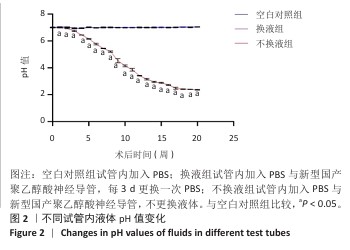
方法:①降解性能:空白对照组试管内加入PBS;换液组试管内加入PBS与新型国产聚乙醇酸神经导管,每3 d更换一次PBS;不换液组试管内加入PBS与新型国产聚乙醇酸神经导管,不更换液体。将3组试管置于37 ℃恒温箱内,每周检测试管内液体的pH值。②细胞实验:将人成纤维细胞分2组培养:对照组加入单纯的培养基,实验组加入含新型国产聚乙醇酸神经导管浸提液的培养基。通过细胞形态、CCK-8检测、划痕实验和Transwell实验评估神经导管的细胞相容性。③体内组织相容性:将新型国产聚乙醇酸神经导管与进口神经导管分别植入SD大鼠股二头肌与臀大肌之间,评估神经导管的降解特性和生物毒性。

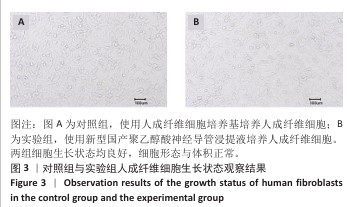
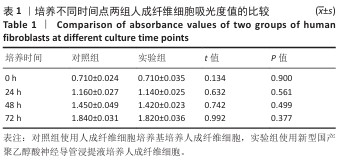
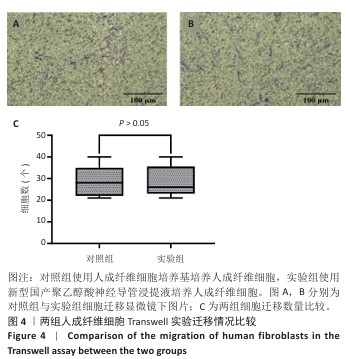
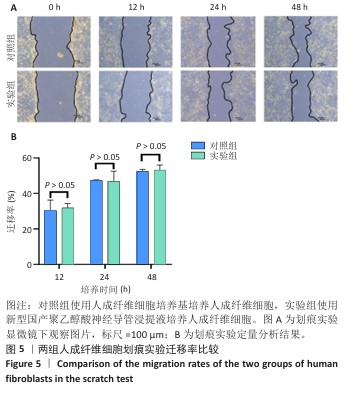
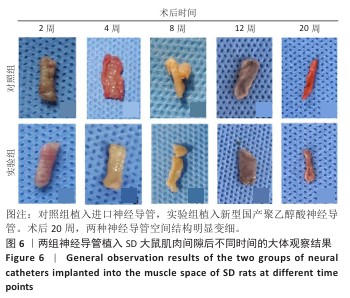
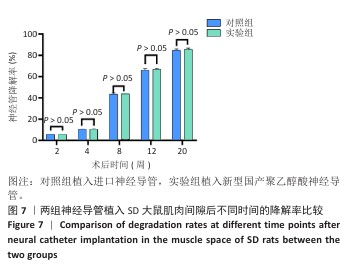
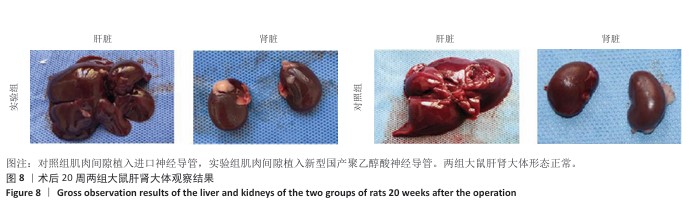
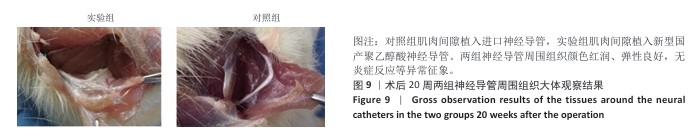
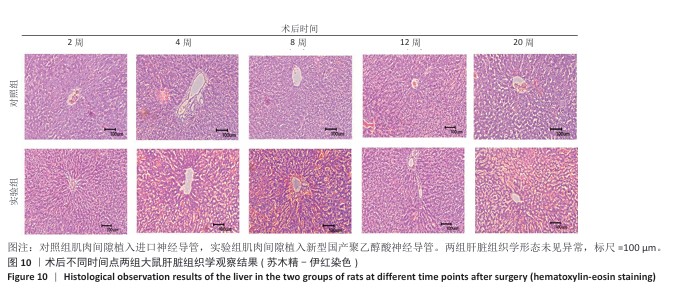
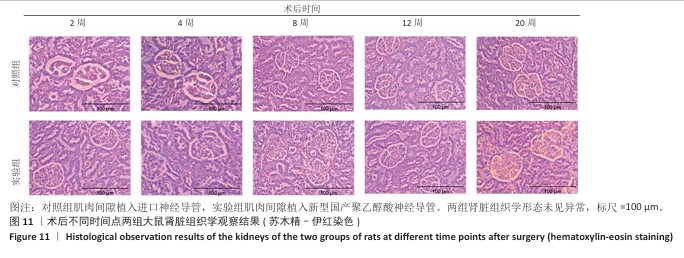
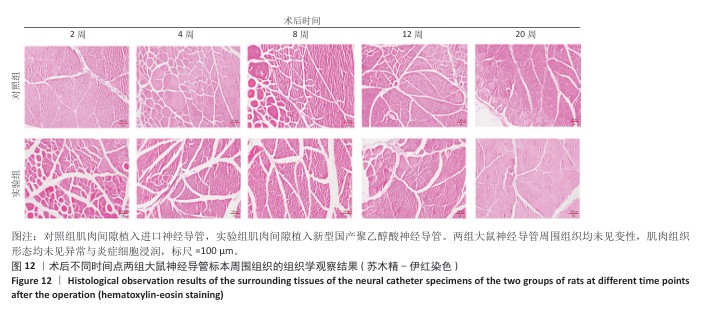
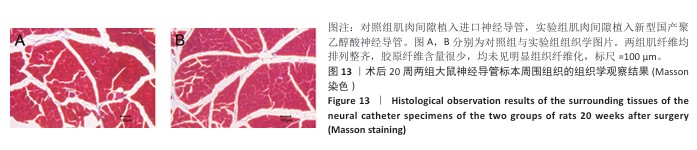
结果与结论:①体外降解实验显示,在换液情况下,新型国产聚乙醇酸神经导管降解对周围液体pH值影响不大;在不换液情况下,新型国产聚乙醇酸神经导管降解可降低周围液体pH值。②两组细胞生长状态均良好,细胞形态与体积正常。CCK-8检测显示,新型国产聚乙醇酸神经导管不影响人成纤维细胞的增殖。划痕实验和Transwell实验显示,新型国产聚乙醇酸神经导管不影响人成纤维细胞的迁移。③新型国产聚乙醇酸神经导管与进口神经导管的降解情况相似。苏木精-伊红染色显示,新型国产聚乙醇酸神经导管对大鼠的主要脏器无明显影响。Masson染色显示,两组大鼠神经导管周围组织正常,均未见炎症细胞浸润。④结果表明,新型国产聚乙醇酸神经导管具有良好的降解性,无生物毒性。

https://orcid.org/0009-0008-4024-9624 (徐圣来) 

中国组织工程研究杂志出版内容重点:生物材料;骨生物材料;口腔生物材料;纳米材料;缓释材料;材料相容性;组织工程

关键词: 聚乙醇酸, 聚乙醇酸神经导管, 自体神经移植, 周围神经缺损, 体外降解, 体内埋植

Abstract: BACKGROUND: Neural catheterization repair of peripheral nerve defects is a research hotspot in the field of biomedical engineering, but the autologous nerve graft repair method as the gold standard has limitations, so there is an urgent need for a method that can replace autologous nerve grafting to repair peripheral nerve defects.
OBJECTIVE: To observe the degradation characteristics and biological toxicity of the new domestic polyglycolic acid neural catheters.
METHODS: (1) Degradation performance: PBS was added to the test tubes of the blank control group. PBS and new domestic polyglycolic acid neural catheter were added to the test tubes of the fluid exchange group, with PBS changed every 3 days. PBS and the new domestic polyglycolic acid neural catheter were added to the test tubes of the non-fluid exchange group, without changing the fluid. All three groups of test tubes were placed in a 37℃ incubator, and the pH value of the fluid in the test tubes was checked weekly. (2) Cell experiments: Human fibroblasts were cultured in two groups: the control group received simple culture medium, and the experimental group received culture medium containing an extract of the new domestic polyglycolic acid neural catheter. Cell compatibility of the nerve conduit was assessed by cell morphology, CCK-8 assay, scratch assay, and Transwell assay. (3) In vivo histocompatibility: The new domestic polyglycolic acid neural catheter and the imported neural catheter were implanted between the biceps femoris and gluteus maximus muscles of SD rats, respectively, to evaluate the degradation characteristics and biotoxicity of the neural catheters. 
RESULTS AND CONCLUSION: (1) In vitro degradation experiments showed that, with fluid exchange, the degradation of the new domestic polyglycolic acid neural catheter had little effect on the pH of the surrounding fluid. Without fluid exchange, the degradation of the new domestic polyglycolic acid neural catheter lowered the pH of the surrounding fluid. (2) Cells in both groups showed good growth, with normal cell morphology and volume. CCK-8 assay showed that the new domestic polyglycolic acid neural catheter did not affect the proliferation of human fibroblasts. Scratch and Transwell assays showed that the new domestic polyglycolic acid neural catheter did not affect the migration of human fibroblasts. (3) The degradation of the new domestic polyglycolic acid neural catheter was similar to that of the imported neural catheter. Hematoxylin-eosin staining showed that the new domestic polyglycolic acid neural catheter had no significant effect on the major organs of rats. Masson staining showed that the tissues surrounding the neural catheter in both groups of rats were normal, with no inflammatory cell infiltration observed. (4) The results indicate that the new domestic polyglycolic acid neural catheter has good degradability and no biotoxicity. 

Key words: polyglycolic acid, polyglycolic acid neural catheter, autologous nerve grafting, peripheral nerve defects, in vitro degradation, in vivo implantation

中图分类号: