中国组织工程研究 ›› 2026, Vol. 30 ›› Issue (19): 4983-4989.doi: 10.12307/2026.223

• 干细胞培养与分化 stem cell culture and differentiation • 上一篇    下一篇

优化全血分离工艺制备治疗级血小板裂解液对心肌细胞缺氧损伤的保护作用

蒋丽红1,2,林富文1,陈  迎1,2,黄雨晨1,2,彭绍静1,陈洁润1,2,苏常山1,2,钟周琳1,2   

  1. 1南宁中心血站,广西壮族自治区南宁市   530007;2南宁输血医学研究所,广西壮族自治区南宁市   530007
  • 收稿日期:2025-08-01 接受日期:2025-10-22 出版日期:2026-07-08 发布日期:2026-02-24
  • 通讯作者: 钟周琳,硕士,主任技师,南宁中心血站,广西壮族自治区南宁市 530007;南宁输血医学研究所,广西壮族自治区南宁市 530007; 共同通讯作者:苏常山,副主任医师,南宁中心血站,广西壮族自治区南宁市 530007;南宁输血医学研究所,广西壮族自治区南宁市 530007
  • 作者简介:蒋丽红,女,1990年生,广西壮族自治区南宁市人,壮族,主管技师,主要从事输血医学研究检测相关工作。
  • 基金资助:
    广西壮族自治区卫生健康委自筹经费科研课题(Z-A20231264),项目负责:蒋丽红;广西壮族自治区卫生健康委自筹经费科研课题(Z-A20231265),项目负责人:钟周琳

Protective effect of optimization of the whole blood separation process to prepare therapeutic-grade platelet lysate on cardiomyocytes from hypoxic injury

Jiang Lihong1, 2, Lin Fuwen1, Chen Ying1, 2, Huang Yuchen1, 2, Peng Shaojing1, Chen Jierun1, 2, Su Changshan1, 2, Zhong Zhoulin1, 2   

  1. 1Nanning Central Blood Station, Nanning 530007, Guangxi Zhuang Autonomous Region, China; 2Nanning Institute of Transfusion Medicine, Nanning 530007, Guangxi Zhuang Autonomous Region, China
  • Received:2025-08-01 Accepted:2025-10-22 Online:2026-07-08 Published:2026-02-24
  • Contact: Zhong Zhoulin, MS, Chief technician, Nanning Central Blood Station, Nanning 530007, Guangxi Zhuang Autonomous Region, China; Nanning Institute of Transfusion Medicine, Nanning 530007, Guangxi Zhuang Autonomous Region, China Co-corresponding author: Su Changshan, Associate chief physician, Nanning Central Blood Station, Nanning 530007, Guangxi Zhuang Autonomous Region, China; Nanning Institute of Transfusion Medicine, Nanning 530007, Guangxi Zhuang Autonomous Region, China
  • About author:Jiang Lihong, Technician-in-charge, Nanning Central Blood Station, Nanning 530007, Guangxi Zhuang Autonomous Region, China; Nanning Institute of Transfusion Medicine, Nanning 530007, Guangxi Zhuang Autonomous Region, China
  • Supported by:
    Self-Funded Research Project of Guangxi Zhuang Autonomous Region Health Commission, No. Z-A20231264 (to JLH); Self-Funded Research Project of Guangxi Zhuang Autonomous Region Health Commission, No. Z-A20231265 (to ZZL)

摘要:

文题释义:

血小板裂解液:是一种通过裂解血小板并收集其释放的细胞内成分而制备的液体,富含血小板衍生生长因子、血管内皮生长因子、表皮生长因子、转化生长因子β等生长因子及其他生物活性分子,在细胞增殖、迁移、组织修复、调节细胞行为和免疫反应中起着重要作用。
心肌细胞缺氧损伤:是指心肌细胞因氧气供应不足或利用障碍导致的代谢异常、结构破坏及功能受损的病理过程。血小板裂解液的生物活性分子可通过激活细胞内的信号通路,诱导心肌细胞及相关修复细胞的增殖与分化,进而促进受损心肌细胞的修复。

摘要
背景:血小板是重要的血液资源,然而在常规的血站工艺流程下却常与白细胞一起被滤除为医疗废物,优化全血分离工艺制备血小板裂解液制品并探索其在组织工程和再生医学等领域的应用具有重要价值。
目的:优化全血分离工艺制备治疗级血小板裂解液,探讨血小板裂解液对心肌细胞缺氧损伤的保护作用。
方法:在封闭血袋及管路条件下分离21份合格全血的血小板,采用冻融法制备21份血小板裂解液,应用酶联免疫试剂盒检测血小板裂解液中的血小板衍生生长因子AA、血小板衍生生长因子BB、血小板衍生生长因子AB、血管内皮生长因子、表皮生长因子、胰岛素样生长因子1、成纤维细胞生长因子、转化生长因子β1的质量浓度范围,分别采用菌落培养法和支原体PCR检测试剂盒观察活菌和支原体的污染情况;建立心肌细胞缺氧模型,评估血小板裂解液对心肌细胞缺氧损伤的保护效果。
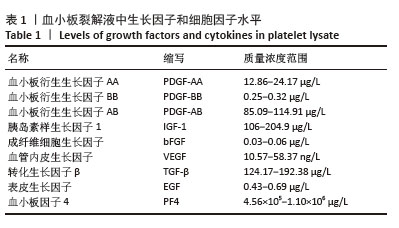
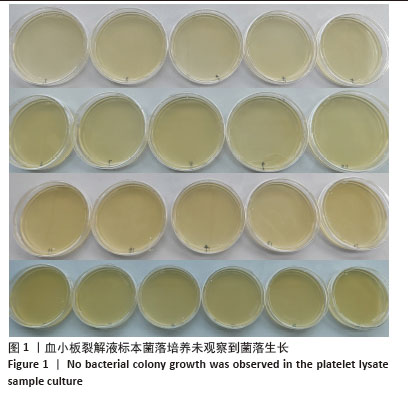
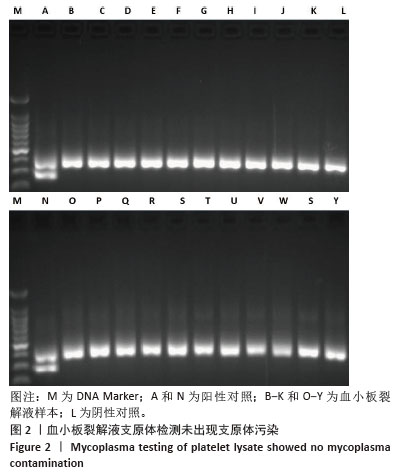
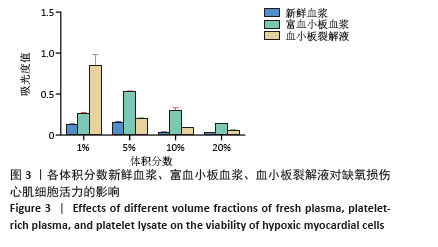
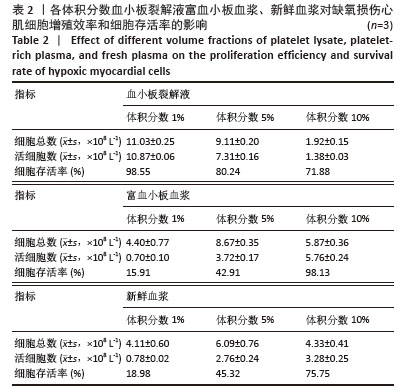
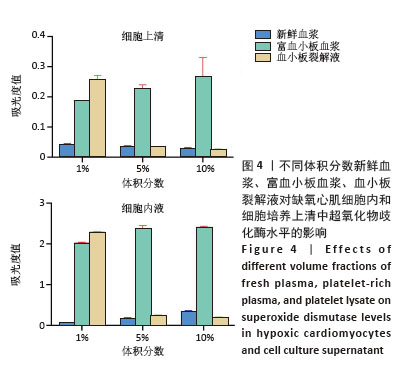
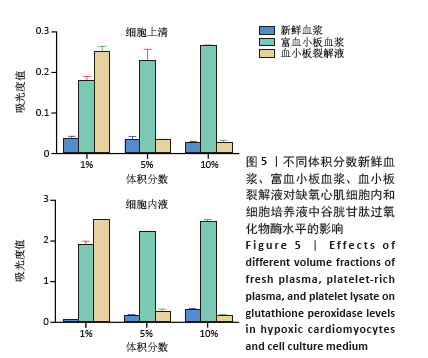
结果与结论:①血小板裂解液主要生长因子和细胞因子的质量浓度范围:血小板衍生生长因子AA为12.86-24.17 μg/L、血小板衍生生长因子BB为0.25-0.32 μg/L、血小板衍生生长因子AB为85.09-114.91 μg/L、血管内皮生长因子为10.57-58.37 μg/L、表皮生长因子为0.43-0.69 μg/L、胰岛素样生长因子1为106-204.9 μg/L、成纤维细胞生长因子为0.03-0.06 μg/L、转化生长因子β1为124.17-192.38 μg/L;②菌落培养及支原体检测结果呈阴性;③低体积分数(1%)血小板裂解液培养的心肌细胞增殖效率最高;低体积分数(1%)血小板裂解液刺激心肌细胞产生高水平超氧化物歧化酶和谷胱甘肽过氧化物酶以保护心肌细胞。该研究通过优化全血分离工艺建立了制备治疗级血小板裂解液的方法,可提高血液资源的利用率。血小板裂解液的主要生长因子水平高,可显著促进缺氧损伤心肌细胞的修复。

关键词: 血小板裂解液, 富血小板血浆, 生长因子, 细胞培养, 心肌细胞, 超氧化物歧化酶, 谷胱甘肽过氧化物酶

Abstract: BACKGROUND: Platelets, crucial blood components, are commonly discarded along with white blood cells in traditional blood processing and become medical waste. Optimizing whole blood separation processes to prepare platelet lysate products and exploring their applications in tissue engineering and regenerative medicine are of great value. 
OBJECTIVE: To optimize blood separation for therapeutic-grade platelet lysate production and explore the protective impact of platelet lysate on myocardial hypoxia injury.
METHODS: Twenty-one platelets were isolated from whole blood using a closed blood bag and tubing system, followed by the preparation of twenty-one platelet lysates through the freeze-thaw method. The concentrations of platelet-derived growth factors (platelet-derived growth factor AA, platelet-derived growth factor BB, and platelet-derived growth factor AB), vascular endothelial growth factor, epidermal growth factor, insulin-like growth factor, fibroblast growth factor, and transforming growth factor-β1 in the platelet lysate were quantified using an enzyme-linked immunosorbent assay kit. Detection ranges for these factors were determined. Bacterial and mycoplasma contamination were observed using the colony culture method and a Mycoplasma PCR detection kit, respectively. A hypoxic cardiomyocyte model was established to evaluate the protective effects of platelet lysate on hypoxia-stressed cardiomyocytes.
RESULTS AND CONCLUSION: (1) The concentration ranges of major growth factors and cytokines in platelet lysates were as follows: platelet-derived growth factor AA: 12.86-24.17 μg/L, platelet-derived growth factor BB: 0.25-0.32 μg/L, platelet-derived growth factor AB: 85.09-114.91 μg/L, vascular endothelial growth factor: 10.57-58.37 μg/L, epidermal growth factor: 0.43-0.69 μg/L, insulin-like growth factor 1: 106-204.9 μg/L, fibroblast growth factor: 0.03-0.06 μg/L, transforming growth factor β1: 124.17-192.38 μg/L. (2) Colony culture and mycoplasma detection yielded negative results. (3) The efficiency of cardiomyocyte proliferation was highest with a low concentration (1%) of platelet lysate in culture. A 1% concentration of platelet lysate effectively stimulated cardiomyocytes to produce high levels of superoxide dismutase and glutathione peroxidase, providing protective effects for cardiomyocytes. This study established a method for preparing therapeutic-grade platelet lysate by optimizing the whole blood separation process, thereby improving the utilization of blood resources. Platelet lysate, rich in essential growth factors, significantly promotes the repair of hypoxic injuries in cardiomyocytes.


Key words: platelet lysate, platelet-rich plasma, growth factor, cell culture, myocardial cell, superoxide dismutase, glutathion peroxidase

中图分类号: