[1] 董佳慧,李慧敏,李南熹,等.糖萼与疾病的相关性及其降解机制研究进展[J].解放军医学杂志,2023,48(3):345-354.
[2] GRIFFIN ME, SORUM AW, MILLER GM, et al. Sulfated glycans engage the Ang-Tie pathway to regulate vascular development. Nat Chem Biol. 2021;17(2):178-186.
[3] 康红艳,刘佳佳,喻淼淼,等.血管内皮细胞糖萼的观测技术研究进展[J].生命科学,2016,28(9):1089-1099.
[4] REITSMA S, SLAAF DW, VINK H. The endothelial glycocalyx: composition, functions, and visualization. Pflugers Arch. 2007;454(3):345-359.
[5] RICHTER RP, PAYNE GA, AMBALAVANAN N, et al. The endothelial glycocalyx in critical illness: a pediatric perspective. Matrix Biol Plus. 2022;14:100106.
[6] ZHANG X, LIN L, HUANG H, et al. Chemoenzymatic synthesis of glycosaminoglycans. Acc Chem Res. 2019; 53(2):335-346.
[7] SONG Y, ZHANG F, LINHARDT RJ. Glycosaminoglycans. Adv Exp Med Biol. 2021;1325:103-116.
[8] MENDE M, BEDNAREK C, WAWRYSZYN M, et al. Chemical synthesis of glycosaminoglycans. Chem Rev. 2016;116(14):81938255.
[9] KAMHI E, JOO EJ, DORDICK JS. Glycosaminoglycans in infectious disease. Biol Rev Camb Philos Soc. 2013;88(4):928-943.
[10] ZIMMERMANN R, WERNER C, STERLING J. Exploring structure - property relationships of GAGs to tailor ECM-mimicking hydrogels. Polymers (Basel). 2018;10(12):1376.
[11] SHENG A, CHEN Q, YU M. Coupling liquid chromatography and tandem mass spectrometry to electrophoresis for indepth analysis of glycosaminoglycan drugs: heparin and the multicomponent sulodexide. Anal Chem. 2020;93(3):14331442.
[12] SODHI H, PANITCH A. Glycosaminoglycans in tissue engineering: a review. Biomolecules. 2021;11(1):29.
[13] PIPERIGKOU Z, TZAFERI K, MAKROKANIS G, et al. The microRNA-cell surface proteoglycan axis in cancer progression. Am J Physiol Cell Physiol. 2022;322(5):825-832.
[14] JIN J, FANG F, GAO W, et al. The structure and function of the glycocalyx and its connection with blood-brain barrier. Front Cell Neurosci. 2021;15:739699.
[15] FU L, KIM HN, STERLING JD, et al. The role of the cell surface glycocalyx in drug delivery to and through the endothelium. Adv Drug Deliv Rev. 2022;184:114195.
[16] COELHO-SANTOS V, SHIH AY. Postnatal development of cerebrovascular structure and the neurogliovascular unit. Wiley Interdiscip Rev Dev Biol. 2020;9(2):e363.
[17] MASOLA V, GRECO N, GAMBARO G, et al. Heparanase as active player in endothelial glycocalyx remodeling. Matrix Biol Plus. 2022;13:100097.
[18] ZHANG C, GUO F, CHANG M, et al. Exosome-delivered syndecan-1 rescues acute lung injury via a FAK/ p190RhoGAP/RhoA/ROCK/NF-kappaB signaling axis and glycocalyx enhancement. Exp Cell Res. 2019;384(1):111596.
[19] AFRATIS N, GIALELI C, NIKITOVIC D. Glycosaminoglycans: key players in cancer cell biology and treatment. FEBS J. 2012; 279(7):1177-1197.
[20] COSGUN ZC, FELS B, KUSCHE-VIHROG K. Nanomechanics of the endothelial glycocalyx: from structure to function Am J Pathol. 2020;190(4):732-741.
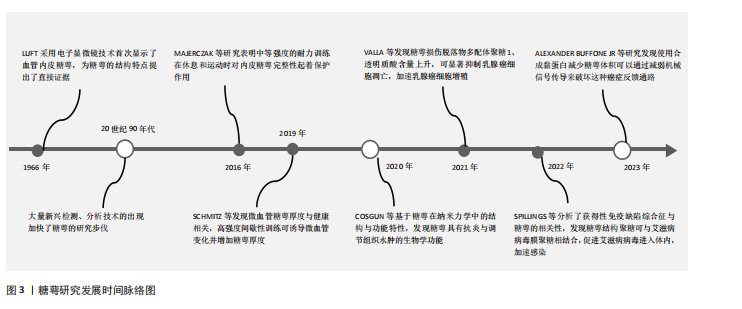
[21] MAJERCZAK J, DUDA K, CHLOPICKI S, et al. Endothelial glycocalyx integrity is preserved in young, healthy men during a single bout of strenuous physical exercise. Physiol Res. 2016;65(2):281-291.
[22] SCHMITZ B, BREULMANN FL, JUBRAN B, et al. A three-step approach identifies novel shear stress-sensitive endothelial microRNAs involved in vasculoprotective effects of high-intensity interval training (HIIT). Oncotarget. 2019;10(38):3625-3640.
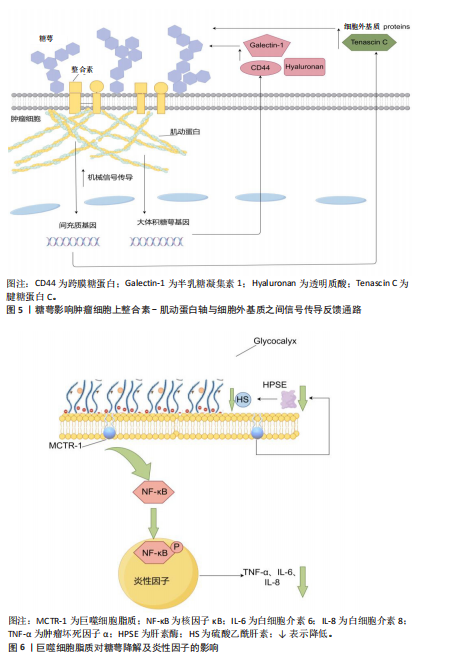
[23] BUFFONE A, WEAVER VM. Don’t sugarcoat it: How glycocalyx composition influences cancer progression. J Cell Biol. 2020;219(1):e201910070.
[24] KADOYA H, YU N, SCHIESSL IM, et al. Essential role and therapeutic targeting of the glomerular endothelial glycocalyx in lupus nephritis. JCI Insight. 2020;5(19): e131252.
[25] 林源希,李真玉.糖萼在脓毒症血管内皮损伤中的变化及其修复策略研究进展[J].解放军医学杂志,2022,47(10):1049-1056.
[26] CHELAZZI C, VILLA G, MANCINELLI P, et al. Glycocalyx and sepsisinduced alterations in vascular permeability. Crit Care. 2015;19: 26.
[27] ALPHONSUS CS, RODSETH RN. The endothelial glycocalyx: a review of the vascular barrier. Anaesthesia. 2014;69(7): 777-784.
[28] 马壮,修光辉,熊伟,等.血管内皮糖萼的研究进展[J].广东医学,2019,40(14): 2113-2116.
[29] KORAKAS E, IKONOMIDIS I, MARKAKIS K, et al.The Endothelial Glycocalyx as a Key Mediator of Albumin Handling and the Development of Diabetic Nephropathy. Curr Vase Pharmacol. 2020;18(6):619-631.
[30] HU Z, CANO I, D’AMORE PA. Update on the role of the endothelial glycocalyx in angiogenesis and vascular inflammation. Front Cell Dev Biol. 2021;9:734276.
[31] 张梓航,高朵岚,戴鑫源,等.衰老引发的糖萼损伤与血管功能障碍[J].医用生物力学,2024,39(2):368-374.
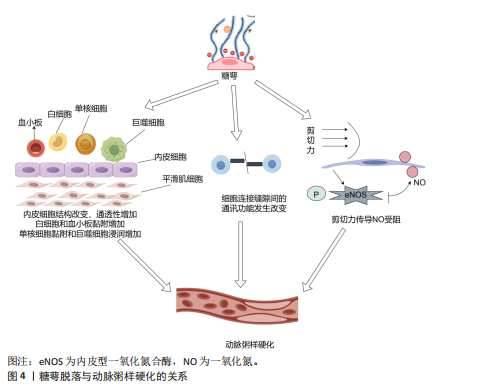
[32] TONG W, DUAN Y, YANG R, et al. Foam cell-derived CXCL14 muti-functionally promotes atherogenesis and is a potent therapeutic target in atherosclerosis. J Cardiovasc Transl Res. 2020;13(2):215-224.
[33] KOZAR RA, PATI S. Syndecan-1 restitution by plasma after hemorrhagic shock. J Trauma Acute Care Surg. 2015;78(6 Suppl 1): S83-S86.
[34] KIM YH, NIJST P, KIEFER K, et al. Endothelial glycocalyx as biomarker for cardiovascular diseases: mechanistic and clinical implications. Curr Heart Fail Rep. 2017;14(2):117-126.
[35] HAJIBABAIE F, KOUHPAYEH S, MIRIAN M, et al. MicroRNAs as the actors in the atherosclerosis scenario. J Physiol Biochem. 2020;76(1):1-12.
[36] MIRANDA CH, DE CARVALHO BM, SCHMIDT A, et al. Evaluation of the endothelial glycocalyx damage in patients with acute coronary syndrome. Atherosclerosis. 2016; 247:184-188.
[37] NEMOTO T, MINAMI Y, YAMAOKA-TOJO M, et al. Endothelial glycocalyx and severity and vulnerability of coronary plaque in patients with coronary artery disease. Atherosclerosis. 2020;302:1-7.
[38] CANCEL LM, EBONG EE, MENSAH S, et al. Endothelial glycocalyx, apoptosis and inflammation in an atherosclerotic mouse model. Atherosclerosis. 2016;252:136-146.
[39] BUTLER PJ, BHATNAGAR A. Mechanobiology of the abluminal glycocalyx. Biorheology. 2019;56(2-3):101-112.
[40] HOJMAN P, DETHLEFSEN C, BRANDT C, et al. Exercise-induced musclederived cytokines inhibit mammary cancer cell growth. Am J Physiol Endocrinol Metab. 2011;301(3):E504-E510.
[41] VALLA S, HASSAN N, VITALE DL, et al. Syndecan-1 depletion has a differential impact on hyaluronic acid metabolism and tumor cell behavior in luminal and triple-negative breast cancer cells. Int J Mol Sci. 2021;22(11):5874.
[42] MORAN H, CANCEL LM, HUANG P, et al. Glycocalyx mechanotransduction mechanisms are involved in renal cancer metastasis. Matrix Biol Plus. 2022;13: 100100.
[43] TONDEPU C, KARUMBAIAH L. Glycomaterials to investigate the functional role of aberrant glycosylation in glioblastoma. Adv Healthc Mater. 2022;11(4):e2101956.
[44] OLIVEIRA T, ZHANG M, JOO EJ, et al. Glycoproteome remodeling in MLL-rearranged B-cell precursor acute lymphoblastic leukemia. Theranostics. 2021;11(19):9519-9537.
[45] BECKER BF, CHAPPELL D, BRUEGGER D, et al. TheraPeutic strategies targeting the endothelial glycocalyx:acute deficits,but great potential.Cardiovasc Res. 2010; 87(2):300-310.
[46] CORREA PL, ISHITANI LH, ABREU DX, et al. The importance of surveillance in cases of and mortality from the COVID-19 epidemic in Belo Horizonte, Brazil, 2020. Rev Bras Epidemiol. 2020;23:e200061.
[47] CHEN F, WANG XD, ZHU KK, et al. Investigation of the psychological status of suspected pati ents during the Coronavirus disease 2019 epidemic. Medicine (Baltimore). 2020;99(38): e22260.
[48] LAMBADIARI V, MITRAKOU A, KOUNTOURI A, et al. Association of COVID-19 with impaired endothelial glycocalyx, vascular function and myocardial deformation 4 months after infection. Eur J Heart Fail. 2021;23(11):1916-1926.
[49] QUEISSER KA, MELLEMA RA, MIDDLETON EA, et al. COVID-19 generates hyaluronan fragments that directly induce endothelial barrier dysfunction. JCI Insight. 2021;6(17): e147472.
[50] PREEZ HN, ALDOUS C, HAYDEN MR, et al. Pathogenesis of COVID-19 described through the lens of an undersulfated and degraded epithelial and endothelial glycocalyx. FASEB J. 2022;36(1):e22052.
[51] MASOLA V, ZAZA G, ARDUINI A, et al. Endothelial glycocalyx as a regulator of fibrotic processes. Int J Mol Sci. 2021; 22(6):2996.
[52] SONG JW, ZULLO J, LIPPHARDT M. Endothelial glycocalyx-the battleground for complications of sepsis and kidney injury. Nephrol Dial Transplant. 2018;33(2):203-211.
[53] VREYS V, DAVID G. Mammalian heparanase: what is the message? J Cell Mol Med. 2007;11(3): 427-452.
[54] CHEN S, HE Y, HU ZW, et al. Heparanase mediates intestinal inflammation and injury in a mouse model of sepsis. J Histochem Cytochem. 2017;65(4):241-249.
[55] LI H, HAO Y, YANG LL, et al . MCTR 1 alleviates lipopolysaccharide-induced acute lung injury by protecting lung endothelial glycocalyx. J Cell Physiol. 2020; 235(10):7283-7294.
[56] MYERS GJ, WEGNER J. Endothelial glycocalyx and cardiopulmonary bypass. J Extra Corpor Technol. 2017;49(3):174-181.
[57] OKAMOTO H, MURAKI I, OKADA H, et al. Re comb inant antithrombin attenuates acute respiratory distress syndrome in experimental endotoxemia. Am J Pathol. 2021;191(9):1526-1536.
[58] IBA T, LEVY JH, AIHARA K, et al. Newly developed recombinant antithrombin protects the endothelial glycocalyx in an endotoxin-induced rat model of sepsis. Int J Mol Sci. 2020; 22(1):176.
[59] HALBGEBAUER R, BRAUN CK, DENK S, et al. Hemorrhagic shock drives glycocalyx, barrier and organ dysfunction early after polytrauma. J Crit Care. 2018;44:229-237.
[60] QI F, ZHOU H, GU P, et al. Endothelial glycocalyx degradation is associated with early organ impairment in poly trauma patients. BMC Emerg Med. 2021;21(1):52.
[61] WELLING H, HENRIKSEN HH, GONZALEZ-RODRIGUEZ ER, et al. Endothelial glycocalyx shedding in patients with burns. Burns. 2020;46(2):386-393.
[62] YANASE F, NAORUNGROJ T, BELLOMO R. Glycocalyx damage biomarkers in healthy controls, abdominal surgery, and sepsis: a scoping review. Biomarkers. 2020;25(6): 425-435.
[63] SUZUKI T, KOYAMA K. Open randomized trial of the effects of 6% hydroxyethyl starch 130/0.4/9 and 5% albumin on safety profile, volume efficacy, and glycocalyx degradation in hepatic and pancreatic surgery. J Anesth. 2020;34(6): 912-923.
[64] PASSOV A, SCHRAMKO A, SALMINEN US, et al. Endothelial glycocalyx during early reperfusion in patients undergoing cardiac surgery. PLoS One. 2021;16(5):e0251747.
[65] SCHIEFER J, FAYBIK P, KOCH S, et al. Glycocalyx damage within human liver grafts correlates with graft injury and postoperative graft function after orthotopic liver transplantation. Transplantation. 2020;104(1):72-78.
[66] INKINEN N, PETTILA V, LAKKISTO P, et al. Association of endothelial and glycocalyx injury biomarkers with fluid administration,development of acute kidney injury, and 90-day mortality: data from the FINNAKI observational study. Ann Intensive Care. 2019;9(1):103.
[67] ZHANG C, GUO F, CHANG M, et al. Exosome-delivered syndecan-1 rescues acute lung injury via a FAK/p190RhoGAP/RhoA/ ROCK/NF-κB signaling axis and glycocalyx enhancement. Exp Cell Res. 2019;384(1):111596.
[68] KAUR G, ROGERS J, RASHDAN NA, et al. Hyperglycemia-induced effects on glycocalyx components in the retina. Exp Eye Res. 2021;213:108846.
[69] LAM PK, MCBRIDE A, LE DT, et al. Visual and biochemical evidence of glycocalyx disruption in human dengue infection, and association with plasma leakage severity. Front Med. 2020;7:545813.
[70] DELAVERIS CS, WEBSTER ER, BANIK SM, et al. Membrane-tethered mucin-like polypeptides sterically inhibit binding and slow fusion kinetics of influenza A virus. Proc Natl Acad Sci U S A. 2020;117(23): 12643-12650.
[71] CLARKE J. The glycocalyx presents a sweet new target in lupus nephritis. Nat Rev Rheumatol. 2020;16(11):604.
[72] SPILLINGS BL, DAY CJ, GARCIA-MINAMBRES A, et al. Host glycocalyx captures HIV proximal to the cell surface via oligomannoseGlcNAc glycan-glycan interactions to support viral entry. Cell Rep. 2022;38(5):110296.
[73] BASSO JC, SUZUKI WA. The Effects of Acute Exercise on Mood, Cognition, Neurophysiology, and Neurochemical Pathways: A Review. Brain Plast. 2017;2(2): 127-152.
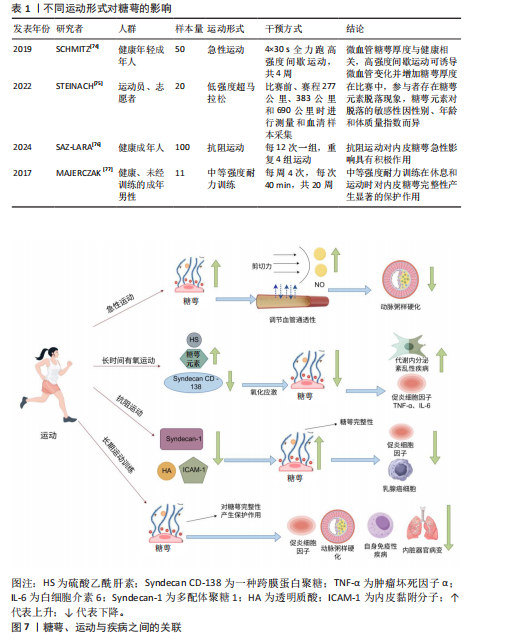
[74] SCHMITZ B, NIEHUES H, LENDERS M, et al. Effects of high-intensity interval training on microvascular glycocalyx and associated microRNAs. American journal of physiology. Am J Physiol Heart Circ Physiol. 2019;316(6):H1538-H1551.
[75] STEINACH M, BIERE K, COKER RH, et al. Influences on glycocalyx shedding during the Yukon Arctic Ultra: the longest and the coldest ultramarathon. J Appl Physiol. 2022;133(5):1119-1135.
[76] SAZ-LARA A, CAVERO-REDONDO I, DEL SAZ-LARA A, et al. The acute effect of exercise on the endothelial glycocalyx in healthy adults: A systematic review and meta-analysis. Eur J Clin Invest. 2024; 54(9):e14240.
[77] MAJERCZAK J, GRANDYS M, DUDA K, et al. Moderate-intensity endurance training improves endothelial glycocalyx layer integrity in healthy young men. Exp Physiol. 2017;102(1):70-85.
[78] DOGNÉ S, RATH G, JOURET F, et al. Hyaluronidase 1 Deficiency Preserves Endothelial Function and Glycocalyx Integrity in Early Streptozotocin-Induced Diabetes. Diabetes. 2016;65(9):2742-2753.
[79] AABASSI Z, ARMALY Z, HEYMAN SN. Glycocalyx Degradation in Ischemia-Reperfusion Injury. Am J Pathol. 2020; 190(4):752-767.
[80] ARUNKUMAR N, VU DC, KHAN S. Diagnosis of mucopolysaccharidoses and mucolipidosis by assaying multiplex enzymes and glycosaminoglycans. Diagnostics. 2021; 11(8):1347.
[81] SAPP RM, EVANS WS, EAGAN LE, et al. The effects of moderate and high-intensity exercise on circulating markers of endothelial integrity and activation in young, healthy men. J Appl Physiol (1985). 2019;127(5):1245-1256.
|