[1] MILLAR NL, MEAKINS A, STRUYF F, et al. Frozen shoulder. Nat Rev Dis Primers. 2022;8(1):59.
[2] GREEN HD, JONES A, EVANS JP, et al. A genome-wide association study identifies 5 loci associated with frozen shoulder and implicates diabetes as a causal risk factor. PLoS Genet. 2021;17(6):e1009577.
[3] ZHOU Y, YIN X, WANG C, et al. Gene association analysis to determine the causal relationship between immune-mediated inflammatory diseases and frozen shoulder. Medicine (Baltimore). 2024; 103(19):e38055.
[4] DE LA SERNA D, NAVARRO-LEDESMA S, ALAYÓN F, et al. A Comprehensive View of Frozen Shoulder: A Mystery Syndrome. Front Med (Lausanne). 2021;8:663703.
[5] CHALLOUMAS D, BIDDLE M, MCLEAN M, et al. Comparison of Treatments for Frozen Shoulder: A Systematic Review and Meta-analysis. JAMA Netw Open. 2020; 3(12):e2029581.
[6] AKBAR M, MCLEAN M, GARCIA-MELCHOR E, et al. Fibroblast activation and inflammation in frozen shoulder. PLoS One. 2019;14(4):e0215301.
[7] LHO YM, HA E, CHO CH, et al. Inflammatory cytokines are overexpressed in the subacromial bursa of frozen shoulder. J Shoulder Elbow Surg. 2013;22(5):666-672.
[8] LEE MJ, YOON KS, OH S, et al. Allogenic Pure Platelet-Rich Plasma Therapy for Adhesive Capsulitis: A Bed-to-Bench Study With Propensity Score Matching Using a Corticosteroid Control Group. Am J Sports Med. 2021;49(9):2309-2320.
[9] CHEN W, MENG J, QIAN H, et al. A Study of IL-1β, MMP-3, TGF-β1, and GDF5 Polymorphisms and Their Association with Primary Frozen Shoulder in a Chinese Han Population. Biomed Res Int. 2017;2017:3681645.
[10] YAN Y, ZHOU M, MENG K, et al. Salvianolic acid B attenuates inflammation and prevent pathologic fibrosis by inhibiting CD36-mediated activation of the PI3K-Akt signaling pathway in frozen shoulder. Front Pharmacol. 2023;14:1230174.
[11] YANG R, TANG Y, HOU J, et al. Fibrosis in frozen shoulder: Activation of IL-6 through PI3K-Akt signaling pathway in synovial fibroblast. Mol Immunol. 2022;150:29-38.
[12] KABBABE B, RAMKUMAR S, RICHARDSON M. Cytogenetic analysis of the pathology of frozen shoulder. Int J Shoulder Surg. 2010;4(3):75-78.
[13] SANDERSON E, GLYMOUR MM, HOLMES MV, et al. Mendelian randomization. Nat Rev Methods Primers. 2022;2:6.
[14] DAVIES NM, HOLMES MV, DAVEY SMITH G. Reading Mendelian randomisation studies: a guide, glossary, and checklist for clinicians. BMJ. 2018;362:k601.
[15] VERDUIJN M, SIEGERINK B, JAGER KJ, et al. Mendelian randomization: use of genetics to enable causal inference in observational studies. Nephrol Dial Transplant. 2010; 25(5):1394-1398.
[16] SKRIVANKOVA VW, RICHMOND RC, WOOLF BAR, et al. Strengthening the Reporting of Observational Studies in Epidemiology Using Mendelian Randomization: The STROBE-MR Statement. JAMA. 2021;326(16):1614-1621.
[17] AHOLA-OLLI AV, WÜRTZ P, HAVULINNA AS, et al. Genome-wide Association Study Identifies 27 Loci Influencing Concentrations of Circulating Cytokines and Growth Factors. Am J Hum Genet. 2017;100(1):40-50.
[18] BURGESS S, SMALL DS, THOMPSON SG. A review of instrumental variable estimators for Mendelian randomization. Stat Methods Med Res. 2017;26(5):2333-2355.
[19] SKRIVANKOVA VW, RICHMOND RC, WOOLF BAR, et al. Strengthening the reporting of observational studies in epidemiology using mendelian randomisation (STROBE-MR): explanation and elaboration. BMJ. 2021;375:n2233.
[20] YIN KJ, HUANG JX, WANG P, et al. No Genetic Causal Association Between Periodontitis and Arthritis: A Bidirectional Two-Sample Mendelian Randomization Analysis. Front Immunol. 2022;13:808832.
[21] BURGESS S, BUTTERWORTH A, THOMPSON SG. Mendelian randomization analysis with multiple genetic variants using summarized data. Genet Epidemiol. 2013;37(7):658-665.
[22] BURGESS S, THOMPSON SG. Interpreting findings from Mendelian randomization using the MR-Egger method. Eur J Epidemiol. 2017;32(5):377-389.
[23] MILNE RL, KUCHENBAECKER KB, MICHAILIDOU K, et al. Identification of ten variants associated with risk of estrogen-receptor-negative breast cancer. Nat Genet. 2017;49(12):1767-1778.
[24] BOWDEN J, DAVEY SMITH G, HAYCOCK PC, et al. Consistent Estimation in Mendelian Randomization with Some Invalid Instruments Using a Weighted Median Estimator. Genet Epidemiol. 2016; 40(4):304-314.
[25] BOWDEN J, SPILLER W, DEL GRECO MF, et al. Improving the visualization, interpretation and analysis of two-sample summary data Mendelian randomization via the Radial plot and Radial regression. Int J Epidemiol. 2018;47(6):2100.
[26] VERBANCK M, CHEN CY, NEALE B, et al. Detection of widespread horizontal pleiotropy in causal relationships inferred from Mendelian randomization between complex traits and diseases. Nat Genet. 2018;50(5):693-698.
[27] WANG Q, CODD V, RAISI-ESTABRAGH Z, et al. Shorter leukocyte telomere length is associated with adverse COVID-19 outcomes: A cohort study in UK Biobank. EBioMedicine. 2021;70:103485.
[28] LEE YS, CHO YB. CCL7 Signaling in the Tumor Microenvironment. Adv Exp Med Biol. 2020;1231:33-43.
[29] CHANG TT, CHEN C, CHEN JW. CCL7 as a novel inflammatory mediator in cardiovascular disease, diabetes mellitus, and kidney disease. Cardiovasc Diabetol. 2022;21(1):185.
[30] LI X, LIANG A, CUI Y, et al. Role of macrophage-associated chemokines in the assessment of initial axial spondyloarthritis. Clin Rheumatol. 2022;41(11):3383-3389.
[31] RUMP L, MATTEY DL, KEHOE O, et al. An initial investigation into endothelial CC chemokine expression in the human rheumatoid synovium. Cytokine. 2017;97: 133-140.
[32] HA S, CHUNG KW, LEE J, et al. Renal tubular PAR2 promotes interstitial fibrosis by increasing inflammatory responses and EMT process. Arch Pharm Res. 2022;45(3):159-173.
[33] NG MTH, BORST R, GACAFERI H, et al. A single cell atlas of frozen shoulder capsule identifies features associated with inflammatory fibrosis resolution. Nat Commun. 2024;15(1):1394.
[34] JOHNSTON CJ, WILLIAMS JP, OKUNIEFF P, et al. Radiation-induced pulmonary fibrosis: examination of chemokine and chemokine receptor families. Radiat Res. 2002;157(3):256-265.
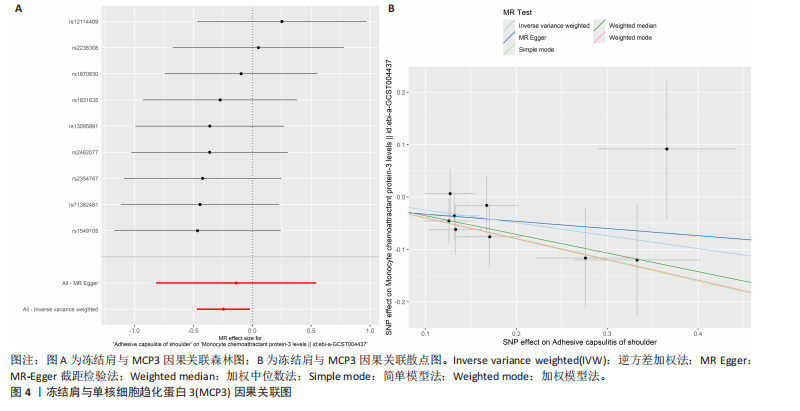
[35] ONG VH, EVANS LA, SHIWEN X, et al. Monocyte chemoattractant protein 3 as a mediator of fibrosis: Overexpression in systemic sclerosis and the type 1 tight-skin mouse. Arthritis Rheum. 2003;48(7):1979-1991.
[36] KALAFATIS D, LÖFDAHL A, NÄSMAN P, et al. Distal Lung Microenvironment Triggers Release of Mediators Recognized as Potential Systemic Biomarkers for Idiopathic Pulmonary Fibrosis. Int J Mol Sci. 2021;22(24):13421.
[37] YANG JG, WANG WM, XIA HF, et al. Lymphotoxin-α promotes tumor angiogenesis in HNSCC by modulating glycolysis in a PFKFB3-dependent manner. Int J Cancer. 2019;145(5):1358-1370.
[38] ZHAO JH, STACEY D, ERIKSSON N, et al. Genetics of circulating inflammatory proteins identifies drivers of immune-mediated disease risk and therapeutic targets. Nat Immunol. 2023;24(9):1540-1551.
[39] CALMON-HAMATY F, COMBE B, HAHNE M, et al. Lymphotoxin α revisited: general features and implications in rheumatoid arthritis. Arthritis Res Ther. 2011;13(4):232.
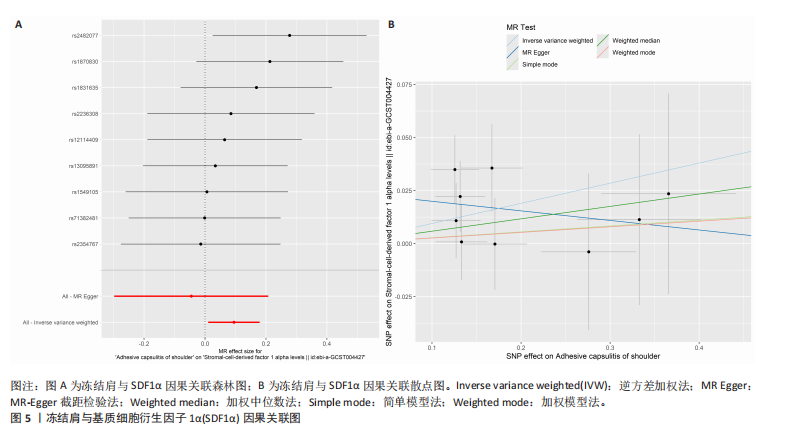
[40] KIM YS, BIGLIANI LU, FUJISAWA M, et al. Stromal cell-derived factor 1 (SDF-1, CXCL12) is increased in subacromial bursitis and downregulated by steroid and nonsteroidal anti-inflammatory agents. J Orthop Res. 2006;24(8):1756-1764.
|