Chinese Journal of Tissue Engineering Research ›› 2026, Vol. 30 ›› Issue (23): 6062-6070.doi: 10.12307/2026.357
Previous Articles Next Articles
Burn and multi-omic biomarkers: causal relationships with 41 inflammatory factors and 35 blood and urine markers
Gao Minyi1, Liu Pinghong1, Lin Haixiong2, 3
- 1Department of Burns and Wound Repair, Guangzhou Hospital of Integrated Traditional Chinese and Western Medicine, Guangzhou 510800, Guangdong Province, China; 2School of Traditional Chinese Medicine, Ningxia Medical University, Yinchuan 750004, Ningxia Hui Autonomous Region, China; 3Key Laboratory of Dryness Syndrome in Chinese Medicine, Ministry of Education, Ningxia Medical University, Yinchuan 750004, Ningxia Hui Autonomous Region, China
-
Received:2025-07-29Accepted:2025-09-11Online:2026-08-18Published:2026-01-04 -
Contact:Lin Haixiong, PhD, Associate researcher, Master’s supervisor, School of Traditional Chinese Medicine, Ningxia Medical University, Yinchuan 750004, Ningxia Hui Autonomous Region, China; Key Laboratory of Dryness Syndrome in Chinese Medicine, Ministry of Education, Ningxia Medical University, Yinchuan 750004, Ningxia Hui Autonomous Region, China -
About author:Gao Minyi, Attending physician, Department of Burns and Wound Repair, Guangzhou Hospital of Integrated Traditional Chinese and Western Medicine, Guangzhou 510800, Guangdong Province, China -
Supported by:the Scientific Research Project of Ningxia Medical University, No. 4005250001 (to LHX)

CLC Number:
Cite this article
Gao Minyi, Liu Pinghong, Lin Haixiong. Burn and multi-omic biomarkers: causal relationships with 41 inflammatory factors and 35 blood and urine markers[J]. Chinese Journal of Tissue Engineering Research, 2026, 30(23): 6062-6070.
share this article
Add to citation manager EndNote|Reference Manager|ProCite|BibTeX|RefWorks
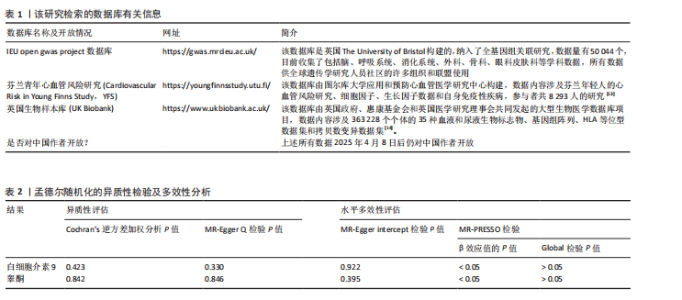
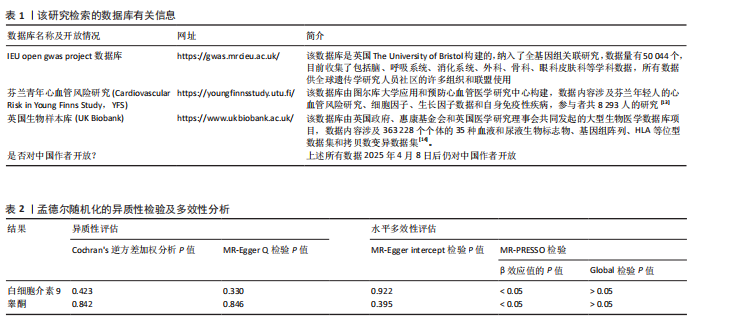
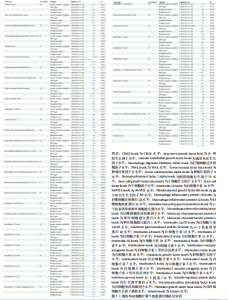
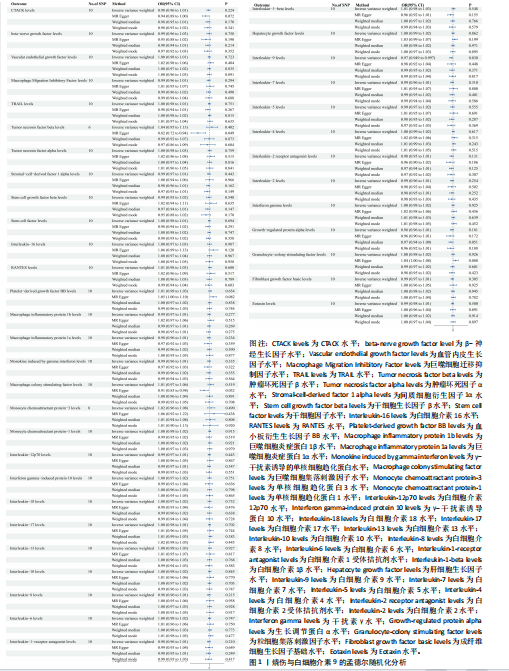
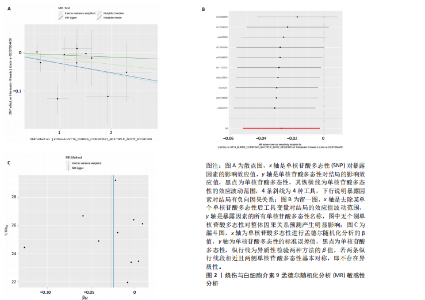
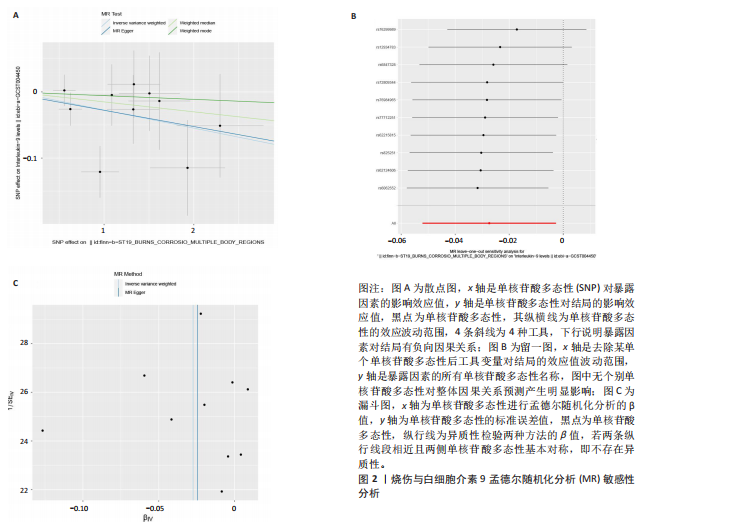
2.1 烧伤和41种炎症因子的关系 研究中主要使用逆方差加权方法将烧伤与41种炎症因子进行孟德尔随机化分析,结果中发现了1个因果关系(P < 0.05),见图1,未观察到混杂因素。结果发现烧伤降低了白细胞介素9(Interleukin-9,IL-9)水平(OR=0.97;95%CI,0.949 to 0.997;P=0.030),采用Cochran’s 逆方差加权检验、MR-Egger Q检验评估异质性(表2),未发现异质性,Cochran’s逆方差加权检验P=0.423,MR-Egger Q检验P=0.330。采用MR-Egger intercept和MR-PRESSO法评估水平多效性,未发现水平多效性MR-Egger intercept P=0.922。MR-PRESSO: Causal Estimate(即β效应值)与逆方差加权法同向,P < 0.05,且Global Test P value > 0.05。其他3种方法(加权中位数,加权模式,MR Egger)在散点图中的斜率方向与逆方差加权方法相同(图2A)。留一敏感性分析显示,剔除任意一个单核苷酸多态性对结果没有显著影响(图2B),且漏斗图基本对称(图2C),因此认为烧伤降低白细胞介素9水平具有稳健性。然而,没有稳健的证据支持烧伤会升高或者降低其余40种炎症因子的风险,见图1。"
"
"
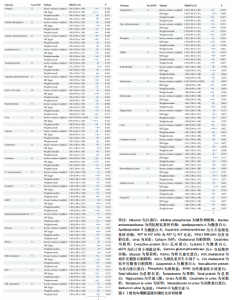
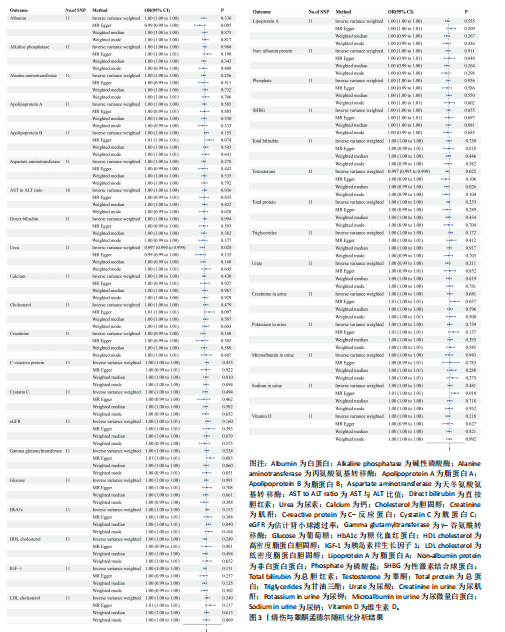
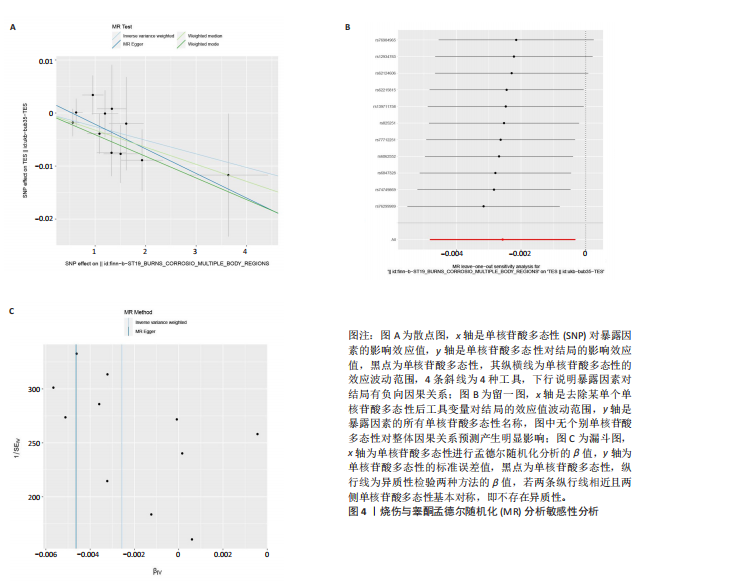
2.2 烧伤和35种血液和尿液生物标志物的关系 研究中主要使用逆方差加权方法将烧伤与35种血液和尿液生物标志物进行孟德尔随机化分析,结果中发现了2个因果关系(P < 0.05),见图3,未观察到混杂因素。结果发现烧伤降低了尿素水平 (OR=0.997;95%CI,0.994 to 0.999;P=0.028),但是加权模式(Weighted mode)法在散点图中的斜率方向与逆方差加权方法相反,结果不稳健。并发现了烧伤降低了睾酮水平(OR=0.997;95%CI,0.995 to 0.999;P=0.025),采用Cochran’s 逆方差加权检验、MR-Egger Q检验评估异质性(表2),未发现异质性,Cochran’s 逆方差加权检验P=0.842,MR-Egger Q检验P=0.846。采用MR-Egger intercept和MR-PRESSO法评估水平多效性,未发现水平多效性MR-Egger intercept P=0.395。MR-PRESSO: Causal Estimate(即β效应值)与逆方差加权法同向,P < 0.05,且Global Test P value > 0.05。其他3种方法(加权中位数,加权模式, MR Egger)在散点图中的斜率方向与逆方差加权方法相同,见图4A。留一敏感性分析显示,剔除任意一个单核苷酸多态性对结果没有显著影响(图4B),且漏斗图基本对称(图4C),因此认为烧伤降低睾酮水平具有稳健性。然而,没有稳健的证据支持烧伤会升高或者降低其余34种血液、尿液标志物的风险,见图3。"
"
| [1] SPRONK I, VAN UDEN D, VAN DAMMEN L, et al. Outcomes that matter most to burn patients: A national multicentre survey study in the Netherlands. Burns. 2024;50(1):31-40. [2] RYBARCZYK MM, SCHAFER JM, ELM CM, et al. Prevention of burn injuries in low- and middle-income countries: A systematic review. Burns. 2016;42(6):1183-1192. [3] SANTARELLI MD, JEFFERY AD, PATTERSON SG, et al. Persistent inflammation, immunosuppression, and catabolism syndrome and sepsis in pediatric burns. Burns. 2025;51(6):107571. [4] 左娜,唐琪,于猛,等. 脂肪干细胞源性外泌体中miR-196b-5p对大鼠烧伤创面愈合的影响[J].中国组织工程研究, 2026,30(1):43-49. [5] HUANG J, ZHU Z, JI D, et al. Single-Cell Transcriptome Profiling Reveals Neutrophil Heterogeneity and Functional Multiplicity in the Early Stage of Severe Burn Patients. Front Immunol. 2021;12:792122. [6] SENGUL T, KIRKLAND-KYHN H, GUL A. Postacute Overview of Burn Injuries: Pathophysiology, Management, and Future Directions. Nurs Clin North Am. 2025; 60(1):15-25. [7] QI S, MA A, LIN H, et al. The effect of inflammatory cytokines on the risk of hypertrophic scar: a mendelian randomization study. Arch Dermatol Res. 2024;316(8):551. [8] WANG X, WEI Y, NIE X, et al. Relationship between 21 Medications and Negative Emotions: A Mendelian Randomization Analysis in Asian Populations. Curr Med Chem. 2025 May 19. doi: 10.2174/0109298673359046250502104101. [9] LOU J, XIANG Z, ZHU X, et al. Gut microbiota constituents may affect hypertrophic scarring risk through interaction with specific immune cells in a two-step, two-sample Mendelian randomization study. Sci Rep. 2025;15(1):20656. [10] 曾银,张甘霖,郭军,等. 两样本孟德尔随机化分析炎性因子与前列腺癌因果关系[J]. 中华男科学杂志,2024,30(7):588-596. [11] 何秀英,薛婷,黄惠彬. 抗氧化营养素与代谢综合征关系研究:基于孟德尔随机化[J]. 福建医药杂志,2025,47(2):25-30. [12] OU H, HUANG H, YE X, et al. The Relationship between Dietary Habits and Gastroesophageal Reflux Disease: A Two-Sample Mendelian Randomization Study. Curr Med Chem. 2025;32(29):6395-6407. [13] AHOLA-OLLI AV, WURTZ P, HAVULINNA AS, et al. Genome-wide Association Study Identifies 27 Loci Influencing Concentrations of Circulating Cytokines and Growth Factors. Am J Hum Genet. 2017;100(1):40-50. [14] SINNOTT-ARMSTRONG N, TANIGAWA Y, AMAR D, et al. Genetics of 35 blood and urine biomarkers in the UK Biobank. Nat Genet. 2021;53(2):185-194. [15] 孙阿宁,朱斌,武明芬,等. 甲状腺功能减退及左甲状腺素钠治疗与幽门螺杆菌感染的因果关系:一项孟德尔随机化研究[J]. 临床药物治疗杂志,2024,22(6):23-27. [16] 贺梓宸,田锋,祝铭,等. 基于孟德尔随机化研究探讨可改变的生活方式、肥胖特征与肾小球肾炎的关系[J]. 中国中西医结合肾病杂志,2024,25(11):980-983. [17] XIE H, LIU Y, GU X, et al. Association between sugar-sweetened beverages and pure fruit juice with risk of six cardiovascular diseases: a Mendelian randomization study. Eur J Clin Nutr. 2024;78(8):670-676. [18] BIAN D, GONG H, SHI W. The Causal Effect of Iron Traits on Risk of Hypertrophic Scarring: A Two-Sample Mendelian Randomization Study. J Cosmet Dermatol. 2025;24(5):e70216. [19] OU H, LAI Z, YE X, et al. Irritable bowel syndrome and structural brain changes - A two-sample Mendelian randomization study of cortical thickness and surface area. Rev Esp Enferm Dig. 2025;117(8):426-432. [20] ZHENG W, LAI W, ZHANG Y, et al. Type 2 diabetes as a risk factor for promoting hypertrophic scar formation after wound healing: a two-sample mendelian randomization study. Arch Dermatol Res. 2025;317(1):656. [21] OU H, HUANG H, XU Y, et al. Systematic druggable genome-wide Mendelian randomization to identify therapeutic targets and dominant flora for ulcerative colitis. Pharmacol Res. 2025;213:107662. [22] 王欣雨,吴迎春,严宇璐,等. 乳制品摄入与肌肉减少症风险之间的因果关系:一项两样本孟德尔随机化研究[J]. 临床与病理杂志,2024,44(11):1496-1505. [23] 邵姝钰,周星,宋自芳. 自身免疫性肝病和1型糖尿病之间的遗传联系:一项两样本孟德尔随机化研究[J]. 华中科技大学学报(医学版),2025,54(1):22-29. [24] 余德华,陈竞纬. 认知能力与慢性心力衰竭之间的因果关系:一项两样本双向孟德尔随机化分析[J]. 中华养生保健,2024, 42(19):8-12. [25] BURGESS S, BUTTERWORTH A, THOMPSON SG. Mendelian randomization analysis with multiple genetic variants using summarized data. Genet Epidemiol. 2013;37(7):658-665. [26] VERBANCK M, CHEN C, NEALE B, et al. Detection of widespread horizontal pleiotropy in causal relationships inferred from Mendelian randomization between complex traits and diseases. Nat Genet. 2018;50(5):693-698. [27] 王庆哲. 多不饱和脂肪酸与泌尿系结石的关联:孟德尔随机化研究[J]. 实用药物与临床,2025,28(3):183-187. [28] BOWDEN J, DAVEY SMITH G, BURGESS S. Mendelian randomization with invalid instruments: effect estimation and bias detection through Egger regression. Int J Epidemiol. 2015;44(2):512-525. [29] 王亮,郭翔云,秦金然,等. 两样本孟德尔随机化研究炎症因子与骨质疏松症的因果关联[J]. 中国骨质疏松杂志,2025, 31(1):62-69. [30] 魏熙翔,杨晖. 从基因层面揭示户外活动与近视的因果关系:基于孟德尔随机化原理[J].眼科学报,2024,39(5):246-258. [31] KOH B, ABDUL QAYUM A, SRIVASTAVA R, et al. A conserved enhancer regulates Il9 expression in multiple lineages. Nat Commun. 2018;9(1):4803. [32] XIONG T, ATTAR M, GNIRCK A, et al. Interleukin-9 protects from early podocyte injury and progressive glomerulosclerosis in Adriamycin-induced nephropathy. Kidney Int. 2020;98(3):615-629. [33] ZHUANG R, CHEN J, CHENG HS, et al. Perivascular Fibrosis Is Mediated by a KLF10-IL-9 Signaling Axis in CD4+ T Cells. Circ Res. 2022;130(11):1662-1681. [34] DENG KM, YANG XS, LUO Q, et al. Deleterious Role of Th9 Cells in Pulmonary Fibrosis. Cells. 2021;10(11):3209. [35] LIU T, YANG L, MAO H, et al. Knowledge Domain and Emerging Trends in Podocyte Injury Research From 1994 to 2021: A Bibliometric and Visualized Analysis. Front Pharmacol. 2021;12:772386. [36] YANG Q, CAO Y, WANG L, et al. Mechanical force receptor Piezo1 regulates T(H)9 cell differentiation. Cell Rep. 2025;44(1):115136. [37] DAI N, CHANG H, WANG Y, et al. Restoration of skin pigmentation after deep partial or full-thickness burn injury. Adv Drug Deliv Rev. 2018;123:155-164. [38] YIN H, CHAI J, YU Y, et al. Regulation of signaling pathways downstream of IGF-I/insulin by androgen in skeletal muscle of glucocorticoid-treated rats. J Trauma. 2009;66(4):1083-1090. [39] 唐远洋,罗高兴,贺伟峰. 严重烧伤感染后细胞因子风暴发生发展机制浅析[J]. 四川大学学报(医学版),2021,52(1):16-21. [40] KUMAR GG, KILARI EK, NELLI G, et al. Oral administration of Turnera diffusa willd. ex Schult. extract ameliorates steroidogenesis and spermatogenesis impairment in the testes of rats with type-2 diabetes mellitus. J Ethnopharmacol. 2023;314:116638. [41] 彭曦. 重症烧伤患者的代谢分期及营养治疗策略[J]. 中华烧伤与创面修复杂志, 2021,37(9):805-810. [42] ZIAEIPOUR S, PIRYAEI A, ALIAGHAEI A, et al. Chronic scrotal hyperthermia induces azoospermia and severe damage to testicular tissue in mice. Acta Histochem. 2021;123(4):151712. [43] WHITE JP, GAO S, PUPPA MJ, et al. Testosterone regulation of Akt/mTORC1/FoxO3a signaling in skeletal muscle. Mol Cell Endocrinol. 2013;365(2):174-186. [44] KELLY DM, AKHTAR S, SELLERS DJ, et al. Testosterone differentially regulates targets of lipid and glucose metabolism in liver, muscle and adipose tissues of the testicular feminised mouse. Endocrine. 2016;54(2):504-515. [45] 李雨珏,余希杰. 骨骼和睾丸的信号交流及其临床意义[J]. 中华内分泌代谢杂志,2018,34(8):712-716. [46] 蔺雅琦,王瑞琦,娄艳茹,等. 维生素D对女性卵巢激素及生育调节的研究进展[J]. 生殖医学杂志,2024,33(7):983-989. [47] BOGGI AC, DO AMARAL JB, BACCHI ALL, et al. Evaluation of the Impact of Exposure To Heat and to By-Products of Combustion on the Health of Firefighters. Ann Burns Fire Disasters. 2023;36(2):100-110. [48] KAHLKE V, DOHM C, MEES T, et al. Early interleukin-10 treatment improves survival and enhances immune function only in males after hemorrhage and subsequent sepsis. Shock. 2002;18(1):24-28. [49] 文娟. 雌二醇与二氢睾酮对血管内皮细胞增殖的影响和机制研究[D]. 长沙:中南大学,2013. [50] SHI H, CHEER K, SIMANAINEN U, et al. The contradictory role of androgens in cutaneous and major burn wound healing. Burns Trauma. 2021;9:tkaa046. |
| [1] | Pan Hongfei, Zhuang Zhenbing, Xu Baiyun, Yang Zhangyang, Lin Kairui, Zhan Bingqing, Lan Jinghan, Gao Heng, Zhang Nanbo, Lin Jiayu. Inhibitory effects of different concentrations of auranofin on M1 macrophage function and its therapeutic potential in diabetic wound healing [J]. Chinese Journal of Tissue Engineering Research, 2026, 30(6): 1390-1397. |
| [2] | Lai Jiaming, , Song Yuling, Chen Zixi, Wei Jinghuan, Cai Hao, , Li Guoquan, . Screening of diagnostic markers for endothelial cell Senescence in mice with radiation-induced heart disease and analysis of immune infiltration [J]. Chinese Journal of Tissue Engineering Research, 2026, 30(6): 1450-1463. |
| [3] | Guo Ying, Tian Feng, Wang Chunfang. Potential drug targets for the treatment of rheumatoid arthritis: large sample analysis from European databases [J]. Chinese Journal of Tissue Engineering Research, 2026, 30(6): 1549-1557. |
| [4] | Wu Zhilin, , He Qin, Wang Pingxi, Shi Xian, Yuan Song, Zhang Jun, Wang Hao . DYRK2: a novel therapeutic target for rheumatoid arthritis combined with osteoporosis based on East Asian and European populations [J]. Chinese Journal of Tissue Engineering Research, 2026, 30(6): 1569-1579. |
| [5] | Liu Hongtao, Wu Xin, Jiang Xinyu, Sha Fei, An Qi, Li Gaobiao. Causal relationship between age-related macular degeneration and deep vein thrombosis: analysis based on genome-wide association study data [J]. Chinese Journal of Tissue Engineering Research, 2026, 30(6): 1602-1608. |
| [6] | Gao Zengjie, , Pu Xiang, Li Lailai, Chai Yihui, Huang Hua, Qin Yu. Increased risk of osteoporotic pathological fractures associated with sterol esters: evidence from IEU-GWAS and FinnGen databases [J]. Chinese Journal of Tissue Engineering Research, 2026, 30(5): 1302-1310. |
| [7] | Liu Fengzhi, Dong Yuna, Tian Wenyi, Wang Chunlei, Liang Xiaodong, Bao Lin. Gene-predicted associations between 731 immune cell phenotypes and rheumatoid arthritis [J]. Chinese Journal of Tissue Engineering Research, 2026, 30(5): 1311-1319. |
| [8] | Zhang Cuicui, Chen Huanyu, Yu Qiao, Huang Yuxuan, Yao Gengzhen, Zou Xu. Relationship between plasma proteins and pulmonary arterial hypertension and potential therapeutic targets [J]. Chinese Journal of Tissue Engineering Research, 2026, 30(5): 1331-1340. |
| [9] | Zeng Hao, Sun Pengcheng, Chai Yuan, Huang Yourong, Zhang Chi, Zhang Xiaoyun. Association between thyroid function and osteoporosis: genome-wide data analysis of European populations [J]. Chinese Journal of Tissue Engineering Research, 2026, 30(4): 1019-1027. |
| [10] | Rong Xiangbin, , Zheng Haibo, Mo Xueshen, Hou Kun, Zeng Ping, . Plasma metabolites, immune cells, and hip osteoarthritis: causal inference based on GWAS data from European populations [J]. Chinese Journal of Tissue Engineering Research, 2026, 30(4): 1028-1035. |
| [11] | He Qiwang, , , Chen Bo, Liang Fuchao, Kang Zewei, Zhou Yuan, Ji Anxu, Tang Xialin, . Relationship between Alzheimer’s disease and sarcopenia and body mass index: analysis of GWAS datasets for European populations [J]. Chinese Journal of Tissue Engineering Research, 2026, 30(4): 1036-1046. |
| [12] | Ding Yu, Chen Jingwen, Chen Xiuyan, Shi Huimin, Yang Yudie, Zhou Meiqi, Cui Shuai, . Circulating inflammatory proteins and myocardial hypertrophy: large sample analysis of European populations from GWAS Catalog and FinnGen databases [J]. Chinese Journal of Tissue Engineering Research, 2026, 30(4): 1047-1057. |
| [13] | Xu Jiamu, Yang Cheng, Li Weimin, Wang Chunqing. Role and pathogenesis of pyroptosis and inflammatory factors in osteoporosis [J]. Chinese Journal of Tissue Engineering Research, 2026, 30(3): 691-700. |
| [14] | Zhao Feifan, Cao Yujing. An artificial neural network model of ankylosing spondylitis and psoriasis shared genes and machine learning-based mining and validation [J]. Chinese Journal of Tissue Engineering Research, 2026, 30(3): 770-784. |
| [15] | Liu Chu, Qiu Boyuan, Tong Siwen, He Linyuwei, Chen Haobo, Ou Zhixue. A genetic perspective reveals the relationship between blood metabolites and osteonecrosis: an analysis of information from the FinnGen database in Finland [J]. Chinese Journal of Tissue Engineering Research, 2026, 30(3): 785-794. |
| Viewed | ||||||
|
Full text |
|
|||||
|
Abstract |
|
|||||