Chinese Journal of Tissue Engineering Research ›› 2026, Vol. 30 ›› Issue (29): 7739-7748.doi: 10.12307/2026.272
Previous Articles Next Articles
Osteoarthritis characteristic genes and prediction of targeted food-medicine homology traditional Chinese medicine: bioinformatics analysis and kinetic simulation
Li Zhengpeng1, Shao Weigang1, 2, Zeng Hao1, Xiang Kelin1, Zhang Botao1, Zou Shunyi1, Chen Sheng1, Qi Wen1, 2
- 1Guangxi University of Chinese Medicine, Nanning 530000, Guangxi Zhuang Autonomous Region, China; 2Ruikang Hospital Affiliated to Guangxi University of Chinese Medicine, Nanning 530011, Guangxi Zhuang Autonomous Region, China
-
Received:2025-11-11Revised:2025-11-28Online:2026-10-18Published:2026-03-07 -
Contact:Qi Wen, PhD, Guangxi University of Chinese Medicine, Nanning 530000, Guangxi Zhuang Autonomous Region, China; Ruikang Hospital Affiliated to Guangxi University of Chinese Medicine, Nanning 530011, Guangxi Zhuang Autonomous Region, China -
About author:Li Zhengpeng, MS candidate, Guangxi University of Chinese Medicine, Nanning 530000, Guangxi Zhuang Autonomous Region, China -
Supported by:Self-Funded Project of Guangxi Zhuang Autonomous Region Administration of Traditional Chinese Medicine, No. GXZYA20230146 (to QW); Guangxi Traditional Chinese Medicine Appropriate Technology Development and Promotion Project, No. GZSY2024043 (to QW); Scientific Research Basic Ability Enhancement Project of Guangxi Zhuang Autonomous Region Young and Middle-aged Teachers, No. 2024KY0308 (to SWG); Self-Funded Project of Guangxi Zhuang Autonomous Region Administration of Traditional Chinese Medicine, No. GXZYA20240112 (to SWG)

CLC Number:
Cite this article
Li Zhengpeng, Shao Weigang, Zeng Hao, Xiang Kelin, Zhang Botao, Zou Shunyi, Chen Sheng, Qi Wen. Osteoarthritis characteristic genes and prediction of targeted food-medicine homology traditional Chinese medicine: bioinformatics analysis and kinetic simulation[J]. Chinese Journal of Tissue Engineering Research, 2026, 30(29): 7739-7748.
share this article
Add to citation manager EndNote|Reference Manager|ProCite|BibTeX|RefWorks
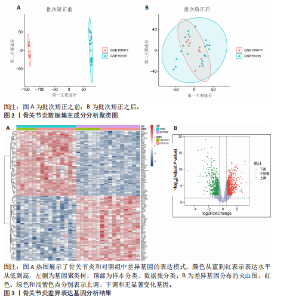
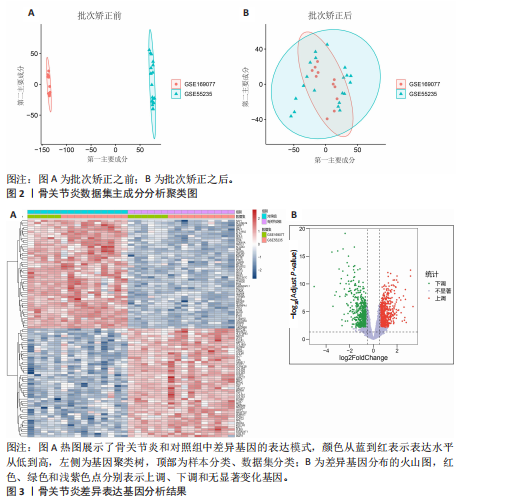
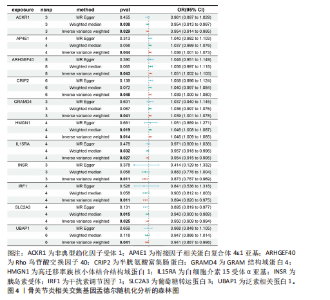
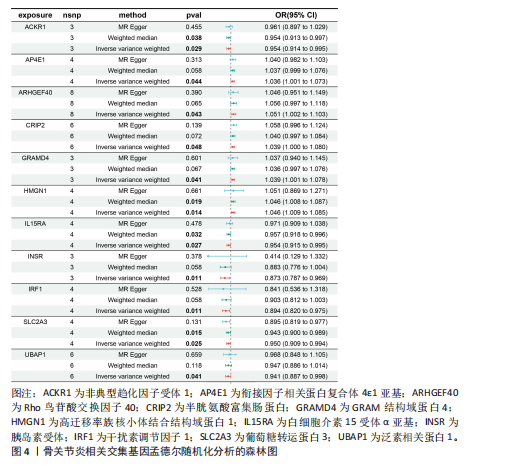
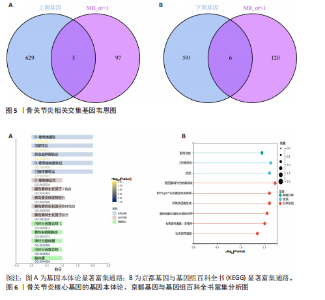
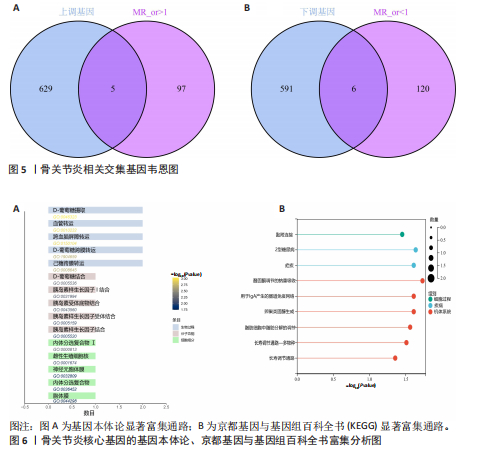
2.1 骨关节炎差异基因结果筛选 通过对GSE169077和GSE55235数据集进行批次矫正并进行主成分分析,矫正后的批次效应基本消除,见图2。将以上处理好的2个数据集进行差异表达分析,共获得1 231个差异基因,其中上调差异基因为634个,下调差异基因为597个。可视化热图及火山图见图3。 2.2 孟德尔随机化分析骨关节炎相关基因 孟德尔随机化分析共筛选出与骨关节炎显著相关的基因228个(P < 0.05),将其与差异表达基因结果取交集后获得11个特征基因(图4)。其中,下调基因(OR < 1)6个,包括葡萄糖转运蛋白3(solute carrier family 2 member 3,SLC2A3)、泛素相关蛋白1(ubiquitin associated protein 1,UBAP1)、白细胞介素15受体α亚基(interleukin 15 receptor alpha subunit,IL15RA)、非典型趋化因子受体1(atypical chemokine receptor 1,ACKR1)、胰岛素受体(insulin receptor,INSR)及干扰素调节因子1(interferon regulatory factor 1,IRF1);上调基因(OR > 1)5个,包括Rho鸟苷酸交换因子40(Rac/Cdc42 guanine nucleotide exchange factor 40,ARHGEF40)、高迁移率族核小体结合结构域蛋白1(high mobility group nucleosome binding domain protein 1,HMGN1)、GRAM 结构域蛋白4(GRAM domain containing protein 4,GRAMD4)、半胱氨酸富集肠蛋白(cysteine rich protein 2,CRIP2)及衔接因子相关蛋白复合体4ε1亚基(adaptor related protein complex 4 subunit epsilon 1,AP4E1),见图5。进一步对上述11个特征基因进行多效性及异质性检验,结果均未发现多效性或异质性(P > 0.05),表明此次分析所得结果具有较高的可靠性,并提示上述基因与骨关节炎存在潜在的因果关系,见表1。 2.3 基因本体论、京都基因与基因组百科全书富集分析结果 通过对骨关节炎核心基因的功能富集分析,基因本体论分析共鉴定出181个显著富集的生物学条目,其中生物过程139条,细胞组分17条,分子功能24条;主要涉及代谢调控、细胞信号传导及炎症反应等过程。结果显示,在生物过程类别中,显著富集的条目包括D-葡萄糖摄取、血管转运和跨血脑屏障转运等,这些过程可能在研究的生物学机制中起到重要作用。在分子功能类别中主要涉及D-葡萄糖结合和胰岛素样生长因子;细胞成分部"
"
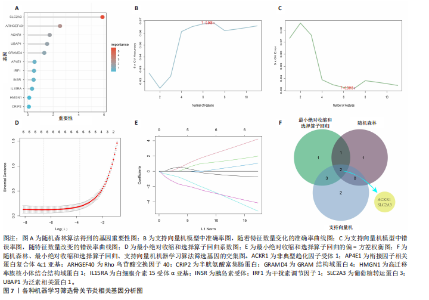
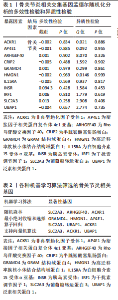
分则主要涉及内体分选复合物和神经元胞体膜等。京都基因与基因组百科全书富集分析结果表明这些基因参与2型糖尿病、醛固酮调节的钠重吸收、用于 IgA 产生的肠道免疫网络、卵巢类固醇生成、黏附连接等重要通路,提示其在骨关节炎生理病理过程中起关键作用,见图6。 2.4 机器学习筛选骨关节炎相关基因 此次研究使用随机森林模型、最小绝对收缩和选择算子回归和支持向量机模型3种机器学习算法进一步筛选骨关节炎相关性更为显著的基因。随机森林模型选取重要性较高的前3个基因,最小绝对收缩和选择算子回归获得6个基因,支持向量机模型获得3个基因,通过三者获取基因取交集则获得2个最为显著的生物标志物(SLC2A3、ACKR1),详见表2,图7。 2.5 骨关节炎相关基因验证 为验证3种机器学习算法所获得骨关节炎相关2个特征基因的准确性和有效性,进行外部数据集验证,并绘制箱式图。同时,构建Nomogram模型,并绘制抽检特征曲线和校正曲线。箱式图结果显示,与正常组相比,SLC2A3和ACKR1在骨关节炎组呈显著低表达 (P < 0.05),见图8A,B。通过构建诊断列线图结果得出特征基因SLC2A3和ACKR1可能是骨关节炎潜在的保护因子,见图8C。校准曲线结果显示,校正曲线与理想曲线拟合尚可,提示该模型具有良好的预测准确度,见图8D。另外,通过受试者工作特征"
"

"
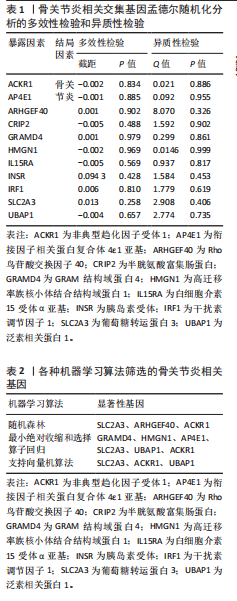
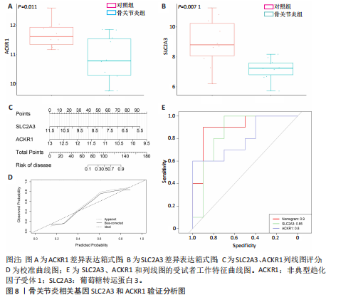
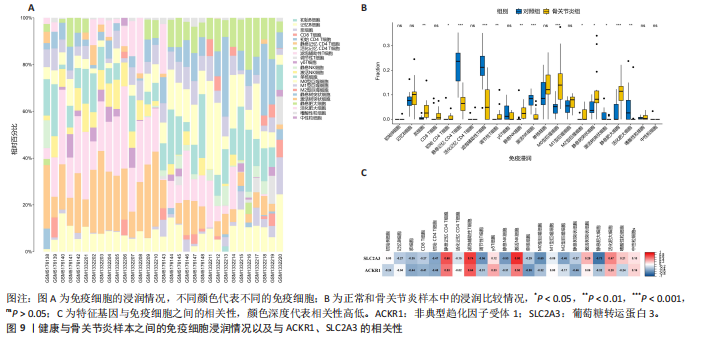
曲线评估列线图模型的区分度以及单个基因是否可用于区分骨关节炎与对照样本,结果显示Nomogram模型(曲线下面积=0.9)、SLC2A3(曲线下面积=0.85)、ACKR1(曲线下面积=0.8)的曲线下面积均大于0.8,见图8E,表明SLC2A3和ACKR1在骨关节炎诊断中具有较高的准确性及特异性,可作为其潜在的生物标志物。 2.6 骨关节炎相关基因免疫浸润分析 此次研究采用CIBERSORT算法进行免疫浸润分析,以探讨骨关节炎样本与免疫细胞浸润的相关性。图9A展示了各样本中22种免疫细胞的浸润比例情况,揭示了样本间免疫微环境的显著异质性。如图9B所示,骨关节炎与13种免疫细胞在两组间存在差异,其中,静息记忆CD4 T细胞、滤泡辅助性T细胞、激活自然杀伤细胞、M0巨噬细胞和静息肥大细胞表现高度显著差异性。具体而言,骨关节炎组中静息CD4 T细胞、活化自然杀伤细胞及滤泡辅助性T细胞呈明显低表达趋势,而M0巨噬细胞与静息肥大细胞的表达水平则明显升高。进一步的相关性分析显示,骨关节炎核心基因SLC2A3与ACKR1的表达与免疫细胞浸润水平密切相关,图9C。"
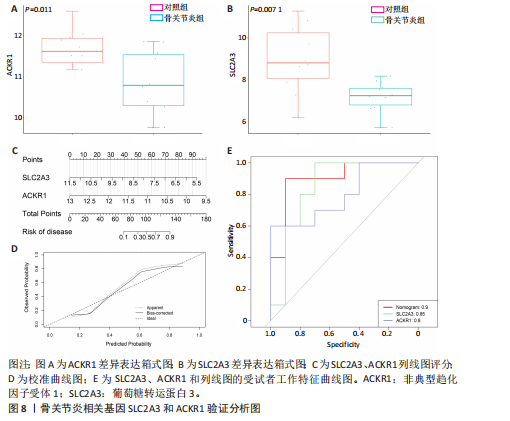
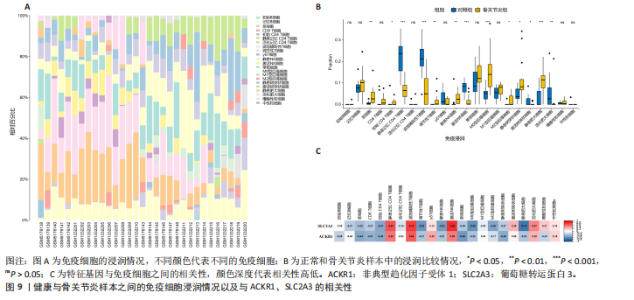
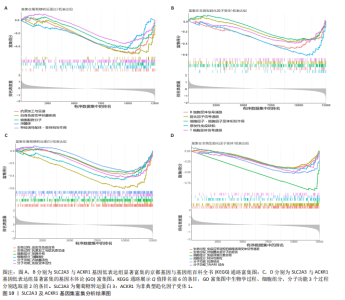
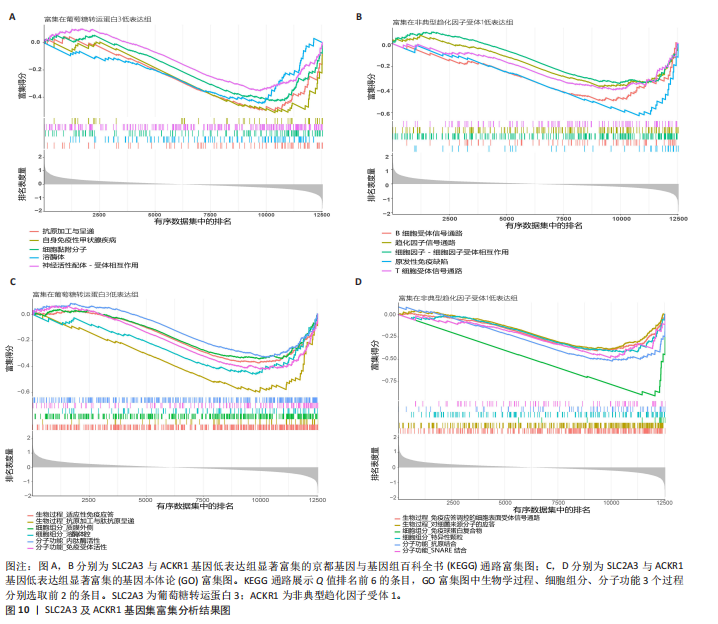
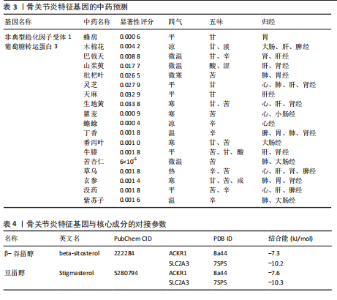
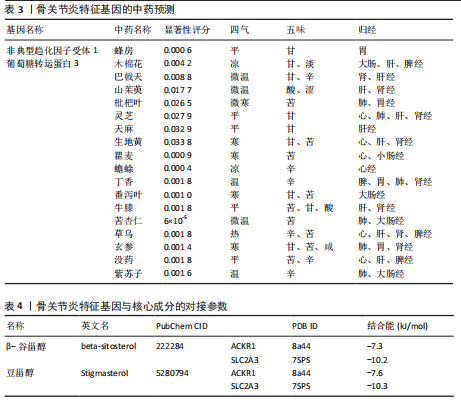
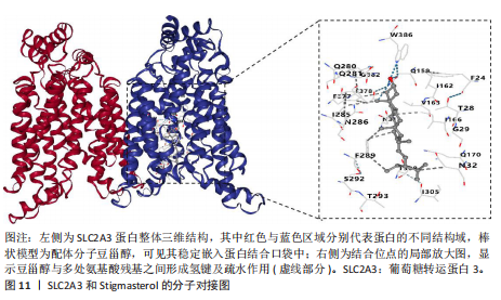
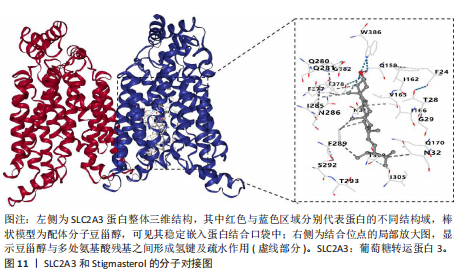
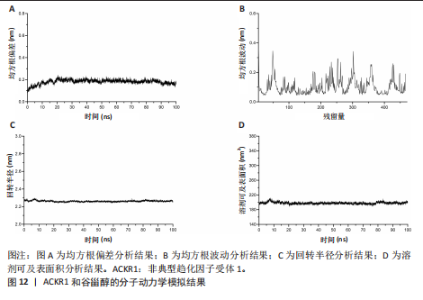
SLC2A3和ACKR1基因的表达水平均与静息CD4 T细胞、滤泡辅助性T细胞、激活自然杀伤细胞的浸润呈现显著的正相关关系,而与M0巨噬细胞和静息肥大细胞的浸润则表现出显著的负相关关系。 2.7 单基因的基因集富集分析结果 此次研究显示SLC2A3与ACKR1基因在骨关节炎样本中呈现显著低表达的状态,因此对其低表达组进一步开展了基因集富集分析。结果显示,SLC2A3低表达组显著富集的京都基因与基因组百科全书信号通路主要包括抗原加工与呈递通路、自身免疫性甲状腺疾病通路、细胞黏附分子通路、溶酶体通路以及神经活性配体-受体相互作用通路;涉及的生物学过程则包含适应性免疫应答和抗原肽加工与呈递;显著富集的细胞组分包括质膜外侧及溶酶体腔;而分子功能则涉及免疫受体活性、免疫受体活性(图10A,C)。 ACKR1低表达组则主要富集于京都基因与基因组百科全书通路中的B细胞受体信号通路、趋化因子信号通路、细胞因子-细胞因子受体相互作用通路、原发性免疫缺陷通路及T细胞受体信号通路;生物学过程富集集中于免疫应答相关的细胞表面受体信号调控和细菌来源分子应答反应;细胞组分涉及免疫球蛋白复合物及特异性颗粒;分子功能方面涉及抗原结合及可溶性NSF附着蛋白受体蛋白结合(图10B,D)。 2.8 中药预测 将筛选所得的SLC2A3与ACKR1基因导入Coremine Medical数据库和Herb数据库中进行以Significance < 0.05为标准的中药预测,其中SLC2A3最终筛选出苦杏仁、紫苏子、玄参等17味中药,ACKR1则得出蜂房1味中药,详见表3。通过查阅《中华人民共和国药典》《中华本草》及文献对上述中药的四气五味、归经进行分析,其中四气五味以温、苦、甘为主,归经则以肝、肾经居多。随后,参考国家药食同源目录可选出山茱萸、紫苏子、灵芝、天麻、苦杏仁、丁香、生地黄共7味中药。 2.9 分子对接 筛选所得出7味药食同源中药导入HERB数据库中查找每味中药化学成分初步得出249个化合物,经拓扑参数分析得出β-谷甾醇与豆甾醇两种成分进行分子对接。最后,通过CB-DOCK2网站将上述两种成分分别与ACKR1、SLC2A3进行分子对接并对结合能最低的结果进行可视化展示,详见表4和图11。 2.10 分子动力学模拟 选择结合能最低的SLC2A3和Stigmasterol复合物进行分子动力学模拟。均方根偏差衡量蛋白质和配体构象稳定性的良好指标。由图12A所示,ACKR1和Stigmasterol的复合物体系,前期出现较小波动,在20 ns趋于平衡,整体来看均方根偏差最终在0.2 mm上下波动,说明SLC2A3和Stigmasterol相结合时表现出较高稳定性。均方根波动可以表示蛋白质中氨基酸残基的柔性大小。由图12B所示,此次模拟ACKR1和Stigmasterol的均方根波动值相对较低,均在0.4 mm以下,表明其灵活性较低,稳定性较高。回转半径可以用于蛋白质整体紧凑程度的指标。由图12C所示,此次模拟SLC2A3和Stigmasterol的复合体在模拟时间1-100 ns内回转半径保持稳定,表明复合物内结构和动态的平衡。溶剂可及表面积波动评估蛋白质表面积的指标。由图12D所示,此次模拟SLC2A3和Stigmasterol的复合体结果显示,受体与配体结合后,复合物的溶剂可及表面积无明显变化,进一步表面蛋白小分子可实现较为稳定结合。以上结果表明,SLC2A3和Stigmasterol的结合具有稳定构象和活性。"
"
"
"
"

| [1] KOLASINSKI SL, NEOGI T, HOCHBERG MC, et al. 2019 American College of Rheumatology/Arthritis Foundation Guideline for the Management of Osteoarthritis of the Hand, Hip, and Knee. Arthritis Rheumatol. 2020;72(2): 220-233. [2] MOTTA F, BARONE E, SICA A, et al. Inflammaging and Osteoarthritis. Clin Rev Allergy Immunol. 2023;64(2):222-238. [3] YUNUS MHM, NORDIN A, KAMAL H. Pathophysiological Perspective of Osteoarthritis. Medicina (Kaunas). 2020;56(11):614. [4] WEN C, XIAO G. Advances in osteoarthritis research in 2021 and beyond. J Orthop Translat. 2022;32:A1-A2. [5] LONG H, LIU Q, YIN H, et al. Prevalence Trends of Site-Specific Osteoarthritis From 1990 to 2019: Findings From the Global Burden of Disease Study 2019. Arthritis Rheumatol. 2022; 74(7):1172-1183. [6] MINNIG MCC, GOLIGHTLY YM, NELSON AE. Epidemiology of osteoarthritis: literature update 2022-2023. Curr Opin Rheumatol. 2024;36(2):108-112. [7] 王新力. α-酮戊二酸纳米复合缓释药物的制备及其在治疗骨性关节炎中的作用研究[D]. 西安:中国人民解放军空军军医大学,2025. [8] SITTER T, FORGET P. Persistent postoperative opioid use in Europe: A systematic review. Eur J Anaesthesiol. 2021;38(5):505-511. [9] HUSSAIN SM, NEILLY DW, BALIGA S, et al. Knee osteoarthritis: a review of management options. Scott Med J. 2016;61(1):7-16. [10] ZHOU G, ZHANG X, GU Z, et al. Research progress on the treatment of knee osteoarthritis combined with osteoporosis by single-herb Chinese medicine and compound. Front Med (Lausanne). 2023;10:1254086. [11] 秦翠英, 郭祖昌, 张杰, 等. 药食同源物质在主动健康和人口老龄化科技应对方面的应用展望[J]. 中国实验方剂学杂志,2025, 31(15):258-267. [12] HU X, ZENG Z, ZHANG J, et al. Molecular dynamics simulation of the interaction of food proteins with small molecules. Food Chem. 2023;405(Pt A):134824. [13] CHEN W, YANG Q, HU L, et al. Shared diagnostic genes and potential mechanism between PCOS and recurrent implantation failure revealed by integrated transcriptomic analysis and machine learning. Front Immunol. 2023;14:1175384. [14] BOWDEN J, DEL GRECO MF, MINELLI C, et al. Improving the accuracy of two-sample summary-data Mendelian randomization: moving beyond the NOME assumption. Int J Epidemiol. 2019;48(3):728-742. [15] BOWDEN J, DAVEY SMITH G, BURGESS S. Mendelian randomization with invalid instruments: effect estimation and bias detection through Egger regression. Int J Epidemiol. 2015;44(2):512-525. [16] Global, regional, and national burden of osteoarthritis, 1990-2020 and projections to 2050: a systematic analysis for the Global Burden of Disease Study 2021. Lancet Rheumatol. 2023;5(9):e508-e522. [17] 郭素蓉, 曹士盛, 穆星彤, 等. Compound 3k治疗骨关节炎:调控氧化应激通路改善软骨细胞糖酵解的作用机制[J]. 中国组织工程研究,2025,29(2):363-370. [18] QIAO S, ZHAO R, HE S, et al. Quercitrin attenuates the progression of osteoarthritis via inhibiting NF-kappaB signaling pathways and enhance glucose transport capacity. Exp Cell Res. 2023;433(2):113854. [19] TROMPETER N, GARDINIER JD, DEBARROS V, et al. Insulin-like growth factor-1 regulates the mechanosensitivity of chondrocytes by modulating TRPV4. Cell Calcium. 2021;99:102467. [20] 冯天阳, 邓乐, 徐构, 等. ESCRT机制介导的调节性细胞死亡引起的质膜损伤修复及其机制(英文)[J]. 生物化学与生物物理进展, 2025,52(5):1099-1112. [21] CHEN R, YING C, ZOU Y, et al. Sarsasapogenin inhibits YAP1-dependent chondrocyte ferroptosis to alleviate osteoarthritis. Biomed Pharmacother. 2023;168:115772. [22] 李豪, 陶红成, 曾平, 等. 丝裂原活化蛋白激酶信号通路调控骨关节炎的发生发展:指导中药靶点治疗[J]. 中国组织工程研究, 2026,30(6):1476-1485. [23] DEL SORDO L, BLACKLER GB, PHILPOTT HT, et al. Impaired Efferocytosis by Synovial Macrophages in Patients With Knee Osteoarthritis. Arthritis Rheumatol. 2023;75(5):685-696. [24] TANG Y, HU X, LU X. Captopril, an angiotensin-converting enzyme inhibitor, possesses chondroprotective efficacy in a rat model of osteoarthritis through suppression local renin-angiotensin system. Int J Clin Exp Med. 2015;8(8):12584-12592. [25] WEN J, LYU P, STOLZER I, et al. Epithelial HIF2alpha expression induces intestinal barrier dysfunction and exacerbation of arthritis. Ann Rheum Dis. 2022;81(8):1119-1130. [26] HAO X, ZHANG J, SHANG X, et al. Exercise modifies the disease-relevant gut microbial shifts in post-traumatic osteoarthritis rats. Bone Joint Res. 2022;11(4):214-225. [27] NAOT D, WATSON M, CHOI AJ, et al. The effect of age on the microarchitecture and profile of gene expression in femoral head and neck bone from patients with osteoarthritis. Bone Rep. 2020;13:100287. [28] RUFINO AT, ROSA SC, JUDAS F, et al. Expression and function of K(ATP) channels in normal and osteoarthritic human chondrocytes: possible role in glucose sensing. J Cell Biochem. 2013; 114(8):1879-1889. [29] XIANG J, CHEN H, LIN Z, et al. Identification and experimental validation of ferroptosis-related gene SLC2A3 is involved in rheumatoid arthritis. Eur J Pharmacol. 2023;943:175568. [30] YAO X, LI W, FANG D, et al. Emerging Roles of Energy Metabolism in Ferroptosis Regulation of Tumor Cells. Adv Sci (Weinh). 2021;8(22):e2100997. [31] JIANG D, GUO J, LIU Y, et al. Glycolysis: an emerging regulator of osteoarthritis. Front Immunol. 2023;14:1327852. [32] 李宏元, 杨柳, 靳宪辉. 缺氧诱导因子与骨稳态失衡类疾病的相关性[J]. 中国组织工程研究,2022,26(33):5393-5399. [33] 苏永昆, 孙红, 杨华, 等. 缺氧诱导因子在骨关节炎中的研究进展[J]. 中国矫形外科杂志,2025,33(21):1947-1951. [34] YAO X, HE Z, QIN C, et al. SLC2A3 promotes macrophage infiltration by glycolysis reprogramming in gastric cancer. Cancer Cell Int. 2020;20:503. [35] YANG P, TAN J, YUAN Z, et al. Expression profile of cytokines and chemokines in osteoarthritis patients: Proinflammatory roles for CXCL8 and CXCL11 to chondrocytes. Int Immunopharmacol. 2016;40:16-23. [36] CAMBIER S, GOUWY M, PROOST P. The chemokines CXCL8 and CXCL12: molecular and functional properties, role in disease and efforts towards pharmacological intervention. Cell Mol Immunol. 2023;20(3):217-251. [37] SAMUS M, ROT A. Atypical chemokine receptors in cancer. Cytokine. 2024;176:156504. [38] ZHU Y, DENG L, XIA J, et al. Identification of Key Glycolysis-Related Genes in Osteoarthritis and Their Correlation with Immune Infiltration Using Bioinformatics Analysis and Machine Learning. Open Access Rheumatol. 2025;17:157-171. [39] COMERFORD I, MCCOLL SR. Atypical chemokine receptors in the immune system. Nat Rev Immunol. 2024;24(10):753-769. [40] KULKARNI P, HARSULKAR A, MARTSON A, et al. Mast Cells Differentiated in Synovial Fluid and Resident in Osteophytes Exalt the Inflammatory Pathology of Osteoarthritis. Int J Mol Sci. 2022; 23(1).DOI:10.3390/ijms23010541. [41] LEI Y, GUO X, LUO Y, et al. Synovial microenvironment-influenced mast cells promote the progression of rheumatoid arthritis. Nat Commun. 2024;15(1):113. [42] MIHLAN M, WISSMANN S, GAVRILOV A, et al. Neutrophil trapping and nexocytosis, mast cell-mediated processes for inflammatory signal relay. Cell. 2024;187(19):5316-5335. [43] 李虎业, 窦增花, 孔德元, 等. 山茱萸新苷Ⅰ干预膝骨关节炎模型大鼠抑制白细胞介素6介导的炎性反应[J]. 中国组织工程研究, 2021,25(2):211-215. [44] YU H, YAO S, ZHOU C, et al. Morroniside attenuates apoptosis and pyroptosis of chondrocytes and ameliorates osteoarthritic development by inhibiting NF-kappaB signaling. J Ethnopharmacol. 2021;266:113447. [45] LIU Y, ZHOU C, TAN J, et al. Ganoderic acid A slows osteoarthritis progression by attenuating endoplasmic reticulum stress and blocking NF-Kappab pathway. Chem Biol Drug Des. 2024; 103(1):e14382. [46] 李博. 天麻素调节自噬对骨关节炎软骨细胞的保护作用和机制研究[D]. 上海:中国人民解放军海军军医大学,2023. [47] WU Z, WANG Y, YAN G, et al. Eugenol protects chondrocytes and articular cartilage by downregulating the JAK3/STAT4 signaling pathway. J Orthop Res. 2023;41(4):747-758. [48] BAKRIM S, BENKHAIRA N, BOURAIS I, et al. Health Benefits and Pharmacological Properties of Stigmasterol. Antioxidants (Basel). 2022;11(10).DOI:10.3390/antiox11101912. [49] MO Z, XU P, LI H. Stigmasterol alleviates interleukin-1beta-induced chondrocyte injury by down-regulatingsterol regulatory element binding transcription factor 2 to regulateferroptosis. Bioengineered. 2021; 12(2):9332-9340. [50] LIM JH, KIM SE, KIM H, et al. Intra-articular injection of stigmasterol-loaded nanoparticles reduce pain and inhibit the inflammation and joint destruction in osteoarthritis rat model: A pilot study. Drug Deliv Transl Res. 2024; 14(7):1969-1981. |
| [1] | Wu Zhilin, , He Qin, Wang Pingxi, Shi Xian, Yuan Song, Zhang Jun, Wang Hao . DYRK2: a novel therapeutic target for rheumatoid arthritis combined with osteoporosis based on East Asian and European populations [J]. Chinese Journal of Tissue Engineering Research, 2026, 30(6): 1569-1579. |
| [2] | Liu Hongtao, Wu Xin, Jiang Xinyu, Sha Fei, An Qi, Li Gaobiao. Causal relationship between age-related macular degeneration and deep vein thrombosis: analysis based on genome-wide association study data [J]. Chinese Journal of Tissue Engineering Research, 2026, 30(6): 1602-1608. |
| [3] | Guo Ying, Tian Feng, Wang Chunfang. Potential drug targets for the treatment of rheumatoid arthritis: large sample analysis from European databases [J]. Chinese Journal of Tissue Engineering Research, 2026, 30(6): 1549-1557. |
| [4] | Lyu Guoqing, Aizimaitijiang·Rouzi, Xiong Daohai. Irisin inhibits ferroptosis in human articular chondrocytes: roles and mechanisms [J]. Chinese Journal of Tissue Engineering Research, 2026, 30(6): 1359-1367. |
| [5] | Zhang Qian, Huang Dongfeng. Weighted gene co-expression network analysis combined with machine learning to screen and validate biomarkers for osteoarthritis [J]. Chinese Journal of Tissue Engineering Research, 2026, 30(5): 1096-1105. |
| [6] | Liu Kexin, , Hao Kaimin, Zhuang Wenyue, , Li Zhengyi. Autophagy-related gene expression in pulmonary fibrosis models: bioinformatic analysis and experimental validation [J]. Chinese Journal of Tissue Engineering Research, 2026, 30(5): 1129-1138. |
| [7] | Bu Yangyang, Ning Xinli, Zhao Chen. Intra-articular injections for the treatment of osteoarthritis of the temporomandibular joint: different drugs with multiple combined treatment options [J]. Chinese Journal of Tissue Engineering Research, 2026, 30(5): 1215-1224. |
| [8] | Gao Zengjie, , Pu Xiang, Li Lailai, Chai Yihui, Huang Hua, Qin Yu. Increased risk of osteoporotic pathological fractures associated with sterol esters: evidence from IEU-GWAS and FinnGen databases [J]. Chinese Journal of Tissue Engineering Research, 2026, 30(5): 1302-1310. |
| [9] | Liu Fengzhi, Dong Yuna, Tian Wenyi, Wang Chunlei, Liang Xiaodong, Bao Lin. Gene-predicted associations between 731 immune cell phenotypes and rheumatoid arthritis [J]. Chinese Journal of Tissue Engineering Research, 2026, 30(5): 1311-1319. |
| [10] | Zhang Cuicui, Chen Huanyu, Yu Qiao, Huang Yuxuan, Yao Gengzhen, Zou Xu. Relationship between plasma proteins and pulmonary arterial hypertension and potential therapeutic targets [J]. Chinese Journal of Tissue Engineering Research, 2026, 30(5): 1331-1340. |
| [11] | Zeng Hao, Sun Pengcheng, Chai Yuan, Huang Yourong, Zhang Chi, Zhang Xiaoyun. Association between thyroid function and osteoporosis: genome-wide data analysis of European populations [J]. Chinese Journal of Tissue Engineering Research, 2026, 30(4): 1019-1027. |
| [12] | Rong Xiangbin, , Zheng Haibo, Mo Xueshen, Hou Kun, Zeng Ping, . Plasma metabolites, immune cells, and hip osteoarthritis: causal inference based on GWAS data from European populations [J]. Chinese Journal of Tissue Engineering Research, 2026, 30(4): 1028-1035. |
| [13] | He Qiwang, , , Chen Bo, Liang Fuchao, Kang Zewei, Zhou Yuan, Ji Anxu, Tang Xialin, . Relationship between Alzheimer’s disease and sarcopenia and body mass index: analysis of GWAS datasets for European populations [J]. Chinese Journal of Tissue Engineering Research, 2026, 30(4): 1036-1046. |
| [14] | Ding Yu, Chen Jingwen, Chen Xiuyan, Shi Huimin, Yang Yudie, Zhou Meiqi, Cui Shuai, . Circulating inflammatory proteins and myocardial hypertrophy: large sample analysis of European populations from GWAS Catalog and FinnGen databases [J]. Chinese Journal of Tissue Engineering Research, 2026, 30(4): 1047-1057. |
| [15] | Zhao Feifan, Cao Yujing. An artificial neural network model of ankylosing spondylitis and psoriasis shared genes and machine learning-based mining and validation [J]. Chinese Journal of Tissue Engineering Research, 2026, 30(3): 770-784. |
| Viewed | ||||||
|
Full text |
|
|||||
|
Abstract |
|
|||||