Chinese Journal of Tissue Engineering Research ›› 2026, Vol. 30 ›› Issue (28): 7332-7339.doi: 10.12307/2026.809
Previous Articles Next Articles
Molecular mechanisms of active compounds from Tripterygium wilfordii in prevention and treatment of rheumatoid arthritis
Zhang Hongrui1, 2, Wu Ruiqi1, 2, Wang Wenchi1, 2, Peng Qinglin1, Cui Wei1
- 1Affiliated Ruikang Hospital of Guangxi University of Chinese Medicine, Nanning 530000, Guangxi Zhuang Autonomous Region, China; 2Guangxi University of Chinese Medicine, Nanning 530299, Guangxi Zhuang Autonomous Region, China
-
Received:2025-08-13Revised:2025-12-12Online:2026-10-08Published:2026-02-11 -
Contact:Cui Wei, Chief physician, Professor, Master’s supervisor, Affiliated Ruikang Hospital of Guangxi University of Chinese Medicine, Nanning 530000, Guangxi Zhuang Autonomous Region, China -
About author:Zhang Hongrui, MS candidate, Affiliated Ruikang Hospital of Guangxi University of Chinese Medicine, Nanning 530000, Guangxi Zhuang Autonomous Region, China; Guangxi University of Chinese Medicine, Nanning 530299, Guangxi Zhuang Autonomous Region, China -
Supported by:Guangxi Natural Science Foundation, No. 2023JJA140318 (to CW); Graduate Education Innovation Program of Guangxi University of Chinese Medicine, No. YCBXJ2025029 (to WRQ); Category A Project of the “Guipai Traditional Chinese Medicine Inheritance and Innovation Team” of Guangxi University of Chinese Medicine, No.2022A004 (to CW); Guangxi Young Qihuang Scholar Training Program, No. [2022]13; Promotion and Application Project of Appropriate Techniques in Traditional Chinese and Ethnic Medicine in Guangxi, No. GZSY23-13

CLC Number:
Cite this article
Zhang Hongrui, Wu Ruiqi, Wang Wenchi, Peng Qinglin, Cui Wei. Molecular mechanisms of active compounds from Tripterygium wilfordii in prevention and treatment of rheumatoid arthritis[J]. Chinese Journal of Tissue Engineering Research, 2026, 30(28): 7332-7339.
share this article
Add to citation manager EndNote|Reference Manager|ProCite|BibTeX|RefWorks
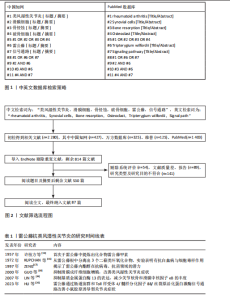
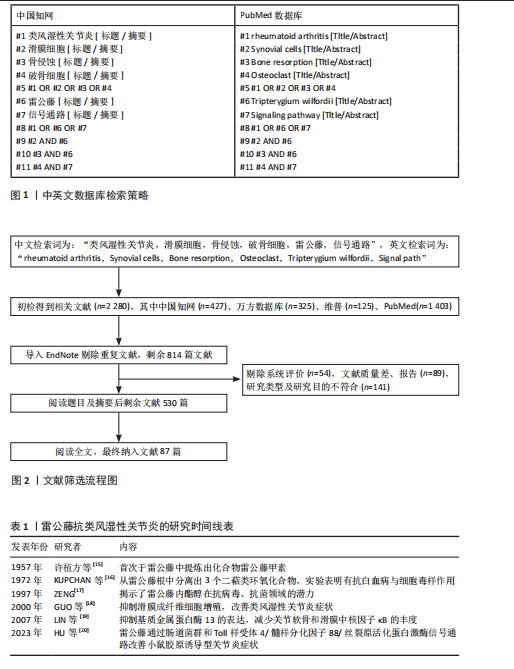
2.1 雷公藤抗类风湿性关节炎的研究时间图 自1957年许植方等[15]首次于雷公藤中提炼出化合物雷公藤甲素(Triptolide,TP)后,科学家们对雷公藤的研究不断深入,逐步解锁了雷公藤丰富的药理价值。到1972年,KUPCHAN等[16]从雷公藤根中分离出3个二萜类环氧化合物,实验表明有抗白血病与细胞毒样作用,为后续的深入研究奠定了基础。20世纪80年代起,雷公藤片、雷公藤多苷片等制剂相继上市,并在临床广泛应用。1997年,ZENG等[17]研究首次展示了雷公藤内酯醇对类风湿性关节炎外周血单核细胞、滑膜细胞体外产生免疫球蛋白的影响,揭示了其在抗病毒、抗菌领域的潜力。2000年,GUO等[18]研究证明雷公藤内酯醇通过抑制滑膜成纤维细胞增殖来改善类风湿性关节炎的疾病活动,为类风湿性关节炎的治疗提供了新的思路。随着研究的深入,雷公藤在软骨保护方面的作用也日益受到重视。2007年,LIN等[19]研究表明,雷公藤提取物能够抑制胶原诱导型关节炎小鼠基质金属蛋白酶13的表达,同时促进组织金属蛋白酶抑制因子1的表达,此外,雷公藤提取物能够降低胶原诱导型关节炎小鼠关节软骨和滑膜中与炎症相关的核因子κB的丰度,为软骨保护提供了有力的支持。2023年,HU等[20]研究表明雷公藤通过肠道菌群和Toll样受体4/髓样分化因子88/丝裂原活化蛋白激酶信号通路改善小鼠胶原诱导型关节炎症状,为雷公藤在类风湿性关节炎防治中的应用提供了更为深入的科学依据。发展时间线见表1。 2.2 雷公藤活性成分治疗类风湿性关节炎的相关研究 现代药理学研究发现,从雷公藤中分离出的活性成分主要以生物碱类[21]、二萜类[22]、三萜类化合物为主[23],它们是雷公藤治疗的物质基础,具有免疫抑制、溶血、抗炎、抗菌及抗病毒等多种特性[24-25]。此外,雷公藤还含挥发油、黄酮类和有机酸类等多种活性成分,经"
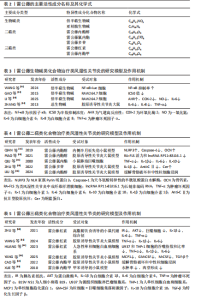
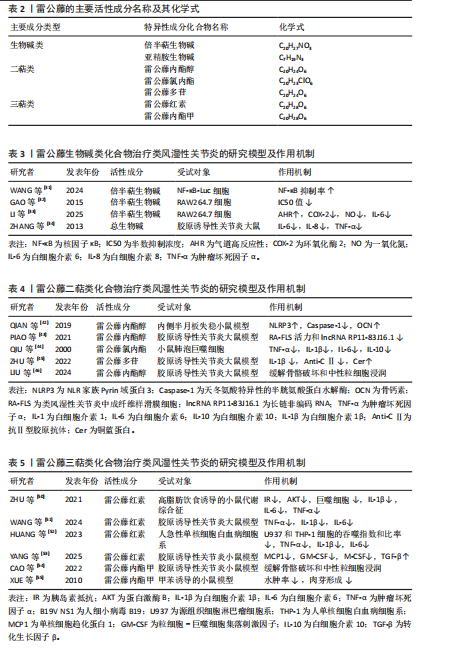
相关研究报道,这些活性成分在类风湿性关节炎中也展现出了独特的治疗潜力,但是目前相关研究相对较少,在未来的研究中挖掘相应的活性成分尤为重要[26]。最近几年的研究揭示,雷公藤中含有的一些活性成分已经成为类风湿性关节炎药物研究领域的关注焦点(表2)。 2.2.1 生物碱类 生物碱类化合物是一类天然有机化合物[27],具有强烈的生物活性。生物碱广泛存在于植物、动物和真菌中。目前,已知雷公藤生物碱中的主要活性成分为倍半萜生物碱和亚精胺生物碱[28],其中倍半萜生物碱可分为含氮倍半萜生物碱和无氮倍半萜生物碱,雷公藤红素A-H和L对脂多糖诱导的巨噬细胞产生一氧化氮有中等抑制作用,对类风湿性关节炎滑膜细胞有明显的抗增殖作用[29]。其他几种化学成分,如无氮倍半萜烯,也观察到类似的药理活性[30]。雷公藤生物碱类化合物治疗类风湿性关节炎的研究模型及作用机制,见表3[31-34]。 2.2.2 二萜类 雷公藤中二萜类化合物主要有雷公藤内酯醇、雷公藤氯内酯、雷公藤多苷等,有免疫调节、抗炎和抗肿瘤等药理活性[35]。既往研究发现,雷公藤内酯醇通过抑制线粒体自噬、NLRP3炎症小体激活和细胞焦亡,抑制细胞炎症反应[36]。二萜类化合物还可通过其他途径发挥抗类风湿性关节炎的作用[37]。有研究表明雷公藤内酯醇通过抑制磷脂酰肌醇3激酶/蛋白激酶B/活化T细胞核因子1通路抑制破骨细胞生成[38],同时雷公藤内酯醇可显著降低胶原诱导性关节炎大鼠关节和血清中核因子κB受体活化因子配体和核因子κB受体活化因子的表达,提高骨保护素水平,以及降低人成纤维样滑膜细胞和外周血单核细胞共培养系统中的核因子κB受体活化因子配体和核因子κB受体活化因子水平,提高骨保护素水平,揭示雷公藤内酯醇可能通过阻止骨侵蚀来减轻类风湿性关节炎,并通过调节核因子κB受体活化因子配体-核因子κB受体活化因子-骨保护素信号通路抑制破骨细胞形成[39]。雷公藤氯内酯通过抑制T细胞增殖、DNA合成及白细胞介素2受体表达,减少肿瘤坏死因子α、白细胞介素1、白细胞介素2、白细胞介素6、白细胞介素8、干扰素γ、一氧化氮和前列腺素E2的产生,具有显著的抗炎和免疫抑制作用,在巴豆油诱导的小鼠耳水肿实验中显示抗炎活性[40]。 邹联银等[41]研究发现雷公藤多苷治疗后类风湿性关节炎患者免疫球蛋白A、G、M水平显著降低,关节压痛数、关节肿胀数明显减少,可在短期内缓解患者的症状体征。雷公藤二萜类化合物治疗类风湿性关节炎的研究模型及作用机制,见表4[42-46]。 2.2.3 三萜类 雷公藤中三萜类化合物治疗类风湿性关节炎的主要成分为雷公藤红素、雷公藤内酯甲等,雷公藤红素具有抑制破骨细胞、成纤维样滑膜细胞、抗炎等药理活性。管咏梅等[47]研究发现,雷公藤红素显著抑制类风湿性关节炎中成纤维样滑膜细胞增殖、侵袭,促进凋亡,缓解氧化应激和炎症反应,作用机制可能是抑制核因子κBp65蛋白及其磷酸化蛋白和mRNA表达,提高血红素加氧酶1和核因子E2相关因子2蛋白和mRNA表达,上调促凋亡因子Caspase-3蛋白表达,下调抑凋亡因子Bcl-2蛋白表达。此外,雷公藤红素通过抑制核因子κB和丝裂原活化蛋白激酶通路,在RAW264.7细胞分化为成骨细胞过程中降低成骨细胞特异性基因(抗酒石酸酸性磷酸酶、组织蛋白酶K、c-fos和活化T细胞核因子1)的表达来抑制成骨细胞分化,在小鼠颅骨模型中减轻了磨损颗粒诱导的骨溶解[48]。而雷公藤内酯甲抑制脂多糖/干扰素γ诱导的巨噬细胞中Toll样受体4和磷酸化p65的增加以及核因子κB抑制蛋白α的减少;此外,雷公藤内酯甲能降低脂多糖/干扰素γ诱导的巨噬细胞核中p65表达,增加白细胞介素10和转化生长因子β表达。Toll样受体4/核因子κB信号通路参与雷公藤内酯甲在巨噬细胞炎症反应中的作用,雷公藤内酯甲可抑制脂多糖/干扰素γ诱导的巨噬细胞中白细胞介素12 p35、白细胞介素12 p40、单核细胞趋化蛋白1及诱导型一氧化氮合酶等细胞因子的产生,减少MARCO阳性细胞数量[49]。因此,以上实验可证明雷公藤内酯甲可以减少促炎因子、增强抗炎和免疫调节功能以延缓类风湿性关节炎的病变。雷公藤三萜类化合物治疗类风湿性关节炎的研究模型及作用机制,见表5[50-55]。 2.3 雷公藤活性成分治疗类风湿性关节炎相关信号通路 2.3.1 Janus激酶/信号转导和转录活化因子通路 Janus激酶/信号转导和转录活化因子通路与免疫系统功能的各个方面有关,如对抗感染、维持免疫耐受、增强屏障功能和预防癌症[56],这些都是参与免疫应答的重要因素[57-58]。在类风湿性关节炎条件下,多种细胞因子通过白细胞介素6激活Janus激酶/信号转导和转录活化因子3,影响成骨细胞的成熟和分化[59]。"
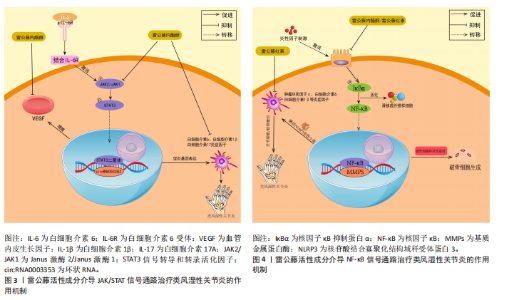
Janus激酶/信号转导和转录活化因子通路激活后,核因子κB受体活化因子配体表达上调,骨保护素表达下调。核因子κB受体活化因子配体与破骨细胞前体表面的核因子κB受体活化因子结合后,激活核因子κB信号通路,促进破骨细胞分化[60]。在类风湿性关节炎中,Janus激酶/信号转导和转录活化因子通路处于持续激活状态[61],通过提高基质金属蛋白酶基因的表达、促进软骨细胞凋亡,加速疾病进展[62]。研究发现,雷公藤内酯醇能降低白细胞介素6、白细胞介素1β和血管内皮生长因子下游靶基因的表达水平,抑制细胞周期进程,从而减轻炎症反应和成纤维样滑膜细胞增殖,并且雷公藤内酯醇降低Janus激酶2、磷酸化Janus激酶2、信号转导和转录活化因子3和磷酸化信号转导和转录活化因子3表达水平,从而阻断Janus激酶/信号转导和转录活化因子3信号通路,抑制炎性细胞因子的表达和成纤维细胞样滑膜细胞的增殖[63]。细胞实验结果表明,雷公藤内酯醇呈时间依赖性抑制类风湿性关节炎成纤维样滑膜细胞中circRNA0003353表达,上调抑炎细胞因子白细胞介素4水平,下调促炎细胞因子白细胞介素6、白细胞介素17水平,从而抑制细胞活力和迁移能力[64]。有实验证明,雷公藤内酯醇可抑制白细胞介素6的分泌,降低Janus激酶、白细胞介素6受体和磷酸化信号转导和转录活化因子3的表达,阻断白细胞介素6受体-Janus激酶/信号转导和转录活化因子通路,该通路对于细胞增殖、存活和炎症至关重要,雷公藤内酯醇不仅具有抗炎的潜力,而且还是Janus激酶/信号转导和转录活化因子3通路的抑制剂[65]。以上研究成果表明,雷公藤活性成分通过干预Janus激酶/信号转导和转录活化因子信号通路,从而抑制炎症反应和类风湿性关节炎成纤维样滑膜细胞增殖,为治疗类风湿性关节炎提供了理论依据(图3)。 2.3.2 核因子κB信号通路 核因子κB是转录因子家族成员[66],核因子κB活化和促炎的作用机制对于炎症性疾病的治疗策略具有重要意义[67]。类风湿性关节炎的骨侵蚀是由滑膜内巨噬细胞、成纤维细胞、树突状细胞、B细胞和浸润性T细胞的相互作用介导的[68]。核因子κB在这些细胞中激活可引发促炎反应,加剧疾病病理[69]。在滑膜中,核因子κB活化导致促炎T细胞、巨噬细胞和滑膜成纤维细胞产生促炎递质,形成正反馈循环,这会促进炎症和骨质侵蚀的发展[70]。将钛颗粒施加于小鼠颅骨表面引起局部炎症和溶骨反应,雷公藤内酯醇在体外有效抑制破骨细胞形成、骨吸收和核因子κB受体活化因子配体诱导的核因子κB活化,在体内有效抑制钛颗粒诱导的骨溶解[71]。 雷公藤红素治疗后,完全弗氏佐剂诱导的大鼠关节肿胀、关节炎指数评分、炎性细胞浸润和滑膜增生均相应改善。完全弗氏佐剂诱导的大鼠血清和THP-1细胞上清液中白细胞介素1β和白细胞介素18分泌显著减少,雷公藤红素阻断了核因子κB信号通路并抑制NLRP3炎性小体的激活,通过抑制活性氧/核因子κB/NLRP3轴来缓解类风湿性关节炎的炎症反应[72]。雷公藤内酯醇抑制了胶原诱导性关节炎大鼠滑膜细胞增生、炎症和软骨糜烂,抑制成纤维细胞样滑膜细胞增殖并促进凋亡,调节白细胞介素17/核因子κB信号通路,从而减少炎性细胞浸润和成纤维细胞样滑膜细胞侵袭性生长[73]。雷公藤红素及雷公藤内酯醇通过抑制核因子κB通路,减少炎症因子释放及破骨细胞活性,缓解类风湿性关节炎炎症、骨侵蚀及滑膜增生(图4)。 2.3.3 环鸟苷酸-腺苷酸单磷酸-干扰素基因刺激因子信号通路 环鸟苷酸-腺苷酸单磷酸-干扰素基因刺激因子信号通路调控先天性和适应性免疫应答[74],以及自噬、衰老、凋亡等基本细胞功能[75]。环鸟苷酸-腺苷酸单磷酸和干扰素基因刺激因子在类风湿性关节炎的滑膜巨噬细胞中高度表达,激活这些通路促进巨噬细胞向促炎M1型极化,分泌肿瘤坏死因子α、白细胞介素1β等促炎因子,加重类风湿性关节炎症状[76]。抑制环鸟苷酸-腺苷酸单磷酸和干扰素基因刺激因子表达可以减少这些因子的分泌,从而减轻类风湿性关节炎表现[77]。研究发现,雷公藤内酯醇可以抑制成纤维细胞样滑膜细胞分泌白细胞介素6,不同程度抑制成纤维细胞样滑膜细胞中环鸟苷酸-腺苷酸单磷酸、干扰素基因刺激因子蛋白表达水平,与阻断环鸟苷酸-腺苷酸单磷酸-干扰素基因刺激因子信号通路相关[78]。雷公藤内酯醇通过提升细胞内DNA识别反应,增强了环鸟苷酸-腺苷酸单磷酸的生成,从而激活干扰素基因刺激因子通路,这一激活过程会促进干扰素基因刺激因子转位至内质网,并通过TANK结合激酶1及干扰素调节因子3的磷酸化,进一步启动抗病毒和免疫调节反应,帮助改善类风湿性关节炎的症状[79]。雷公藤内酯醇通过调控环鸟苷酸-腺苷酸单磷酸-干扰素基因刺激因子信号通路,减少炎症因子释放,改善类风湿性关节炎症状(图5)。 2.3.4 磷脂酰肌醇3激酶/蛋白激酶B信号通路 磷脂酰肌醇3激酶家族是一类特异性催化磷脂酰肌醇物质的激酶,蛋白激酶B是磷脂酰肌醇3激酶信号通路的核心递质[80],通过多种下游效应因子调控关键细胞生物学过程,磷脂酰肌醇3激酶/蛋白激酶B信号通路通过作用于哺乳动物雷帕霉素靶蛋白,抑制成纤维细胞样滑膜细胞的自噬作用[81],促进滑膜细胞持续增殖,从而加剧类风湿性关节炎的病理进程[82]。 研究发现,雷公藤内酯醇药物组大鼠体质量升高,足爪厚度降低,滑膜组织中微血管密度和血管内皮生长因子表达降低,磷酸酶和张力蛋白同源物蛋白表达升高,磷脂酰肌醇3激酶、蛋白激酶B和磷酸化磷脂酰肌醇3激酶蛋白表达降低,抑制滑膜组织新生血管生成,发挥对类风湿性关节炎的治疗作用[83]。YANG等[84]发现,雷公藤红素灌胃后胶原诱导性关节炎小鼠软骨组织损伤和炎症浸润逐渐减轻,关节破坏显著减少,血清炎症细胞因子肿瘤坏死因子α和白细胞介素1β水平显著降低,雷公藤红素通过抑制炎症因子的释放来减少关节软骨破坏和骨侵蚀,诱导自噬和抑制磷脂酰肌醇3激酶/蛋白激酶B/哺乳动物雷帕霉素靶蛋白信号通路,从而在类风湿性关节炎中发挥保护作用。雷公藤化合物通过抑制磷脂酰肌醇3激酶/蛋白激酶B/哺乳动物雷帕霉素靶蛋白信号通路,减少炎症因子释放,抑制滑膜新生血管生成,"

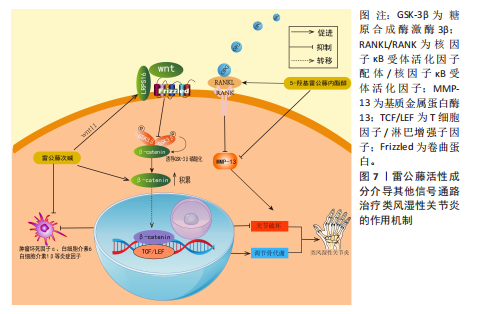
诱导自噬,减轻软骨损伤和骨侵蚀,发挥对类风湿性关节炎的保护作用(图6)。 2.3.5 其他信号通路 研究发现,雷公藤内酯醇(LLDT-8)抑制核因子κB受体活化因子配体诱导的核因子κB表达[85],雷公藤内酯醇可以通过骨保护素/核因子κB受体活化因子/核因子κB受体活化因子配体信号通路抑制基质金属蛋白酶13的产生并增加骨保护素/核因子κB受体活化因子配体的表达,从而减弱胶原诱导性关节炎,显著抑制白细胞介素1β和白细胞介素6表达,表明雷公藤内酯醇具有抗炎特性[86]。雷公藤次碱显著下调胶原诱导性关节炎大鼠的白细胞介素6、白细胞介素1β和肿瘤坏死因子α水平以及抑制Wnt11异常表达,抑制胶原诱导性关节炎成纤维细胞样滑膜细胞中β-catenin、细胞周期素D1、糖原合成酶激酶3β和c-Myc的异常高表达,减少β-catenin进入细胞核,支持雷公藤次碱通过Wnt/β-catenmin信号通路发挥作用[87]。因此,雷公藤内酯醇、雷公藤次碱可通过多靶点抑制核因子κB、Wnt/β-catenin等信号通路,下调白细胞介素1β、白细胞介素6、肿瘤坏死因子α等促炎因子,调节骨保护素/核因子κB受体活化因子配体平衡并抑制基质金属蛋白酶13表达,从而减轻关节炎症,抑制滑膜增生及骨侵蚀,展现抗类风湿性关节炎的潜力(图7)。"
"
| [1] HUANG J, FU X, CHEN X, et al. Promising Therapeutic Targets for Treatment of Rheumatoid Arthritis. Front Immunol. 2021;12:686155. [2] PRASAD P, VERMA S, SURBHI, et al. Rheumatoid arthritis: advances in treatment strategies. Mol Cell Biochem. 2023;478(1):69-88. [3] BRZUSTEWICZ E, HENC I, DACA A, et al. Autoantibodies, C-reactive protein, erythrocyte sedimentation rate and serum cytokine profiling in monitoring of early treatment. Cent Eur J Immunol. 2017;42(3):259-268. [4] ALETAHA D, SMOLEN JS. Diagnosis and Management of Rheumatoid Arthritis: A Review. JAMA. 2018;320(13):1360-1372. [5] SMOLEN JS, ALETAHA D, BARTON A, et al. Rheumatoid arthritis. Nat Rev Dis Primers. 2018; 4:18001. [6] 田新平,李梦涛,曾小峰.我国类风湿关节炎诊治现状与挑战:来自中国类风湿关节炎2019年年度报告[J].中华内科杂志,2021,60(7):593-598. [7] 池里群,周彬,高文远,等.治疗类风湿性关节炎常用药物的研究进展[J].中国中药杂志, 2014,39(15):2851-2858. [8] MIN HK, KIM SH, KIM HR, et al. Therapeutic Utility and Adverse Effects of Biologic Disease-Modifying Anti-Rheumatic Drugs in Inflammatory Arthritis. Int J Mol Sci. 2022;23(22):13913. [9] TAN Y, BUCH MH. ‘Difficult to treat’ rheumatoid arthritis: current position and considerations for next steps. RMD Open. 2022;8(2):e002387. [10] 李洋,刘健,胡月迪,等.基于《黄帝内经》营卫理论探讨类风湿关节炎的中医辨治思路[J].山西中医药大学学报,2024,25(12):1405-1411. [11] 《中成药治疗优势病种临床应用指南》标准化项目组.中成药治疗类风湿关节炎临床应用指南(2022年)[J].中国中西医结合杂志,2023, 43(3):261-273. [12] SHEN J, FANG Y, XU N, et al. Exploring the mechanism of triptolide inhibiting the motility of fibroblast-like synoviocytes in rheumatoid arthritis via RhoA/Rho-associated kinase axis, based on network pharmacology, molecular docking and molecular dynamics simulations. Front Pharmacol. 2025;16:1545514. [13] 杨洁,石英杰,舒峻,等.雷公藤甲素靶向FASN调控类风湿关节炎脂代谢的机制研究[J].中国中医基础医学杂志,2024,30(12):2053-2059. [14] BAO J, DAI SM. A Chinese herb Tripterygium wilfordii Hook F in the treatment of rheumatoid arthritis: mechanism, efficacy, and safety. Rheumatol Int. 2011;31(9):1123-1129. [15] 许植方,李珠莲,宋涛能.民间杀虫药雷公藤根成分研究:雷公藤甲素[J].化学世界,1957(3): 102-105. [16] KUPCHAN SM, COURT WA, DAILEY RG Jr, et al. Triptolide and tripdiolide, novel antileukemic diterpenoid triepoxides from Tripterygium wilfordii. J Am Chem Soc. 1972;94(20):7194-7205. [17] ZENG XJ, ZHANG NZ. Effects of tripchlorolide (T4) of Tripterygium Wilfordii Hook on the production of immunoglobulins by peripheral blood mononuclear cells and by synovial cells of rheumatoid arthritis patients in vitro. Yao Xue Xue Bao. 1997;32(3):171-173. [18] GUO Y, YU M, JIANG Y, et al. Effect of Tripterygium Wilfordii Hook T4 monomer on proliferation and interleukin-6 production of synovial fibroblasts of patients with rheumatoid arthritis. Zhongguo Yi Xue Ke Xue Yuan Xue Bao. 2000;22(2):190-202. [19] LIN N, LIU C, XIAO C, et al. Triptolide, a diterpenoid triepoxide, suppresses inflammation and cartilage destruction in collagen-induced arthritis mice. Biochem Pharmacol. 2007;73(1):136-146. [20] HU J, NI J, ZHENG J, et al. Tripterygium hypoglaucum extract ameliorates adjuvant-induced arthritis in mice through the gut microbiota. Chin J Nat Med. 2023;21(10):730-744. [21] WANG Y, YAN J, ZHANG Z, et al. Immunosuppressive Sesquiterpene Pyridine Alkaloids from Tripterygium wilfordii Hook. f. Molecules. 2022;27(21):7274. [22] TIAN Y, WEI Y, LUO H, et al. Diterpenoids and lignans from the stems of Tripterygium wilfordii and their anti-inflammatory activities. Fitoterapia. 2025;180:106306. [23] CHEN J, XUE Y, SHUAI X, et al. Effect of major components of Tripterygium wilfordii Hook. f on the uptake function of organic anion transporting polypeptide 1B1. Toxicol Appl Pharmacol. 2022; 435:115848. [24] LONG C, YANG Y, YANG Y, et al. The Exploration of Novel Pharmacophore Characteristics and Multidirectional Elucidation of Structure-Activity Relationship and Mechanism of Sesquiterpene Pyridine Alkaloids from Tripterygium Based on Computational Approaches. Evid Based Complement Alternat Med. 2021;2021:6676470. [25] MOON M, PYEON M, YANG J, et al. Subtype-selective effect and molecular regulation of celastrol and triptolide at human nicotinic acetylcholine receptors. Chem Biol Interact. 2025;408:111412. [26] LI S, CHEN Q, ZHANG Y, et al. Hyaluronic acid dissolving microneedle patch-assisted acupoint transdermal delivery of triptolide for effective rheumatoid arthritis treatment. Sci Rep. 2024; 14(1):25256. [27] BHAMBHANI S, KONDHARE KR, GIRI AP. Diversity in Chemical Structures and Biological Properties of Plant Alkaloids. Molecules. 2021;26(11):3374. [28] 高淑红,韦玲.雷公藤的化学成分及其提取物检验方法的分析[J].生物技术世界,2015(11):39. [29] DUAN H, TAKAISHI Y, MOMOTA H, et al. Immunosuppressive diterpenoids from Tripterygium wilfordii. J Nat Prod. 1999;62(11): 1522-1535. [30] ZHANG Y, MAO X, LI W, et al. Tripterygium wilfordii: An inspiring resource for rheumatoid arthritis treatment. Med Res Rev. 2021;41(3):1337-1374. [31] WANG YJ, YAN JG, ZHANG ZM, et al. Structure Characterization of Four New Sesquiterpene Pyridine Alkaloids from Tripterygium wilfordii Hook. f. and Anti-Inflammatory Activity Evaluations. Molecules. 2024;29(22):5284. [32] GAO C, HUANG XX, BAI M, et al. Anti-inflammatory sesquiterpene pyridine alkaloids from Tripterygium wilfordii. Fitoterapia. 2015;105:49-54. [33] LI D, JIA Q, ZHAO Q, et al. Macrolide sesquiterpene pyridine alkaloids from the roots of Tripterygium regelii and their anti-inflammatory activity. Bioorg Chem. 2025;158:108330. [34] ZHANG Y, XU W, LI H, et al. Therapeutic effects of total alkaloids of Tripterygium wilfordii Hook f. on collagen-induced arthritis in rats. J Ethnopharmacol. 2013;145(3):699-705. [35] GANG W, HAO H, YONG H, et al. Therapeutic Potential of Triptolide in Treating Bone-Related Disorders. Front Pharmacol. 2022;13:905576. [36] 康艳慧,穆萍萍,张海雷.雷公藤甲素对类风湿关节炎成纤维样滑膜细胞线粒体自噬、NLRP3炎症小体活化和细胞焦亡的影响[J].现代药物与临床,2024,39(2):290-295. [37] TOREQUL ISLAM M, QUISPE C, HERRERA-BRAVO J, et al. Activities and Molecular Mechanisms of Diterpenes, Diterpenoids, and Their Derivatives in Rheumatoid Arthritis. Evid Based Complement Alternat Med. 2022;2022:4787643. [38] CUI J, LI X, WANG S, et al. Triptolide prevents bone loss via suppressing osteoclastogenesis through inhibiting PI3K-AKT-NFATc1 pathway. J Cell Mol Med. 2020;24(11):6149-6161. [39] LIU C, ZHANG Y, KONG X, et al. Triptolide Prevents Bone Destruction in the Collagen-Induced Arthritis Model of Rheumatoid Arthritis by Targeting RANKL/RANK/OPG Signal Pathway. Evid Based Complement Alternat Med. 2013;2013:626038. [40] BRINKER AM, MA J, LIPSKY PE, et al. Medicinal chemistry and pharmacology of genus Tripterygium (Celastraceae). Phytochemistry. 2007;68(6):732-766. [41] 邹联银,廖群英.雷公藤多苷治疗类风湿关节炎对免疫球蛋白的影响[J].吉林医学,2023, 44(2):444-446. [42] QIAN K, ZHANG L, SHI K. Triptolide prevents osteoarthritis via inhibiting hsa-miR-20b. Inflammopharmacology. 2019;27(1):109-119. [43] PIAO X, ZHOU J, XUE L. Triptolide decreases rheumatoid arthritis fibroblast-like synoviocyte proliferation, invasion, inflammation and presents a therapeutic effect in collagen-induced arthritis rats via inactivating lncRNA RP11-83J16.1 mediated URI1 and β-catenin signaling. Int Immunopharmacol. 2021;99:108010. [44] QIU HB, YANG Y, ZHOU SX. Effects of tripcholorolide on inflammatory reaction of mouse alveolar macrophages in vitro. Acta Pharmacol Sin. 2000;21(12):1197-1201. [45] ZHU Y, ZHANG L, ZHANG X, et al. Tripterygium wilfordii glycosides ameliorates collagen-induced arthritis and aberrant lipid metabolism in rats. Front Pharmacol. 2022;13:938849. [46] LIU P, LIU H, SANG Y, et al. Triptolide regulates neutrophil function through the Hippo signaling pathway to alleviate rheumatoid arthritis disease progression. J Transl Autoimmun. 2024;8:100242. [47] 管咏梅,万志艳,王舒慧,等.基于NF-κB、Nrf2/HO-1信号通路及Bcl-2/Caspase-3凋亡蛋白表达探讨雷公藤-川芎组分配伍对类风湿关节炎成纤维样滑膜细胞的影响[J].中国实验方剂学杂志,2025,31(2):17-26. [48] QIN A, CHENG TS, LIN Z, et al. Prevention of wear particle-induced osteolysis by a novel V-ATPase inhibitor saliphenylhalamide through inhibition of osteoclast bone resorption. PLoS One. 2012; 7(4):e34132. [49] HU Y, XU T, YIN W, et al. Anti-inflammatory sesquiterpene polyol esters from the stem and branch of Tripterygium wilfordii. Chin J Nat Med. 2023;21(3):233-240. [50] ZHU Y, WAN N, SHAN X, et al. Celastrol targets adenylyl cyclase-associated protein 1 to reduce macrophages-mediated inflammation and ameliorates high fat diet-induced metabolic syndrome in mice. Acta Pharm Sin B. 2021;11(5): 1200-1212. [51] WANG B, SHEN J, WANG X, et al. Biomimetic nanoparticles for effective Celastrol delivery to targeted treatment of rheumatoid arthritis through the ROS-NF-κB inflammasome axis. Int Immunopharmacol. 2024;131:111822. [52] HUANG CL, CHEN DY, TZANG CC, et al. Celastrol attenuates human parvovirus B19 NS1induced NLRP3 inflammasome activation in macrophages. Mol Med Rep. 2023;28(4):193. [53] YANG J, HE B, DANG L, et al. Celastrol Regulates the Hsp90-NLRP3 Interaction to Alleviate Rheumatoid Arthritis. Inflammation. 2025;48(1):346-360. [54] CAO Y, LIU J, HUANG C, et al. Wilforlide A ameliorates the progression of rheumatoid arthritis by inhibiting M1 macrophage polarization. J Pharmacol Sci. 2022;148(1):116-124. [55] XUE M, JIANG ZZ, LIU JP, et al. Comparative study on the anti-inflammatory and immune suppressive effect of Wilforlide A. Fitoterapia. 2010;81(8):1109-112. [56] QIU Q, FENG Q, TAN X, et al. JAK3-selective inhibitor peficitinib for the treatment of rheumatoid arthritis. Expert Rev Clin Pharmacol. 2019;12(6):547-554. [57] XIN P, XU X, DENG C, et al. The role of JAK/STAT signaling pathway and its inhibitors in diseases. Int Immunopharmacol. 2020;80:106210. [58] ZHENG Y, WEI K, JIANG P, et al. Macrophage polarization in rheumatoid arthritis: signaling pathways, metabolic reprogramming, and crosstalk with synovial fibroblasts. Front Immunol. 2024;15:1394108. [59] EMORI T, KASAHARA M, SUGAHARA S, et al. Role of JAK-STAT signaling in the pathogenic behavior of fibroblast-like synoviocytes in rheumatoid arthritis: Effect of the novel JAK inhibitor peficitinib. Eur J Pharmacol. 2020;882:173238. [60] HU L, LIU R, ZHANG L. Advance in bone destruction participated by JAK/STAT in rheumatoid arthritis and therapeutic effect of JAK/STAT inhibitors. Int Immunopharmacol. 2022;111:109095. [61] HU Q, BIAN Q, RONG D, et al. JAK/STAT pathway: Extracellular signals, diseases, immunity, and therapeutic regimens. Front Bioeng Biotechnol. 2023;11:1110765. [62] BALDINI C, MORICONI FR, GALIMBERTI S, et al. The JAK-STAT pathway: an emerging target for cardiovascular disease in rheumatoid arthritis and myeloproliferative neoplasms. Eur Heart J. 2021;42(42):4389-4400. [63] LIN JJ, TAO K, GAO N, et al. Triptolide Inhibits Expression of Inflammatory Cytokines and Proliferation of Fibroblast-like Synoviocytes Induced by IL-6/sIL-6R-Mediated JAK2/STAT3 Signaling Pathway. Curr Med Sci. 2021;41(1):133-139. [64] 王杰,刘健,文建庭,等.雷公藤甲素抑制类风湿关节炎患者的成纤维样滑膜细胞的炎症和迁移:基于circRNA 0003353/JAK2/STAT3信号通路[J].南方医科大学学报,2022,42(3):367-374. [65] WANG Z, JIN H, XU R, et al. Triptolide downregulates Rac1 and the JAK/STAT3 pathway and inhibits colitis-related colon cancer progression. Exp Mol Med. 2009;41(10):717-727. [66] GUO Q, JIN Y, CHEN X, et al. NF-κB in biology and targeted therapy: new insights and translational implications. Signal Transduct Target Ther. 2024; 9(1):53. [67] SUN SC. The non-canonical NF-κB pathway in immunity and inflammation. Nat Rev Immunol. 2017;17(9):545-558. [68] TANG Y, LIU Q, FENG Y, et al. Tripterygium Ingredients for Pathogenicity Cells in Rheumatoid Arthritis. Front Pharmacol. 2020;11:583171. [69] ROMAN-BLAS JA, JIMENEZ SA. NF-kappaB as a potential therapeutic target in osteoarthritis and rheumatoid arthritis. Osteoarthritis Cartilage. 2006;14(9):839-848. [70] ROBERTI A, CHAFFEY LE, GREAVES DR. NF-κB Signaling and Inflammation-Drug Repurposing to Treat Inflammatory Disorders? Biology (Basel). 2022;11(3):372. [71] HUANG J, ZHOU L, WU H, et al. Triptolide inhibits osteoclast formation, bone resorption, RANKL-mediated NF-қB activation and titanium particle-induced osteolysis in a mouse model. Mol Cell Endocrinol. 2015;399:346-353. [72] JING M, YANG J, ZHANG L, et al. Celastrol inhibits rheumatoid arthritis through the ROS-NF-κB-NLRP3 inflammasome axis. Int Immunopharmacol. 2021;98:107879. [73] ZHANG C, WENG Y, WANG H, et al. A synergistic effect of triptolide and curcumin on rheumatoid arthritis by improving cell proliferation and inducing cell apoptosis via inhibition of the IL-17/NF-κB signaling pathway. Int Immunopharmacol. 2024;142(Pt A):112953. [74] ZHU Q, ZHOU H. The role of cGAS-STING signaling in rheumatoid arthritis: from pathogenesis to therapeutic targets. Front Immunol. 2024;15: 1466023. [75] CHAUVIN SD, STINSON WA, PLATT DJ, et al. Regulation of cGAS and STING signaling during inflammation and infection. J Biol Chem. 2023; 299(7):104866. [76] YANG X, ZHAO L, PANG Y. cGAS-STING pathway in pathogenesis and treatment of osteoarthritis and rheumatoid arthritis. Front Immunol. 2024; 15:1384372. [77] KALINKOVICH A, LIVSHITS G. The cross-talk between the cGAS-STING signaling pathway and chronic inflammation in the development of musculoskeletal disorders. Ageing Res Rev. 2025;104:102602. [78] 许阿兰,龙瑛婕,王祥,等.雷公藤甲素对类风湿性关节炎患者滑膜成纤维细胞cGAS-STING信号通路的影响[J].中华中医药杂志, 2022,37(2):1087-1090. [79] LU J, ZHANG Y, DONG H, et al. New mechanism of nephrotoxicity of triptolide: Oxidative stress promotes cGAS-STING signaling pathway. Free Radic Biol Med. 2022;188:26-34. [80] YU L, WEI J, LIU P. Attacking the PI3K/Akt/mTOR signaling pathway for targeted therapeutic treatment in human cancer. Semin Cancer Biol. 2022;85:69-94. [81] PASKEH MDA, GHADYANI F, HASHEMI M, et al. Biological impact and therapeutic perspective of targeting PI3K/Akt signaling in hepatocellular carcinoma: Promises and Challenges. Pharmacol Res. 2023;187:106553. [82] LIU S, MA H, ZHANG H, et al. Recent advances on signaling pathways and their inhibitors in rheumatoid arthritis. Clin Immunol. 2021;230: 108793. [83] 刘静,燕丽君.雷公藤内酯醇对类风湿性关节炎模型大鼠血管新生和PTEN/PI3K/AKT通路的影响[J].吉林大学学报(医学版),2020, 46(6):1227-1233+1351. [84] YANG J, LIU J, LI J, et al. Celastrol inhibits rheumatoid arthritis by inducing autophagy via inhibition of the PI3K/AKT/mTOR signaling pathway. Int Immunopharmacol. 2022;112: 109241. [85] LI Y, QI W, YAN L, et al. Tripterygium wilfordii derivative LLDT-8 targets CD2 in the treatment of rheumatoid arthritis. Biomed Rep. 2021;15(4):81. [86] ZENG JZ, MA LF, MENG H, et al. (5R)-5-hydroxytriptolide (LLDT-8) prevents collagen-induced arthritis through OPG/RANK/RANKL signaling in a rat model of rheumatoid arthritis. Exp Ther Med. 2016;12(5):3101-3106. [87] HUANG Y, PENG Y, LI H, et al. Wilforine inhibits rheumatoid arthritis pathology through the Wnt11/β-catenin signaling pathway axis. Arthritis Res Ther. 2023;25(1):243. |
| [1] | Chen Haojie, Wang Dai, Shen Shan. Immune inflammatory microenvironment mechanisms in peri-implantitis [J]. Chinese Journal of Tissue Engineering Research, 2026, 30(8): 2054-2062. |
| [2] | Hu Xiongke, Liu Shaohua, Tan Qian, Liu Kun, Zhu Guanghui. Shikonin intervention with bone marrow mesenchymal stem cells improves microstructure of femur in aged mice [J]. Chinese Journal of Tissue Engineering Research, 2026, 30(7): 1609-1615. |
| [3] | Han Nianrong, Huang Yifei, Akram · Osman, Liu Yanlu, Hu Wei . Programmed cell death receptor-1 suppresses osteogenic differentiation of rat bone marrow mesenchymal stem cells in a high-glucose microenvironment [J]. Chinese Journal of Tissue Engineering Research, 2026, 30(7): 1649-1657. |
| [4] | Liu Anting, Lu Jiangtao, Zhang Wenjie, He Ling, Tang Zongsheng, Chen Xiaoling. Regulation of AMP-activated protein kinase by platelet lysate inhibits cadmium-induced neuronal apoptosis [J]. Chinese Journal of Tissue Engineering Research, 2026, 30(7): 1800-1807. |
| [5] | Chen Ju, Zheng Jinchang, Liang Zhen, Huang Chengshuo, Lin Hao, Zeng Li. Effect and mechanism of beta-caryophyllene in mice with osteoarthritis [J]. Chinese Journal of Tissue Engineering Research, 2026, 30(6): 1341-1347. |
| [6] | Wen Guangwei, Zhen Yinghao, Zheng Taikeng, Zhou Shuyi, Mo Guoye, Zhou Tengpeng, Li Haishan, Lai Yiyi. Effects and mechanisms of isoginkgetin on osteoclastogenesis [J]. Chinese Journal of Tissue Engineering Research, 2026, 30(6): 1348-1358. |
| [7] | Lyu Guoqing, Aizimaitijiang·Rouzi, Xiong Daohai. Irisin inhibits ferroptosis in human articular chondrocytes: roles and mechanisms [J]. Chinese Journal of Tissue Engineering Research, 2026, 30(6): 1359-1367. |
| [8] | Peng Zhiwei, Chen Lei, Tong Lei. Luteolin promotes wound healing in diabetic mice: roles and mechanisms [J]. Chinese Journal of Tissue Engineering Research, 2026, 30(6): 1398-1406. |
| [9] | Zhu Kuicheng, Du Chunyan, Zhang Jintao. Mechanism by which hairless gene mutation promotes white adipose tissue browning in hairless mice [J]. Chinese Journal of Tissue Engineering Research, 2026, 30(6): 1424-1430. |
| [10] | Li Hao, Tao Hongcheng, Zeng Ping, Liu Jinfu, Ding Qiang, Niu Chicheng, Huang Kai, Kang Hongyu. Mitogen-activated protein kinase signaling pathway regulates the development of osteoarthritis: guiding targeted therapy with traditional Chinese medicine [J]. Chinese Journal of Tissue Engineering Research, 2026, 30(6): 1476-1485. |
| [11] | Guo Ying, Tian Feng, Wang Chunfang. Potential drug targets for the treatment of rheumatoid arthritis: large sample analysis from European databases [J]. Chinese Journal of Tissue Engineering Research, 2026, 30(6): 1549-1557. |
| [12] | Wu Zhilin, , He Qin, Wang Pingxi, Shi Xian, Yuan Song, Zhang Jun, Wang Hao . DYRK2: a novel therapeutic target for rheumatoid arthritis combined with osteoporosis based on East Asian and European populations [J]. Chinese Journal of Tissue Engineering Research, 2026, 30(6): 1569-1579. |
| [13] | Zheng Yin, Wu Zhenhua, Zhang Cheng, Ruan Kexin, Gang Xiaolin, Ji Hong. Safety and efficacy of immunoadsorption therapy for rheumatoid arthritis: a network meta-analysis and systematic review [J]. Chinese Journal of Tissue Engineering Research, 2026, 30(5): 1260-1268. |
| [14] | Liu Fengzhi, Dong Yuna, Tian Wenyi, Wang Chunlei, Liang Xiaodong, Bao Lin. Gene-predicted associations between 731 immune cell phenotypes and rheumatoid arthritis [J]. Chinese Journal of Tissue Engineering Research, 2026, 30(5): 1311-1319. |
| [15] | Chen Yixian, Chen Chen, Lu Liheng, Tang Jinpeng, Yu Xiaowei. Triptolide in the treatment of osteoarthritis: network pharmacology analysis and animal model validation [J]. Chinese Journal of Tissue Engineering Research, 2026, 30(4): 805-815. |
| Viewed | ||||||
|
Full text |
|
|||||
|
Abstract |
|
|||||