Chinese Journal of Tissue Engineering Research ›› 2026, Vol. 30 ›› Issue (36): 9413-9422.doi: 10.12307/2026.910
Previous Articles Next Articles
Identification of antimicrobial peptides as key therapeutic targets for necrosis by sodium overload in osteoarthritis using multiple machine learning approaches: cytological validation
Wang Huaijing1, Guo Jinrong2, Wan Dongping1, Mei Qijie2, Yuan Jingzhao1, Xu Wenfei2, Zeng Chao2, Zheng Haijun2, Yuan Changshen2, #br# Duan Kan2#br#
- 1Graduate School of Guangxi University of Chinese Medicine, Nanning 530200, Guangxi Zhuang Autonomous Region, China; 2The First Affiliated Hospital of Guangxi University of Chinese Medicine, Nanning 530023, Guangxi Zhuang Autonomous Region, China
-
Received:2025-11-13Revised:2026-03-25Online:2026-12-28Published:2026-05-20 -
Contact:Yuang Changshen, MS, Chief physician, Master’s supervisor, The First Affiliated Hospital of Guangxi University of Chinese Medicine, Nanning 530023, Guangxi Zhuang Autonomous Region, China Co-corresponding author: Duan Kan, PhD, Chief physician, Doctoral supervisor, The First Affiliated Hospital of Guangxi University of Chinese Medicine, Nanning 530023, Guangxi Zhuang Autonomous Region, China -
About author:Wang Huaijing, PhD, Graduate School of Guangxi University of Chinese Medicine, Nanning 530200, Guangxi Zhuang Autonomous Region, China Guo Jinrong, MS, Associate chief physician, The First Affiliated Hospital of Guangxi University of Chinese Medicine, Nanning 530023, Guangxi Zhuang Autonomous Region, China Wang Huaijing and Guo Jinrong contributed equally to this work. -
Supported by:National Natural Science Foundation of China, No. 82160912 (to DK); Guangxi Natural Science Foundation Project (General Project: Traditional Chinese Medicine Zhuang Yao Medicine Joint Special Project), No. 2023GXNSFAA026051 (to YCS); Innovation Project of Guangxi Graduate Education of GXUCM, No. YCBZ2024152 (to WHJ); Innovation Project of Guangxi Graduate Education of GXUCM, No. YCB2025192 (to WDP)

CLC Number:
Cite this article
Wang Huaijing, Guo Jinrong, Wan Dongping, Mei Qijie, Yuan Jingzhao, Xu Wenfei, Zeng Chao, Zheng Haijun, Yuan Changshen, Duan Kan. Identification of antimicrobial peptides as key therapeutic targets for necrosis by sodium overload in osteoarthritis using multiple machine learning approaches: cytological validation[J]. Chinese Journal of Tissue Engineering Research, 2026, 30(36): 9413-9422.
share this article
Add to citation manager EndNote|Reference Manager|ProCite|BibTeX|RefWorks
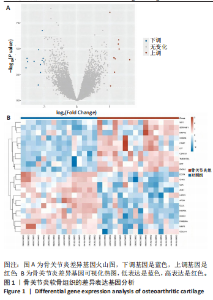
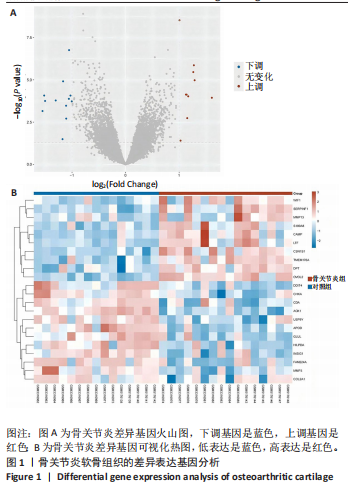
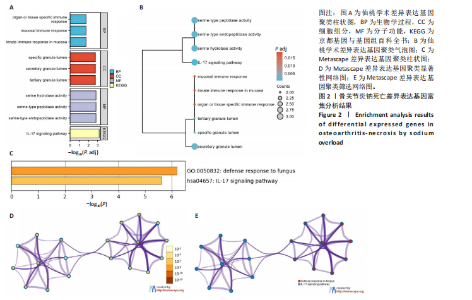
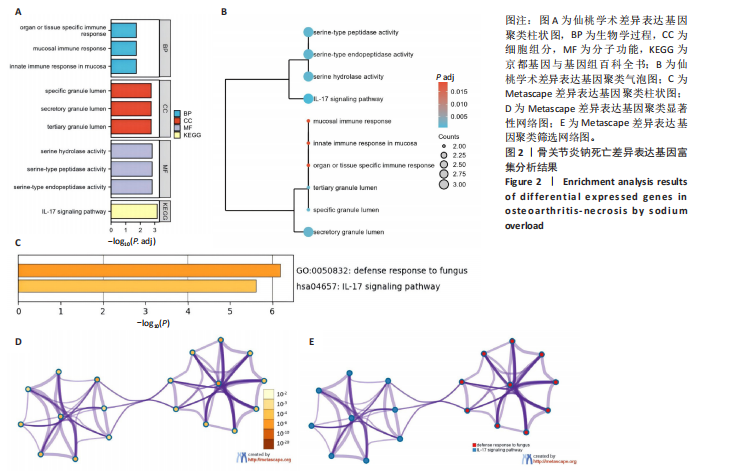
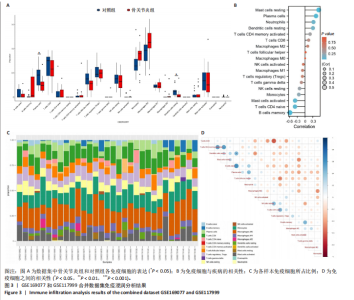
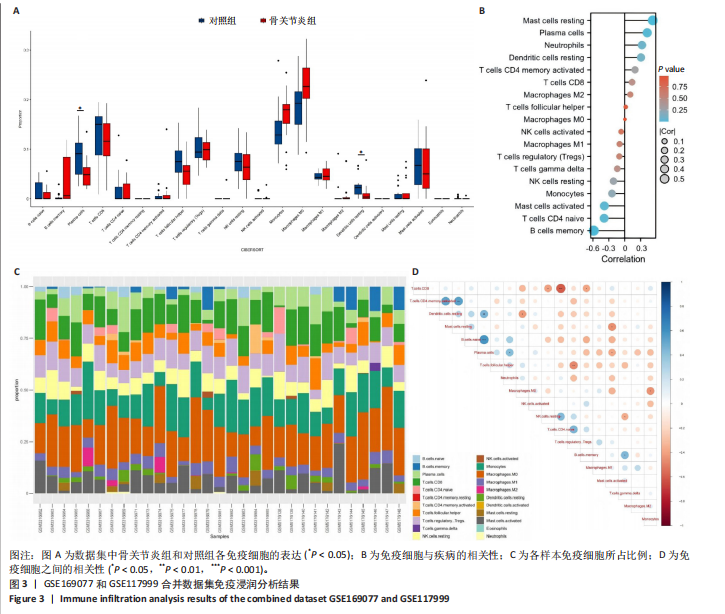
2.1 筛选获得9个骨关节炎钠死亡差异基因 GSE117999和GSE169077数据集合并后获取差异表达基因总计22个,其中12个下调基因、10个上调基因(图1A,B)。通过Genecard数据库获取钠死亡相关靶点 3 662个。将差异基因与钠死亡相关靶点取交集,获得9个靶点:CSN1S1、载脂蛋白D、乳铁蛋白、抗菌肽、GLUL、S100钙结合蛋白A8、CHKA、基质金属蛋白酶3、基质金属蛋白酶13。 2.2 差异基因富集于白细胞介素17信号通路及免疫相关功能 借助Metascape和仙桃学术等多个数据库开展骨关节炎钠死亡差异基因的富集分析。GO分析显示生物学过程主要富集在器官或组织特异性免疫反应、黏膜免疫反应、黏膜的先天免疫反应;细胞组分主要富集在特定颗粒管腔、分泌颗粒腔、三级颗粒腔;分子功能主要富集在丝氨酸水解酶活性、丝氨酸型肽酶活性、丝氨酸型内肽酶活性。KEGG分析结果显示主要在白细胞介素17信号通路富集(图2)。 2.3 浆细胞与静态树突状细胞在骨关节炎中呈现异常浸润 借助“CIBERSORT”包开展GSE117999与GSE169077合并数据集的免疫浸润分析,结果显示正常组与骨关节炎组间具有明显差异的免疫细胞为2种(图3A),浆细胞、静态树突状细胞在骨关节"
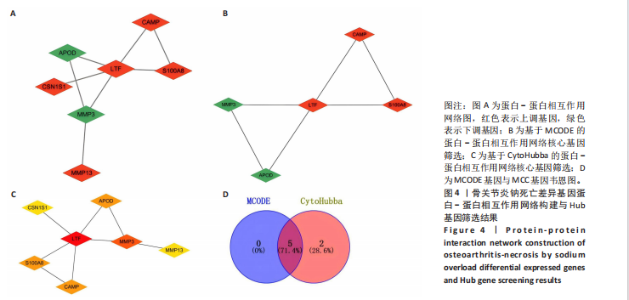
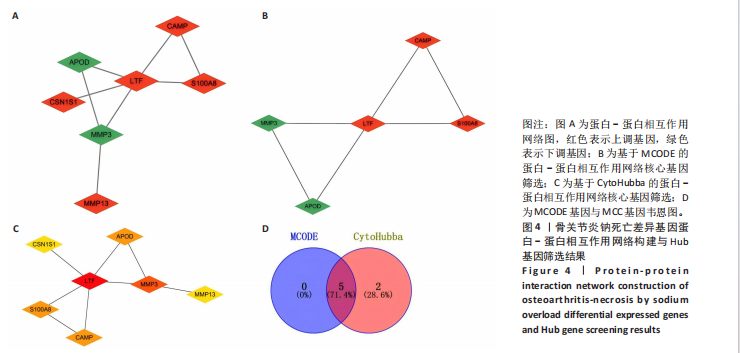
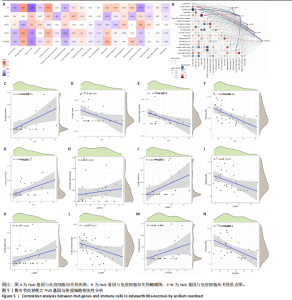
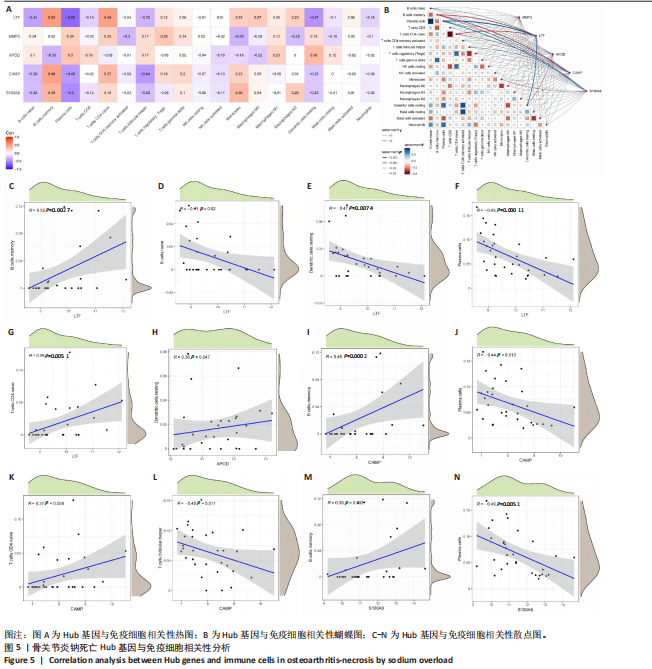
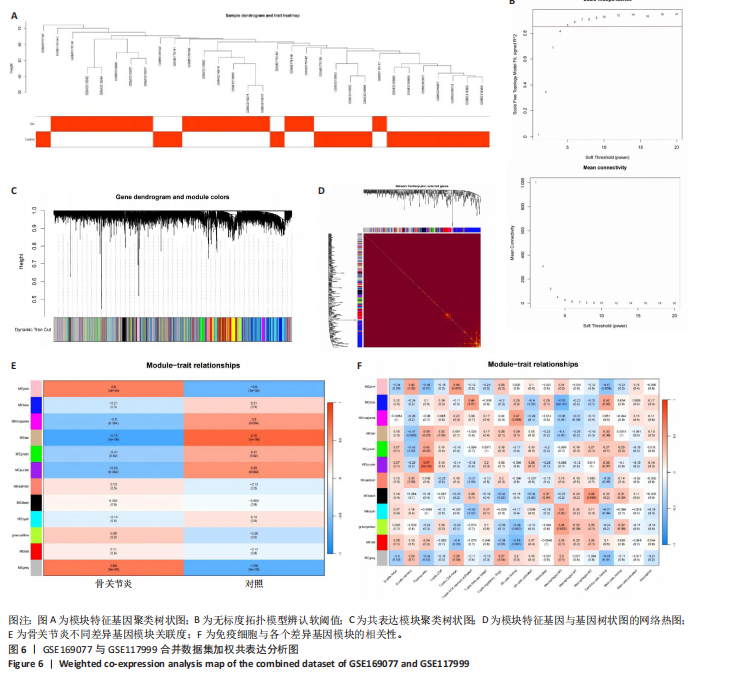
炎组显著低表达(P < 0.05);记忆B细胞表现出与疾病最强的负相关,而静息态肥大细胞则表现出最强的正相关(图3B);骨关节炎组与正常组在整体免疫细胞浸润模式上存在明显差异(图3C);CD8型T细胞与初始CD4型T细胞显著正相关,浆细胞与初始B细胞显著负相关(图3D)。 2.4 蛋白-蛋白相互作用网络鉴定出5个与骨关节炎钠死亡相关的Hub基因 蛋白-蛋白相互作用网络分析发现基质金属蛋白酶3、抗菌肽、载脂蛋白D、CSN1S1、乳铁蛋白、S100钙结合蛋白A8、基质金属蛋白酶13之间具有密切相互作用(图4A)。通过MCODE和CytoHubba插件筛选,最终确定基质金属蛋白酶3、载脂蛋白D、抗菌肽、S100钙结合蛋白A8、乳铁蛋白作为Hub基因(图4B-D)。 2.5 Hub基因与特定免疫细胞亚群存在显著相关性 抗菌肽与M0巨噬细胞、浆细胞、卵泡辅助性T细胞呈显著负相关;S100钙结合蛋白A8与记忆B细胞显著正相关,与卵泡辅助性T细胞显著负相关;乳铁蛋白与记忆B细胞、初始CD4型T细胞显著正相关,与初始B细胞、静息树突状细胞、浆细胞显著负相关;载脂蛋白D与静息树突状细胞正相关;基质金属蛋白酶3、载脂蛋白D未发现与免疫细胞有显著相关性(P > 0.05)(图5)。 2.6 加权共表达分析锁定抗菌肽、乳铁蛋白、S100钙结合蛋白A8等核心基因 以合并GSE169077、GSE117999后的数据集为基础开展聚类分析,排除离群样本后(图6A),设置软阈值β=10建立无尺度拓扑网络(图6B)。鉴定出16个基因模块(图6C,D),其中粉色模块和棕黄色模块与骨关节炎具有显著相关性(图"
"
"
"
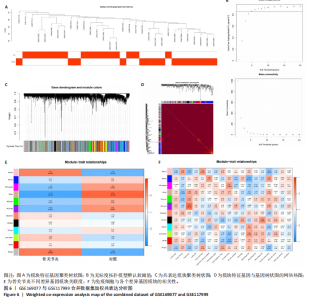
6E)。这些模块与骨关节炎钠死亡差异基因交集获得乳铁蛋白、抗菌肽、S100钙结合蛋白A8关键基因。紫色模块与浆细胞高度正相关(r=0.67,P=3×10⁻⁵)(图6F),其与骨关节炎钠死亡差异基因交集得到CSN1S1基因。 2.7 3种机器学习算法共同鉴定抗菌肽为关键诊断基因并验证其效能 LASSO回归筛选出3个诊断性基因:抗菌肽、CHKA、基质金属蛋白酶3(图7A,B);随机森林筛选出5个诊断性基因:抗菌肽、基质金属蛋白酶13、CSN1S1、载脂蛋白D、基质金属蛋白酶3(图7C,D);XGBoost筛选出7个诊断性基因:GLUL、CSN1S1、S100钙结合蛋白A8、乳铁蛋白、载脂蛋白D、基质金属蛋白酶13、抗菌肽(图7E,F)。3种算法交集基因为抗菌肽(图7G)。在GSE51588数据集中,骨关节炎软骨下骨中抗菌肽表达显著下调(P < 0.001)(图7H);在GSE55235数据集中,骨关节炎滑膜组织中抗菌肽表达趋势低于正常对照组,但差异无显著性意义(P=0.33)(图7I)。列线图模型显示预测患病风险与真实患病风险高度一致(图7J,K)。受试者工作特征曲线分析显示测试集曲线下面积为0.871,验证集曲线下面积分别为0.655和0.853(图7L-N)。决策曲线分析显示抗菌肽在3个数据集中均具有较好的"
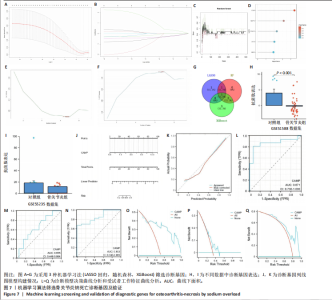
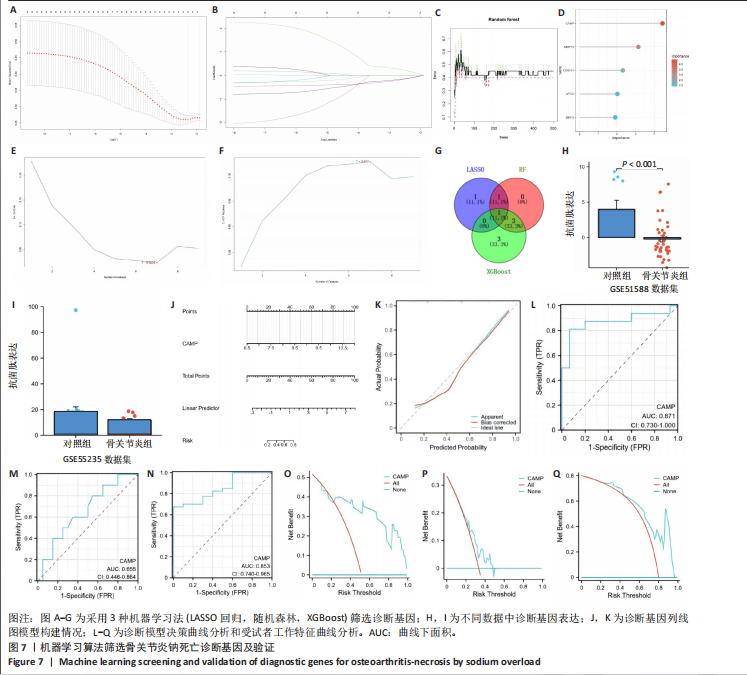
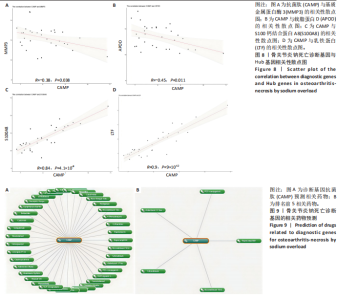
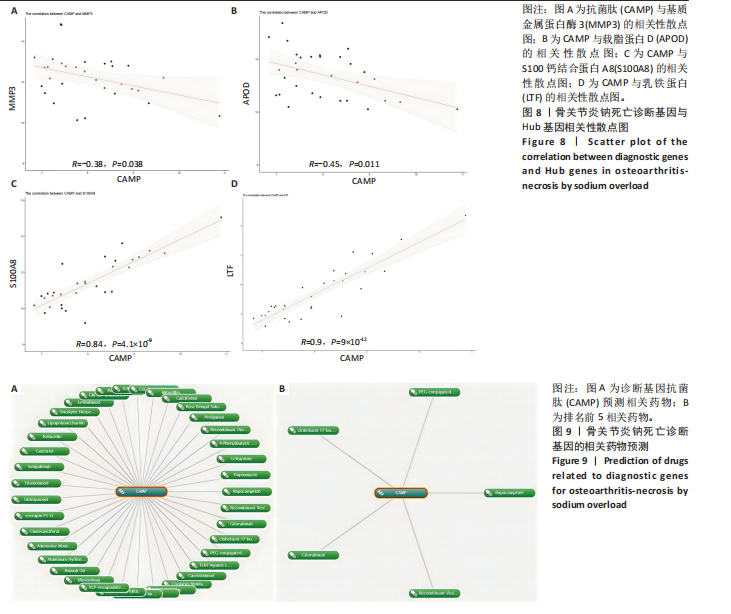
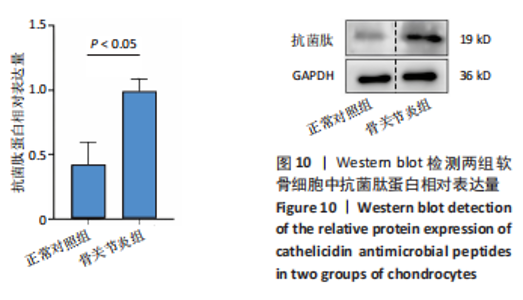
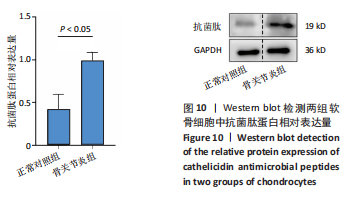
临床效益(图7O-Q)。 2.8 诊断基因抗菌肽与Hub基因表达高度相关 借助机器学习对Hub基因和诊断基因二者关联度进行筛选。抗菌肽与基质金属蛋白酶3存在负相关(R=-0.38,P=0.038);与载脂蛋白D存在负相关(R=-0.45,P=0.011);与S100钙结合蛋白A8存在显著正相关(R=0.84,P=4.1×10⁻⁹);与乳铁蛋白存在显著正相关(R=0.9,P=9×10-12)(图8)。 2.9 预测获得5种可靶向抗菌肽的潜在治疗药物 预测可调控诊断基因的药物共计38种(P < 0.01)(图9A),相关性最强的前5种药物为:聚乙二醇缀合Toll样受体7/8激动剂NKTR-262、罗哌卡肽、17-丁酸氯倍他索、表达干扰素-β和酪氨酸酶相关蛋白1的重组水疱性口炎病毒、吉洛拉单抗(图9B)。 2.10 细胞实验证实骨关节炎模型中抗菌肽蛋白表达上调 Western blot检测结果显示,骨关节炎组抗菌肽蛋白相对表达量显著高于正常对照组(图10)。"
"
"
| [1] OKUYAN HM, COŞKUN A, BEGEN MA. Current status, opportunities, and challenges of exosomes in diagnosis and treatment of osteoarthritis. Life Sci. 2025;362:123365. [2] PAN C, LU F, HAO X, et al. Low-intensity pulsed ultrasound delays the progression of osteoarthritis by regulating the YAP-RIPK1-NF-κB axis and influencing autophagy. J Transl Med. 2024;22(1):286. [3] YAO Q, WU X, TAO C, et al. Osteoarthritis: pathogenic signaling pathways and therapeutic targets. Signal Transduct Target Ther. 2023;8(1):56. [4] MOHD NOOR NA, ABDULLAH NURUL A, AHMAD MOHD ZAIN MR, et al. Extracellular Vesicles from Mesenchymal Stem Cells as Potential Treatments for Osteoarthritis. Cells. 2021;10(6):1287. [5] QU Y, WANG Y, WANG S, et al. A comprehensive analysis of single-cell RNA transcriptome reveals unique SPP1+ chondrocytes in human osteoarthritis. Comput Biol Med. 2023;160:106926. [6] GLYN-JONES S, PALMER AJ, AGRICOLA R, et al. Osteoarthritis. Lancet. 2015; 386(9991):376-387. [7] MINNIG MCC, GOLIGHTLY YM, NELSON AE. Epidemiology of osteoarthritis: literature update 2022-2023. Curr Opin Rheumatol. 2024;36(2):108-112. [8] TANG J, LIU T, WEN X, et al. Estrogen-related receptors: novel potential regulators of osteoarthritis pathogenesis. Mol Med. 2021;27(1):5. [9] HE Y, MAKARCZYK MJ, LIN H. Role of mitochondria in mediating chondrocyte response to mechanical stimuli. Life Sci. 2020;263:118602. [10] LIN X, TSAO CT, KYOMOTO M, et al. Injectable Natural Polymer Hydrogels for Treatment of Knee Osteoarthritis. Adv Healthc Mater. 2022;11(9):e2101479. [11] COSTA MC, ANGELINI C, FRANZESE M, et al. Identification of therapeutic targets in osteoarthritis by combining heterogeneous transcriptional datasets, drug-induced expression profiles, and known drug-target interactions. J Transl Med. 2024;22(1):281. [12] BOER CG. Osteoarthritis year in review 2024: Genetics, genomics, and epigenetics. Osteoarthritis Cartilage. 2025;33(1):50-57. [13] FU W, WANG J, LI T, et al. Persistent activation of TRPM4 triggers necrotic cell death characterized by sodium overload. Nat Chem Biol. 2025;21(8):1238-1249. [14] HE F, MA Y, LI S, et al. Necroptotic TNFα-Syndecan 4-TNFα Vicious Cycle as a Therapeutic Target for Preventing Temporomandibular Joint Osteoarthritis. J Bone Miner Res. 2022;37(5):1044-1055. [15] YIN Z, LI G, ZHONG Q, et al. Cinobufagin overcomes bortezomib resistance in multiple myeloma strains by targeting SEC62/TRPM4-mediated NECSO. Phytomedicine. 2025;147:157171. [16] PROFF A, NAZET U, SCHRÖDER A, et al. Mechanical Stress Induces Sodium Entry and Osmoprotective Responses in Murine Synovial Fibroblasts. Cells. 2024;13(6):496. [17] ULSHÖFER R, BROS H, HAUSER AE, et al. Preventing Axonal Sodium Overload or Mitochondrial Calcium Uptake Protects Axonal Mitochondria from Oxidative Stress-Induced Alterations. Oxid Med Cell Longev. 2022;2022:6125711. [18] WIRTH KJ, SCHEIBENBOGEN C. Pathophysiology of skeletal muscle disturbances in Myalgic Encephalomyelitis/Chronic Fatigue Syndrome (ME/CFS). J Transl Med. 2021;19(1):162. [19] QUINN TP, HESS JL, MARSHE VS, et al. A primer on the use of machine learning to distil knowledge from data in biological psychiatry. Mol Psychiatry. 2024; 29(2):387-401. [20] SOUSA RT, SILVA S, PESQUITA C. Explaining protein-protein interactions with knowledge graph-based semantic similarity. Comput Biol Med. 2024;170:108076. [21] CHO H, SHE J, DE MARCHI D, et al. Machine Learning and Health Science Research: Tutorial. J Med Internet Res. 2024;26:e50890. [22] YI HC, YOU ZH, HUANG DS, et al. Graph representation learning in bioinformatics: trends, methods and applications. Brief Bioinform. 2022;23(1):bbab340. [23] HUANG K, XIAO C, GLASS LM, et al. Machine learning applications for therapeutic tasks with genomics data. Patterns (N Y). 2021;2(10):100328. [24] ZHANG C, XU L, MIAO X, et al. Machine learning assisted dual-modal SERS detection for circulating tumor cells. Biosens Bioelectron. 2025;268:116897. [25] TAMINAU J, MEGANCK S, LAZAR C, et al. Unlocking the potential of publicly available microarray data using inSilicoDb and inSilicoMerging R/Bioconductor packages. BMC Bioinformatics. 2012;13:335. [26] LAN Z, YANG Y, SUN R, et al. A novel signature of cartilage aging-related immunophenotyping biomarkers in osteoarthritis. Comput Biol Med. 2025;187: 109816. [27] ARBEEVA L, MINNIG MC, YATES KA, et al. Machine Learning Approaches to the Prediction of Osteoarthritis Phenotypes and Outcomes. Curr Rheumatol Rep. 2023;25(11):213-225. [28] LIU G, HE G, ZHANG J, et al. Identification of SCRG1 as a Potential Therapeutic Target for Human Synovial Inflammation. Front Immunol. 2022;13:893301. [29] WU CY, HSIEH HL, SUN CC, et al. IL-1beta induces MMP-9 expression via a Ca2+-dependent CaMKII/JNK/c-JUN cascade in rat brain astrocytes. Glia. 2009; 57(16):1775-1789. [30] NAGAOKA I, TAMURA H, REICH J. Therapeutic Potential of Cathelicidin Peptide LL-37, an Antimicrobial Agent, in a Murine Sepsis Model. Int J Mol Sci. 2020; 21(17):5973. [31] WANG G, LI Y, YANG G, et al. Cathelicidin antimicrobial peptide (CAMP) gene promoter methylation induces chondrocyte apoptosis. Hum Genomics. 2021;15(1):24. [32] HÖPFINGER A, SCHMID A, SCHWEITZER L, et al. Regulation of Cathelicidin Antimicrobial Peptide (CAMP) Gene Expression by TNFα and cfDNA in Adipocytes. Int J Mol Sci. 2023;24(21):15820. [33] XUE Y, CHEN H, ZHANG S, et al. Resveratrol Confers Vascular Protection by Suppressing TLR4/Syk/NLRP3 Signaling in Oxidized Low-Density Lipoprotein-Activated Platelets. Oxid Med Cell Longev. 2021;2021:8819231. [34] XUE H, ZHOU H, LOU Q, et al. Urolithin B reduces cartilage degeneration and alleviates osteoarthritis by inhibiting inflammation. Food Funct. 2024;15(7):3552-3565. [35] TIMUR UT, JAHR H, ANDERSON J, et al. Identification of tissue-dependent proteins in knee OA synovial fluid. Osteoarthritis Cartilage. 2021;29(1):124-133. [36] VAN LENT PL, GREVERS LC, BLOM AB, et al. Stimulation of chondrocyte-mediated cartilage destruction by S100A8 in experimental murine arthritis. Arthritis Rheum. 2008;58(12):3776-3787. [37] ZHONG ZX, ZHOU S, LIANG YJ, et al. Natural flavonoids disrupt bacterial iron homeostasis to potentiate colistin efficacy. Sci Adv. 2023;9(23):eadg4205. [38] LIU M, LU J, CHEN Y, et al. Sodium Sulfite-Induced Mast Cell Pyroptosis and Degranulation. J Agric Food Chem. 2021;69(27):7755-7764. [39] PITZER A, ELIJOVICH F, LAFFER CL, et al. DC ENaC-Dependent Inflammasome Activation Contributes to Salt-Sensitive Hypertension. Circ Res. 2022;131(4):328-344. [40] MOURMOURA E, PAPATHANASIOU I, TRACHANA V, et al. Leptin-depended NLRP3 inflammasome activation in osteoarthritic chondrocytes is mediated by ROS. Mech Ageing Dev. 2022;208:111730. [41] CHEN H, YE Z, KORPERSHOEK JV, et al. Antibody and aptamer-based therapies for osteoarthritis: Application of antibodies and promise of aptamers. Mol Ther Nucleic Acids. 2025;36(2):102552. [42] GOVINDARAJ K, METELING M, VAN ROOIJ J, et al. Osmolarity-Induced Altered Intracellular Molecular Crowding Drives Osteoarthritis Pathology. Adv Sci (Weinh). 2024;11(11):e2306722. [43] ZHOU K, YANG C, SHI K, et al. Activated macrophage membrane-coated nanoparticles relieve osteoarthritis-induced synovitis and joint damage. Biomaterials. 2023;295:122036. [44] PENG G, LI W, PENG L, et al. Multifunctional DNA-Based Hydrogel Promotes Diabetic Alveolar Bone Defect Reconstruction. Small. 2024;20(10):e2305594. [45] TONG MJ, SONG MX, LIU Z, et al. A Bionic Thermosensitive Sustainable Delivery System for Reversing the Progression of Osteoarthritis by Remodeling the Joint Homeostasis. Adv Healthc Mater. 2024;13(16):e2303792. [46] NAZIR MM, FARZEEN I, SAEED S, et al. Kaempferol as a multi-targeted phytotherapeutic for arthritis: systematic review and meta-analysis of preclinical models. Inflammopharmacology. 2025;33(7):3519-3542. [47] HALLAND N, SCHMIDT F, WEISS T, et al. Rational Design of Highly Potent, Selective, and Bioavailable SGK1 Protein Kinase Inhibitors for the Treatment of Osteoarthritis. J Med Chem. 2022;65(2):1567-1584. [48] GAO X, MA Y, ZHANG G, et al. Targeted elimination of intracellular reactive oxygen species using nanoparticle-like chitosan- superoxide dismutase conjugate for treatment of monoiodoacetate-induced osteoarthritis. Int J Pharm. 2020; 590:119947. [49] ROLIG AS, ROSE DC, MCGEE GH, et al. Combining bempegaldesleukin (CD122-preferential IL-2 pathway agonist) and NKTR-262 (TLR7/8 agonist) improves systemic antitumor CD8+ T cell cytotoxicity over BEMPEG+RT. J Immunother Cancer. 2022;10(4):e004218. [50] ZHENG L, GU M, LI X, et al. ITGA5+ synovial fibroblasts orchestrate proinflammatory niche formation by remodelling the local immune microenvironment in rheumatoid arthritis. Ann Rheum Dis. 2025b;84(2):232-252. |
| [1] | Lyu Guoqing, Aizimaitijiang·Rouzi, Xiong Daohai. Irisin inhibits ferroptosis in human articular chondrocytes: roles and mechanisms [J]. Chinese Journal of Tissue Engineering Research, 2026, 30(6): 1359-1367. |
| [2] | Lai Jiaming, , Song Yuling, Chen Zixi, Wei Jinghuan, Cai Hao, , Li Guoquan, . Screening of diagnostic markers for endothelial cell Senescence in mice with radiation-induced heart disease and analysis of immune infiltration [J]. Chinese Journal of Tissue Engineering Research, 2026, 30(6): 1450-1463. |
| [3] | Zhang Qian, Huang Dongfeng. Weighted gene co-expression network analysis combined with machine learning to screen and validate biomarkers for osteoarthritis [J]. Chinese Journal of Tissue Engineering Research, 2026, 30(5): 1096-1105. |
| [4] | Zhang Jiuxuan, Zhang Jinnan, Sui Xiaofan, Pei Xiaxia, Wei Jianhong, Su Qiang, Li Tian. Effects of ammonia poisoning on cognitive behavior and hippocampal synaptic damage in mice [J]. Chinese Journal of Tissue Engineering Research, 2026, 30(5): 1122-1128. |
| [5] | Liu Kexin, , Hao Kaimin, Zhuang Wenyue, , Li Zhengyi. Autophagy-related gene expression in pulmonary fibrosis models: bioinformatic analysis and experimental validation [J]. Chinese Journal of Tissue Engineering Research, 2026, 30(5): 1129-1138. |
| [6] | Zhang Di, Zhao Jun, Ma Guangyue, Sun Hui, Jiang Rong. Mechanism of depression-like behavior in chronic social defeat stress mice based on high-throughput sequencing [J]. Chinese Journal of Tissue Engineering Research, 2026, 30(5): 1139-1146. |
| [7] | Bu Yangyang, Ning Xinli, Zhao Chen. Intra-articular injections for the treatment of osteoarthritis of the temporomandibular joint: different drugs with multiple combined treatment options [J]. Chinese Journal of Tissue Engineering Research, 2026, 30(5): 1215-1224. |
| [8] | Ma Hong, Ding Xueling, Wang Qi, Lyu Hui, Asya Albusm, Cheng Xinyi, Ma Xiang. Expression and significance of tumor necrosis factor alpha, nuclear factor kappaB and ionized calcium binding adaptor molecule-1 in the hippocampus of mice with aortic dissection [J]. Chinese Journal of Tissue Engineering Research, 2026, 30(4): 858-863. |
| [9] | Gu Fucheng, Yang Meixin, Wu Weixin, Cai Weijun, Qin Yangyi, Sun Mingyi, Sun Jian, Geng Qiudong, Li Nan. Effects of Guilu Erxian Glue on gut microbiota in rats with knee osteoarthritis: machine learning and 16S rDNA analysis [J]. Chinese Journal of Tissue Engineering Research, 2026, 30(4): 1058-1072. |
| [10] | Huang Yunshi, Chai Linsong, Ni Jinglei, Zuo Shuang, Lin Bingbing, Huang Jia. Development and evaluation of a prediction model for functional language communication outcomes in post-stroke aphasia patients [J]. Chinese Journal of Tissue Engineering Research, 2026, 30(36): 9604-9612. |
| [11] | Liu Yi, Lu Jiarong, Wu Jianyong. Diabetes prediction and analysis of influencing factors integrating genetic information [J]. Chinese Journal of Tissue Engineering Research, 2026, 30(36): 9589-9596. |
| [12] | Chen Yida, Cheng Xinyi, Zhao Huan, Zhou Xichao, Gu Qiaoli, Lin Xiao, Shi Qin. Effects of physiological osmotic pressure on chondrocyte differentiation and extracellular matrix metabolism [J]. Chinese Journal of Tissue Engineering Research, 2026, 30(35): 9143-9150. |
| [13] | Zhao Minjun, , Wu Xubo, , Yin Jianli, , Ge Yangshuo, Ding Jiaying, Huang Chunmeng, Meng Tingting, Wang Xuezong, Liu Zhenfeng, Ding Daofang. Effects of cobimetinib versus combination of dasatinib and quercetin on stress-induced chondrocyte senescence [J]. Chinese Journal of Tissue Engineering Research, 2026, 30(35): 9151-9158. |
| [14] | Cao Shan, Wang Yanxi, Duan Kaixuan, Qi Xiang, Wang Yuhan. Xiao Ban Tong Mai Fang regulates autophagy via targeting miR-126-3p: bioinformatics analysis for prevention and treatment of atherosclerosis [J]. Chinese Journal of Tissue Engineering Research, 2026, 30(35): 9355-9364. |
| [15] | Yang Huaqun, Abudouainijiang·Abulimiti, Wang Fazheng, Maimaitishawutiaji·Maimaiti, Li Simi, Muhetaer·Maimaitirexiati. Weighted gene co-expression network analysis combined with machine learning identifies autophagy and senescence signature genes in osteoarthritis chondrocytes [J]. Chinese Journal of Tissue Engineering Research, 2026, 30(34): 8889-8898. |
| Viewed | ||||||
|
Full text |
|
|||||
|
Abstract |
|
|||||