Chinese Journal of Tissue Engineering Research ›› 2026, Vol. 30 ›› Issue (35): 9336-9344.doi: 10.12307/2026.439
Previous Articles Next Articles
Postmenopausal cognitive impairment: a bibliometric analysis of developmental context and hot trends
Chen Xiaoxia1, 2, Zhao Lihua2, Li Taowen1, 2, Qin Yimei1, 2, Liang Jinyu1, 2
- 1Guangxi University of Chinese Medicine, Nanning 530001, Guangxi Zhuang Autonomous Region, China; 2First Affiliated Hospital of Guangxi University of Chinese Medicine, Nanning 530001, Guangxi Zhuang Autonomous Region, China
-
Received:2025-10-15Revised:2026-01-18Online:2026-12-18Published:2026-04-30 -
Contact:Zhao Lihua, PhD, Chief physician, Doctoral supervisor, First Affiliated Hospital of Guangxi University of Chinese Medicine, Nanning 530001, Guangxi Zhuang Autonomous Region, China -
About author:Chen Xiaoxia, PhD candidate, Guangxi University of Chinese Medicine, Nanning 530001, Guangxi Zhuang Autonomous Region, China; First Affiliated Hospital of Guangxi University of Chinese Medicine, Nanning 530001, Guangxi Zhuang Autonomous Region, China -
Supported by:National Natural Science Foundation of China, No. 82160933 (to ZLH); Natural Science Foundation of Guangxi Zhuang Autonomous Region, No. 2022GXNSFAA035577 (to ZLH); Innovation Project of Guangxi Graduate Education, No. YCBZ2025191 (to CXX)

CLC Number:
Cite this article
Chen Xiaoxia, Zhao Lihua, Li Taowen, Qin Yimei, Liang Jinyu. Postmenopausal cognitive impairment: a bibliometric analysis of developmental context and hot trends[J]. Chinese Journal of Tissue Engineering Research, 2026, 30(35): 9336-9344.
share this article
Add to citation manager EndNote|Reference Manager|ProCite|BibTeX|RefWorks
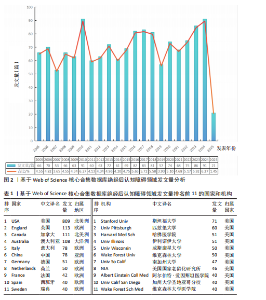
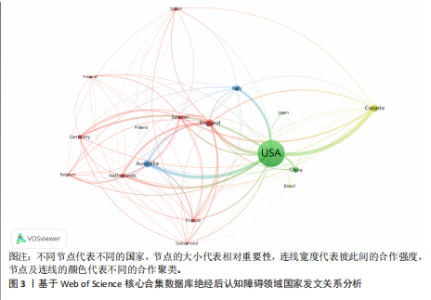
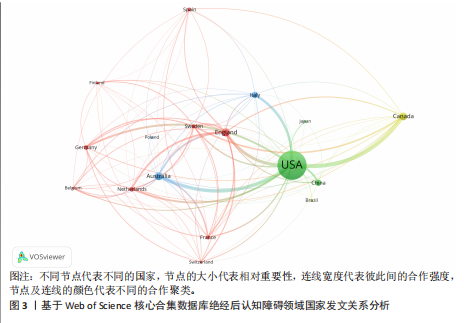
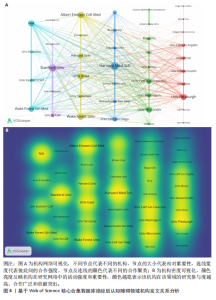
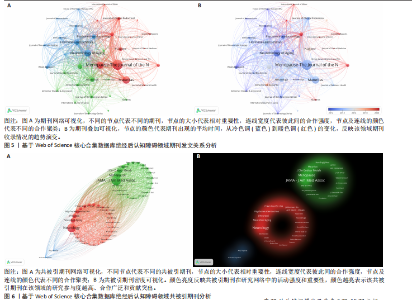
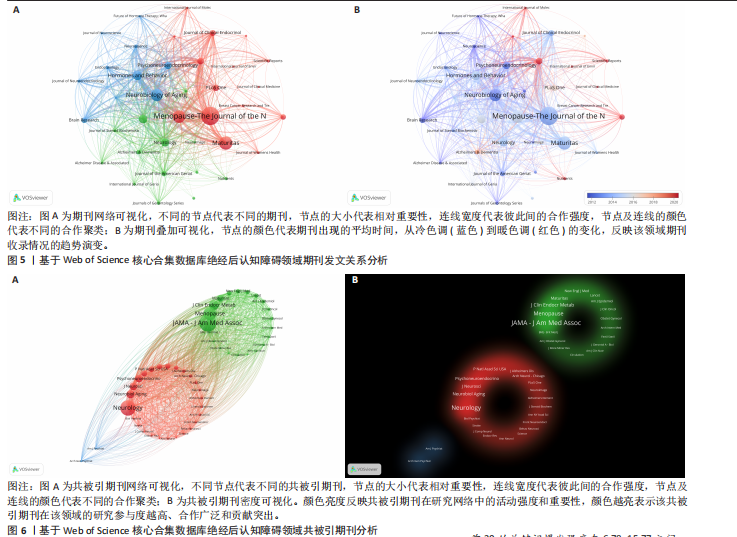
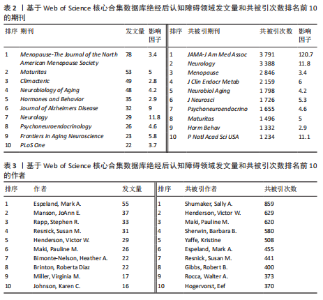
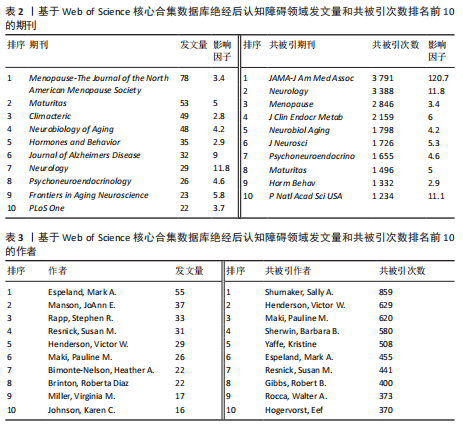
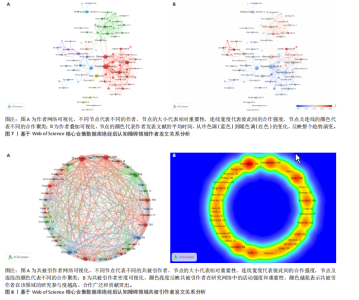
2.1 发文量分析 梳理近20年绝经后认知障碍领域的相关文献,共获取1 452 篇有效文献,年发文量呈波动增长趋势,见图2,可划分为3个阶段:第1阶段(2005-2009年)、第2阶段(2010-2018年)和第3阶段(2019-2025年)。第1阶段时间久远,是领域发展的初步活跃期,发文量和占比量较大。2005年发文量为66篇,占比4.55%;2007年出现第1个低谷,发文量仅53篇,随后呈波动上升。第2阶段进入复杂波动期,研究热度有所起伏,2010年发文量跃升至91篇,占比6.27%,达到第1个高峰;2011年回落至60篇,随后逐年波动上升,文献产出相对稳定;在2015-2018年,发文量趋向稳定且处于较高水平,维持在81-83篇之间。第3阶段进入回升调整期,2019年发文量仅57篇,出现第2个低谷,之后发文量逐步上升;直至2023年达到86篇,占比3.93%;2024年达到91篇,占比6.27%。 2.2 国家和机构发文关系分析 相关文献来自71个国家,发文量排名前11的国家归属地区涵盖欧洲、北美洲、亚洲、大洋洲,其中欧洲有7个国家(英国、意大利、德国、荷兰、法国、西班牙、瑞典)。在这些国家中,发文量最多的是美国(809篇),其次是英国(113篇)、加拿大(111篇),见表1。依据发文量≥18篇的标准对18个国家进行可视化处理,构建合作网络,见图3。不同国家之间存在着广泛且活跃的合作,根据链接强度,可见美国和澳大利亚、加拿大、英国、意大利合作较为活跃。相关文献来自1 830个机构,发文量排名前11的机构均归属美国。前4个机构分别是:斯坦福大学(71篇)、匹兹堡大学(60篇)、哈佛医学院(51篇)、伊利诺伊大学(51篇)。将发文量≥18篇的41个机构进行可视化,构建合作网络,见图4。根据链接强度,斯坦福大学和南加州大学之间的合作十分紧密,存在积极的合作。 2.3 期刊和共被引期刊分析 相关文献发表于510种期刊,《Menopause-The Journal of the North American Menopause Society》发文量最多(78篇),其次是《Maturitas》(53篇)和《Climacteric》(49篇)。在排名前10的期刊中,影响因子最高的是《Neurology》(IF=11.8)、《Journal of Alzheimers Disease》(IF=9)和《Frontiers in Aging Neuroscience》(IF=5.8),见表2。按照发文量≥6篇的标准筛选出39种期刊,并绘制合作网络。如图5所示,根据链接强度,《Menopause-The Journal of the North American Menopause Society》与《Climacteric》《Hormones and Behavior》《Maturitas》存在积极的引用关系。共被引期刊中,《JAMA-J Am Med Assoc》(3 791次)共被引次数最多,其次是《Neurology》(3 388次)和《Menopause》(2 846次)。在排名前10的期刊中,影响因子最高的是《JAMA-J Am Med Assoc》(IF=120.7)、《Neurology》(IF=11.8)和《P Natl Acad Sci USA》(IF=11.1),见表2。筛选出共被引次数最少为364次的50种期刊绘制合作网络。如图6所示,根据链接强度,《Menopause》与《J Clin Endocr Metab》《Maturitas》《Neurology》存在最明显的共被引关系。 2.4 作者和共被引作者分析 共有6 909位作者参与了绝经后认知障碍的研究,在发文量排名前10的作者中,发文量均在16篇及以上。Espeland, Mark A.以55篇文献位居第一,其次是Manson, JoAnn E.(37篇)和Rapp, Stephen R.(33篇),见表3。将发文量≥6篇的105个作者构建合作网络,如图7所示,根据链接强度,可知Espeland, Mark A.与Resnick, Susan M.、Rapp, Stephen R.、Manson, Joann E.、Shumaker, Sally A.存在密切合作。在38 876位共被引作者中,排名前10的作者共被引次数超过370次。排名第一的是Shumaker, Sally A.(859次),其次是Henderson, Victor W.(629次)和Maki, Pauline M.(620次),见表3。基于共被引次数≥115"
"
"
"

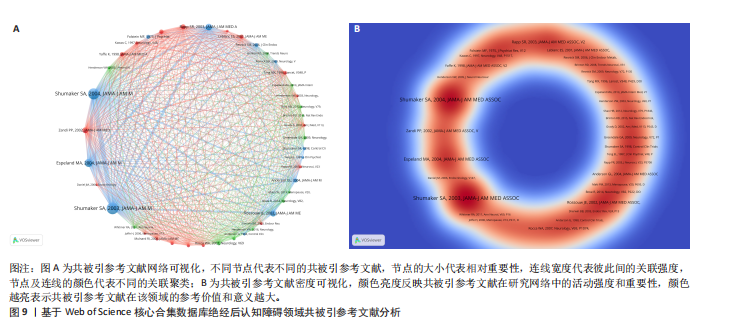
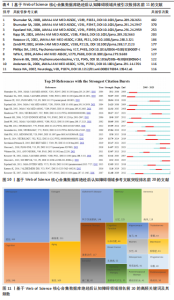
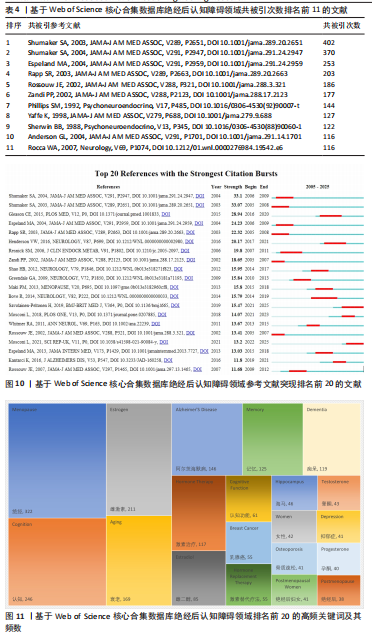
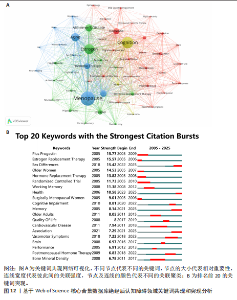
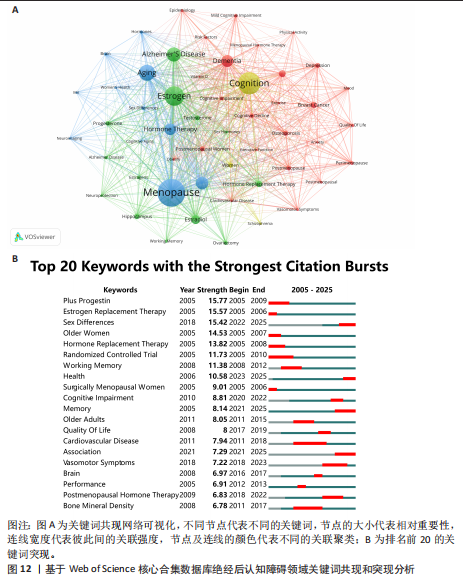
次的42个作者构建合作网络。如图8所示,根据链接强度,可见Henderson, Vw与Shumaker, Sa、Yaffe, K、Sherwin, Bb之间存在积极合作。 2.5 共被引参考文献 近20年共有59 493篇共被引参考文献。排名前11的共被引参考文献共被引次数≥116次。其中,排名第一、二、三的共被引次数分别为402次、370次、253次,见表4。将共被引次数≥60次的42篇参考文献构建共被引网络,见图9,可见排名第一的文献与第二、三、六等文献存在积极的共被引关系。 2.6 参考文献突现 通过CiteSpace识别出63篇具有强烈引用爆发的参考文献。排名前20篇展示见图10,蓝色柱子代表年份,红色柱子表示具有强烈引用爆发的年份。参考文献的引用爆发最早出现在2005年,最晚出现在2022年。引用爆发强度最高(强度=33.1)的文献题目是“Conjugated Equine Estrogens and Incidence of Probable Dementia and Mild Cognitive Impairment in Postmenopausal Women: Women’s Health Initiative Memory Study”,引用爆发时间为2006-2009年,由Shumaker SA等人撰写。引用爆发强度第二(强度=33.07)的文献题目是“Estrogen plus progestin and the incidence of dementia and mild cognitive impairment in postmenopausal women: the Women’s Health Initiative Memory Study: a randomized controlled trial”,引用爆发时间为2005-2008年,作者也是Shumaker SA等人,均发表于《JAMA-J Am Med Assoc》(IF=120.7)。总体而言,该20篇参考文献的引用爆发强度在11.68-33.1之间,持续时间为2-5年,具有研究借鉴价值。 2.7 关键词共现和突现分析 共检索到2 454个关键词,图11展示了绝经后认知障碍排名前20的高频关键词及其频数。绝经、认知、雌激素被提及的次数均≥211次,位列前3,代表了该领域的关键词。将出现次数≥15次的52个关键词进行聚类分析,如图12A所示,共得到4个聚类。蓝色聚类包括绝经(Menopause)、衰老(Aging)、激素疗法(Hormone Therapy)、记忆(Memory)、激素(Hormones)等;绿色聚类包括雌激素(Estrogen)、阿尔茨海默病(Alzheimer’s Disease)、雌二醇(Estradiol)、激素替代疗法(Hormone Replacement Therapy)、睾酮(Testosterone)等;红色聚类包括痴呆(Dementia)、抑郁症(Depression)、认知功能(Cognitive Function)、绝经后期(Postmenopause)等;黄色聚类包括认知(Cognition)、女性(Women)、精神分裂症(Schizophrenia)等。通过CiteSpace识别出33个突现关键词。排名前20个关键词展示见图12B,关键词突现最早在2005年,最晚出现在2023年。爆发强度第一(强度=15.77)的是加用孕激素(Plus Progestin),爆发时间为2005-2009年。爆发强度第二(强度=15.57)的是雌激素替代疗法(Estrogen Replacement Therapy),爆发时间为2005-2006年。爆发强度第三(强度=15.42)的是性别差异(Sex Differences),2022-2025年处于被引爆发状态,表明近年来该关键词研究热度持续上升。总体而言,排名"
"
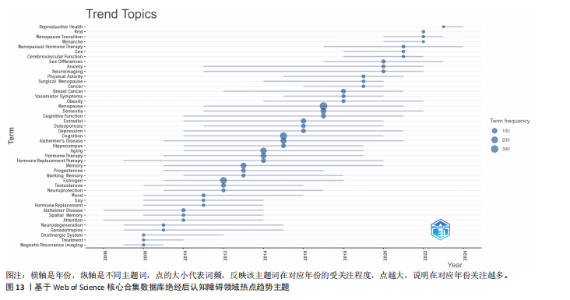
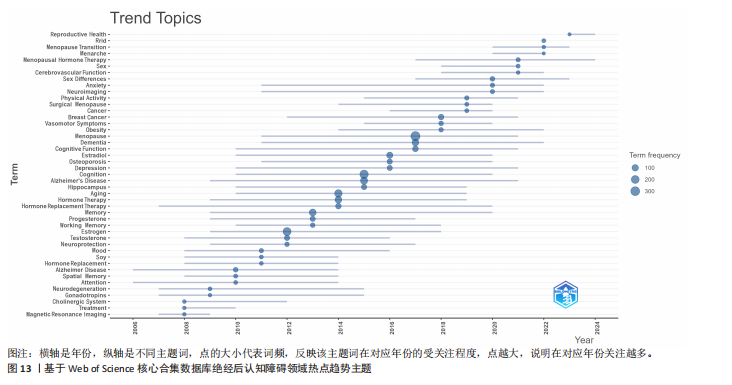
前20的关键词爆发强度在6.78-15.77之间,持续时间为1-7年。 2.8 热点趋势主题 如图13所示,较早期(2006年后)磁共振成像(Magnetic Resonance Imaging)等检测技术类主题较早出现,但词频较低,至2022年神经影像学(Neuroimaging)受关注程度热涨。早期(2010-2015年)认知(Cognition)、雌激素(Estrogen)、衰老(Aging)、阿尔茨海默病(Alzheimer’S Disease)、记忆(Memory)等主题词频次显著升高,研究聚焦于激素与神经退行性疾病、认知记忆的关联。中后期(2016年后)主要为绝经(Menopause)、痴呆(Dementia)、雌二醇(Estradiol)、认知功能(Cognitive Function)、 乳腺癌(Breast Cancer)、抑郁症(Depression)、骨质疏松症(Osteoporosis)、性别差异(Sex Differences)、血管舒缩症状(Vasomotor Symptoms)、肥胖(Obesity)、焦虑(Anxiety)、身体活动(Physical Activity)等多个议题。"


"
"
"
"
| [1] CALLE A, BLÜMEL JE, CHEDRAUI P, et al. Severe menopausal symptoms linked to cognitive impairment: an exploratory study. Menopause. 2024;31(11):959-965. [2] TANG F, CHI I, DONG X. Sex Differences in the Prevalence and Incidence of Cognitive Impairment: Does Immigration Matter? J Am Geriatr Soc. 2019;67(S3):S513-S518. [3] CONLEY AC, ALBERT KM, MCDONALD BC, et al. Estradiol treatment in young postmenopausal women with self-reported cognitive complaints: Effects on cholinergic-mediated cognitive performance. Hum Psychopharmacol. 2022; 37(5):e2838. [4] 贺舒凝,张佳豪,杨若男,等.我国45岁及以上人群认知功能障碍的空间分布及其影响因素[J].南方医科大学学报,2023,43(4):611-619. [5] STICKEL AM, TARRAF W, KUWAYAMA S, et al. Connections between reproductive health and cognitive aging among women enrolled in the HCHS/SOL and SOL-INCA. Alzheimers Dement. 2024;20(3):1944-1957. [6] BLÜMEL JE, ARTEAGA E, VALLEJO MS, et al. Association of bilateral oophorectomy and menopause hormone therapy with mild cognitive impairment: the REDLINC X study. Climacteric. 2022;25(2):195-202. [7] SOCHOCKA M, KARSKA J, PSZCZOLOWSKA M, et al. Cognitive Decline in Early and Premature Menopause. Int J Mol Sci. 2023;24(7):6566. [8] BUTLER T, TEY S, GALVIN JE, et al. Endocrine Dyscrasia in the Etiology and Therapy of Alzheimer’s Disease. J Alzheimers Dis. 2024; 101(3):705-713. [9] BODDETI U, POLAVARAPU H, PATEL S, et al. Current Status of Awake Spine Surgery: A Bibliometric Analysis. World Neurosurg. 2024;187:194-201.e2. [10] WAN Y, SHEN J, OUYANG J, et al. Bibliometric and visual analysis of neutrophil extracellular traps from 2004 to 2022. Front Immunol. 2022; 13:1025861. [11] ZHAO L, ZHANG G, YANG J, et al. Knowledge mapping and emerging trends in cognitive impairment associated with chronic pain: A 2000-2024 bibliometric study. Brain Res Bull. 2025;220:111175. [12] MA Y, KRAEMER KM, LYU J, et al. Randomized Controlled Trials of Mindfulness and Acceptance-Based Interventions Over the Past Two Decades: A Bibliometric Analysis. J Altern Complement Med. 2021;27(11):930-939. [13] JIN L, WU L, ZHANG J, et al. Quantitative analysis of literature on diagnostic biomarkers of Schizophrenia: revealing research hotspots and future prospects. BMC Psychiatry. 2025;25(1):186. [14] LI D, WU M. Potential value and research frontiers of virus in neuroinflammation: a bibliometric and visualized analysis. Front Immunol. 2024;15: 1390149. [15] ARIA M, CUCCURULLO C. bibliometrix: An R-tool for comprehensive science mapping analysis. J Informetr. 2017;11(4):959-975. [16] SABE M, PILLINGER T, KAISER S, et al. Half a century of research on antipsychotics and schizophrenia: A scientometric study of hotspots, nodes, bursts, and trends. Neurosci Biobehav Rev. 2022;136:104608. [17] PALOMINO-LEYVA C, RIVERA-RECUENCO J, FERNANDEZ-GIUSTI A, et al. Bibliometric analysis of the worldwide scientific production on COVID-19 infection and cerebrovascular disease. Ann Card Anaesth. 2023;26(2):197-203. [18] HONG T, FENG X, TONG W, et al. Bibliometric analysis of research on the trends in autophagy. PeerJ. 2019;7:e7103. [19] GUO M, WU Y, GROSS AL, et al. Age at menopause and cognitive function and decline among middle-aged and older women in the China Health and Retirement Longitudinal Study, 2011-2018. Alzheimers Dement. 2025;21(2):e14580. [20] OMEROVIC E, PETRIE M, REDFORS B, et al. Pragmatic randomized controlled trials: strengthening the concept through a robust international collaborative network: PRIME-9-Pragmatic Research and Innovation through Multinational Experimentation. Trials. 2024; 25(1):80. [21] CAO C, LI S, ZHOU G, et al. Global trends in COVID-19 Alzheimer’s related research: a bibliometric analysis. Front Neurol. 2023;14: 1193768. [22] ROGIC S, POIRIER-MORENCY G, HIETER P, et al. Global partnerships in rare disease research. Dis Model Mech. 2025;18(7):dmm052401. [23] KAUR M, KAUR M. Cognitive performance of women at various stages of reproductive aging and associated risk factors. Climacteric. 2022;25(3):278-285. [24] BORTZ J, KLATT KC, WALLACE TC. Perspective: Estrogen and the Risk of Cognitive Decline: A Missing Choline(rgic) Link. Adv Nutr. 2022;13(2): 376-387. [25] HUANG W, JIANG S, GENG L, et al. Correlation between menopausal symptoms and everyday cognition in Chinese (peri)menopausal women. Gynecol Endocrinol. 2021;37(7):655-659. [26] RADAGHDAM S, KARAMAD V, NOURAZARIAN A, et al. Molecular mechanisms of sex hormones in the development and progression of Alzheimer’s disease. Neurosci Lett. 2021;764:136221. [27] THAN S, MORAN C, BEARE R, et al. Cognitive trajectories during the menopausal transition. Front Dement. 2023;2:1098693. [28] TICKERHOOF M, CHAM H, OULDIBBAT L, et al. Postmortem tissue biomarkers of menopausal transition. Preprint. bioRxiv. 2024; 2024.06.20.599941. [29] HAN S, LIU D, TAN C, et al. Male- and female-specific reproductive risk factors across the lifespan for dementia or cognitive decline: a systematic review and meta-analysis. BMC Med. 2023;21(1):457. [30] GONZÁLEZ-BURGOS I, VELÁZQUEZ-ZAMORA DA, GONZÁLEZ-TAPIA D. Estradiol-mediated modulation of memory and of the underlying dendritic spine plasticity through the life span. Histol Histopathol. 2024;39(4):411-423. [31] LI M, ZHANG J, SHI Y, et al. The radiomics features of the temporal lobe region related to menopause based on MR-T2WI can be used as potential biomarkers for AD. Cereb Cortex. 2023;33(14):9067-9078. [32] ZHAO J, JIAO Y, WANG H, et al. Radiomic features of the hippocampal based on magnetic resonance imaging in the menopausal mouse model linked to neuronal damage and cognitive deficits. Brain Imaging Behav. 2024;18(2):368-377. [33] LEE JK, RAGHAVAN S, CHRISTENSON LR, et al. Longitudinal associations of reproductive factors and exogeneous estrogens with neuroimaging biomarkers of Alzheimer’s disease and cerebrovascular disease. Alzheimers Dement. 2024;20(7):4613-4624. [34] WANG Y, THERRIAULT J, TISSOT C, et al. Hormone therapy is associated with lower Alzheimer’s disease tau biomarkers in post-menopausal females -evidence from two independent cohorts. Alzheimers Res Ther. 2024;16(1):162. [35] MOIR ME, CORKERY AT, SENESE KA, et al. Age at natural menopause impacts cerebrovascular reactivity and brain structure. Am J Physiol Regul Integr Comp Physiol. 2023;324(2):R207-R215. [36] JETT S, SCHELBAUM E, JANG G, et al. Ovarian steroid hormones: A long overlooked but critical contributor to brain aging and Alzheimer’s disease. Front Aging Neurosci. 2022;14:948219. [37] NICOTRA R, LUTZ C, MESSAL HA, et al. Rat Models of Hormone Receptor-Positive Breast Cancer. J Mammary Gland Biol Neoplasia. 2024;29(1):12. [38] RUPEĆ Z, TRUBALSKI M, ZULFIQUAR Z, et al. Hormonal influence on osteoporosis. Wiad Lek. 2025;78(3):531-538. [39] NAGDA AL, DATAR MC, NAPHADE NM, et al. A Cross-sectional Assessment of Depression, Anxiety, and Cognition in Perimenopausal and Menopausal Women. J Midlife Health. 2023;14(2):117-122. [40] SCHAEDEL Z, HOLLOWAY D, BRUCE D, et al. Management of sleep disorders in the menopausal transition. Post Reprod Health. 2021;27(4):209-214. [41] MA J, CHEN YH, CHIANG CP, et al. Hormone replacement therapy did not increase risk of melanoma in Chinese female with menopausal and postmenopausal disorders: A population-based retrospective cohort study in Taiwan. J Dermatol. 2023;50(9):1162-1169. [42] JAFF NG, CROWTHER NJ. The Association of Reproductive Aging with Cognitive Function in Sub-Saharan African Women. Methods Mol Biol. 2022;2343:71-91. [43] VIDYANTI AN, RAHMAWATI F, RAHMAN RH, et al. Lifestyle interventions for dementia risk reduction: A review on the role of physical activity and diet in Western and Asian Countries. J Prev Alzheimers Dis. 2025;12(2):100028. [44] WANG J, RANG Y, LIU C. Effects of Caloric Restriction and Intermittent Fasting and Their Combined Exercise on Cognitive Functioning: A Review. Curr Nutr Rep. 2024;13(4):691-700. [45] OBERLIN LE, JAYWANT A, WOLFF A, et al. Strategies to Promote Cognitive Health in Aging: Recent Evidence and Innovations. Curr Psychiatry Rep. 2022;24(9):441-450. [46] XU X, CHEW KA, WONG ZX, et al. The SINgapore GERiatric Intervention Study to Reduce Cognitive Decline and Physical Frailty (SINGER): Study Design and Protocol. J Prev Alzheimers Dis. 2022;9(1):40-48. [47] CALSOLARO V, BOTTARI M, COPPINI G, et al. Endocrine dysfunction and cognitive impairment. Minerva Endocrinol (Torino). 2021; 46(3):335-349. [48] GHOSSON A, SOUFAN F, KADDOURA H, et al. Understanding the Intersection Between Hormonal Dynamics and Brain Plasticity in Alzheimer’s Disease: A Narrative Review for Implementing New Therapeutic Strategies. Health Sci Rep. 2025;8(7):e70975. [49] DEBNATH C, GURIA S, GUHA D, et al. A Novel BOND-KNN Algorithm to Predict Breast Cancer Survival using Multi-modal Features. Annu Int Conf IEEE Eng Med Biol Soc. 2024;2024:1-4. [50] CHEN M, ZHAO G, PENG L. Transcranial Magnetic Stimulation Applications in the Study of Executive Functions: A Review. Brain Behav. 2024;14(11):e70099. |
| [1] | Xu Canli, He Wenxing, Wang Yuping, Ba Yinying, Chi Li, Wang Wenjuan, Wang Jiajia. Research context and trend of TBK1 in autoimmunity, signaling pathways, gene expression, tumor prevention and treatment [J]. Chinese Journal of Tissue Engineering Research, 2026, 30(在线): 1-11. |
| [2] | Zhu Xiaolong, Zhang Wei, Yang Yang. Visualization analysis of research hotspots and cutting-edge information in the field of intervertebral disc regeneration and repair [J]. Chinese Journal of Tissue Engineering Research, 2026, 30(9): 2391-2402. |
| [3] | Wen Fayan, Li Yan, Qiang Tianming, Yang Chen, Shen Linming, Li Yadong, Liu Yongming. Unilateral biportal endoscopic technology for treatment of lumbar degenerative diseases: global research status and changing trends [J]. Chinese Journal of Tissue Engineering Research, 2026, 30(9): 2380-2390. |
| [4] | Lai Yu, Chen Yueping, Zhang Xiaoyun. Research hotspots and frontier trends of bioactive materials in treating bone infections [J]. Chinese Journal of Tissue Engineering Research, 2026, 30(8): 2132-2144. |
| [5] | Zhang Haiwen, Zhang Xian, Xu Taichuan, Li Chao. Bibliometric and visual analysis of the research status and trends of senescence in osteoporosis [J]. Chinese Journal of Tissue Engineering Research, 2026, 30(6): 1580-1591. |
| [6] | Huang Jie, Zeng Hao, Wang Wenchi, Lyu Zhucheng, Cui Wei. Visualization analysis of literature on the effect of lipid metabolism on osteoporosis [J]. Chinese Journal of Tissue Engineering Research, 2026, 30(6): 1558-1568. |
| [7] | Yang Zeyu, Zhi Liang, Wang Jia, Zhang Jingyi, Zhang Qingfang, Wang Yulong, Long Jianjun. A visualized analysis of research hotspots in high-frequency repetitive transcranial magnetic stimulation from the macroscopic perspective [J]. Chinese Journal of Tissue Engineering Research, 2026, 30(5): 1320-1330. |
| [8] | Wang Xiaojing, Wei Jingyi, Liu Xihua. A visualized analysis of vagus nerve stimulation in the field of stroke rehabilitation [J]. Chinese Journal of Tissue Engineering Research, 2026, 30(35): 9316-9326. |
| [9] | Wang Quan, Tang Zhenglong. Visualization analysis of literature on medication-related osteonecrosis of the jaw [J]. Chinese Journal of Tissue Engineering Research, 2026, 30(35): 9327-9335. |
| [10] | Li Huiping, Jia Huanhuan, Zhao Weibo. Animal models of Parkinson’s disease: research status and trend analysis [J]. Chinese Journal of Tissue Engineering Research, 2026, 30(35): 9345-9354. |
| [11] | He Renda, Ma Wei, Sun Yongsi, Mo Xueni. Future medical research on brain organoids: interdisciplinary training, bioengineering technologies, and optimized model maturity [J]. Chinese Journal of Tissue Engineering Research, 2026, 30(34): 9088-9094. |
| [12] | Bu Fanchen, Hua Zhen, , Li Xiaolong, Lyu Jinye, Man Hao, Wang Jianwei, . Triangular fibrocartilage complex injuries: a visualization analysis of treatment hotspots and frontiers [J]. Chinese Journal of Tissue Engineering Research, 2026, 30(34): 9095-9102. |
| [13] | Liu Yi, Fu Yuping, Cheng Qiannan. Global analysis and hotspot exploration of acne scarring: a bibliometric visualization approach [J]. Chinese Journal of Tissue Engineering Research, 2026, 30(34): 9103-9112. |
| [14] | Xia Jinyan, Su Meifang, Yang Wenyu, Hu Qilan, Gong Li. Application of novel materials in tissue repair of diabetic foot wounds [J]. Chinese Journal of Tissue Engineering Research, 2026, 30(32): 8563-8568. |
| [15] | Zhang Zhanyue, Zhao Lijun, Zhang Chunyang, Zhang Zhongqi, Fu Kang, Zhang Zhihong. Application and development of polyetheretherketone material in skull defect repair [J]. Chinese Journal of Tissue Engineering Research, 2026, 30(32): 8569-8576. |
| Viewed | ||||||
|
Full text |
|
|||||
|
Abstract |
|
|||||