Chinese Journal of Tissue Engineering Research ›› 2026, Vol. 30 ›› Issue (29): 7715-7723.doi: 10.12307/2026.265
Previous Articles Next Articles
Zinc finger DHHC-type containing 2 emerges as a novel therapeutic target in osteoarthritis pathogenesis: genome-wide data analysis in European populations
Wei Bingqi1, 2, Zhang Xinyue1, 2, Ren Xingyue1, 2, Sun Jiahui1, 2, Chen Liu1, 2, Li Yijing1, 2, Qi Yifan1, 2, Wang Shangzeng1, 2
- 1School of Orthopedics, Henan University of Chinese Medicine, Zhengzhou 450002, Henan Province, China; 2Department of Orthopaedics, Henan Provincial Hospital of Traditional Chinese Medicine (The Second Affiliated Hospital of Henan University of Chinese Medicine), Zhengzhou 450002, Henan Province, China
-
Received:2025-07-28Revised:2025-12-13Online:2026-10-18Published:2026-03-07 -
Contact:Wang Shangzeng, Chief physician, Doctoral supervisor, School of Orthopedics, Henan University of Chinese Medicine, Zhengzhou 450002, Henan Province, China; Department of Orthopaedics, Henan Provincial Hospital of Traditional Chinese Medicine (The Second Affiliated Hospital of Henan University of Chinese Medicine), Zhengzhou 450002, Henan Province, China -
About author:Wei Bingqi, MS candidate, School of Orthopedics, Henan University of Chinese Medicine, Zhengzhou 450002, Henan Province, China; Department of Orthopaedics, Henan Provincial Hospital of Traditional Chinese Medicine (The Second Affiliated Hospital of Henan University of Chinese Medicine), Zhengzhou 450002, Henan Province, China -
Supported by:National Natural Science Foundation of China, No. 82374490 (to WSZ); Natural Science Foundation of Henan Province, No. 222300420486 (to WSZ); University Science and Technology Innovation Team of Henan Province, No. 24IRTSTHN040 (to WSZ); the Scientific Research Project of Traditional Chinese Medicine in Henan Province, Nos. 2023ZYZD06, 2021ZY2010 and 2019ZY2035 (all to WSZ); the Science and Technology Benefit People Plan Project of Zhengzhou, No. 2023KJHM0009 (to WSZ); Key Research and Development Projects in Henan Province, No. 241111311700 (to WSZ); the Henan Provincial Young and Middle-Aged Health Science & Technology Innovation Leading Talents Program, No. LJRC2024020 (to WSZ); Henan Provincial College Students’ Innovation and Entrepreneurship Training Program, No. 202410471006 (to QYF)

CLC Number:
Cite this article
Wei Bingqi, Zhang Xinyue, Ren Xingyue, Sun Jiahui, Chen Liu, Li Yijing, Qi Yifan, Wang Shangzeng. Zinc finger DHHC-type containing 2 emerges as a novel therapeutic target in osteoarthritis pathogenesis: genome-wide data analysis in European populations[J]. Chinese Journal of Tissue Engineering Research, 2026, 30(29): 7715-7723.
share this article
Add to citation manager EndNote|Reference Manager|ProCite|BibTeX|RefWorks
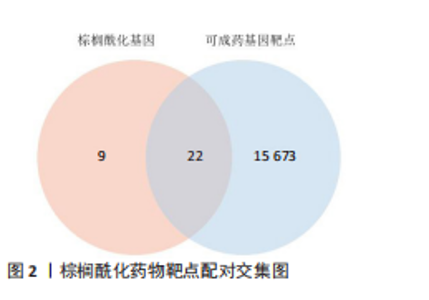
2.1 棕榈酰化药物靶点配对结果 利用R语言编程环境中的“ggplot2”和“VennDiagram”对31种已知参与棕榈酰化过程的关键基因与15 695种具有成药潜力的目标基因进行了系统匹配验证,旨在筛选出棕榈酰化相关的药物靶点,结果发现两者间存在22种交集基因。配对验证图如图2所示。"
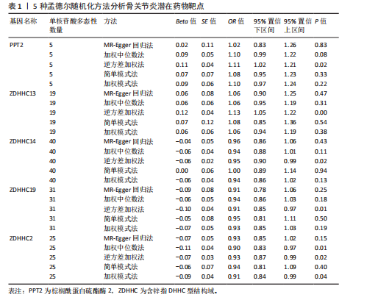
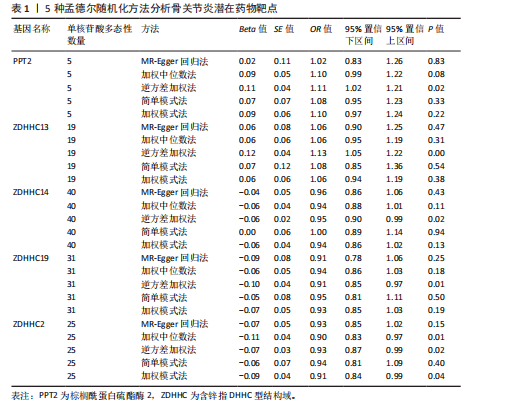
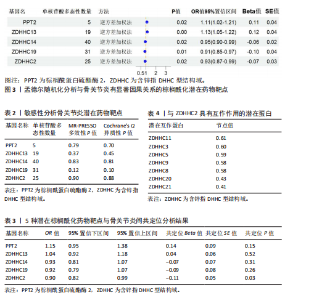
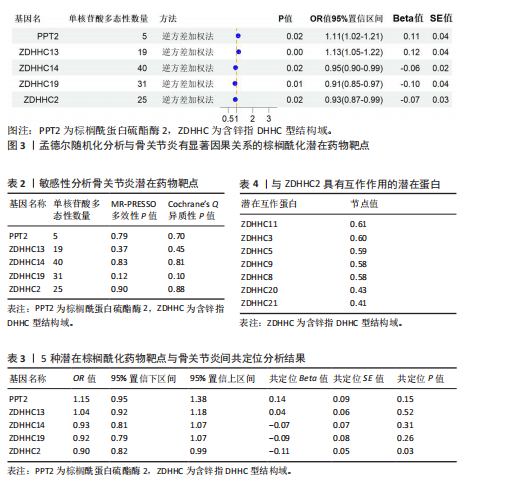
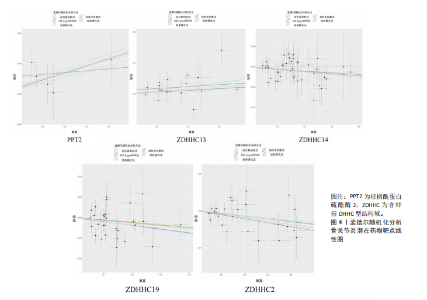
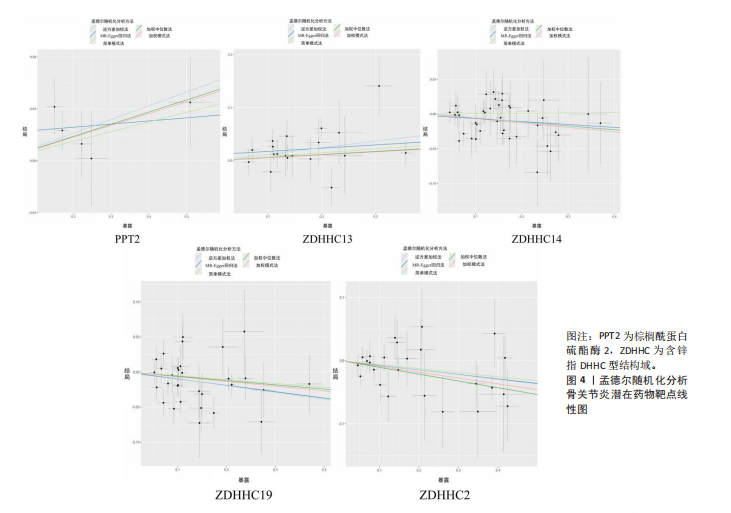
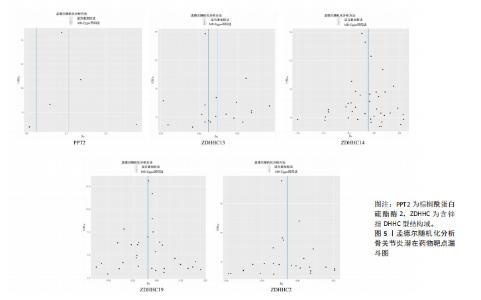
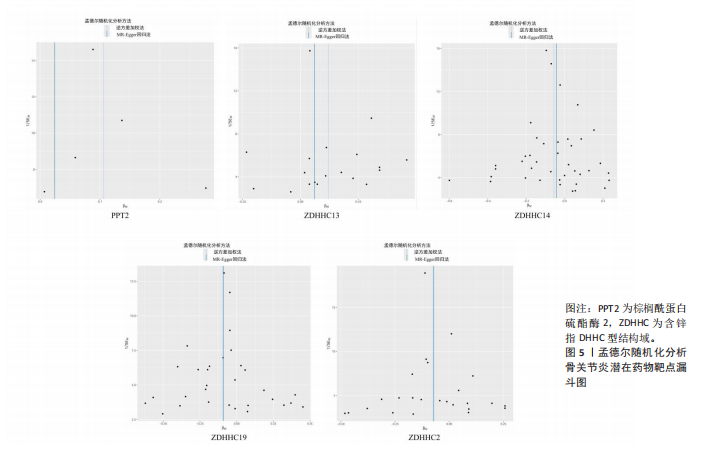
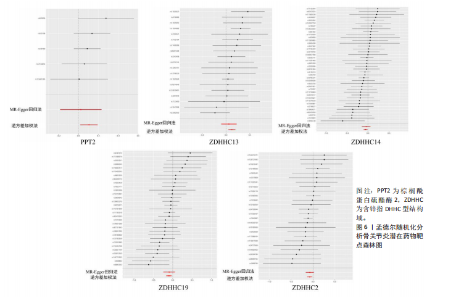
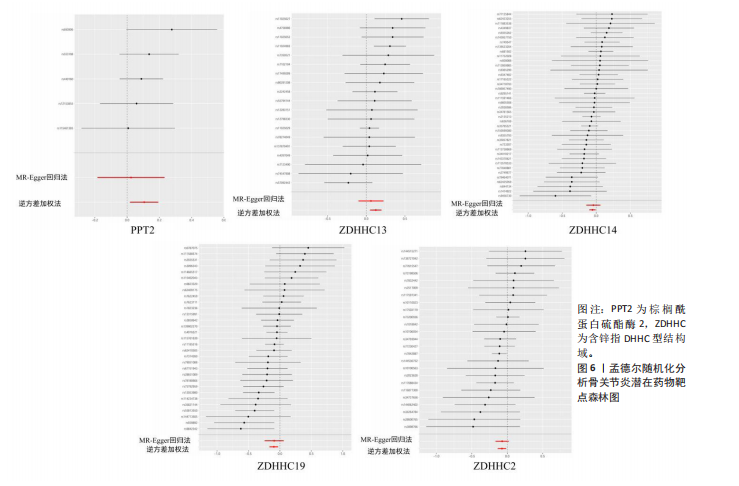
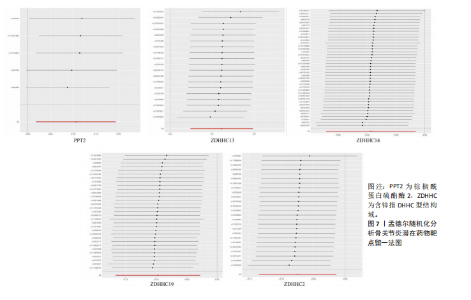
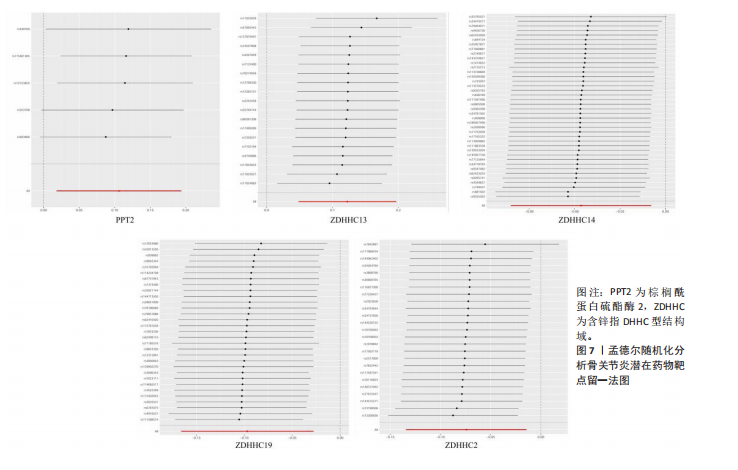
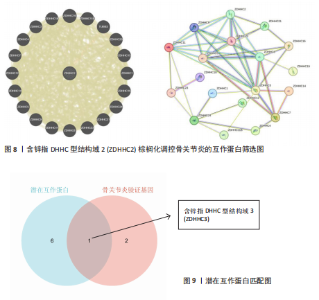
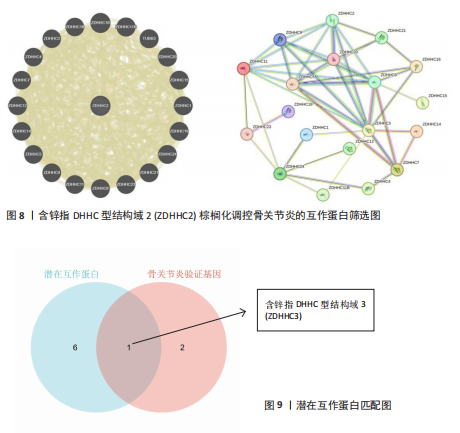
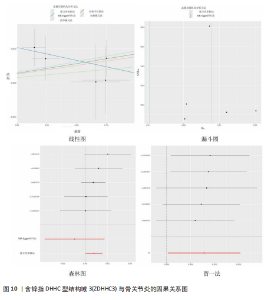
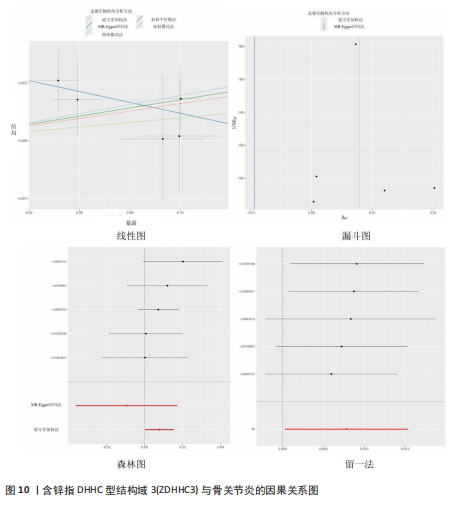
2.2 孟德尔随机化分析潜在药物靶点 基于前期设定的筛选标准,采用MR-Egger回归法、加权中位数法、逆方差加权法、简单模式法和加权模式法5种方法,探究纳入的22种棕榈酰化药靶配对基因和骨关节炎的因果关系,以逆方差加权法分析结果为主,结果显示仅有5种棕榈酰化药物靶点配对基因与骨关节炎间具有显著的因果关系,全部分析结果见表1。如图3所示,与骨关节炎的发生发展存在正向因果关系的有2个,即棕榈酰蛋白硫酯酶2和含锌指DHHC型结构域13。反向因果关系有3个,即含锌指DHHC型结构域14、含锌指DHHC型结构域19、含锌指DHHC型结构域2。 2.3 敏感性分析检验潜在药物靶点 对上述结果进行敏感性分析,经MR-PRESSO多效性检验后发现以上5种棕榈酰化药物靶点与骨关节炎间多效性检验的P值均 > 0.05,结果提示不存在多效性。而后进行棕榈酰化基因与骨关节炎间因果关系的异质性检验,结果提示P值均 > 0.05,即不存在异质性。故经敏感性分析可知,5种棕榈酰化基因靶点均可作为骨关节炎的潜在药物靶点,见表2,图4-7。 2.4 共定位分析确定棕榈酰化调控新型关键药物靶点 将这5种潜在棕榈酰化药物靶点与骨关节炎进行共定位分析,以共享因果变异的概率,如表3所示,结果仅提示含锌指DHHC型结构域2与骨关节炎间具有共定位关系。因此,含锌指DHHC型结构域2是棕榈酰化调控骨关节炎发生发展的新型关键药物靶点。 2.5 GeneMANIA及STRING互作网络筛选潜在互作蛋白药物靶点 采用GeneMANIA网站来预测和构建与含锌指DHHC型结构域2棕榈酰化调控骨关节的关键药物靶点功能相似的基因相互作用网络,以便探索它们的相互作用关系、共表达模式,预测共定位、基因相互作用、通路及相关信息。 如图8所示,共预测出20个潜在互作蛋白。而后导入STRING网站进行节点关联,隐藏无连线的潜在互作蛋白后,导出潜在互作蛋白互作网路图谱,结果发现与含锌指DHHC型结构域2节点相关的蛋白共有7个,均为棕榈酰化蛋白,见表4。以上提示未来应用含锌指DHHC型结构域2制备骨关节炎新型药物时,可针对这7种蛋白开展相关研究,以便发挥协同作用。 2.6 验证基因确定互作蛋白药物靶点 为了进一步明确含锌指DHHC型结构域2与其互作蛋白的有效性和关联性,故选用另一骨关节炎基因组研究数据作为验证基因进行棕榈酰化分析。如图9所示,有3种基因为棕榈酰化基因,将这3种基因与上文7种潜在互作蛋白进行匹配后,仅匹配含锌指DHHC型结构域3这一互作基因。如图10所示,含锌指DHHC型结构域3与骨关节炎的发生具有正向因果关系。"
"
"
"
"
"
"
"
| [1] LI Z, CHENG Q, LIN L, et al. Plasma Membrane-Derived Biomimetic Apoptotic Nanovesicles Targeting Inflammation and Cartilage Degeneration for Osteoarthritis. Small Methods. 2025;9(1):e2400660. [2] SUN T, XUE JB, ZHOU YL, et al. Myricitrin regulates proliferation, apoptosis and inflammation of chondrocytes treated with IL-1β. Cell Mol Biol (Noisy-le-grand). 2020; 66(1):65-69. [3] REN XS, XIE T, ZHUANG HM, et al. The molecular link between obstructive sleep apnea and osteoarthritis: based on bioinformatics analysis and experimental validation. Am J Transl Res. 2023;15(7):4487-4503. [4] KANEKO Y, TANIGAWA N, SATO Y, et al. Oral administration of N-acetyl cysteine prevents osteoarthritis development and progression in a rat model. Sci Rep. 2019;9(1):18741. [5] ZHU J, ZHU Y, XIAO W, et al. Instability and excessive mechanical loading mediate subchondral bone changes to induce osteoarthritis. Ann Transl Med. 2020;8(6):350. [6] ANSARI MY, AHMAD N, HAQQI TM. Oxidative stress and inflammation in osteoarthritis pathogenesis: Role of polyphenols. Biomed Pharmacother. 2020;129:110452. [7] LI X, LU Y, WANG Y, et al. Thermo-responsive injectable naringin-loaded hydrogel polymerised sodium alginate/bioglass delivery for articular cartilage. Drug Deliv. 2021;28(1):1290-1300. [8] AKÇA B, ANKAY YILBAŞ A, ÜZÜMCÜGIL F, et al. How does intraarticular dexmedetomidine injection effect articular cartilage and synovium? An animal study. BMC Anesthesiol. 2020;20(1): 237. [9] GBD 2019 Diseases and Injuries Collaborators. Global burden of 369 diseases and injuries in 204 countries and territories, 1990-2019: a systematic analysis for the Global Burden of Disease Study 2019. Lancet. 2020;396(10258): 1204-1222. [10] FRÉNAL K, KEMP LE, SOLDATI-FAVRE D. Emerging roles for protein S-palmitoylation in Toxoplasma biology. Int J Parasitol. 2014; 44(2):121-131. [11] CAI J, CUI J, WANG L. S-palmitoylation regulates innate immune signaling pathways: molecular mechanisms and targeted therapies. Eur J Immunol. 2023;53(10):e2350476. [12] GREGGI C, MONTANARO M, SCIOLI MG, et al. Modulation of Carnitine Palmitoyl Transferase 1b Expression and Activity in Muscle Pathophysiology in Osteoarthritis and Osteoporosis. Biomolecules. 2024;14(10):1289. [13] DAVIES NM, HOLMES MV, DAVEY SMITH GD. Reading mendelian randomisation studies: a guide, glossary, and checklist for clinicians. BMJ. 2018;362(12):k601. [14] SANDERSON E, GLYMOUR MM, HOLMES MV, et al. Mendelian randomization. Nat Rev Methods Primers. 2022;2:6. [15] WANG YZ, SHEN HB. Challenges and factors that influencing causal inference and interpretation, based on Mendelian randomization studies. Zhonghua Liu Xing Bing Xue Za Zhi. 2020;41(8): 1231-1236. [16] BURGESS S, THOMPSON SG. Interpreting findings from Mendelian randomization using the MR-Egger method. Eur J Epidemiol. 2017;32(5):377-389. [17] FERENCE BA, HOLMES MV, SMITH GD. Using Mendelian Randomization to Improve the Design of Randomized Trials. Cold Spring Harb Perspect Med. 2021;11(7):a040980. [18] HO J, MAK CCH, SHARMA V, et al. Mendelian Randomization Studies of Lifestyle-Related Risk Factors for Osteoarthritis: A PRISMA Review and Meta-Analysis. Int J Mol Sci. 2022; 23(19):11906. [19] LI M, ZHANG L, CHEN CW. Diverse Roles of Protein Palmitoylation in Cancer Progression, Immunity, Stemness, and Beyond. Cells. 2023;12(18):2209. [20] CHAMBERLAIN LH, SHIPSTON MJ. The physiology of protein S-acylation. Physiol Rev. 2015;95(2):341-376. [21] CHEN Y, LI Y, WU L. Protein S-palmitoylation modification: implications in tumor and tumor immune microenvironment. Front Immunol. 2024;15:1337478. [22] VÕSA U, CLARINGBOULD A, WESTRA HJ, et al. Large-scale cis- and trans-eQTL analyses identify thousands of genetic loci and polygenic scores that regulate blood gene expression. Nat Genet. 2021;53(9):1300-1310. [23] ZENGINI E, HATZIKOTOULAS K, TACHMAZIDOU I, et al. Genome-wide analyses using UK Biobank data provide insights into the genetic architecture of osteoarthritis. Nat Genet. 2018;50(4):549-558. [24] DÖNERTAŞ HM, FABIAN DK, VALENZUELA MF, et al. Common genetic associations between age-related diseases. Nat Aging. 2021;1(4):400-412. [25] CEREZO M, SOLLIS E, JI Y, et al. The NHGRI-EBI GWAS Catalog: standards for reusability, sustainability and diversity. Nucleic Acids Res. 2025;53(D1):D998-D1005. [26] KINTU C, SOREMEKUN O, KAMIZA AB, et al. The causal effects of lipid traits on kidney function in Africans: bidirectional and multivariable Mendelian-randomization study. EBioMedicine. 2023;90:104537. [27] BULL CJ, HAZELWOOD E, LEGGE DN, et al. Impact of weight loss on cancer-related proteins in serum: results from a cluster randomised controlled trial of individuals with type 2 diabetes. EBioMedicine. 2024;100:104977. [28] BURGESS S, DUDBRIDGE F, THOMPSON SG. Combining information on multiple instrumental variables in Mendelian randomization: comparison of allele score and summarized data methods. Stat Med. 2016;35(11):1880-1906. [29] HEMANI G, BOWDEN J, SMITH GD. Evaluating the potential role of pleiotropy in Mendelian randomization studies. Hum Mol Genet. 2018; 27(R2):R195-R208. [30] GIAMBARTOLOMEI C, VUKCEVIC D, SCHADT EE, et al. Bayesian test for colocalisation between pairs of genetic association studies using summary statistics. PLoS Genet. 2014;10(5): e1004383. [31] FRANZ M, RODRIGUEZ H, LOPES C, et al. GeneMANIA update 2018. Nucleic Acids Res. 2018;46(W1):W60-W64. [32] SZKLARCZYK D, KIRSCH R, KOUTROULI M, et al. The STRING database in 2023: protein-protein association networks and functional enrichment analyses for any sequenced genome of interest. Nucleic Acids Res. 2023;51(D1):D638-D646. [33] MØRKHOLT AS, OKLINSKI MK, LARSEN A, et al. Pharmacological inhibition of carnitine palmitoyl transferase 1 inhibits and reverses experimental autoimmune encephalitis in rodents. PLoS One. 2020;15(6):e0234493. [34] LI YY, FENG YP, LIU L, et al. Inhibition of HMGB1 suppresses inflammation and catabolism in temporomandibular joint osteoarthritis <em>via</em> NF-κB signaling pathway. Eur J Histochem. 2022;66(3):3357. [35] SHENG J, YOU X, NIE D, et al. ZDHHC2 promoted antimycobacterial responses by selective autophagic degradation of B-RAF and C-RAF in macrophages. Sci Adv. 2025;11(4):eadq7706. [36] ASHRUF OS, ANSARI MY. Natural Compounds: Potential Therapeutics for the Inhibition of Cartilage Matrix Degradation in Osteoarthritis. Life (Basel). 2022;13(1):102. [37] LEFFERTS AR, NORMAN E, CLAYPOOL DJ, et al. Cytokine competent gut-joint migratory T Cells contribute to inflammation in the joint. Front Immunol. 2022;13:932393. [38] KO PJ, DIXON SJ. Protein palmitoylation and cancer. EMBO Rep. 2018;19(10):e46666. [39] LIU Z, LIU C, XIAO M, et al. Bioinformatics Analysis of the Prognostic and Biological Significance of ZDHHC-Protein Acyltransferases in Kidney Renal Clear Cell Carcinoma. Front Oncol. 2020; 10:565414. [40] SUN Y, ZHU L, LIU P, et al. ZDHHC2-Mediated AGK Palmitoylation Activates AKT-mTOR Signaling to Reduce Sunitinib Sensitivity in Renal Cell Carcinoma. Cancer Res. 2023;83(12):2034-2051. [41] ZHANG H, LI X, MA C, et al. Fine-mapping of ZDHHC2 identifies risk variants for schizophrenia in the Han Chinese population. Mol Genet Genomic Med. 2020;8(7):e1190. [42] GREAVES J, MUNRO KR, DAVIDSON SC, et al. Molecular basis of fatty acid selectivity in the zDHHC family of S-acyltransferases revealed by click chemistry. Proc Natl Acad Sci U S A. 2017; 114(8):E1365-E1374. [43] MALGAPO MIP, LINDER ME. Substrate recruitment by zDHHC protein acyltransferases. Open Biol. 2021;11(4):210026. [44] ELLIOT MURPHY R, BANERJEE A. In vitro reconstitution of substrate S-acylation by the zDHHC family of protein acyltransferases. Open Biol. 2022;12(4):210390. [45] LI D, LIU Y, LU Y, et al. Palmitoylation of SARS-CoV-2 S protein is critical for S-mediated syncytia formation and virus entry. J Med Virol. 2022;94(1):342-348. [46] XU M, TAN J, ZHU L, et al. Palmitoyltransferase ZDHHC3 Aggravates Nonalcoholic Steatohepatitis by Targeting S-Palmitoylated IRHOM2. Adv Sci (Weinh). 2023;10(28):e2302130. [47] TANG B, KANG W, DONG Q, et al. Research progress on S-palmitoylation modification mediated by the ZDHHC family in glioblastoma. Front Cell Dev Biol. 2024;12:1413708. [48] SHARMA C, WANG HX, LI Q, et al. Protein acyltransferase DHHC3 regulates breast tumor growth, oxidative stress, and senescence. Cancer Res. 2017;77(24):6880-6890. [49] 曾浩,孙鹏程,柴源,等.甲状腺功能和骨质疏松症的关联:欧洲人群全基因组数据分析[J].中国组织工程研究,2026,30(4):1019-1027. [50] 容向宾,郑海波,莫学燊,等.血浆代谢物、免疫细胞与髋骨关节炎的因果推断:GWAS数据欧洲群体资料分析[J].中国组织工程研究, 2026,30(4):1028-1035. [51] TAYLOR DJ, CHHETRI SB, TASSIA MG, et al. Sources of gene expression variation in a globally diverse human cohort. Nature. 2024; 632(8023):122-130. |
| [1] | Guo Ying, Tian Feng, Wang Chunfang. Potential drug targets for the treatment of rheumatoid arthritis: large sample analysis from European databases [J]. Chinese Journal of Tissue Engineering Research, 2026, 30(6): 1549-1557. |
| [2] | Lyu Guoqing, Aizimaitijiang·Rouzi, Xiong Daohai. Irisin inhibits ferroptosis in human articular chondrocytes: roles and mechanisms [J]. Chinese Journal of Tissue Engineering Research, 2026, 30(6): 1359-1367. |
| [3] | Wu Zhilin, , He Qin, Wang Pingxi, Shi Xian, Yuan Song, Zhang Jun, Wang Hao . DYRK2: a novel therapeutic target for rheumatoid arthritis combined with osteoporosis based on East Asian and European populations [J]. Chinese Journal of Tissue Engineering Research, 2026, 30(6): 1569-1579. |
| [4] | Liu Hongtao, Wu Xin, Jiang Xinyu, Sha Fei, An Qi, Li Gaobiao. Causal relationship between age-related macular degeneration and deep vein thrombosis: analysis based on genome-wide association study data [J]. Chinese Journal of Tissue Engineering Research, 2026, 30(6): 1602-1608. |
| [5] | Bu Yangyang, Ning Xinli, Zhao Chen. Intra-articular injections for the treatment of osteoarthritis of the temporomandibular joint: different drugs with multiple combined treatment options [J]. Chinese Journal of Tissue Engineering Research, 2026, 30(5): 1215-1224. |
| [6] | Gao Zengjie, , Pu Xiang, Li Lailai, Chai Yihui, Huang Hua, Qin Yu. Increased risk of osteoporotic pathological fractures associated with sterol esters: evidence from IEU-GWAS and FinnGen databases [J]. Chinese Journal of Tissue Engineering Research, 2026, 30(5): 1302-1310. |
| [7] | Liu Fengzhi, Dong Yuna, Tian Wenyi, Wang Chunlei, Liang Xiaodong, Bao Lin. Gene-predicted associations between 731 immune cell phenotypes and rheumatoid arthritis [J]. Chinese Journal of Tissue Engineering Research, 2026, 30(5): 1311-1319. |
| [8] | Zhang Cuicui, Chen Huanyu, Yu Qiao, Huang Yuxuan, Yao Gengzhen, Zou Xu. Relationship between plasma proteins and pulmonary arterial hypertension and potential therapeutic targets [J]. Chinese Journal of Tissue Engineering Research, 2026, 30(5): 1331-1340. |
| [9] | Zhang Qian, Huang Dongfeng. Weighted gene co-expression network analysis combined with machine learning to screen and validate biomarkers for osteoarthritis [J]. Chinese Journal of Tissue Engineering Research, 2026, 30(5): 1096-1105. |
| [10] | Zeng Hao, Sun Pengcheng, Chai Yuan, Huang Yourong, Zhang Chi, Zhang Xiaoyun. Association between thyroid function and osteoporosis: genome-wide data analysis of European populations [J]. Chinese Journal of Tissue Engineering Research, 2026, 30(4): 1019-1027. |
| [11] | Rong Xiangbin, , Zheng Haibo, Mo Xueshen, Hou Kun, Zeng Ping, . Plasma metabolites, immune cells, and hip osteoarthritis: causal inference based on GWAS data from European populations [J]. Chinese Journal of Tissue Engineering Research, 2026, 30(4): 1028-1035. |
| [12] | He Qiwang, , , Chen Bo, Liang Fuchao, Kang Zewei, Zhou Yuan, Ji Anxu, Tang Xialin, . Relationship between Alzheimer’s disease and sarcopenia and body mass index: analysis of GWAS datasets for European populations [J]. Chinese Journal of Tissue Engineering Research, 2026, 30(4): 1036-1046. |
| [13] | Ding Yu, Chen Jingwen, Chen Xiuyan, Shi Huimin, Yang Yudie, Zhou Meiqi, Cui Shuai, . Circulating inflammatory proteins and myocardial hypertrophy: large sample analysis of European populations from GWAS Catalog and FinnGen databases [J]. Chinese Journal of Tissue Engineering Research, 2026, 30(4): 1047-1057. |
| [14] | Zhao Feifan, Cao Yujing. An artificial neural network model of ankylosing spondylitis and psoriasis shared genes and machine learning-based mining and validation [J]. Chinese Journal of Tissue Engineering Research, 2026, 30(3): 770-784. |
| [15] | Liu Chu, Qiu Boyuan, Tong Siwen, He Linyuwei, Chen Haobo, Ou Zhixue. A genetic perspective reveals the relationship between blood metabolites and osteonecrosis: an analysis of information from the FinnGen database in Finland [J]. Chinese Journal of Tissue Engineering Research, 2026, 30(3): 785-794. |
| Viewed | ||||||
|
Full text |
|
|||||
|
Abstract |
|
|||||