Chinese Journal of Tissue Engineering Research ›› 2026, Vol. 30 ›› Issue (29): 7696-7705.doi: 10.12307/2026.264
Previous Articles Next Articles
Outcome measures in randomized controlled trials of vestibular peripheral vertigo: a systematic evaluation of traditional Chinese medicine treatment
Hou Mingkai1, 2, Geng Siyu3, Qin Jinghan1, 2, Shen Liya4, Huang Haoxuan4, Zhao Qianao5, Zhang Daopei1, 2, 6, Zhang Huailiang1, 2, 6
- 1Department of Encephalopathy, 4Department of Respiratory Medicine, the First Affiliated Hospital of Henan University of Chinese Medicine, Zhengzhou 450000, Henan Province, China; 2Henan Collaborative Innovation Center for Prevention and Treatment of Major Diseases with Integrated Chinese and Western Medicine, Zhengzhou 450000, Henan Province, China; 3the Second Clinical Medical College of Henan University of Chinese Medicine, Zhengzhou 450046, Henan Province, China; 5Zhongjing Academy, Henan University of Chinese Medicine, Zhengzhou 450000, Henan Province, China; 6Henan Provincial Diagnosis and Treatment Center for Vertigo Diseases, Zhengzhou 450000, Henan Province, China
-
Received:2025-08-26Revised:2025-12-22Online:2026-10-18Published:2026-03-07 -
Contact:Zhang Huailiang, Professor, Chief physician, Doctoral supervisor, Department of Encephalopathy, the First Affiliated Hospital of Henan University of Chinese Medicine, Zhengzhou 450000, Henan Province, China; Henan Collaborative Innovation Center for Prevention and Treatment of Major Diseases with Integrated Chinese and Western Medicine, Zhengzhou 450000, Henan Province, China; Henan Provincial Diagnosis and Treatment Center for Vertigo Diseases, Zhengzhou 450000, Henan Province, China -
About author:Hou Mingkai, MS candidate, Physician, Department of Encephalopathy, the First Affiliated Hospital of Henan University of Chinese Medicine, Zhengzhou 450000, Henan Province, China; Henan Collaborative Innovation Center for Prevention and Treatment of Major Diseases with Integrated Chinese and Western Medicine, Zhengzhou 450000, Henan Province, China -
Supported by:Guideline Group Standard Project of China Association of Chinese Medicine, No. 20220711-BZ-CACM (to ZHL); Major Special Project of Traditional Chinese Medicine Scientific Research in Henan Province, No. 2024ZYZD02 (to ZHL); Zhang Huailiang National Famous Veteran Traditional Chinese Medicine Expert Inheritance Studio Construction Project, No. National Administration of Traditional Chinese Medicine [2018]134 (to ZHL)

CLC Number:
Cite this article
Hou Mingkai, Geng Siyu, Qin Jinghan, Shen Liya, Huang Haoxuan, Zhao Qianao, Zhang Daopei, Zhang Huailiang. Outcome measures in randomized controlled trials of vestibular peripheral vertigo: a systematic evaluation of traditional Chinese medicine treatment[J]. Chinese Journal of Tissue Engineering Research, 2026, 30(29): 7696-7705.
share this article
Add to citation manager EndNote|Reference Manager|ProCite|BibTeX|RefWorks
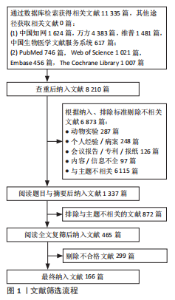
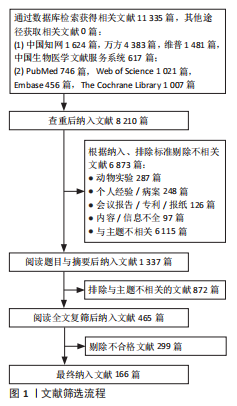
2.1 文献筛选 通过系统性文献检索共获得初始文献11 335篇,查重后纳入8 210篇,根据纳入、排除标准筛选去除不符合文献6 873篇,题目及摘要审读后去除文献872篇,全文阅读后去除文献299篇,最终纳入文献166篇。见图1。"
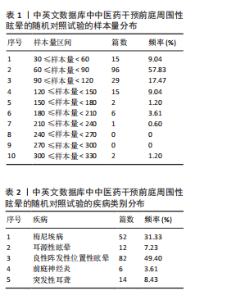
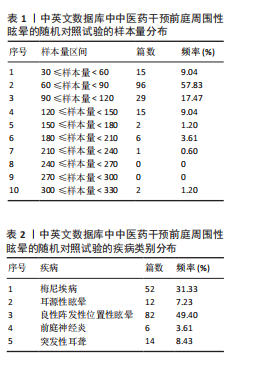
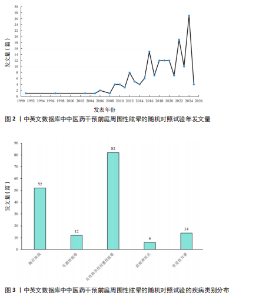
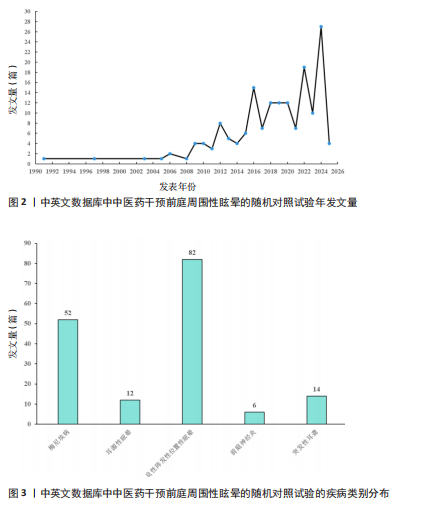
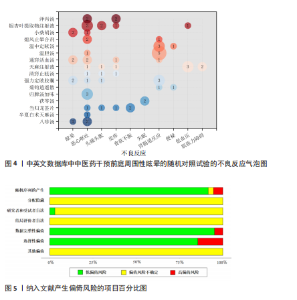
2.2 文献发文趋势 纳入文献共166篇,年发文量整体呈波动上升趋势,1990-2008年发文量趋于平稳,2009-2025年发文量呈现阶段性波动增长,见图2。 2.3 文献基本特征 2.3.1 研究对象 共纳入患者14 718例,单项研究样本量多集中于60-90例,见表1。其中12篇随机对照试验未详细指明前庭周围性眩晕类别,154篇随机对照试验报告研究对象涉及5类疾病,包括梅尼埃病(52篇,31.33%)、良性阵发性位置性眩晕(82篇,49.40%)、耳源性眩晕(12篇,7.23%)、前庭神经炎(6篇,3.61%)、突发性耳聋(14篇,8.43%),见表2,图3。"
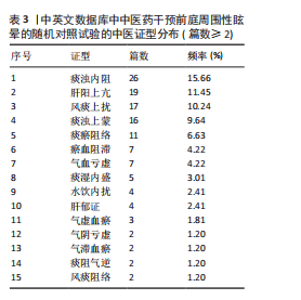
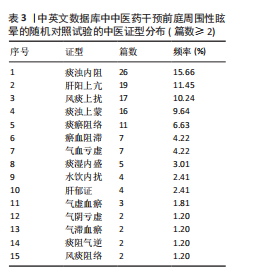
2.3.2 中医辨证分型 纳入166篇文献中,139篇(91.67%)报告了27种中医证型,频率前3位是痰浊内阻证(26篇,15.66%)、肝阳上亢证(19篇,11.45%)、风痰上扰证(17篇,10.24%),见表3。"
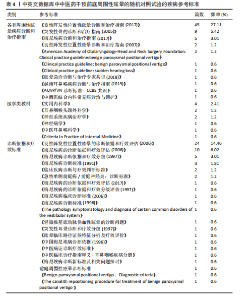
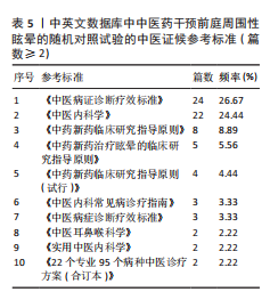
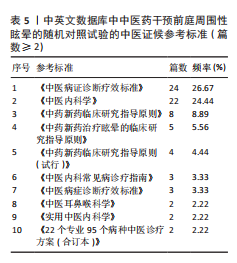
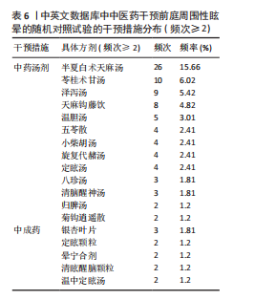
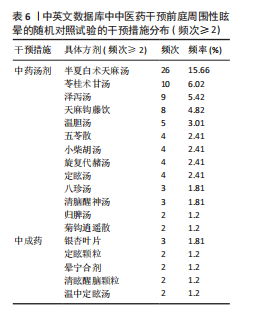
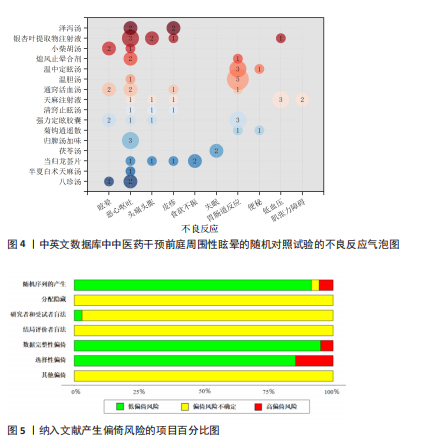
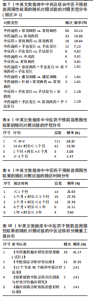
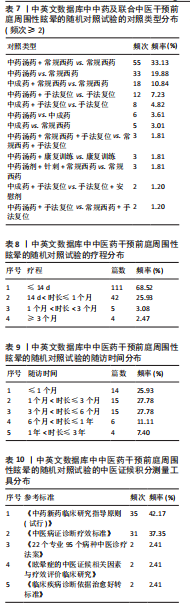
2.3.3 病例选择参考标准 132篇随机对照试验的病例选择参考前庭周围性眩晕相关标准,涉及38种,其中各类前庭周围性眩晕诊断和治疗指南类别中使用频率最多的是《良性阵发性位置性眩晕诊断和治疗指南(2017)》(45篇,27.11%),医学类教材中使用频率最多的是《实用内科学》(4篇,2.41%),诊断依据和疗效标准类别中使用频率最多的是《良性阵发性位置性眩晕的诊断依据与疗效评估(2006)》(24篇,14.46%),见表4。90篇随机对照试验的病例选择参考中医证候诊断标准,涉及25种,使用频率较多的是《中医病证诊断疗效标准》[26](24篇,26.67%)、《中医内科学》(22篇,24.44%)、《中药新药临床研究指导原则》(8篇,8.89%)等,见表5。 2.3.4 干预措施 纳入文献共涉及84种干预措施,中药汤剂中使用频率排名前3的干预措施为半夏白术天麻汤(26次,15.66%)、苓桂术甘汤(10次,6.02%)、泽泻汤(9次,5.42%)等;中成药中使用频率前3依次为银杏叶片(3次,1.81%)、定眩颗粒(2次,1.20%)、晕宁合剂(2次,1.20%),见表6。中药及联合中医干预前庭周围性眩晕对照类型见表7。 2.3.5 不良反应 23篇随机对照试验(13.86%)明确报告了不良反应,共涉及10种不良反应,患者不良反应分布见图4。 2.3.6 疗程和随访 162篇文献报告了疗程情况,范围集中在≤14 d内,≥3个月的文献仅4篇(2.47%)。54篇(32.53%)报告了随访情况,随访时间3 d-2年,其中随访时间≤1个月的文献14篇(25.93%),1-3个月、3-6个月的文献15篇(27.78%),6个月-1年的文献6篇(11.11%),1-3年的文献仅4篇(7.41%)。疗程及随访时间分布见表8,9。 2.4 偏倚风险评估 根据Cochrane偏倚风险评估工具评价纳入文献的偏倚风险[21-22]:①随机序列的产生方面,71篇采用比较合理的随机分配方式,如随机数字表法、抽签法、双色球等,评为“低风险”;14篇采用不合理分组方案,如根据入院顺序、不同的治疗方案、入院单双号等方式,评为“高风险”;81篇仅提到“随机”,但未详细描述,评为“风险不确定”;②分配隐藏方面,纳入文献均未描述,评为“风险不确定”;③研究者和受试者盲法方面,2篇采用双盲设计并通过可行性验证,评为“低风险”;3篇单盲方案存在实施缺陷,评为“高风险”;其余文献因盲法执行细节缺失评为“风险不确定”;④结局评价者盲法方面,纳入文献均未报告,评为“风险不确定”;⑤数据完整性方面,8篇报告脱落情况,其中2篇脱落率超过10%的样本阈值,评为“高风险”,6篇低于该阈值,评为“低风险”;其余文献均未报告,评为“风险不确定”;⑥选择性报告方面,142篇按照研究方案报告结局,评为“低风险”;24篇无法验证报告方案的完整性,评为“风险不确定”;⑦其他偏倚方面,所有文献均未提及额外偏倚来源,统一判定为“风险不确定”,见图5。 2.5 中医证候积分测量工具 纳入文献中83篇报告了15种测量工具,使用频率最高的是《中药新药临床研究指导原则》(35次,42.17%),见表10。"
"
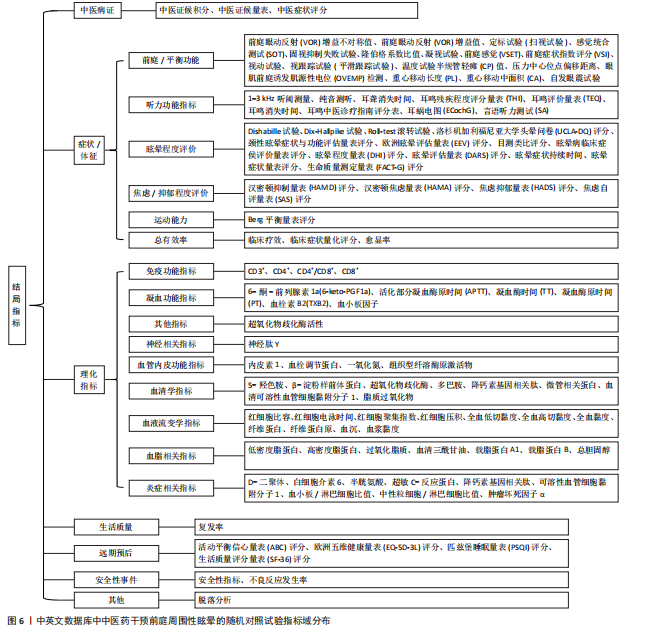
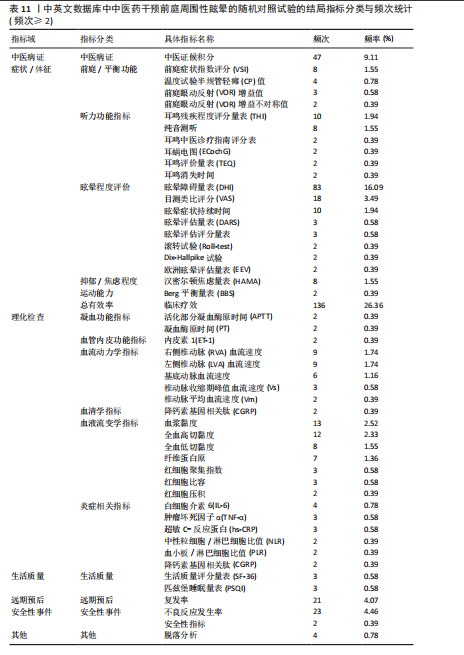
2.6 结局指标 166篇随机对照试验共涉及119种结局指标,累计频次585次。参照COMET手册及中医药临床试验核心指标集研制技术规范,根据指标的功能属性[24,27],将结局指标归为7个指标域,见图6。结局指标种类最多的是理化检查(58种,48.74%)。使用频率最"
高的是症状/体征(341次,58.29%),其中结局指标频率排名前3的是总有效率(138次,23.59%)、眩晕程度评价(129次,22.05%)、前"
"
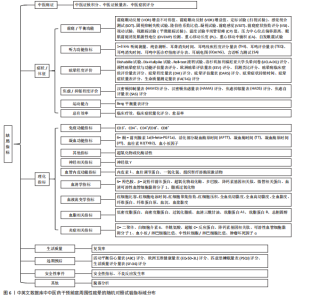
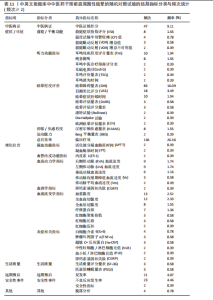
庭/平衡功能(31次,5.30%),此外,所有结局指标中仅出现1次的指标有69个(57.98%),所有研究均未纳入经济学评估指标。频率≥2的结局指标分类及统计见表11。 通过对119种指标进行整理归类,纳入研究的结局指标证据分布气泡图见图7。"
"
"
| [1] 中国医药教育协会眩晕专业委员会,中国医师协会急诊医师分会.眩晕急诊诊断与治疗指南(2021年)[J].中华急诊医学杂志, 2021,30(4):402-406. [2] ROGERS TS, NOEL MA, GARCIA B. Dizziness: Evaluation and Management. Am Fam Physician. 2023;107(5):514-523. [3] MITCHELL MB, BHATTACHARYYA N. Balance Disorder Trends in US Adults 2008-2016: Epidemiology and Functional Impact. OTO Open. 2023;7(2):e58. [4] MUELLEMAN T, SHEW M, SUBBARAYAN R, et al. Epidemiology of dizzy patient population in a neurotology clinic and predictors of peripheral etiology. Otol Neurotol. 2017;38(6):870-875. [5] JEONG J, YOUK TM, CHOI HS. Incidence of peripheral vestibular disorders based on population data of South Korea. J Vestib Res. 2023;33(2):143-150. [6] 何燕,张建友,孙建宏.利多卡因联合阿托品对全麻下择期手术的老年患者心率变异性的影响[J].实用临床医药杂志,2020, 24(18):54-57. [7] XING Y, SI L, ZHANG W, et al. Etiologic distribution of dizziness/vertigo in a neurological outpatient clinic according to the criteria of the international classification of vestibular disorders: a single-center study. J Neurol. 2024;271(5):2446-2457. [8] SEIDEL DU, PARK JJ, SESTERHENN AM, et al. Diagnoses of dizziness and vertigo-related disorders in ENT practices in Germany. Otol Neurotol. 2018;39(4):474-480. [9] 吴延,王广玲,聂作婷,等.2022年版《世界指南:老年人跌倒的预防与管理》解读[J].中国全科医学,2023,26(10):1159-1163,1171. [10] CARENDER WJ, GRZESIAK M, TELIAN SA. Vestibular physical therapy and fall risk assessment. Otolaryngol Clin North Am. 2021; 54(5):1015-1036. [11] CHEN X, WEI D, FANG F, et al. Peripheral vertigo and subsequent risk of depression and anxiety disorders: a prospective cohort study using the UK Biobank. BMC Med. 2024; 22(1):63. [12] 曹美玲,吴沛霞,席淑新.周围性眩晕患者疾病不确定感与社会支持的相关性[J].中国眼耳鼻喉科杂志,2023,23(2):137-140. [13] 刘道飞,李孟高,尹毅.强力定眩胶囊联合倍他司汀治疗前庭周围性眩晕的应用效果[J].黑龙江中医药,2024,53(5):11-13. [14] 宋静静.银杏叶提取物联合甲磺酸倍他司汀片治疗前庭周围性眩晕临床观察[J].实用中医药杂志,2023,39(7):1342-1345. [15] 王瑞平,肇晖,李斌.随机对照临床试验设计要点和规范[J].上海医药,2022,43(7):72. [16] WANG Y, GHADIMI M, WANG Q, et al. Instruments assessing risk of bias of randomized trials frequently included items that are not addressing risk of bias issues. J Clin Epidemiol. 2022;152:218. [17] 吴泰相,李幼平,卞兆祥,等. 中医药临床随机对照试验报告规范(征求意见稿) [J].中国循证医学杂志,2007,7(8):601-605. [18] 邱瑞瑾,孙杨,胡嘉元,等.临床研究中选择结局指标测量工具的方法[J]. 中国循证医学杂志,2018,18(2):238-243. [19] BISDORFF AR, STAAB JP, NEWMAN-TOKER DE. Overview of the International Classification of Vestibular Disorders. Neurol Clin. 2015;33(3): 541-550, vii. [20] 中华医学会神经病学分会,中华神经科杂志编辑委员会.眩晕诊治专家共识[J].中华神经科杂志,2010,43(5):369-374. [21] CUMPSTON M, LI T, PAGE MJ, et al. Updated guidance for trusted systematic reviews: a new edition of the Cochrane Handbook for Systematic Reviews of Interventions. Cochrane Database Syst Rev. 2019;10(10):ED000142. [22] 谷鸿秋,王杨,李卫.Cochrane 偏倚风险评估工具在随机对照研究Meta分析中的应用[J].中国循环杂志,2014,29(2):147-148. [23] 国家中医药管理局.中医临床诊疗术语·第2部分·证候[S].北京:中国标准出版社,2021. [24] 张明妍,张俊华,张伯礼,等.中医药临床试验核心指标集研制技术规范[J].中华中医药杂志,2021,36(2):924-928. [25] 李猛,胡晓艺,罗臻,等.针灸治疗荨麻疹临床研究的证据图分析[J].中国针灸,2025, 45(10):1519-1526. [26] 吴勉华,王新月.中医内科学[M].北京:中国中医药出版社,2012. [27] WILLIAMSON PR, ALTMAN DG, BAGLEY H, et al. The COMET Handbook: version 1.0. Trials. 2017;18(Suppl 3):280. [28] 王子衿,孙伟伟,张颖思,等.中医药治疗子宫内膜异位症随机对照试验结局指标与测量工具的现状分析[J].中国中药杂志, 2023,48(16):4521-4528. [29] 《中成药治疗优势病种临床应用指南》标准化项目组.中成药治疗眩晕相关疾病临床应用指南(2022年)[J].中国中西医结合杂志,2023,43(10):1157-1166. [30] 安然逊,徐园,石浩然,等.医疗保健干预性系统评价再评价报告规范:PRIOR声明解读[J].中国循证医学杂志,2023,23(8):978-987. [31] 任高灿,刘锦,高风,等.中医药治疗冠状动脉血运重建术后心绞痛的随机对照试验结局指标分析[J].中华中医药杂志,2024, 39(9):4884-4893. [32] 李涵玥,李旖旎,向林妹,等.抗阻运动对神经根型颈椎病患者疼痛和功能影响的荟萃分析[J].中国组织工程研究,2026,30(4): 987-996. [33] 周航,王丽琼,屠建锋,等.针刺随机对照试验中盲法评价现状与方法学思考[J].中医杂志,2024,65(19):1978-1982+1987. [34] 闫世艳,何丽云,刘保延.随机对照临床试验中盲法质量评价现状[J].中国循证医学杂志,2014,14(5):631-635. [35] 孙聪,董玉江,高红梅,等.中医药治疗心房颤动的优势及临床研究要点分析[J].中医杂志,2025,66(2):133-138. [36] 唐健元,艾彦伶,梁丹,等.证候类中药新药临床转化关键技术问题的思考与实践[J].科学通报,2024,69(34):5020-5027. [37] 王宝祥,许俊杰,陆霞,等.苓桂术甘汤联合管石复位对良性阵发性位置性眩晕患者中医证候积分、血液流变学指标及预后的影响[J].中国中医急症,2018,27(6):1004-1007. [38] VAISHALI K, KISHORE CP, SAMPATH CPR, et al. Effectiveness of vestibular rehabilitation therapy and yoga in the management of chronic peripheral vertigo: A randomized controlled trial. F1000Res. 2024;13:578. [39] 万幸,官春燕,李菲,等.前庭周围性眩晕患者跌倒管理的研究进展[J].上海护理, 2024,24(8):28-32. [40] 张彭,张艺尹,许家昕,等.中医药疗效评价指标体系构建方法中存在的问题及思考[J].中医杂志,2024,65(18):1875-1881. [41] WOLFOVITZ A, GECEL NA, GIMMON Y, et al. Navigating the vestibular maze: text-mining analysis of publication trends over five decades. Front Neurol. 2024;15:1292640. [42] KIRBAC A, KAYA E, INCESULU SA, et al. Differentiation of peripheral and non-peripheral etiologies in children with vertigo/dizziness: The video-head impulse test and suppression head impulse paradigm. Int J Pediatr Otorhinolaryngol. 2024;179:111935. [43] AZAMI M, FUSHIKI H, TSUNODA R, et al. Clinical features of persistent postural-perceptual dizziness with isolated otolith dysfunction as revealed by VEMP and vHIT findings. Front Neurol. 2023;14:1129569. [44] 刘保延,李洪皎,何丽云,等.证候疗效评价的研究进展[J].中医杂志,2009,50(5):397-399+421. [45] 赵雪,戴国华,管慧,等.中医临床疗效评价指标的选择与应用[J].中华中医药杂志, 2022,37(4):1863-1867. [46] 王家良.临床流行病学:临床科研设计、测量与评价[M].上海:上海科学技术出版社,2014. [47] STRUPP M, KERN NL, LAURELL G, et al. World-wide survey on the treatment of peripheral vestibular disorders. Front Neurol. 2025;16:1540443. [48] 邢冬梅,张俊华,张伯礼.中医临床研究核心结局指标集形成路径[J].中华中医药杂志,2014,29(5):1352-1355. [49] 高一城,曹蕊,刘芷含,等.中医药临床实践指南推荐意见形成的难点及方法学建议[J].中医杂志,2024,65(3):251-255. [50] YEO BSY, TOH EMS, LIM NE, et al. Association of Benign Paroxysmal Positional Vertigo with Depression and Anxiety-A Systematic Review and Meta-Analysis. Laryngoscope. 2024;134(2):526-534. [51] 顾金光,魏光成,赵勇,等.手法治疗膝骨关节炎随机对照试验的结局指标现状分析[J].中国中医药信息杂志,2025,32(4):58-64. [52] 孙亚男,于长禾.中医个体化疗效评价系统的构建思路与方法[J].中华中医药杂志, 2023,38(11):5133-5137. [53] 杨军,金玉莲,陈建勇,等.重视内耳功能精细化个体化综合评估[J].临床耳鼻咽喉头颈外科杂志,2022,36(9):651-658+664. [54] 李芙瑶,崔哲洙,雷慧超,等. 1例分泌性中耳炎鼓膜置管术后合并良性阵发性位置性眩晕、突发性耳聋以及前庭神经炎的病例报告[J].延边大学医学学报,2024,47(6):731-733. [55] 张晶晶,钟昀,陈卫银,等.泽泻汤加减治疗梅尼埃病疗效及安全性的Meta分析[J].中医临床研究,2023,15(32):100-106. [56] 刘兴健,杜一,王郁,等.良性阵发性位置性眩晕患者七年大数据回顾分析[J].中华耳科学杂志,2024,22(1):23-26. [57] 中国研究型医院学会眩晕医学专业委员会,北京医学会眩晕医学分会,吴阶平医学基金会眩晕医学专家委员会.眩晕医学科建设的临床路径[J].中国研究型医院,2020,7(3):13-15. [58] 单希征,王恩彤.眩晕医学的4.0时代[J].北京医学,2021,43(6):483-485. |
| [1] | Leng Xiaoxuan, Zhao Yuxin, Liu Xihua. Effects of different neuromodulatory stimulation modalities on non-motor symptoms in Parkinson’s patients: a network meta-analysis [J]. Chinese Journal of Tissue Engineering Research, 2026, 30(5): 1282-1293. |
| [2] | Tian Xuanhe, Tong Siyu, Teng Fei, Zhong Shuai, Zhao Xiaohu, Zhang Yuya, Liu Yuan, Jiang Ping. Potential targets and drug prediction for gout: identification of druggable genes [J]. Chinese Journal of Tissue Engineering Research, 2026, 30(29): 7706-7714. |
| [3] | Li Zhengpeng, Shao Weigang, Zeng Hao, Xiang Kelin, Zhang Botao, Zou Shunyi, Chen Sheng, Qi Wen. Osteoarthritis characteristic genes and prediction of targeted food-medicine homology traditional Chinese medicine: bioinformatics analysis and kinetic simulation [J]. Chinese Journal of Tissue Engineering Research, 2026, 30(29): 7739-7748. |
| [4] | Sun Kui, Huang Hailun, Wei Yatao, Liu Yongai, Gao Heng. Bibliometric analysis of exercise therapy interventions for adolescent idiopathic scoliosis [J]. Chinese Journal of Tissue Engineering Research, 2026, 30(29): 7755-7763. |
| [5] | Wang Shaona, Li Ruiyang, An Lanhua, Zhang Jinsheng. Role of non-coding RNAs in Alzheimer’s disease and treatment with traditional Chinese medicine [J]. Chinese Journal of Tissue Engineering Research, 2026, 30(29): 7663-7672. |
| [6] | Ren Yi, Wang Qing, Yu Shaohong, Qiu Zhengang. Meta-analysis of robot-assisted walking training on lower limb motor function improvement in Parkinson's disease patients#br# [J]. Chinese Journal of Tissue Engineering Research, 2026, 30(28): 7475-7484. |
| [7] | Fan Yuanhe, Yang Yongju, He Fanyu, Qiao Long, Zhang Yu, Zhang Shuai, Li Zhiwen, Guan Xuefeng. Mechanism by which Yougui Pill inhibits pyroptosis of chondrocytes in rats with knee osteoarthritis [J]. Chinese Journal of Tissue Engineering Research, 2026, 30(24): 6214-6219. |
| [8] | Zhong Haotian, Li Jianwen, Han Weichao, Li Songbo. Traditional Chinese Medicine compound formula and effective ingredients for treating intervertebral disc degeneration: a multi-targeted and holistic regulation concept [J]. Chinese Journal of Tissue Engineering Research, 2026, 30(24): 6316-6327. |
| [9] | Yang Jun, Li Bin, Xing Guogang, Cai Jie, Liu Lu, Chen Peng, Zhang Tao, Fu Yuanbo, Liu Huilin. Application of patch-clamp technique in traditional Chinese medicine: a visual analysis of relevant literature [J]. Chinese Journal of Tissue Engineering Research, 2026, 30(23): 6010-6020. |
| [10] | Yao Yinxuan, Wen Suru, Chen Chaosheng, Wen Xin, Feng Keying, Kuang Zaoyuan, Zhang Wen. Puerarin-loaded injectable double-network hydrogel for promoting skin wound healing [J]. Chinese Journal of Tissue Engineering Research, 2026, 30(20): 5201-5213. |
| [11] | Xu Yawei, Meng Shilong, Zhang Xu, Wang Chengjie, Yuan Yifeng, Shi Xiaolin, Wang Jiao, Liu Kang . Repairing bone defects with active ingredients of traditional Chinese medicine combined with hydrogels: successes and challenges [J]. Chinese Journal of Tissue Engineering Research, 2026, 30(20): 5295-5303. |
| [12] | Wu Yilin, Tian Hongying, Sun Jiale, Jiao Jiajia, Zhao Zihan, Shao Jinhuan, Zhao Kaiyue, Zhou Min, Li Qian, Li Zexin, Yue Changwu. Intervention effect and mechanism of Compound Herba Gueldenstaedtiae in a mouse model of breast hyperplasia [J]. Chinese Journal of Tissue Engineering Research, 2026, 30(17): 4377-4389. |
| [13] | Fu Xiao, Li Jigao, Yan Xiaonan, Song Zhe, Guo Yuejun, Li Hanbing, Zhou Quan. Traditional Chinese medicine effective ingredients for the treatment of rheumatoid arthritis: mechanism based on nuclear factor kappaB signaling pathway [J]. Chinese Journal of Tissue Engineering Research, 2026, 30(16): 4180-4192. |
| [14] | Gao Shiai, Yu Zifu, Chen Jinhui, Cao Xinyan, Leng Xiaoxuan, Liu Xihua. Efficacy of non-invasive neuromodulation techniques on autism spectrum disorder: a network meta-analysis [J]. Chinese Journal of Tissue Engineering Research, 2026, 30(10): 2550-2559. |
| [15] | Qi Xiang, Cao Shan, Chen Jian, Zhang Yijia, Liu Keke, Xu Zifu, Liu Wang, Fu Xiaoxiao, Yin Xiaolei. Screening of genes related to mitochondrial dysfunction and ferroptosis in atherosclerosis and target prediction of regulatory traditional Chinese medicine [J]. Chinese Journal of Tissue Engineering Research, 2026, 30(10): 2641-2652. |
| Viewed | ||||||
|
Full text |
|
|||||
|
Abstract |
|
|||||