Chinese Journal of Tissue Engineering Research ›› 2026, Vol. 30 ›› Issue (36): 9640-9648.doi: 10.12307/2026.393
Causal association study between resting-state brain network functional and structural connectivity and autoimmune diseases
Wang Xiaoxuan1, Xiao Lu2, 3, Miao Changhong2, 3, Yuan Weijie4, Guo Dengzhou5, Yuan Ziwei1
- 1Department of Encephalopathy, 5Department of Nephropathy, the First Affiliated Hospital of Hebei University of Traditional Chinese Medicine, Shijiazhuang 050000, Hebei Province, China; 2National Clinical Research Center of Acupuncture and Moxibustion of Traditional Chinese Medicine, Tianjin 300380, China; 3Department of Emergency, First Teaching Hospital of Tianjin University of Traditional Chinese Medicine, Tianjin 300380, China; 4Department of Trauma III, the Third Hospital of Shijiazhuang, Shijiazhuang 050000, Hebei Province, China
-
Received:2025-08-01Revised:2025-10-22Online:2026-12-28Published:2026-05-26 -
Contact:Yuan Ziwei, MS, Associate chief physician, Master's supervisor, Department of Encephalopathy, the First Affiliated Hospital of Hebei University of Traditional Chinese Medicine, Shijiazhuang 050000, Hebei Province, China Co-corresponding author: Xiao Lu, MD, Associate chief physician, Master's supervisor, National Clinical Research Center of Acupuncture and Moxibustion of Traditional Chinese Medicine, Tianjin 300380, China; Department of Emergency, First Teaching Hospital of Tianjin University of Traditional Chinese Medicine, Tianjin 300380, China -
About author:Wang Xiaoxuan, MS, Physician, Department of Encephalopathy, the First Affiliated Hospital of Hebei University of Traditional Chinese Medicine, Shijiazhuang 050000, Hebei Province, China -
Supported by:National Natural Science Foundation of China, No. 82405123 (to XL); Research Project of Hebei Provincial Administration of Traditional Chinese Medicine, No. T2025106 (to XL); "Innovation Project" Fund of First Teaching Hospital of Tianjin University of Traditional Chinese Medicine, No. 201928 (to XL); The Seventh Batch of National Academic Experience Inheritance Project for Senior Traditional Chinese Medicine Experts, No. [2021]272 (to YZW); Hebei Provincial Natural Science Foundation, No. H2022423367 (to GDZ)

CLC Number:
Cite this article
Wang Xiaoxuan, Xiao Lu, Miao Changhong, Yuan Weijie, Guo Dengzhou, Yuan Ziwei. Causal association study between resting-state brain network functional and structural connectivity and autoimmune diseases[J]. Chinese Journal of Tissue Engineering Research, 2026, 30(36): 9640-9648.
share this article
Add to citation manager EndNote|Reference Manager|ProCite|BibTeX|RefWorks
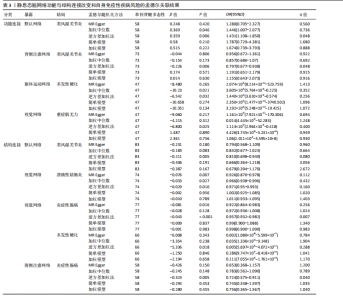
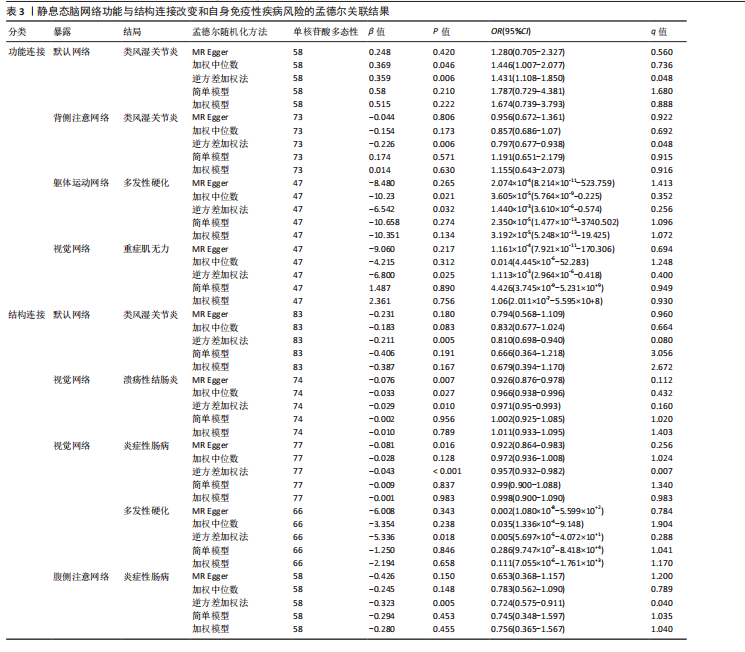
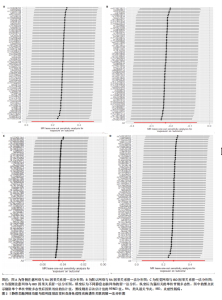
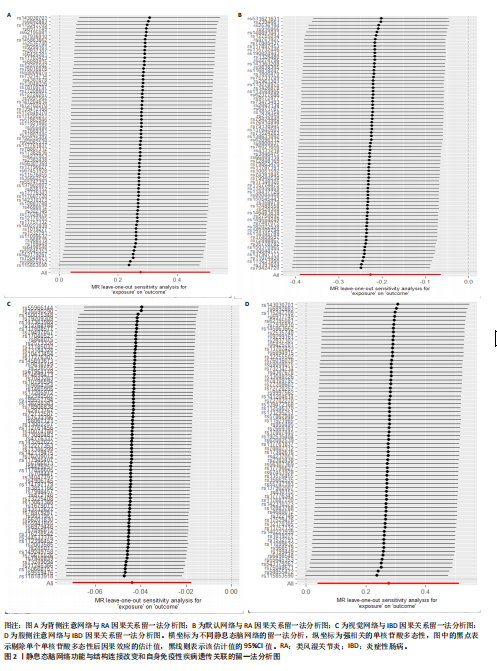
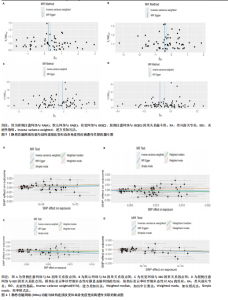
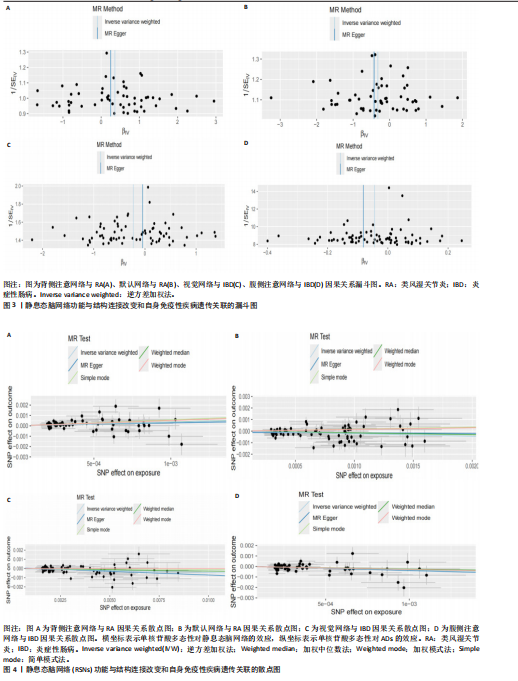
2.1 工具变量的筛选 通过进行相关性分析及去除连锁不平衡,剔除与混杂因素相关的单核苷酸多态性后,筛选出符合要求的工具变量,所有工具变量的F统计量均>10,表明弱工具变量的可能性较低。 2.2 静息态脑网络功能/结构连接对自身免疫性疾病的影响及敏感性分析 以静息态脑网络的功能/结构连接为暴露变量,自身免疫性疾病为结局变量,通过孟德尔随机化分析发现5种自身免疫性疾病与特定静息态脑网络的因果关联达到名义显著性(逆方差加权法P < 0.05),结果见表3。初步分析表明,默认网络、背侧注意网络、腹侧注意网络、躯体运动网络及视觉网络的连接异常与自身免疫性疾病风险相关,其中经错误发现率校正(q < 0.05)后仍具有统计学显著性的发现包括:默认网络的功能连接增强与类风湿关节炎发病风险升高呈正相关(OR=1.431,95%CI=1.108-1.850,P=0.006,q=0.048),该关联在FinnGen(P=0.041)和GWAS Catalog(P=0.026)数据库中得到验证。背侧注意网络的功能降低可能与类风湿关节炎发病风险降低相关(OR=0.797,95%CI=0.677-0.938,P=0.006,q=0.048),尽管加权模型法和简单模型法存在结果方向分歧(可能存在潜在极端值干扰),逆方差加权法、加权中位数与MR Egger的效应方向一致仍支持其潜在的遗传关联,然而,该效应在其余两个数据库中未达到统计学意义。此外,视觉网络结构连接降低与炎症性肠病的发病风险降低相关(OR=0.957,95%CI=0.932-0.982,P < 0.001,q=0.007),该关联在FinnGen(P=0.002)和GWAS Catalog(P=0.002)数据库中均得到验证,腹侧注意网络的结构连接减弱同样与炎症性肠病风险降低相关(OR=0.724,95%CI=0.575-0.911,P=0.005,q=0.04),其关联在GWAS Catalog数据库中也显示显著一致性(P=0.032)。除加权模式与简单模式法存在分歧外,其余静息态脑网络的功能/结构连接与自身免疫性疾病的关联,MR-Egger、加权中位数法、加权模型法和简单模型法结果方向与逆方差加权法基本一致,证实了结果的总体可靠性。这些发现系统揭示了特定脑网络功能/结构改变对免疫疾病风险的影响,并通过多数据库验证增强了结果的可靠性。研究未发现静息态脑网络功能/结构连接与系统性红斑狼疮、1型糖尿病及乳糜泻有显著因果关联(P值均> 0.05)。异质性检验表明工具变量无明显异质性(P值> 0.05);MR-PRESSO和MR-Egger intercept分析发现,纳入的静息态脑网络的功能/结构连接相关工具变量P均> 0.05,说明纳入的工具变量之间不存在水平多效性,结果可靠,见表4。留一法检验结果发现,在逐一剔除单个单核苷酸多态性后结果没有发生改变,未见明显离群值,进一步验证了研究结果的稳健性(图2)。漏斗图呈现对称分布特征,提示方向性偏倚较小,见图3。阳性结果的散点图展示见图4。 2.3 自身免疫性疾病对静息态脑网络功能/结构连接的影响及敏感性分析 通过反向孟德尔随机化分析进一步探究自身免疫性疾病对静息态脑网络功能/结构的因果关系。分析发现4种自身免疫性疾病与静息态脑网络存在名义显著性关联(逆方差加权法P < 0.05):类风湿关节炎的遗传易感性可能导致默认模式网络(default mode network,DMN)结构连接增强(OR=1.062,95%CI=1.000-1.128,P=0.048);系统性红斑狼疮风险与默认网络的结构连接相关(OR=1.000 04,95%CI=1.000-1.000 1,P=0.006);乳糜泻的遗传易感性可能降低默认网络功能连接(OR=0.999,95%CI= 0.999 4-0.999 8,P=0.026)、边缘网络功能连接(OR=0.999,95%CI=0.999 6-0.999 9,P=0.014)及背侧注意网络结构连接(OR=0.999,95%CI=0.999 5-0.999 9,P=0.013);多发性硬化症风险与默认网络结构连接(OR=0.999,95%CI=0.999 6-0.999 9,P=0.041)、腹侧注意网络结构连接(OR=0.999,95%CI=0.999 7-0.999 9,P=0.020)及全局网络结构(OR=0.999,95%CI=0.999 3-0.999 9,P= 0.020)连接减弱相关。但经严格错误发现率校正(q < 0.05)后,上述关联均未达到统计学显著性(q > 0.05),提示这些初步发现可能受多重检验假阳性影响,需后续研究验证。为保证结果的可靠性,进行了敏感性分析,MR-PRESSO和MR-Egger intercept分析未发现与自身免疫性疾病相关的单核苷酸多态性存在水平多效性(P > 0.05);Cochran Q检验提示自身免疫性疾病的工具变量无异质性。对结果进行“留一法”分析证实时,发现逐一剔除单核苷酸多态性因果效应方向与主分析一致,表明结果并未被单一遗传变异驱动,所有研究的漏斗图均为对称分布,提示结果无明显的发表偏倚。"
"
"

"

| [1] CONRAD N, MISRA S, VERBAKEL JY, et al. Incidence, prevalence, and co-occurrence of autoimmune disorders over time and by age, sex, and socioeconomic status: a population-based cohort study of 22 million individuals in the UK. Lancet. 2023;401(10391):1878-1890. [2] MILLER FW. The increasing prevalence of autoimmunity and autoimmune diseases: an urgent call to action for improved understanding, diagnosis, treatment, and prevention. Curr Opin Immunol. 2023;80:102266. [3] GUTIERREZ-ARCELUS M, RICH SS, RAYCHAUDHURI S. Autoimmune diseases - connecting risk alleles with molecular traits of the immune system. Nat Rev Genet. 2016;17(3):160-174. [4] SCHERLINGER M, MERTZ P, SAGEZ F, et al. Worldwide trends in all-cause mortality of auto-immune systemic diseases between 2001 and 2014. Autoimmunity Rev. 2020;19(6):102531. [5] ZHAO M, ZHAI H, LI H, et al. Age-standardized incidence, prevalence, and mortality rates of autoimmune diseases in adolescents and young adults (15-39 years): an analysis based on the global burden of disease study 2021. BMC Public Health. 2024;24(1):1800. [6] SONG Y, LI J, WU Y. Evolving understanding of autoimmune mechanisms and new therapeutic strategies of autoimmune disorders. Signal Transduct Target Ther. 2024;9(1):263. [7] ROBERTS MH, ERDEI E. Comparative United States autoimmune disease rates for 2010-2016 by sex, geographic region, and race. Autoimmun Rev. 2020;19(1):102423 [8] FANG Y, NI J, WANG YS, et al. Exosomes as biomarkers and therapeutic delivery for autoimmune diseases: Opportunities and challenges. Autoimmun Rev. 2023;22(3):103260. [9] SHI G, ZHANG J, ZHANG ZJ, et al. Systemic Autoimmune Diseases 2014. J Immunol Res. 2015;2015:183591. [10] VIVAS AJ, BOUMEDIENE S, TOBÓN GJ. Predicting autoimmune diseases: A comprehensive review of classic biomarkers and advances in artificial intelligence. Autoimmun Rev. 2024;23(9):103611. [11] DHITAL R, KAVANAUGH A. Autoimmune consequences of biologics. J Allergy Clin Immunol. 2022;149(1):48-50. [12] MCCOY MK, TANSEY MG. TNF signaling inhibition in the CNS: implications for normal brain function and neurodegenerative disease. J Neuroinflammation. 2008;5:45. [13] BALOGH L, OLÁH K, SÁNTA S, et al. Novel and potential future therapeutic options in systemic autoimmune diseases. Front Immunol. 2024;15:1249500. [14] SHAH SC, ITZKOWITZ SH. Colorectal Cancer in Inflammatory Bowel Disease: Mechanisms and Management. Gastroenterology. 2022;162(3): 715-730.e3. [15] KRUSIŃSKI A, GRZYWA-CELIŃSKA A, SZEWCZYK K, et al. Various Forms of Tuberculosis in Patients with Inflammatory Bowel Diseases Treated with Biological Agents. Int J Inflam. 2021; 2021:6284987. [16] ROSE NR. Prediction and Prevention of Autoimmune Disease in the 21st Century: A Review and Preview. Am J Epidemiol. 2016; 183(5):403-406. [17] BERKOVIC D, AYTON D, BRIGGS AM, et al. “The Financial Impact Is Depressing and Anxiety Inducing”: A Qualitative Exploration of the Personal Financial Toll of Arthritis. Arthritis Care Res (Hoboken). 2021;73(5):671-679. [18] STONE R. The inflamed brain. Science. 2024; 384(6697):728-733. [19] AL-DIWANI AAJ, POLLAK TA, IRANI SR, et al. Psychosis: an autoimmune disease? Immunology. 2017;152(3):388-401 [20] BENROS ME, MORTENSEN PB, EATON WW. Autoimmune diseases and infections as risk factors for schizophrenia. Ann N Y Acad Sci. 2012; 1262:56-66. [21] LIU H, LIU H, TIAN B, et al. Alterations in cerebral perfusion and corresponding brain functional networks in systemic lupus erythematosus with cognitive impairment. Sci Rep. 2025;15:1310. [22] BARRACLOUGH M, MCKIE S, PARKER B, et al. Altered cognitive function in systemic lupus erythematosus and associations with inflammation and functional and structural brain changes. Ann Rheum Dis. 2019;78(7):934-940. [23] VALLERAND IA, PATTEN SB, BARNABE C. Depression and the risk of rheumatoid arthritis. Curr Opin Rheumatol. 2019;31(3): 279-284. [24] FIGUEIREDO-BRAGA M, CORNABY C, CORTEZ A, et al. Influence of Biological Therapeutics, Cytokines, and Disease Activity on Depression in Rheumatoid Arthritis. J Immunol Res. 2018;2018:5954897. [25] MARSLAND AL, KUAN DCH, SHEU LK, et al. Systemic Inflammation and Resting State Connectivity of the Default Mode Network. Brain Behav Immun. 2017;62:162-170. [26] LIZANO P, KIELY C, MIJALKOV M, et al. Peripheral inflammatory subgroup differences in anterior Default Mode network and multiplex functional network topology are associated with cognition in psychosis. Brain Behav Immun. 2023;114:3-15. [27] HANLY JG, ROBERTSON JW, LEGGE A, et al. Resting state functional connectivity in SLE patients and association with cognitive impairment and blood-brain barrier permeability. Rheumatology (Oxford). 2023;62(2):685-695. [28] HANLY JG, KOZORA E, BEYEA SD, et al. Review: Nervous System Disease in Systemic Lupus Erythematosus: Current Status and Future Directions. Arthritis Rheumatol. 2019;71(1):33-42. [29] SEKULA P, DEL GRECO MF, PATTARO C, et al. Mendelian Randomization as an Approach to Assess Causality Using Observational Data. J Am Soc Nephrol. 2016;27(11):3253-3265. [30] TISSINK E, WERME J, LANGE S C DE, et al. The Genetic Architectures of Functional and Structural Connectivity Properties within Cerebral Resting-State Networks. eNeuro. 2023; 10(4):ENEURO.0242-22.2023. [31] THOMAS YEO BT, KRIENEN FM, SEPULCRE J, et al. The organization of the human cerebral cortex estimated by intrinsic functional connectivity.J Neurophysiol. 2011;106(3):1125-1165. [32] HUANG D, WU Y, YUE J, et al. Causal relationship between resting-state networks and depression: a bidirectional two-sample mendelian randomization study. BMC Psychiatry. 2024;24(1):402. [33] CANELA-XANDRI O, RAWLIK K, TENESA A. An atlas of genetic associations in UK Biobank. Nat Genet. 2018;50(11):1593-1599. [34] DÖNERTAŞ HM, FABIAN DK, VALENZUELA MF, et al. Common genetic associations between age-related diseases. Nat Aging. 2021;1(4):400-412. [35] JIANG L, ZHENG Z, FANG H, et al. A generalized linear mixed model association tool for biobank-scale data. Nat Genet. 2021;53(11):1616-1621. [36] ANDLAUER TFM, BUCK D, ANTONY G, et al. Novel multiple sclerosis susceptibility loci implicated in epigenetic regulation. Sci Adv. 2016; 2(6):e1501678. [37] CHIA R, SAEZ-ATIENZAR S, MURPHY N, et al. Identification of genetic risk loci and prioritization of genes and pathways for myasthenia gravis: a genome-wide association study. Proc Natl Acad Sci U S A. 2022;119(5):e2108672119. [38] GLANVILLE KP, COLEMAN JRI, O’REILLY PF, et al. Investigating Pleiotropy Between Depression and Autoimmune Diseases Using the UK Biobank. Biol Psychiatry Glob Open Sci. 2021;1(1):48-58. [39] BURGESS S, BOWDEN J, FALL T, et al. Sensitivity Analyses for Robust Causal Inference from Mendelian Randomization Analyses with Multiple Genetic Variants. Epidemiology. 2017;28(1):30-42. [40] BENJAMINI Y, HOCHBERG Y. Controlling the False Discovery Rate: A Practical and Powerful Approach to Multiple Testing. J R Stat Soc Series B Stat Methodol.1995;57(1): 289-300. [41] ZHENG JF, LEE YH, LEONG PY. The Modern Epidemic of Autoimmunity. Int J Rheum Dis. 2024; 27(11):e15426. [42] CHANG R, YEN-TING CHEN T, WANG SI, et al. Risk of autoimmune diseases in patients with COVID-19: A retrospective cohort study. EClinicalMedicine. 2023;56:101783. [43] JOO YB, LIM YH, KIM KJ, et al. Respiratory viral infections and the risk of rheumatoid arthritis. Arthritis Res Ther. 2019;21(1):199. [44] YIQI YAN, RUI HAN, YAOLEI MA, et al.Plant adaptive agents: promising therapeutic molecules in the treatment of post-viral fatigue. Acupunct Herb Med. 2023;3(1):20-27. [45] QIANRU ZHAO, RONGHUA ZHAO, ZIHAN GENG, et al. Xuanfei Baidu granule alleviates coronavirus-induced pneumonia in low-temperature and high-humidity environments. Acupunct Herb Med. 2023;3(3):200-206. [46] THORBURN AN, MACIA L, MACKAY CR. Diet, metabolites, and “western-lifestyle” inflammatory diseases. Immunity. 2014;40(6):833-842. [47] HSIAO YH, CHEN YT, TSENG CM, et al. Sleep disorders and increased risk of autoimmune diseases in individuals without sleep apnea. Sleep. 2015;38(4):581-586. [48] SKEVAKI C, NADEAU KC, ROTHENBERG ME, et al. Impact of climate change on immune responses and barrier defense. J Allergy Clin Immunol. 2024;153(5):1194-1205. [49] TANG KT, TSUANG BJ, KU KC, et al. Relationship between exposure to air pollutants and development of systemic autoimmune rheumatic diseases: a nationwide population-based case-control study. Ann Rheum Dis. 2019;78(9):1288-1291. [50] LUO B, XIANG D, JI X, et al. The anti-inflammatory effects of exercise on autoimmune diseases: A 20-year systematic review. J Sport Health Sci. 2024;13(3):353-367. [51] CRITCHLEY HD, HARRISON NA. Visceral influences on brain and behavior. Neuron. 2013;77(4):624-638. [52] GIANAROS PJ, WAGER TD. Brain-Body Pathways Linking Psychological Stress and Physical Health. Curr Dir Psychol Sci. 2015;24(4):313-321. [53] EISENBERGER NI, COLE SW. Social neuroscience and health: neurophysiological mechanisms linking social ties with physical health. Nat Neurosci. 2012;15(5):669-674. [54] DUM RP, LEVINTHAL DJ, STRICK PL. Motor, cognitive, and affective areas of the cerebral cortex influence the adrenal medulla. Proc Natl Acad Sci U S A. 2016;113(35):9922-9927. [55] BUSHNELL MC, CEKO M, LOW LA. Cognitive and emotional control of pain and its disruption in chronic pain. Nat Rev Neurosci. 2013;14(7):502-511. [56] BALIKI MN, GEHA PY, APKARIAN AV, et al. Beyond feeling: chronic pain hurts the brain, disrupting the default-mode network dynamics. J Neurosci. 2008;28(6):1398-1403. [57] BASU N, KAPLAN CM, ICHESCO E, et al. Neurobiologic Features of Fibromyalgia Are Also Present Among Rheumatoid Arthritis Patients. Arthritis Rheumatol. 2018;70(7):1000-1007. [58] SUNDERMANN B, BURGMER M, POGATZKI-ZAHN E, et al. Diagnostic classification based on functional connectivity in chronic pain: model optimization in fibromyalgia and rheumatoid arthritis. Acad Radiol. 2014;21(3):369-377. [59] CORBETTA M, SHULMAN GL. Control of goal-directed and stimulus-driven attention in the brain. Nat Rev Neurosci. 2002;3(3):201-215. [60] SARA SJ, BOURET S. Orienting and reorienting: the locus coeruleus mediates cognition through arousal. Neuron. 2012;76(1):130-141. [61] BARI A, XU S, PIGNATELLI M, et al. Differential attentional control mechanisms by two distinct noradrenergic coeruleo-frontal cortical pathways. Proc Natl Acad Sci U S A. 2020;117(46):29080-29089. [62] SZELÉNYI J, VIZI ES. The catecholamine cytokine balance: interaction between the brain and the immune system. Ann N Y Acad Sci. 2007;1113:311-324. [63] ENGLER H, DOENLEN R, RIETHER C, et al. Chemical destruction of brain noradrenergic neurons affects splenic cytokine production. J Neuroimmunol. 2010;219(1-2):75-80. [64] FEINSTEIN DL, KALININ S, BRAUN D. Causes, consequences, and cures for neuroinflammation mediated via the locus coeruleus: noradrenergic signaling system. J Neurochem. 2016;139(S2):154-178. [65] LIMANAQI F, BUSCETI CL, BIAGIONI F, et al. Autophagy-Based Hypothesis on the Role of Brain Catecholamine Response During Stress. Front Psychiatry. 2020;11:569248. [66] POPULIN L,STEBBING MJ, FURNESS JB.Neuronal regulation of the gut immune system and neuromodulation for treating inflammatory bowel disease. FASEB Bioadv. 2021;3(11):953-966. [67] ARULCHELVAN E, VANNESTE S. Transcutaneous electrical stimulation enhances episodic memory encoding via a noradrenaline-attention network, with associated neuroinflammatory changes. Brain Stimul. 2025;18(1):191-207. [68] WANG H, LABUS JS, GRIFFIN F, et al. Functional brain rewiring and altered cortical stability in ulcerative colitis. Mol Psychiatry. 2022;27(3):1792-1804. [69] LEECH R, BRAGA R, SHARP DJ. Echoes of the brain within the posterior cingulate cortex. J Neurosci. 2012;32(1):215-222. [70] LEECH R, SHARP DJ. The role of the posterior cingulate cortex in cognition and disease.Brain. 2014;137(Pt 1):12-32. [71] HALL CV, RADFORD-SMITH G, SAVAGE E, et al. Brain signatures of chronic gut inflammation. Front Psychiatry. 2023;14:1250268. [72] BONAZ BL, BERNSTEIN CN. Brain-gut interactions in inflammatory bowel disease. Gastroenterology. 2013;144(1):36-49. [73] MATTEOLI G, BOECKXSTAENS GE. The vagal innervation of the gut and immune homeostasis. Gut. 2013;62(8):1214-1222. [74] NOSEDA R, COPENHAGEN D, BURSTEIN R. Current understanding of photophobia, visual networks and headaches. Cephalalgia. 2019;39(13):1623-1634. [75] KORNELSEN J, WITGES K, LABUS J, et al. Brain structure and function changes in ulcerative colitis. Neuroimage Rep. 2021;1(4):100064. [76] CUNNINGHAM C. Microglia and neurodegeneration: the role of systemic inflammation. Glia. 2013;61(1):71-90. [77] FRANK-CANNON TC, ALTO LT, MCALPINE FE, et al.Does neuroinflammation fan the flame in neurodegenerative diseases? Mol Neurodegener. 2009;4:47 [78] VENEGAS C, KUMAR S, FRANKLIN BS, et al. Microglia-derived ASC specks cross-seed amyloid-β in Alzheimer’s disease. Nature. 2017; 552(7685):355-361. [79] NUSSLOCK R, MILLER GE. Early-Life Adversity and Physical and Emotional Health Across the Lifespan: A Neuroimmune Network Hypothesis. Biol Psychiatry. 2016;80(1):23-32. [80] INAGAKI TK, MUSCATELL KA, IRWIN MR, et al. Inflammation selectively enhances amygdala activity to socially threatening images. Neuroimage. 2012;59(4):3222-3226. [81] HARRISON NA, DOELLER CF, VOON V, et al. Peripheral inflammation acutely impairs human spatial memory via actions on medial temporal lobe glucose metabolism. Biol Psychiatry. 2014; 76(7):585-593. [82] KRAYNAK TE, MARSLAND AL, WAGER TD, et al. Functional neuroanatomy of peripheral inflammatory physiology: A meta-analysis of human neuroimaging studies. Neurosci Biobehav Rev. 2018;94:76-92. [83] WANG L, HAN K, HUANG Q, et al. Systemic lupus erythematosus-related brain abnormalities in the default mode network and the limbic system: A resting-state fMRI meta-analysis. J Affect Disord. 2024;355:190-199. [84] BASU N, KAPLAN CM, ICHESCO E, et al. Functional and structural magnetic resonance imaging correlates of fatigue in patients with rheumatoid arthritis. Rheumatology (Oxford). 2019;58(10):1822-1830. [85] DEMURU M, VAN DUINKERKEN E, FRASCHINI M, et al. Changes in MEG resting-state networks are related to cognitive decline in type 1 diabetes mellitus patients. Neuroimage Clin. 2014;5:69-76. [86] CROOSU SS, HANSEN TM, BROCK B, et al. Altered functional connectivity between brain structures in adults with type 1 diabetes and polyneuropathy. Brain Res. 2022;1784:147882. [87] GONZALEZ-ESCAMILLA G, FLEISCHER V, MONGAY-OCHOA N, et al.Dynamic reorganization of the somatomotor network in multiple sclerosis - Evidence from edge-centric functional connectivity analysis. Brain Stimul. 2024;17(5):980-982. |
| [1] | Wu Zhilin, , He Qin, Wang Pingxi, Shi Xian, Yuan Song, Zhang Jun, Wang Hao . DYRK2: a novel therapeutic target for rheumatoid arthritis combined with osteoporosis based on East Asian and European populations [J]. Chinese Journal of Tissue Engineering Research, 2026, 30(6): 1569-1579. |
| [2] | Liu Hongtao, Wu Xin, Jiang Xinyu, Sha Fei, An Qi, Li Gaobiao. Causal relationship between age-related macular degeneration and deep vein thrombosis: analysis based on genome-wide association study data [J]. Chinese Journal of Tissue Engineering Research, 2026, 30(6): 1602-1608. |
| [3] | Guo Ying, Tian Feng, Wang Chunfang. Potential drug targets for the treatment of rheumatoid arthritis: large sample analysis from European databases [J]. Chinese Journal of Tissue Engineering Research, 2026, 30(6): 1549-1557. |
| [4] | Gao Zengjie, , Pu Xiang, Li Lailai, Chai Yihui, Huang Hua, Qin Yu. Increased risk of osteoporotic pathological fractures associated with sterol esters: evidence from IEU-GWAS and FinnGen databases [J]. Chinese Journal of Tissue Engineering Research, 2026, 30(5): 1302-1310. |
| [5] | Liu Fengzhi, Dong Yuna, Tian Wenyi, Wang Chunlei, Liang Xiaodong, Bao Lin. Gene-predicted associations between 731 immune cell phenotypes and rheumatoid arthritis [J]. Chinese Journal of Tissue Engineering Research, 2026, 30(5): 1311-1319. |
| [6] | Zhang Cuicui, Chen Huanyu, Yu Qiao, Huang Yuxuan, Yao Gengzhen, Zou Xu. Relationship between plasma proteins and pulmonary arterial hypertension and potential therapeutic targets [J]. Chinese Journal of Tissue Engineering Research, 2026, 30(5): 1331-1340. |
| [7] | Zeng Hao, Sun Pengcheng, Chai Yuan, Huang Yourong, Zhang Chi, Zhang Xiaoyun. Association between thyroid function and osteoporosis: genome-wide data analysis of European populations [J]. Chinese Journal of Tissue Engineering Research, 2026, 30(4): 1019-1027. |
| [8] | Rong Xiangbin, , Zheng Haibo, Mo Xueshen, Hou Kun, Zeng Ping, . Plasma metabolites, immune cells, and hip osteoarthritis: causal inference based on GWAS data from European populations [J]. Chinese Journal of Tissue Engineering Research, 2026, 30(4): 1028-1035. |
| [9] | He Qiwang, , , Chen Bo, Liang Fuchao, Kang Zewei, Zhou Yuan, Ji Anxu, Tang Xialin, . Relationship between Alzheimer’s disease and sarcopenia and body mass index: analysis of GWAS datasets for European populations [J]. Chinese Journal of Tissue Engineering Research, 2026, 30(4): 1036-1046. |
| [10] | Ding Yu, Chen Jingwen, Chen Xiuyan, Shi Huimin, Yang Yudie, Zhou Meiqi, Cui Shuai, . Circulating inflammatory proteins and myocardial hypertrophy: large sample analysis of European populations from GWAS Catalog and FinnGen databases [J]. Chinese Journal of Tissue Engineering Research, 2026, 30(4): 1047-1057. |
| [11] | Chen Cai, Hong Zhongyuan, Deng Huaidong, Zeng Qin, Chen Jiancong. Therapeutic targets for knee osteoarthritis: identification via a bioinformatics approach [J]. Chinese Journal of Tissue Engineering Research, 2026, 30(34): 8878-8888. |
| [12] | Zhao Feifan, Cao Yujing. An artificial neural network model of ankylosing spondylitis and psoriasis shared genes and machine learning-based mining and validation [J]. Chinese Journal of Tissue Engineering Research, 2026, 30(3): 770-784. |
| [13] | Liu Chu, Qiu Boyuan, Tong Siwen, He Linyuwei, Chen Haobo, Ou Zhixue. A genetic perspective reveals the relationship between blood metabolites and osteonecrosis: an analysis of information from the FinnGen database in Finland [J]. Chinese Journal of Tissue Engineering Research, 2026, 30(3): 785-794. |
| [14] | Tian Xuanhe, Tong Siyu, Teng Fei, Zhong Shuai, Zhao Xiaohu, Zhang Yuya, Liu Yuan, Jiang Ping. Potential targets and drug prediction for gout: identification of druggable genes [J]. Chinese Journal of Tissue Engineering Research, 2026, 30(29): 7706-7714. |
| [15] | Wei Bingqi, Zhang Xinyue, Ren Xingyue, Sun Jiahui, Chen Liu, Li Yijing, Qi Yifan, Wang Shangzeng. Zinc finger DHHC-type containing 2 emerges as a novel therapeutic target in osteoarthritis pathogenesis: genome-wide data analysis in European populations [J]. Chinese Journal of Tissue Engineering Research, 2026, 30(29): 7715-7723. |
| Viewed | ||||||
|
Full text |
|
|||||
|
Abstract |
|
|||||