Chinese Journal of Tissue Engineering Research ›› 2026, Vol. 30 ›› Issue (31): 8154-8164.doi: 10.12307/2026.372
Previous Articles Next Articles
Paeoniflorin intervenes in inflammatory factors and abnormal autophagy to improve bortezomib-induced peripheral neuropathy
Fu Jiaqi1, Li Qian2, Sun Runjie3, Xia Mengting1, Cui Xing3
- 1First Clinical Medical College of Shandong University of Traditional Chinese Medicine, Jinan 250013, Shandong Province, China; 2Department of Nursing, 3Center of Oncology, the Second Affiliated Hospital of Shandong University of Traditional Chinese Medicine, Jinan 250001, Shandong Province, China
-
Received:2025-06-06Accepted:2025-09-07Online:2026-11-08Published:2026-05-23 -
Contact:Cui Xing, MD, Professor, Chief physician, Doctoral supervisor, Center of Oncology, the Second Affiliated Hospital of Shandong University of Traditional Chinese Medicine, Jinan 250001, Shandong Province, China -
About author:Fu Jiaqi, MS candidate, First Clinical Medical College of Shandong University of Traditional Chinese Medicine, Jinan 250013, Shandong Province, China -
Supported by:the Natural Science Foundation of China (General Program), Nos. 82274491 and 82074348 (both to CX); Shandong Natural Science Foundation Innovation and Development Joint Fund, No. ZR2023LZL009 (to CX); Jinan Municipal Science and Technology Innovation Project, Nos. 202328072 and 202225014 (both to CX)

CLC Number:
Cite this article
Fu Jiaqi, Li Qian, Sun Runjie, Xia Mengting, Cui Xing. Paeoniflorin intervenes in inflammatory factors and abnormal autophagy to improve bortezomib-induced peripheral neuropathy[J]. Chinese Journal of Tissue Engineering Research, 2026, 30(31): 8154-8164.
share this article
Add to citation manager EndNote|Reference Manager|ProCite|BibTeX|RefWorks
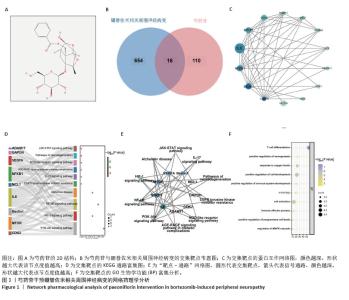
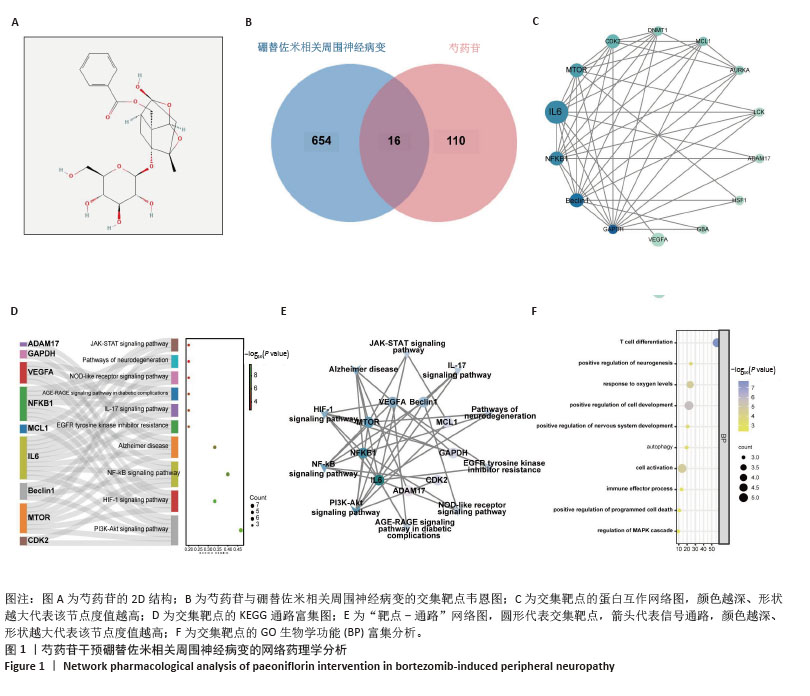
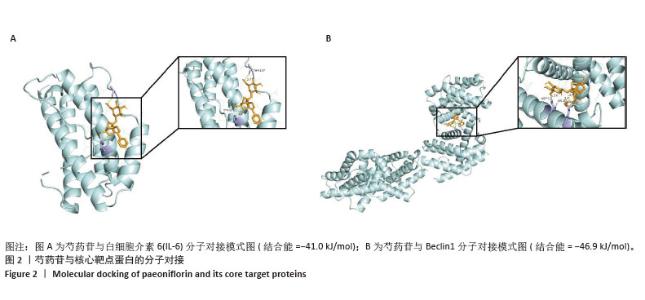
2.1 芍药苷干预硼替佐米相关周围神经病变的网络药理学分析结果 应用PubChem获取的芍药苷的2D结构(图1A),共收集芍药苷作用靶点126个、硼替佐米相关周围神经病变相关靶点670个,取交集后得到16个交集靶点(图1B)。构建蛋白互作网络,拓扑分析显示IL-6、Beclin1是芍药苷作用的重要靶点(图1C)。对16个交集靶点进行KEGG及GO富集分析,共获得48条KEGG通路及56项GO生物学功能,根据P值选取排名前10的KEGG通路及富集到该通路的基因进行展示(图1D),绘制“靶点-通路”网络图(图1E),并展示GO富集结果(图1F)。综合分析发现,芍药苷干预硼替佐米相关周围神经病变的重要靶点及作用途径包括IL-6、Beclin1及NF-κB(核转录因子κB)信号通路、PI3K/Akt(磷酸肌醇3激酶/蛋白激酶B)信号通路、HIF-1(缺氧诱导因子1)等信号通路,并主要涉及神经生长的正向调控、自噬等生物学过程。随后对芍药苷与IL-6、Beclin 1进行分子对接,结合能分别为-41.0,-46.9 kJ/mol,见图2,提示具有良好的对接活性。 "
"
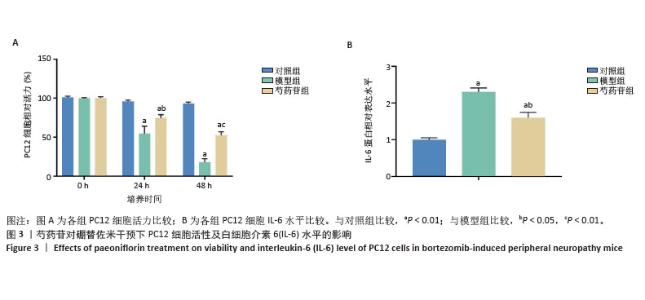
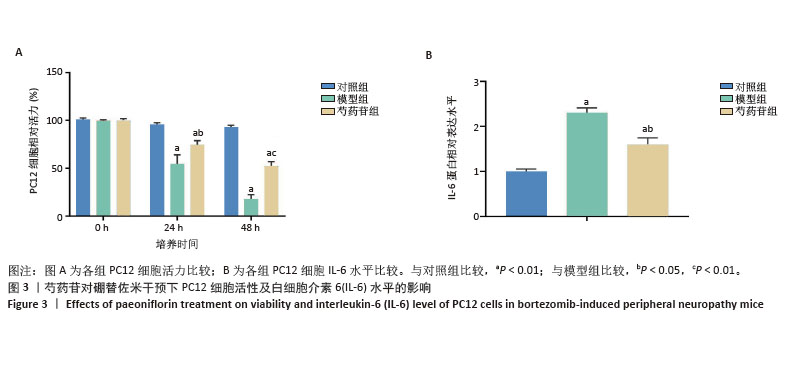
2.2 细胞实验结果 2.2.1 芍药苷对硼替佐米干预下PC12细胞活性及IL-6水平的影响 CCK-8检测结果显示,培养24,48 h,模型组细胞活力低于对照组(P < 0.01),芍药苷组细胞活力高于模型组(P < 0.05或P < 0.01),见图3A,提示芍药苷可以减轻硼替佐米对PC12细胞的损伤。 ELISA检测结果显示,模型组细胞内IL-6水平高于对照组(P < 0.01)、芍药苷组(P < 0.05),见图3B,提示芍药苷可以通过降低IL-6水平改善PC12细胞活性。 "
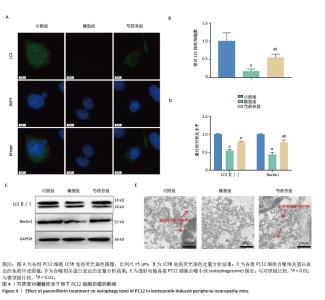
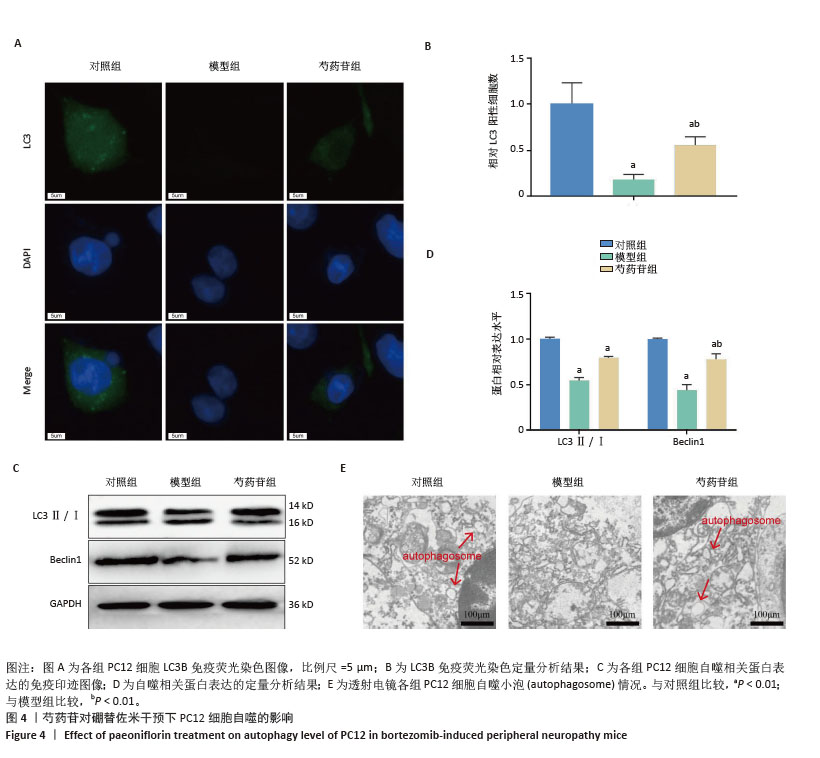
2.2.2 芍药苷对硼替佐米干预下PC12细胞自噬的影响 免疫荧光染色结果显示,模型组PC12细胞内LC3表达低于对照组、芍药苷组(P < 0.01),见图4A,B。Western blot检测结果显示,模型组LC3Ⅱ/Ⅰ、Beclin1蛋白表达低于对照组、芍药苷组(P < 0.01),见图4C,D。透射电镜下可见模型组PC12细胞内自噬水平低于对照组、芍药苷组,见图4E。 "
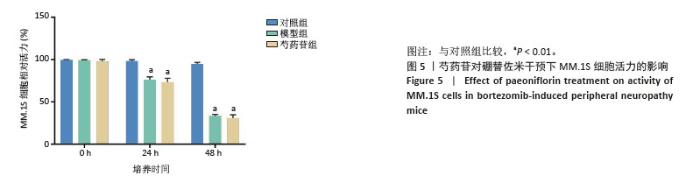
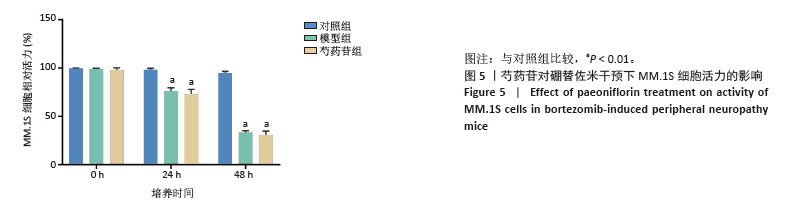
2.2.3 芍药苷对硼替佐米治疗效果的影响 CCK-8检测结果显示,培养24,48 h,模型组、芍药苷组MM.1S细胞活力均低于对照组(P < 0.01),模型组、芍药苷组MM.1S细胞活力比较差异无显著性意义(P > 0.05),见图5,说明芍药苷不会影响硼替佐米治疗的有效性。 "
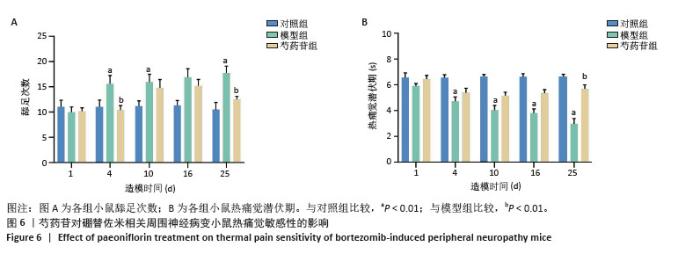
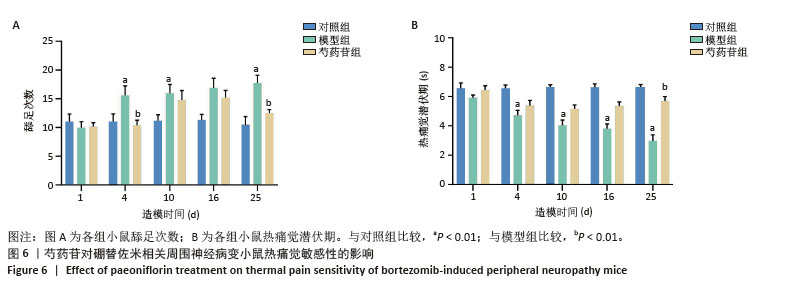
2.3 动物实验结果 2.3.1 实验动物数量分析 45只小鼠全部进入结果分析。 2.3.2 芍药苷对硼替佐米相关周围神经病变小鼠热痛觉敏感性的影响 周围神经病变损伤会导致热痛觉敏感性增加,主要表现为对热刺激的反应时间缩短。热板实验结果显示,与对照组比较,模型组灌胃给药第4,10,16,25天的舔足次数增加(P < 0.01),灌胃给药第10,16,25天的热痛觉潜伏期缩短(P < 0.01);与模型组比较,芍药苷组灌胃给药第4,25天的舔足次数减少(P < 0.01),灌胃给药第25天的热痛觉潜伏期延长(P < 0.01),见图6。提示芍药苷缓解了硼替佐米所导致的神经病理性疼痛。"
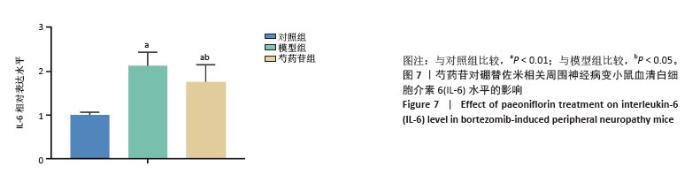
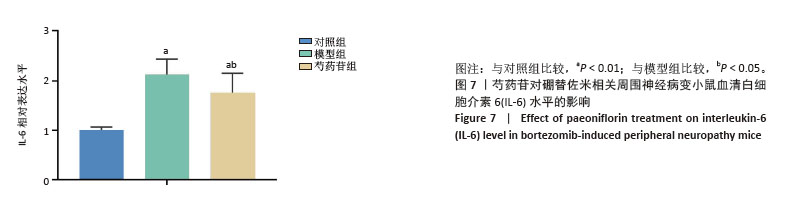
2.3.3 芍药苷对硼替佐米相关周围神经病变小鼠血清IL-6水平的影响 模型组血清IL-6水平高于对照组、芍药苷组(P < 0.01,P < 0.05),见图7。 "
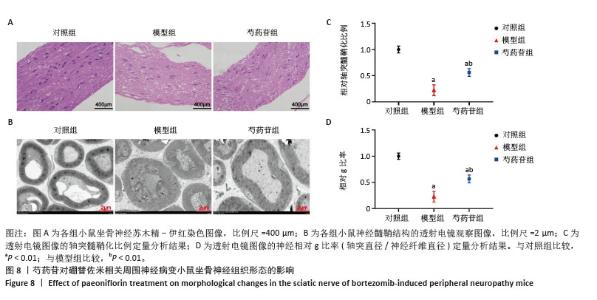
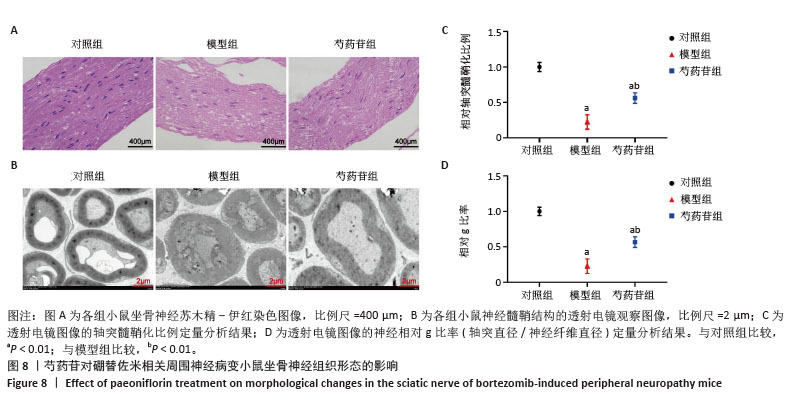
2.3.4 芍药苷对硼替佐米相关周围神经病变小鼠坐骨神经组织形态的影响 苏木精-伊红染色结果显示,与对照组相比,模型组神经纤维形态受损、排列紊乱,出现明显的髓鞘水肿和空泡样改变;与模型组相比,芍药苷组神经纤维形态得到显著改善、排列较为规则,髓鞘化程度提高,髓鞘水肿和空泡样改变程度减轻(图8A)。 透射电镜观察结果显示,与正常组相比,模型组髓鞘厚度不均,呈现虫蚀样破坏,部分区域出现脱髓鞘现象;与模型组相比,芍药苷组显示出神经纤维和髓鞘的再生迹象,髓鞘厚度和结构得到显著改善,见图8B-D。 "
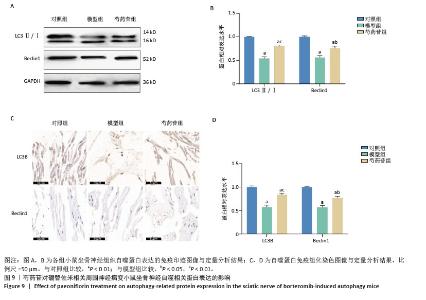
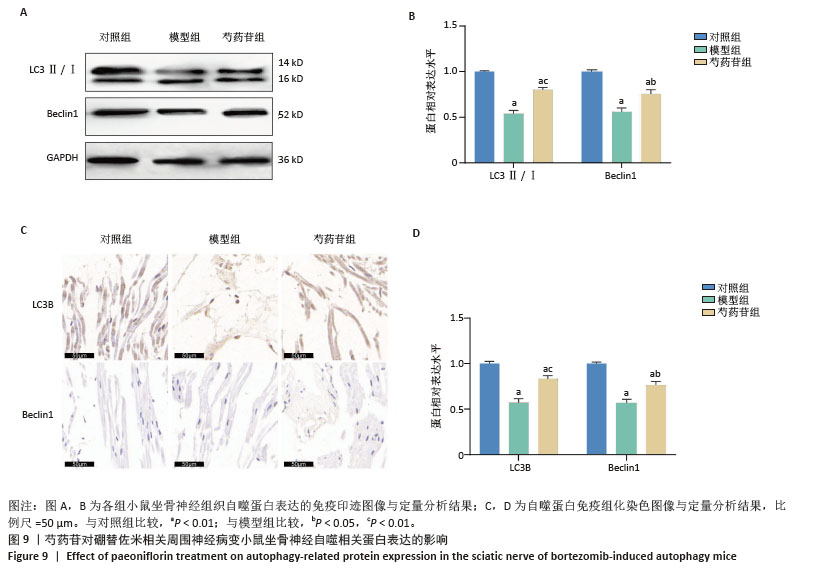
2.3.5 芍药苷对硼替佐米相关周围神经病变小鼠坐骨神经自噬的影响 Western blot检测结果显示,模型组LC3Ⅱ/Ⅰ、Beclin1蛋白表达低于对照组、芍药苷组(P < 0.05或P < 0.01),见图9A,B。免疫组化染色结果显示,模型组LC3B、Beclin1表达低于对照组、芍药苷组(P < 0.05或P < 0.01),见图9C,D。 "
| [1] GOEL U, USMANI S, KUMAR S. Current approaches to management of newly diagnosed multiple myeloma. Am J Hematol. 2022;97:S3-S25. [2] LIU Z, LIU S, ZHAO Y, et al. Biological Mediators and Partial Regulatory Mechanisms on Neuropathic Pain Associated With Chemotherapeutic Agents. Physiol Res. 2024;73(3):333-341. [3] ŁUCZKOWSKA K, ROGIŃSKA D, KULIG P, et al. Bortezomib-Induced Epigenetic Alterations in Nerve Cells: Focus on the Mechanisms Contributing to the Peripheral Neuropathy Development. Int J Mol Sci. 2022;23(5):2431. [4] 罗鸿,高盼娣,李秦川,等.硼替佐米诱导的周围神经病变风险因素及防护措施研究进展[J].中国新药与临床杂志,2025,44(2):98-103. [5] 于源,陈丽娟,孙金芳.中西医治疗化疗药物诱导周围神经病变临床研究进展[J].世界中医药,2024,19(9):1348-1354. [6] 秦敏俭,卫炜,张洁.益肾活血方联合中药熏蒸治疗硼替佐米致周围神经病变的临床效果[J].广西医学,2023,45(5):541-545. [7] 胡美佳.中医定向透药疗法对硼替佐米治疗多发性骨髓瘤引起周围神经病变的疗效研究[J].浙江中医杂志,2024,59(6):528-529. [8] LUO Y, LIN W, XIANG S, et al. Paeoniflorin inhibits chronic restraint stress-induced progression of hepatocellular carcinoma through suppressing norepinephrine-induced activation of hepatic stellate cells via SRC/AKT/ERK pathways. J Ethnopharmacol. 2025;344:119517. [9] ZHOU X, CHEN X, CHENG X, et al. Paeoniflorin, ferulic acid, and atractylenolide III improved LPS-induced neuroinflammation of BV2 microglia cells by enhancing autophagy. J Pharmacol Sci. 2023;152(2):151-161. [10] ZHANG M, ZHENG H, HE J, et al. Network pharmacology and in vivo studies reveal the neuroprotective effects of paeoniflorin on Alzheimer’s disease. Heliyon. 2023;9(11):e21800. [11] TANG H, MA T, WANG Y, et al. Paeoniflorin modulates AGEs/RAGE/P38MAPK/ERK/mTOR autophagy pathway to improve cognitive dysfunction in MRL/lpr mice. Int J Biol Macromol. 2025;307(Pt 1):141765. [12] WANG X, SU L, LIU S, et al. Paeoniflorin Inhibits the Activation of Microglia and Alleviates Depressive Behavior by Regulating SIRT1-NF-kB-NLRP3/Pyroptosis Pathway. Int J Mol Sci. 2024;25(23):12543. [13] FAN Q, GUAN X, HOU Y, et al. Paeoniflorin modulates gut microbial production of indole-3-lactate and epithelial autophagy to alleviate colitis in mice. Phytomedicine. 2020;79:153345. [14] DU B, ZHANG Z, LI N. Madecassoside prevents Aβ25–35-induced inflammatory responses and autophagy in neuronal cells through the class III PI3K/Beclin-1/Bcl-2 pathway. Int Immunopharmacol. 2014;20(1):221-228. [15] YARDIM A, KANDEMIR FM, ÇOMALIH S, et al. Protective Effects of Curcumin Against Paclitaxel-Induced Spinal Cord and Sciatic Nerve Injuries in Rats. Neurochem Res. 2020;46(2):379-395. [16] 李兰珍,李双燕,王烨,等.芍药苷对DSS诱导的慢性溃疡性结肠炎大鼠结肠Beclin1、Bcl-2表达的影响[J].中国中医药科技,2020,27(6):885-889. [17] ZHAO F, PENG C, LI H, et al. Paeoniae Radix Rubra extract attenuates cerebral ischemia injury by inhibiting ferroptosis and activating autophagy through the PI3K/Akt signalling pathway. J Ethnopharmacol. 2023;315:116567. [18] ŁUCZKOWSKA K, ROGINSKA D, ULANCZYK Z, et al. Effect of Bortezomib on Global Gene Expression in PC12-Derived Nerve Cells. Int J Mol Sci. 2020;21(3):751. [19] WANG S, LIU W. Paeoniflorin inhibits proliferation and promotes apoptosis of multiple myeloma cells via its effects on microRNA 29b and matrix metalloproteinase 2. Mol Med Rep. 2016;14(3):2143-2149. [20] CHEN M, CAO L, LUO Y, et al. Paeoniflorin protects against concanavalin A-induced hepatitis in mice. Int Immunopharmacol. 2015;24(1):42-49. [21] JI Y, WANG T, WEI ZF, et al. Paeoniflorin, the main active constituent of Paeonia lactiflora roots, attenuates bleomycin-induced pulmonary fibrosis in mice by suppressing the synthesis of type I collagen. J Ethnopharmacol. 2013;149(3): 825-832. [22] 齐绩,戴铁颖,葛杭萍,等.硼替佐米致周围神经病变的中医证型分布规律探讨[J].浙江中医杂志,2019,54(2):141-142. [23] LI M, ZHU X, ZHANG M, et al. The analgesic effect of paeoniflorin: A focused review. Open Life Sci. 2024;19(1):20220905. [24] 刘平,赵俊超,李日光.芍药苷药理作用及其机制研究进展[J].中医药导报, 2023,29(8):84-88. [25] 朱晏伯,李潇,朱笳悦,等.芍药苷对高糖环境下雪旺细胞线粒体动力学的影响[J].中国糖尿病杂志,2022,30(3):214-220. [26] SUN X, WANG X, ZHAO Z, et al. Paeoniflorin inhibited nod‐like receptor protein‐3 inflammasome and NF‐κB‐mediated inflammatory reactions in diabetic foot ulcer by inhibiting the chemokine receptor CXCR2. Drug Dev Res. 2020;82(3):404-411. [27] LUO F, ZHANG J, MIAO Y, et al. Paeoniflorin regulates microglia-astrocyte crosstalk, inhibits inflammatory response, and alleviates neuropathic pain through HSP90AA1/HMGB1 signaling pathway. Int J Biochem Cell Biol. 2024;176:106675. [28] KHAN A, SHAL B, ULLAH KHAN A, et al. Neuroprotective mechanism of Ajugarin-I against Vincristine-Induced neuropathic pain via regulation of Nrf2/NF-κB and Bcl2 signalling. Int Immunopharmacol. 2023;118:110046. [29] CHENG J, DONG Y, WU J, et al. RNA-seq revealed the protective effect of Huangqi Guizhi Wuwu Decoction against cisplatin induced PC12 cell injury. Int J Neurosci. 2024:1-11. doi: 10.1080/00207454.2024.2392123. [30] UNAY S, BILGIN MD. Investigation of effects of quercetin and low-level laser therapy in cisplatin-induced in vitro peripheral neuropathy model. Lasers Med Sci. 2023;38(1):49. [31] ZHAO G, ZHANG T, LI J, et al. Parkin-mediated mitophagy is a potential treatment for oxaliplatin-induced peripheral neuropathy. Am J Physiol Cell Physiol. 2024; 326(1):C214-C228. [32] ROSSOR AM, REILLY MM. Blood biomarkers of peripheral neuropathy. Acta Neurol Scand. 2022;146(4):325-331. [33] MASUDA Y, MATSUDA S, KOTANI T, et al. Association between Serum Biomarkers and Peripheral Neuropathy in Microscopic Polyangiitis. Int J Mol Sci. 2022; 23(21):13374. [34] 王陶然,张静峥,张荣娟,等.外周血NF-κB、BDNF及NGF与硼替佐米相关周围神经病变的关系分析[J].分子诊断与治疗杂志,2024,16(4):678-682. [35] ALARCÓN-AGUILAR FJ, DE LA MORA ID, FORTIS-BARRERA A. Anti-inflammatory action and effects on carbohydrate and lipid metabolism: an understudied role of interleukin-6. Eur Cytokine Netw. 2024;35(4):48-55. [36] NASHTAHOSSEINI Z, ESLAMI M, PARAANDAVAJI E, et al. Cytokine Signaling in Diabetic Neuropathy: A Key Player in Peripheral Nerve Damage. Biomedicines. 2025;13(3):589. [37] YANG H, LIU C, YUAN F, et al. Clinical significance of SIRT3 and inflammatory factors in multiple myeloma patients with bortezomib-induced peripheral neuropathy: a cohort study. Scand J Clin Lab Invest. 2021;81(8):615-621. [38] LEI Y, ZHANG E, BAI L, et al. Autophagy in Cancer Immunotherapy. Cells. 2022; 11(19):2996. [39] CHANDRASEKARAN V, HEDIYAL TA, ANAND N, et al. Polyphenols, Autophagy and Neurodegenerative Diseases: A Review. Biomolecules. 2023;13(8):1196. [40] BERTH SH, RICH DJ, LIOYD TE. The role of autophagic kinases in regulation of axonal function. Front Cell Neurosci. 2022;16:996593. [41] FLEMING A, LOPEZ A, ROB M, et al. How does autophagy impact neurological function. Neuroscientist. 2025:10738584251324459. [42] LI Y, MEI M, ZHANG Y, GENG L, et al. Antioxidant polyphenolic extract from Rosa cymosa Tratt alleviates the inflammatory response in RAW264.7 macrophages via regulating NF-κB pathway and cell autophagy. J Ethnopharmacol. 2025;346: 119718. [43] LUO R, SU LY, LI G, et al. Activation of PPARA-mediated autophagy reduces Alzheimer disease-like pathology and cognitive decline in a murine model. Autophagy. 2019;16(1):52-69. [44] XU J, KITADA M, OGURA Y, et al. Dapagliflozin Restores Impaired Autophagy and Suppresses Inflammation in High Glucose-Treated HK-2 Cells. Cells. 2021; 10(6):1457. [45] SASAKI T, YAMADA E, UEHARA R, et al. Role of Fyn and the interleukin-6-STAT-3-autophagy axis in sarcopenia. iScience. 2023;26(10):107717. [46] ESPOSITO A, FERRARESI A, SALWA A, et al. Resveratrol Contrasts IL-6 Pro-Growth Effects and Promotes Autophagy-Mediated Cancer Cell Dormancy in 3D Ovarian Cancer: Role of miR-1305 and of Its Target ARH-I. Cancers (Basel). 2022;14(9):2142. [47] CHEN X, ZHOU X, CHENG X, et al. Protective Effect of Ferulic Acid on Lipopolysaccharide-Induced BV2 Microglia Inflammation via AMPK/mTOR Signaling Pathway. Molecules. 2023;28(8):3482. [48] ZHOU D, ZHANG S, HU L, et al. Inhibition of apoptosis signal-regulating kinase by paeoniflorin attenuates neuroinflammation and ameliorates neuropathic pain. J Neuroinflammation. 2019;16(1):83. [49] YANG X, YAO W, SHI H, et al. Paeoniflorin protects Schwann cells against high glucose induced oxidative injury by activating Nrf2/ARE pathway and inhibiting apoptosis. J Ethnopharmacol. 2016;185:361-369. [50] HU F, SONG D, YAN Y, et al. IL-6 regulates autophagy and chemotherapy resistance by promoting BECN1 phosphorylation. Nat Commun. 2021;12(1):3651. [51] YARDIM A, KANDEMIR FM, ÇOMAKLI S, et al. Protective Effects of Curcumin Against Paclitaxel-Induced Spinal Cord and Sciatic Nerve Injuries in Rats. Neurochem Res. 2021;46(2):379-395. [52] KATHEEDER NS, KHEZRI R, O’FARRELL F, et al. Microenvironmental autophagy promotes tumour growth. Nature. 2017;541(7637):417-420. [53] NOGUEIRA-RECALDE U, LORENZO-GOMEZ I, BLANCO FJ, et al. Fibrates as drugs with senolytic and autophagic activity for osteoarthritis therapy. EBioMedicine. 2019;45:588-605. |
| [1] | Jia Jinwen, Airefate·Ainiwaer, Zhang Juan. Effects of EP300 on autophagy and apoptosis related to allergic rhinitis in rats [J]. Chinese Journal of Tissue Engineering Research, 2026, 30(6): 1439-1449. |
| [2] | You Huijuan, Wu Shuzhen, Rong Rong, Chen Liyuan, Zhao Yuqing, Wang Qinglu, Ou Xiaowei, Yang Fengying. Macrophage autophagy in lung diseases: two-sided effects [J]. Chinese Journal of Tissue Engineering Research, 2026, 30(6): 1516-1526. |
| [3] | Liu Kexin, , Hao Kaimin, Zhuang Wenyue, , Li Zhengyi. Autophagy-related gene expression in pulmonary fibrosis models: bioinformatic analysis and experimental validation [J]. Chinese Journal of Tissue Engineering Research, 2026, 30(5): 1129-1138. |
| [4] | Hu Jing, Zhu Ling, Xie Juan, Kong Deying, Liu Doudou. Autophagy regulates early embryonic development in mice via affecting H3K4me3 modification [J]. Chinese Journal of Tissue Engineering Research, 2026, 30(5): 1147-1155. |
| [5] | Wang Yuhe, Xie Tianyu, Ma Shijia, Wang Yujiao, Li Mengting, Xie Daojun. Regulatory effects of Yuping Shen’an Granules on neuronal autophagy in a mouse model of insomnia [J]. Chinese Journal of Tissue Engineering Research, 2026, 30(35): 9217-9230. |
| [6] | Su Xu, Zhang Xiaoxi, Yang Yaqing, Fu Zhenyi, Liu Jiaxin. Mechanism by which non-apoptotic regulated cell death induces neuronal injury in ischemic stroke [J]. Chinese Journal of Tissue Engineering Research, 2026, 30(35): 9281-9293. |
| [7] | Cao Shan, Wang Yanxi, Duan Kaixuan, Qi Xiang, Wang Yuhan. Xiao Ban Tong Mai Fang regulates autophagy via targeting miR-126-3p: bioinformatics analysis for prevention and treatment of atherosclerosis [J]. Chinese Journal of Tissue Engineering Research, 2026, 30(35): 9355-9364. |
| [8] | Ma Runqiu, Yang Huixia, Li Xuer, Bai Zhigang, Li Guizhong, Hao Yinju, Ma Shengchao, Jiang Yideng. Mechanism of glucocorticoid-induced mitochondrial dysfunction in osteoblasts in steroid-induced osteonecrosis of the femoral head [J]. Chinese Journal of Tissue Engineering Research, 2026, 30(34): 8845-8851. |
| [9] | Yang Huaqun, Abudouainijiang·Abulimiti, Wang Fazheng, Maimaitishawutiaji·Maimaiti, Li Simi, Muhetaer·Maimaitirexiati. Weighted gene co-expression network analysis combined with machine learning identifies autophagy and senescence signature genes in osteoarthritis chondrocytes [J]. Chinese Journal of Tissue Engineering Research, 2026, 30(34): 8889-8898. |
| [10] | Wei Wei, Wang Deyu, Yu Zhitong, Qiao Chunlin, Cui Xiangran, Liu Hongfei, Wang Chengbo, Wang Shixuan, Teng Hai. Effects of Gushukang Granules on the expression of myogenic and osteogenic factors in the muscles and bones of sarcopenic osteoporosis rats [J]. Chinese Journal of Tissue Engineering Research, 2026, 30(34): 8921-8929. |
| [11] | Li Jianqiang, Li Feng, Kou Longwei, Shao Yunbo, Zhang Jiali, Guo Jiayi. Action mechanism of Jingu Tongxiao Pill containing serum exosomes in regulating chondrocyte autophagy [J]. Chinese Journal of Tissue Engineering Research, 2026, 30(31): 8146-8153. |
| [12] | Hu Jie, He Hui, Ma Fengyu, Shen Xiaotian, Yuan Zhangqin, Liang Ting, Han Fengxuan. 10-Hydroxy-2-decenoic acid facilitates osteogenic differentiation via the enhancement of autophagy and antioxidant capacity [J]. Chinese Journal of Tissue Engineering Research, 2026, 30(25): 6433-6445. |
| [13] | Hu Yalin, Huang Fengqin, Yang Boyin, Luo Xingmei. Transcription factor EB improves Alzheimer’s disease via the autophagy-lysosome pathway [J]. Chinese Journal of Tissue Engineering Research, 2026, 30(22): 5844-5858. |
| [14] | Tang Cen, Hu Wanqin. Establishing a diagnostic model for recurrent spontaneous abortion based on the levels of autophagy-related genes in the endometrium [J]. Chinese Journal of Tissue Engineering Research, 2026, 30(22): 5728-5738. |
| [15] | Fan Tingting, Xiang Miaomiao, Yuan Xiaoshuang, Yang Xu, Yang Bo, Tian Ting, Chen Xiaoxu, Tang Dongxin, Wang Feiqing, Liu Yang, Li Yanju. Senescent bone marrow mesenchymal stem cells promote multiple myeloma cell proliferation through galectins-3 [J]. Chinese Journal of Tissue Engineering Research, 2026, 30(19): 4836-4842. |
| Viewed | ||||||
|
Full text |
|
|||||
|
Abstract |
|
|||||