Chinese Journal of Tissue Engineering Research ›› 2026, Vol. 30 ›› Issue (18): 4568-4581.doi: 10.12307/2026.744
Previous Articles Next Articles
Mechanistic insights into how Cervi Cornus Colla regulates the intestinal flora-bile acid metabolic pathway to alleviate steroid-induced osteonecrosis of the femoral head in a rat model
Chai Jinlian1, Liang Xuezhen2, 3, Sun Tiefeng4, Li Shudong2, Li Wei2, Li Guangzheng2, Yu Huayun1, Wang Ping4
- 1College of Traditional Chinese Medicine, Shandong University of Traditional Chinese Medicine, Jinan 250355, Shandong Province, China; 2First College of Clinical Medicine, Shandong University of Traditional Chinese Medicine, Jinan 250014, Shandong Province, China; 3Department of Orthopedic Microsurgery, Affiliated Hospital of Shandong University of Traditional Chinese Medicine, Jinan 250014, Shandong, China; 4Shandong Provincial Research Institute of Traditional Chinese Medicine, Jinan 250014, Shandong, China
-
Received:2025-06-20Accepted:2025-09-12Online:2026-06-28Published:2025-12-01 -
Contact:Yu Huayun, PhD, Professor, Doctoral supervisor, College of Traditional Chinese Medicine, Shandong University of Traditional Chinese Medicine, Jinan 250355, Shandong Province, China Co-corresponding author:Wang Ping, PhD, Investigator, Doctoral supervisor, Shandong Provincial Research Institute of Traditional Chinese Medicine, Jinan 250014, Shandong Province, China -
About author:Chai Jinlian, PhD candidate, College of Traditional Chinese Medicine, Shandong University of Traditional Chinese Medicine, Jinan 250355, Shandong, China -
Supported by:Shandong Provincial Key Research and Development Program (Science and Technology Demonstration Project), No. 2021SFGC1205 (to WP); Shandong Provincial Technology Innovation Guidance Program (Central Government Guides Local Science and Technology Development Fund), No. YDZX2024122 (to WP); the National Natural Science Foundation of China, No. 82205154 (to LXZ); Shandong Provincial Natural Science Foundation General Program, No. ZR2024MH156 (to LXZ); Shandong Provincial Traditional Chinese Medicine Science and Technology General Program, No. MR20241837 (to LXZ)

CLC Number:
Cite this article
Chai Jinlian, Liang Xuezhen, Sun Tiefeng, Li Shudong, Li Wei, Li Guangzheng, Yu Huayun, Wang Ping. Mechanistic insights into how Cervi Cornus Colla regulates the intestinal flora-bile acid metabolic pathway to alleviate steroid-induced osteonecrosis of the femoral head in a rat model [J]. Chinese Journal of Tissue Engineering Research, 2026, 30(18): 4568-4581.
share this article
Add to citation manager EndNote|Reference Manager|ProCite|BibTeX|RefWorks
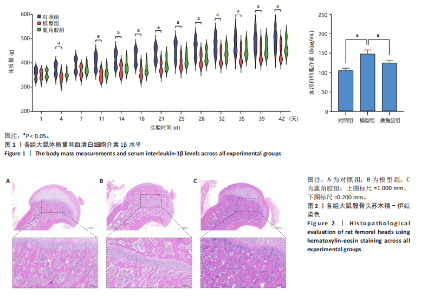
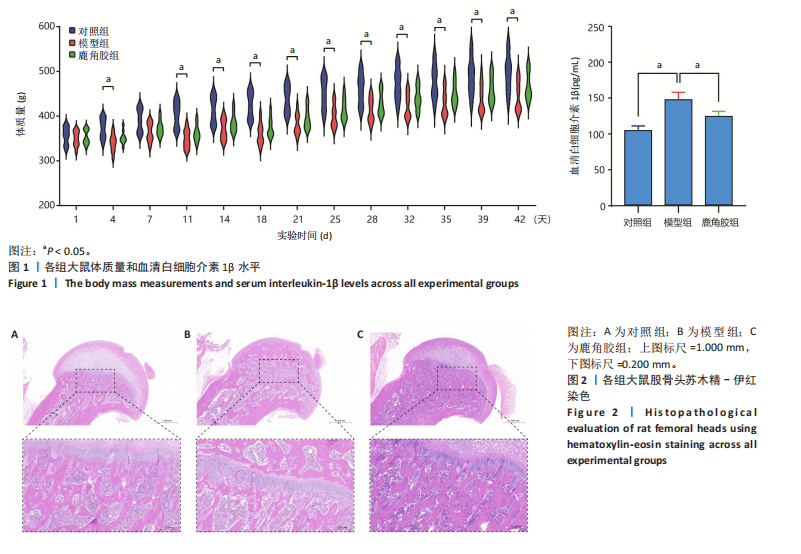
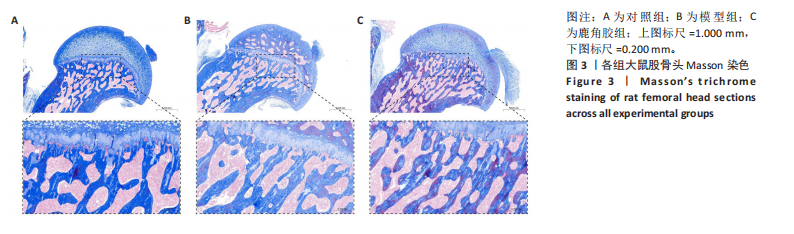
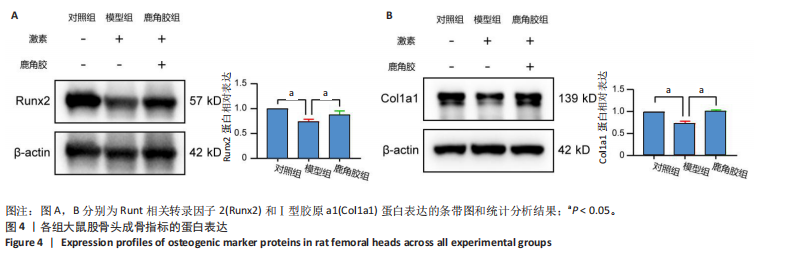
2.1 实验动物数量分析 实验选用SD大鼠30只,对照组、模型组、鹿角胶组各10只。实验过程无死亡,每组随机选取6只进入结果分析。 2.2 鹿角胶对激素性股骨头坏死模型大鼠整体状态、体质量及炎症因子的影响 见图1。 2.2.1 大鼠整体状态 在甲泼尼龙琥珀酸钠注射期间,模型组大鼠出现精神状态不佳、食欲下降、毛色灰暗稀疏、大便稀软、尿量多等症状,体质量整体显著下降(P < 0.05);停止注射后,模型组大鼠体质量有所回升,但至第6周结束时仍显著低于对照组 (P < 0.05)。鹿角胶组大鼠在注射期间症状较轻,表现为食欲尚可、毛色略灰暗稀疏、大便轻度稀软、尿量稍多,体质量下降幅度小于模型组;停止注射后,鹿角胶组大鼠体质量恢复较快,至第6周结束时体质量显著高于模型组(P < 0.05),但仍低于对照组 (P < 0.05)。 2.2.2 ELISA检测结果 与对照组相比,模型组大鼠血清白细胞介素1β水平显著升高(P < 0.05);鹿角胶干预后,白细胞介素1β水平显著降低(P < 0.05),虽未恢复至对照组水平,但显著优于模型组(P < 0.05)。 结果表明,鹿角胶可改善激素性股骨头坏死模型大鼠的整体状态,缓解体质量异常,并降低炎症因子白细胞介素1β的表达水平。 2.3 鹿角胶对激素性股骨头坏死模型大鼠股骨头组织病理学及骨修复能力的影响 2.3.1 组织病理学改变 苏木精-伊红染色结果见图2。与对照组相比,模型组软骨下骨小梁结构紊乱,骨小梁间隙明显变窄,骨髓腔面积缩小,骨小梁内骨细胞数量减少且空骨陷窝增加;同时骨髓腔内造血细胞分布稀疏,骨髓细胞坏死程度加剧,髓内脂肪细胞体积增大并部分融合形成囊状结构(图2B)。鹿角胶干预后,骨小梁结构完整性得到改善,空骨陷窝数量减少,骨髓腔形态规整且髓腔内造血细胞分布均匀,脂肪细胞体积减小且分布稀疏(图2C)。结果表明,鹿角胶可改善激素性股骨头坏死模型大鼠股骨头的组织病理学损伤。 2.3.2 骨修复能力 Masson染色结果见图3。与对照组相比,模型组大鼠股骨头胶原纤维显著减少、变薄且排列稀疏,骨小梁结构破坏严重,骨修复能力明显下降(图3B)。鹿角胶干预后,胶原纤维数量增加、排列更加致密,骨小梁结构得到部分修复,新生骨组织增多,骨修复能力显著提高(图3C)。结果表明,鹿角胶可促进激素性股骨头坏死模型大鼠股骨头的骨修复。 两种染色结果共同证实,鹿角胶通过促进骨小梁结构重建、调节骨髓微环境和增强胶原纤维合成,有效改善激素性股骨头坏死模型大鼠股骨头的组织病理学损伤并增强骨修复能力。 2.4 鹿角胶对激素性股骨头坏死大鼠股骨头成骨标志物Runt相关转录因子2、Ⅰ型胶原a1蛋白表达的影响 Western blot检测结果显示,与对照组相比,模型组大鼠股骨头中Runt相关转录因子2和Ⅰ型胶"

"
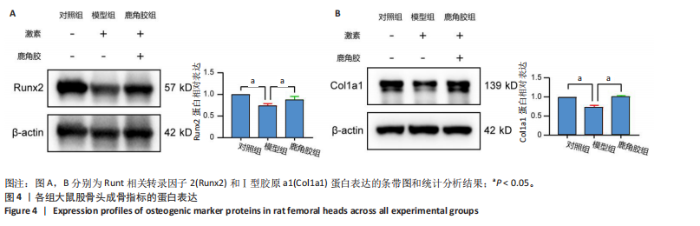
原a1的蛋白表达水平显著下调(P < 0.05),表明激素性股骨头坏死模型大鼠的成骨细胞分化和骨基质合成能力受到抑制;鹿角胶干预后,Runt相关转录因子2和Ⅰ型胶原a1的蛋白表达水平较模型组显著上调(P < 0.05),见图4。 结果表明,鹿角胶可通过促进Runt相关转录因子2和Ⅰ型胶原a1的表达,增强激素性股骨头坏死模型大鼠股骨头的成骨细胞分化和骨基质合成能力,从而改善骨修复功能。 2.5 鹿角胶对激素性股骨头坏死模型大鼠肠道菌群稳态失衡的影响 2.5.1 肠道菌群α多样性分析 对对照组(n=6)、模型组(n=6)和鹿角胶组(n=6)的18份盲肠粪便样本进行16S rDNA基因测序,共获得2 043 425条Clean Reads,聚类为1 456个OTUs。α多样性分析结果显示,随着测序深度的增加,Sob曲线和Shannon曲线均趋于平坦,表明测序数据量足以覆盖样本中的绝大多数微生物信息(图5A,B)。Rank丰度曲线显示,"
"
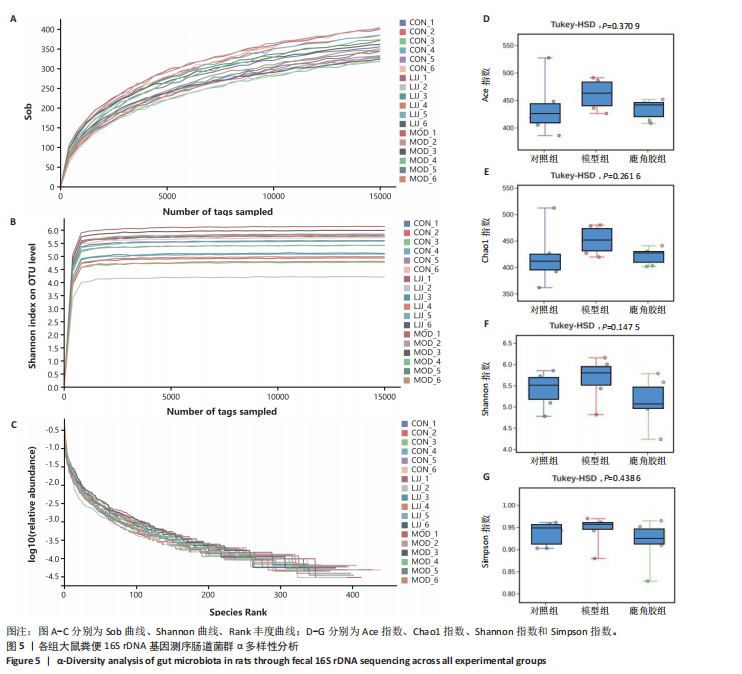
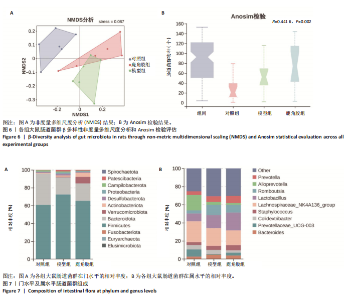
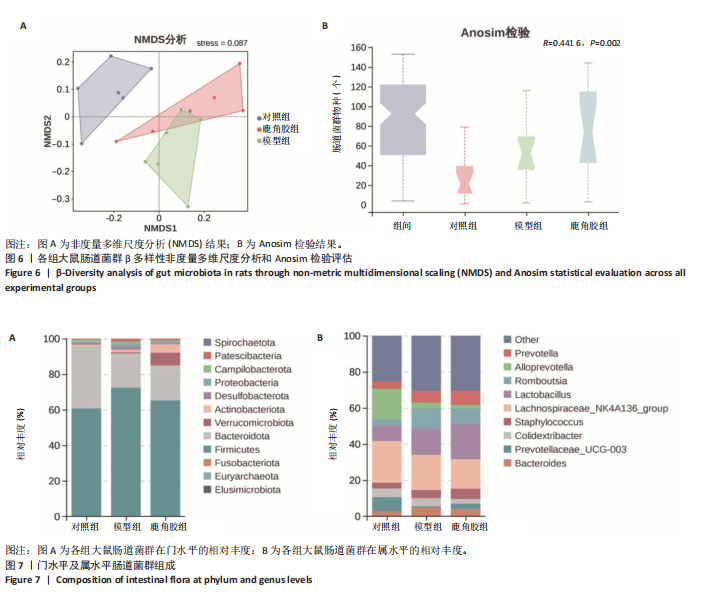
3组样本的物种丰度和均匀度无显著差异(图5C)。进一步分析Ace、Chao1、Shannon和Simpson指数发现,鹿角胶干预对激素性股骨头坏死模型大鼠肠道菌群的整体物种丰度和多样性均无显著影响(P > 0.05)(图5D-G)。结果表明,鹿角胶可能并非通过改变肠道菌群的整体多样性来发挥治疗作用,但其对特定菌群的影响仍需进一步研究。 2.5.2 肠道菌群β多样性分析 采用非度量多维尺度分析和Anosim检验评估3组大鼠肠道菌群结构的差异。非度量多维尺度分析分析结果显示,应力值(stress) < 0.1,表明模型可靠且能够较好地反映样本间的差异(图6A)。Anosim检验结果显示,组间差异显著大于组内差异(R值范围为0-1,P < 0.05),进一步证实了3组间肠道菌群结构存在显著差异(图6B)。结果表明,激素性股骨头坏死模型大鼠的肠道菌群结构发生了显著改变,而鹿角胶干预可能通过调节特定菌群的丰度,改善肠道菌群稳态失衡。 2.5.3 门水平及属水平肠道菌群组成分析 为了进一步评估3组大鼠肠道菌群的总体组成,对各组样本在门水平上的菌群分布进行了分析。结果显示,Firmicutes(60%-72%)和Bacteroidota(19%-35%)在3组中均显著富集,为优势菌门。与模型组相比,鹿角胶组中Firmicutes的相对丰度显著降低(65.15% vs. 72.09%)。此外,Verrucomicrobiota和Actinobacteriota在鹿角胶组中的相对丰度高于对照组和模型组。在属水平上,模型组中Alloprevotella和Prevotellaceae_ UCG-003的相对丰度低于对照组,而Romboutsia和Bacteroides被富集。与模型组相比,鹿角胶的应用使得Prevotellaceae_UCG-003的相对丰度增加,降低了Romboutsia和Bacteroides的相对丰度,见图7。"
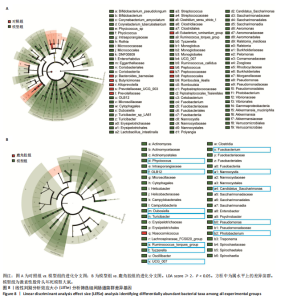
2.5.4 线性判别分析效应大小分析筛选差异基因 在线性判别分析效应大小分析中,设定阈值LDA score≥ 2 ,P < 0.05,得到对照组vs.模型组和模型组vs.鹿角胶组的进化分支图,如图8所示。 可以看出经过糖皮质激素的干预,模型组出现了大量的肠道菌富集,而与之相反的是,鹿角胶组的应用降低了部分肠道菌群的丰度,这些属水平上的差异菌群包括Phycicoccus、OLB12、Dubosiella、Turicibacter、Ruminococcus_torques_group、Tyzzerella、UCG_ 007、Fusobacterium、Nannocystis、Candidatus_Saccharimonas、Pseudomonas、 Photobacterium。其中Dubosiella、Turicibacter、Ruminococcus_torques_group、Tyzzerella、UCG_007均属于Firmicutes。另外值得关注的是,鹿角胶组的Nosocomiicoccus属出现了富集,该菌属也归类于Firmicutes。"

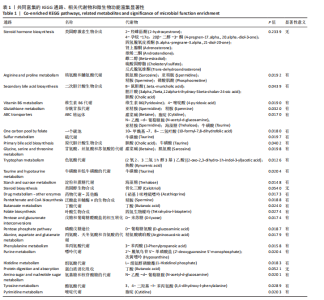
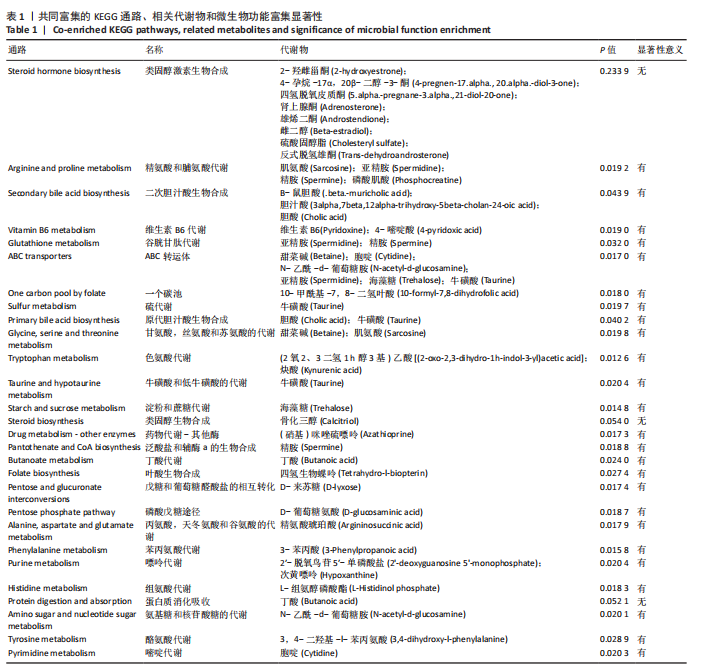
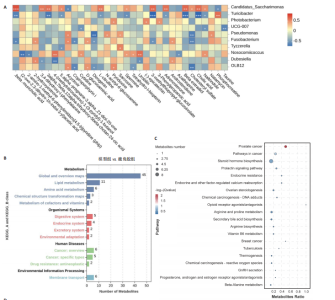
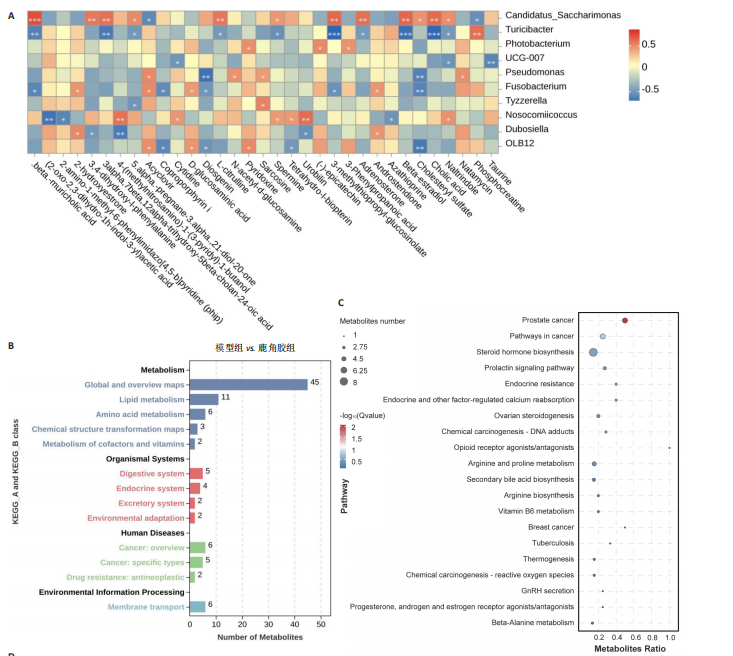
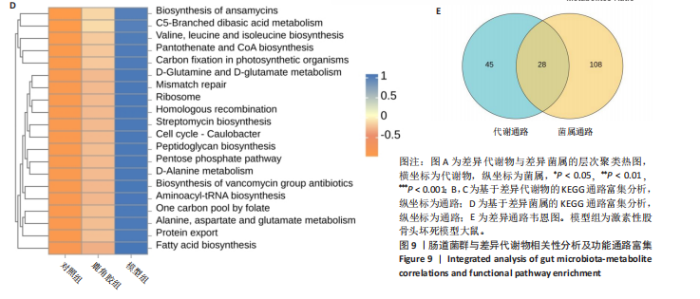
2.6 肠道菌群与代谢物之间的相关性分析 基于前期粪便非靶向代谢组学研究结果(鹿角胶组与模型组间的64个差异代谢物)以及此次研究的13个差异菌属[9],采用Spearman相关性分析评估差异代谢物与差异菌属的相关性,并对相关性系数绝对值进行排序,筛选前60位相关性最高的代谢物和菌属,绘制层次聚类热图(图9A)。结果显示,Candidatus_Saccharimonas与Β-鼠胆酸、胆酸、胆汁酸呈显著正相关(r > 0.5),而Turicibacter与Β-鼠胆酸、胆酸、胆汁酸呈显著负相关(r > -0.5)。此外,Fusobacterium与Β-鼠胆酸呈显著负相关(r > -0.5),UCG_007与牛磺酸呈显著负相关(r > -0.5)。 通过KEGG通路富集分析,基于差异代谢物共获得73条富集通路,其中富集代谢物最多的20条通路及功能富集程度如图9B,C所示;基于差异菌属共获得136条富集通路,其中富集菌属最多的20条通路如图9D所示。 进一步的分析发现,有28条通路在代谢物和菌属分析中均被富集(图9E,表1),其中包括特别关注的次级胆汁酸生物合成、初级胆汁酸生物合成以及牛磺酸和次牛磺酸代谢,这3条通路在微生物的KEGG功能富集中具有显著性差异(P < 0.05),且富集到这些通路的代谢物中包括Β-鼠胆酸、胆酸和牛磺酸。"
"
"
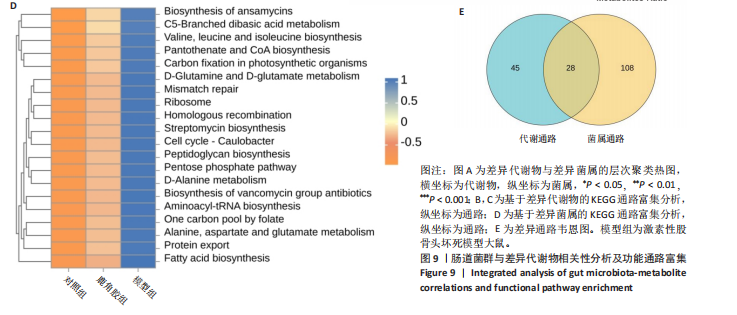

上述结果表明,鹿角胶可能通过调节肠道菌群(如Candidatus_Saccharimonas、Turicibacter、Fusobacterium和UCG_007)及其相关代谢物(如Β-鼠胆酸、胆酸和牛磺酸),影响胆汁酸代谢和牛磺酸代谢通路,从而缓解糖皮质激素诱导的股骨头损伤。"

| [1] 孙懿, 赵海燕, 成杰, 等. 激素性股骨头坏死发生机制的研究进展[J].中国矫形外科杂志,2023,31(1):58-62. [2] 姜旭,何哲希,刘露,等.骨免疫对激素性股骨头坏死作用的研究进展[J].中国矫形外科杂志,2025,33(6):523-527+534. [3] 朱正杰,彭昊.成骨细胞在激素性股骨头坏死发病机制中的作用研究进展[J].生物骨科材料与临床研究,2025,22(1):76-81. [4] ZHAO D, ZHANG F, WANG B, et al. Guidelines for clinical diagnosis and treatment of osteonecrosis of the femoral head in adults (2019 version). J Orthop Translat. 2020;21:100-110. [5] WEINSTEIN RS. Glucocorticoid-induced osteonecrosis. Endocrine. 2012;41(2):183-190. [6] 牛明月,董万涛,李昕昕,等.“肠-骨轴”探讨肠上皮细胞外泌体调控骨髓间充质干细胞铁死亡的机制 [J]. 中国骨质疏松杂志, 2025,31(3):409-415. [7] 薛鹏,杜斌,刘锌,等.基于肠-骨轴探讨肠道菌群对骨代谢影响的研究进展[J].中国骨质疏松杂志,2023,29(1):84-88. [8] LI JY, CHASSAING B, TYAGI AM, et al. Sex steroid deficiency-associated bone loss is microbiota dependent and prevented by probiotics. J Clin Invest. 2016;126(6): 2049-2063. [9] YAN J, HERZOG JW, TSANG K, et al. Gut microbiota induce IGF-1 and promote bone formation and growth. Proc Natl Acad Sci U S A. 2016; 113(47):E7554-e7563. [10] 张萱,杨雪,李新科,等. 短链脂肪酸介导的肠骨轴在骨代谢中的研究进展[J].食品科学,2025,46(2):260-267. [11] LYU Z, HU Y, GUO Y, et al. Modulation of bone remodeling by the gut microbiota: a new therapy for osteoporosis. Bone Res. 2023;11(1):31. [12] BEHERA J, ISON J, TYAGI SC, et al. The role of gut microbiota in bone homeostasis. Bone. 2020;135:115317. [13] LI C, HUANG Q, YANG R, et al. Gut microbiota composition and bone mineral loss-epidemiologic evidence from individuals in Wuhan, China. Osteoporos Int. 2019;30(5):1003-1013. [14] WANG J, WANG Y, GAO W, et al. Diversity analysis of gut microbiota in osteoporosis and osteopenia patients. PeerJ. 2017;5:e3450. [15] WEN K, TAO L, TAO Z, et al.Fecal and Serum Metabolomic Signatures and Microbial Community Profiling of Postmenopausal Osteoporosis Mice Model. Front Cell Infect Microbiol. 2020;10:535310. [16] ATARASHI K, TANOUE T, ANDO M, et al.Th17 Cell Induction by Adhesion of Microbes to Intestinal Epithelial Cells. Cell. 2015;163(2):367-380. [17] CIUCCI T, IBÁÑEZ L, BOUCOIRAN A, et al. Bone marrow Th17 TNFα cells induce osteoclast differentiation, and link bone destruction to IBD. Gut. 2015; 64(7):1072-1081. [18] ARRON JR, CHOI Y. Bone versus immune system. Nature. 2000; 408(6812):535-536. [19] TYAGI AM, DARBY TM, HSU E, et al. The gut microbiota is a transmissible determinant of skeletal maturation. Elife. 2021;10:e64237. [20] HATHAWAY-SCHRADER JD, POULIDES NA, CARSON MD, et al.Specific Commensal Bacterium Critically Regulates Gut Microbiota Osteoimmunomodulatory Actions During Normal Postpubertal Skeletal Growth and Maturation. JBMR Plus. 2020;4(3):e10338. [21] LI JY, YU M, PAL S, et al. Parathyroid hormone-dependent bone formation requires butyrate production by intestinal microbiota. J Clin Invest. 2020;130(4):1767-1781. [22] LI J, HO WTP, LIU C, et al. The role of gut microbiota in bone homeostasis. Bone Joint Res. 2021;10(1):51-59. [23] ADEEL S, SINGH K, VYDARENY KH , et al. Bone loss in surgically ovariectomized premenopausal women is associated with T lymphocyte activation and thymic hypertrophy. J Investig Med. 2013;61(8):1178-1183. [24] 李宁,吴月滢,裴环,等. 基于“肠-骨”轴探讨药食同源复方强骨宁缓解绝经后骨质疏松症的作用机制[J]. 中华中医药杂志,2024, 39(5):2308-2315. [25] 常茹梦,董万涛,宋敏,等. 基于“肠-骨”轴理论探讨中医从脾论治骨质疏松症[J].中国中医药信息杂志,2023,30(6):14-19. [26] 董万涛,张杰,赵张凯,等. 微生物-肠-骨轴与骨质疏松疾病的研究进展[J].微生物学通报,2023,50(2):719-728. [27] 巩彦龙, 黄九妹, 张杰, 等. 肠道屏障与骨代谢[J]. 中国骨质疏松杂志,2024,30(12):1815-1819. [28] 张建,李嘉程,王辉,等.基于肠-骨轴理论探讨肠道菌群对股骨头坏死的作用机制[J].中医正骨,2025,37(4):77-80. [29] 李娜,胡亚楠,王晓雪,等.鹿角胶化学成分、药理作用及质量控制研究进展[J].中药材,2021,44(7):1777-1783. [30] 柴金莲,孙铁锋,李威,等.鹿角胶对激素性股骨头坏死模型大鼠的治疗作用:粪便代谢组学分析[J].中国组织工程研究,2025,29(29): 6187-6197. [31] 梁学振,杨曦,李嘉程,等. 补肾活血胶囊对激素性股骨头坏死大鼠骨修复和脂肪形成的影响 [J]. 中华中医药杂志,2022,37(3):1763-1768. [32] 梁学振,杨曦,李嘉程,等. 补肾活血胶囊介导Hedgehog信号通路调控大鼠骨髓间充质干细胞成骨成脂分化[J]. 中国组织工程研究, 2022,26(7):1020-1026. [33] 梁学振,骆帝,许波,等. 补肾活血胶囊治疗股骨头坏死的分子机制研究[J]. 中华中医药杂志,2019,34(5):2188-2193. [34] 武瑞骐,崔伟,杨启培,等.激素性股骨头坏死的中医药治疗机制[J].中国组织工程研究,2023,27(17):2763-2771. [35] 李钰莹,刘凡杰,邓婷婷,等.基于“肠-骨”轴探讨中医从脾论治膝骨关节炎[J].现代中西医结合杂志,2024,33(24):3423-3426. [36] 余彧,向婷,王官林,等.由“肠-骨轴”探讨从“阳明系统”防治骨质疏松症[J].中国骨质疏松杂志,2024,30(1):134-138. [37] 任彩英,郑洁,赵莉平.基于肠-关节轴理论探讨针灸治疗膝关节骨性关节炎[J].针灸临床杂志,2024,40(12):1-5. [38] WANG S, DONG W, LIU L, et al. Interplay between bile acids and the gut microbiota promotes intestinal carcinogenesis. Mol Carcinog.2019; 58(7):1155-1167. [39] LU L, CHEN X, LIU Y, et al. Gut microbiota and bone metabolism. FASEB J. 2021;35(7):e21740. [40] HERRMANN M, RODRIGUEZ-BLANCO G, BALASSO M, et al. The role of bile acid metabolism in bone and muscle: from analytics to mechanisms. Crit Rev Clin Lab Sci. 2024;61(6):510-528. [41] CHO S W, AN J H, PARK H, et al. Positive regulation of osteogenesis by bile acid through FXR. J Bone Miner Res. 2013;28(10):2109-2121. [42] WANG Q, WANG G, WANG B, et al. Activation of TGR5 promotes osteoblastic cell differentiation and mineralization. Biomed Pharmacother. 2018;108:1797-1803. [43] CAMPODÓNICO VL, TEKLE T, BERGMAN Y, et al. Clinical significance of Nosocomiicoccus ampullae isolated from blood cultures. Microbiol Spectr. 2023;11(6):e0217923. [44] LUCAS LN, BARRETT K, KERBY RL, et al. Dominant Bacterial Phyla from the Human Gut Show Widespread Ability To Transform and Conjugate Bile Acids. mSystems. 2021;31:e0080521. [45] 宋文静,白敏,汪湛东,等.胆汁酸代谢在绝经后骨质疏松症中作用:病理机制与干预[J].中国骨质疏松杂志,2025,31(3):429-434. [46] PERINO A, DEMAGNY H, VELAZQUEZ-VILLEGAS L, et al. Molecular Physiology of Bile Acid Signaling in Health, Disease, and Aging. Physiol Rev. 2021;101(2):683-731. [47] LIU J, CHEN Y, LUO Q. The Association of Serum Total Bile Acids With Bone Mineral Density in Chinese Adults Aged 20-59: A Retrospective Cross-Sectional Study. Front Endocrinol (Lausanne). 2022;13:817437. [48] DENG D, PAN C, WU Z, et al. An Integrated Metabolomic Study of Osteoporosis: Discovery and Quantification of Hyocholic Acids as Candidate Markers. Front Pharmacol. 2021;12:725341. [49] ID BOUFKER H, LAGNEAUX L, FAYYAD-KAZAN H, et al. Role of farnesoid X receptor (FXR) in the process of differentiation of bone marrow stromal cells into osteoblasts. Bone. 2011;49(6):1219-1231. [50] CHO SW, AN JH, PARK H, et al. Positive regulation of osteogenesis by bile acid through FXR. J Bone Miner Res. 2013;28(10):2109-2121. [51] JURADO S, PARÉS A, PERIS P, et al. Bilirubin increases viability and decreases osteoclast apoptosis contributing to osteoporosis in advanced liver diseases. Bone. 2022;162:116483. [52] WANG S, WANG S, WANG X, et al. Effects of Icariin on Modulating Gut Microbiota and Regulating Metabolite Alterations to Prevent Bone Loss in Ovariectomized Rat Model. Front Endocrinol (Lausanne). 2022;13:874849. [53] LI J, ZOU Z, SU X, et al. Cistanche deserticola improves ovariectomized-induced osteoporosis mainly by regulating lipid metabolism: Insights from serum metabolomics using UPLC/Q-TOF-MS. J Ethnopharmacol. 2024;322:117570. [54] TANG XY, GAO MX, XIAO HH, et al. Effects of Xian-Ling-Gu-Bao capsule on the gut microbiota in ovariectomized rats: Metabolism and modulation.J Chromatogr B Analyt Technol Biomed Life Sci. 2021; 1176:122771. [55] 柴艺汇,高洁,陈云志,等.黄芪多糖对小鼠MC-3T3-E1 成骨细胞维生素D 受体mRNA 及蛋白表达的影响[J].时珍国医国药, 2018,29(6):1281-1283. |
| [1] | Wang Zhengye, Liu Wanlin, Zhao Zhenqun. Advance in the mechanisms underlying miRNAs in steroid-induced osteonecrosis of the femoral head [J]. Chinese Journal of Tissue Engineering Research, 2026, 30(5): 1207-1214. |
| [2] | Gu Fucheng, Yang Meixin, Wu Weixin, Cai Weijun, Qin Yangyi, Sun Mingyi, Sun Jian, Geng Qiudong, Li Nan. Effects of Guilu Erxian Glue on gut microbiota in rats with knee osteoarthritis: machine learning and 16S rDNA analysis [J]. Chinese Journal of Tissue Engineering Research, 2026, 30(4): 1058-1072. |
| [3] | Wang Zhengye, Liu Wanlin, Zhao Zhenqun. Mechanism by which vascular endothelial growth factor A targets regulation of angiogenesis in the treatment of steroid-induced osteonecrosis of the femoral head [J]. Chinese Journal of Tissue Engineering Research, 2026, 30(3): 671-679. |
| [4] | Lin Yong, Yang Xiaoqiang, Lin Kun, Yang Fan, He Mincong, Wei Qiushi. Immune microenvironment and inflammatory repair of cystic degeneration in steroid-induced osteonecrosis of the femoral head: a single-cell sequencing analysis [J]. Chinese Journal of Tissue Engineering Research, 2026, 30(17): 4309-4317. |
| [5] | Wu Yilin, Tian Hongying, Sun Jiale, Jiao Jiajia, Zhao Zihan, Shao Jinhuan, Zhao Kaiyue, Zhou Min, Li Qian, Li Zexin, Yue Changwu. Intervention effect and mechanism of Compound Herba Gueldenstaedtiae in a mouse model of breast hyperplasia [J]. Chinese Journal of Tissue Engineering Research, 2026, 30(17): 4377-4389. |
| [6] | Zou Yuxiong, Liu Xiaomeng, Liu Ying, Zhu Yue, Li Shuming, Guo Fangyang, Yu Xinyu, Nie Heyun, Liu Qian, Ao Meiying. Cerebral palsy decoction improves cerebral palsy in male and female young rats: mechanisms based on the “gut-brain-muscle” axis [J]. Chinese Journal of Tissue Engineering Research, 2026, 30(16): 4054-4066. |
| [7] | Sun Long, Wu Haiyang, Tong Linjian, Liu Rui, Yang Weiguang, Xiao Jian, Liu Lice, Sun Zhiming. Regulatory mechanism of leptin in bone metabolism [J]. Chinese Journal of Tissue Engineering Research, 2026, 30(12): 3100-3108. |
| [8] | Wang Tao, Min Youjiang, Wang Min, Wang Shunpu, Li Le, Zhang Chen, Xiao Weiping, Yu Yiping. Causal relationship between gut microbiota and amyotrophic lateral sclerosis: sample analysis from the IEU Open GWAS Database [J]. Chinese Journal of Tissue Engineering Research, 2026, 30(12): 3182-3189. |
| [9] | Zan Yongfeng, Song Keguan, Liu Yuda. Glutamine regulates the effect of hormones on the apoptosis of bone microvascular endothelial cells [J]. Chinese Journal of Tissue Engineering Research, 2026, 30(12): 2965-2974. |
| [10] | Wu Fangjia, Lei Senlin, Li Xianhui, Yang Yang. Aerobic and resistance exercise interventions in a mouse model of nonalcoholic fatty liver disease: correlation between gut microbiota and irisin [J]. Chinese Journal of Tissue Engineering Research, 2026, 30(12): 3029-3043. |
| [11] | Qiu Xueli, Cui Hao, Wu Chenyang, Tao Lide, Yao Yuqian, Tian Bo, Bai Jinyu, Zhang Yingzi. Gut microbiota tryptophan metabolite indole-3-propionic acid alleviates inflammatory bowel disease-related osteoporosis in a mouse model [J]. Chinese Journal of Tissue Engineering Research, 2026, 30(10): 2413-2421. |
| [12] |
Zhao Wensheng, Li Xiaolin, Peng Changhua, Deng Jia, Sheng Hao, Chen Hongwei, Zhang Chaoju, He Chuan.
Gut microbiota and osteoporotic fractures #br#
#br#
[J]. Chinese Journal of Tissue Engineering Research, 2025, 29(6): 1296-1304.
|
| [13] |
Sun Guanghan, Xie Zhencong, Sun Mi, Xu Yang, Guo Dong.
Therapeutic effect and mechanism by which Trichosanthis Fructus-Allii Macrostemonis Bulbus regulates gut microbiota in a rat model of coronary heart disease #br#
#br#
[J]. Chinese Journal of Tissue Engineering Research, 2025, 29(5): 917-927.
|
| [14] | Wang Tao, Wang Shunpu, Min Youjiang, Wang Min, Li Le, Zhang Chen, Xiao Weiping. Causal relationship between gut microbiota and rheumatoid arthritis: data analysis in European populations based on GWAS data [J]. Chinese Journal of Tissue Engineering Research, 2025, 29(35): 7663-7668. |
| [15] | Han Jie, Pan Chengzhen, Shang Yuzhi, Zhang Chi. Identification of immunodiagnostic biomarkers and drug screening for steroid-induced osteonecrosis of the femoral head [J]. Chinese Journal of Tissue Engineering Research, 2025, 29(35): 7690-7700. |
| Viewed | ||||||
|
Full text |
|
|||||
|
Abstract |
|
|||||