Chinese Journal of Tissue Engineering Research ›› 2026, Vol. 30 ›› Issue (17): 4325-4336.doi: 10.12307/2026.068
Previous Articles Next Articles
A metabolomics study on the mechanism by which Shixiang plaster promotes the healing of chronic refractory wounds in rats
Wang Yan1, Zhang Kaiwei2, Liu Man1, Fei Ji2, Zhu Xu2, Ni Yuntao1
- 1Guizhou University of Traditional Chinese Medicine, Guiyang 550000, Guizhou Province, China; 2Department of Orthopaedics, The First Affiliated Hospital of Guizhou University of Traditional Chinese Medicine, Guiyang 550001, Guizhou Province, China
-
Received:2025-02-06Accepted:2025-05-14Online:2026-06-18Published:2025-11-27 -
Contact:Zhang Kaiwei, MD, Doctoral supervisor, Chief physician, Department of Orthopaedics, The First Affiliated Hospital of Guizhou University of Traditional Chinese Medicine, Guiyang 550001, Guizhou Province, China -
About author:Wang Yan, MD candidate, Guizhou University of Traditional Chinese Medicine, Guiyang 550000, Guizhou Province, China -
Supported by:Scientific and Technological Research Project of Traditional Chinese Medicine and Ethnomedicine, Guizhou Province Administration of Traditional Chinese Medicine, No. QZYY-2023-013 (to FJ)

CLC Number:
Cite this article
Wang Yan, Zhang Kaiwei, Liu Man, Fei Ji, Zhu Xu, Ni Yuntao. A metabolomics study on the mechanism by which Shixiang plaster promotes the healing of chronic refractory wounds in rats[J]. Chinese Journal of Tissue Engineering Research, 2026, 30(17): 4325-4336.
share this article
Add to citation manager EndNote|Reference Manager|ProCite|BibTeX|RefWorks
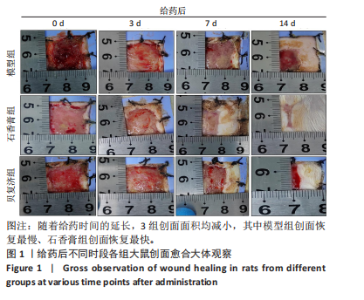
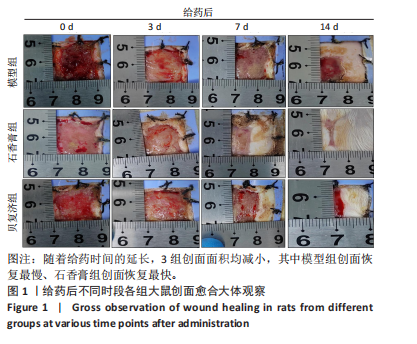
.1 实验动物数量分析 36只大鼠全部进入结果分析。 2.2 各组大鼠创面愈合情况 各组大鼠创面愈合情况见图1。给药当天,3组创面大小约为2 cm×2 cm。给药后3 d,模型组创面颜色较其他两组红,创面大小约1.8 cm×1.9 cm,恢复面积较小;石香膏组创面大小约1.5 cm×1.7 cm,贝复济组创面大小约1.8 cm×1.7 cm。给药后7 d,模型组创面大面积没有结痂,创面大小约1.6 cm×1.8 cm;贝复济组少部分创面没有结痂,创面大小约1.2 cm×1.7 cm;石香膏组创面全部已结痂,创面大小约0.8 cm×0.9 cm。给药后14 d,模型组创面已结痂,但仍比较红肿,创面大小约0.9 cm×1.7 cm;贝复济组创面基本恢复,但创面颜色较石香膏组红,创面大小约0.3 cm×1.4 cm;石香膏组创面大部分已全部恢复,创面大小约0.2 cm×1.4 cm,接近正常组织。"
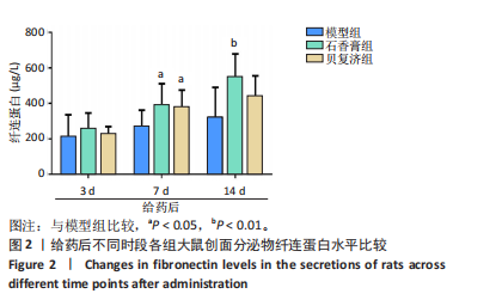
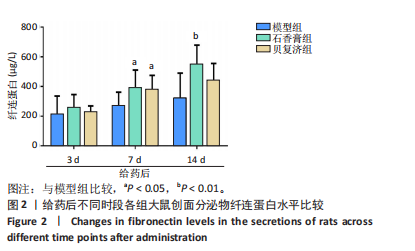
2.3 各组大鼠创面分泌物纤连蛋白水平比较 石香膏组给药后7,14 d的纤连蛋白水平高于模型组(P < 0.05,P < 0.01),贝复济组给药后7 d后的纤连蛋白水平高于模型组(P < 0.05),其余组间比较差异无显著性意义(P > 0.05),见图2。"
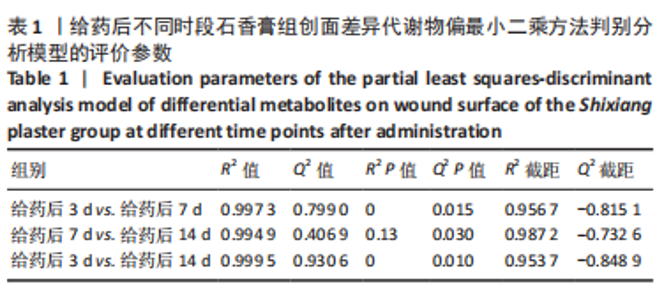
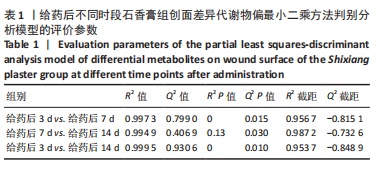
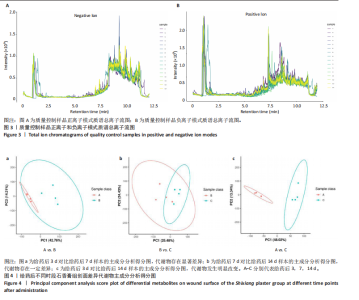
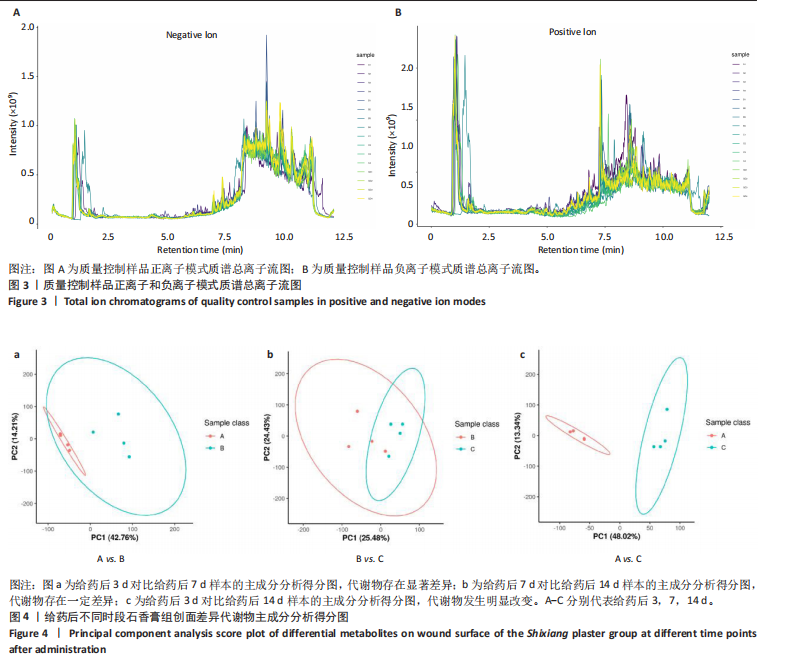
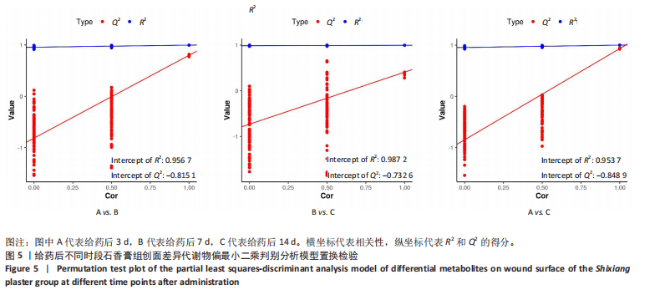
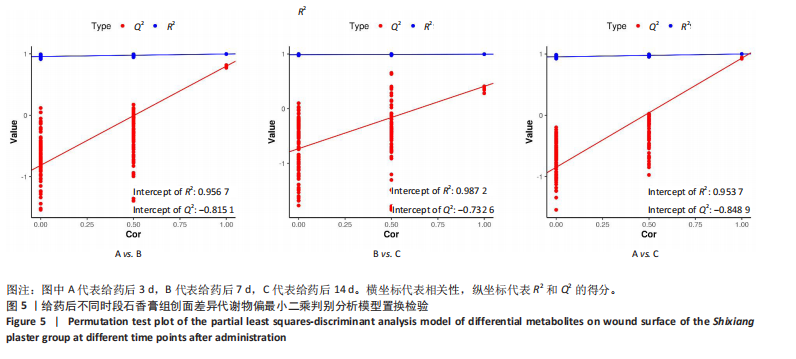
2.4 质量控制样本质谱总离子流图比对 通过分析质量控制样本的质谱总离子流图,宏观评估了所有代谢物的液相色谱分离性能,对正、负离子模式下的质谱总离子图进行了叠加比对,其中横轴代表时间,纵轴显示了在每个时间点质谱中所有离子的总强度。如图3所示,不同样品的质谱总离子叠加图显示各色谱峰的保留时间和响应强度具有较好的一致性,说明仪器误差引起的实验变异较小,保证了数据的可靠性。 2.5 主成分分析得分与其系统稳定性分析 主成分分析得分图如图4所示。给药后3 d对比给药后7 d样本的主成分空间显示出明显分散特征,说明两个时段的创面代谢物存在显著差异;给药后7 d对比给药后14 d样本的主成分空间显示分离趋势较为明显,说明两个时段的创面代谢物存在一定差异;给药后3 d对比给药后14 d样本的主成分空间显示分离趋势更大,说明两个时段的创面代谢物发生了明显改变。 2.6 偏最小二乘方法判别分析结果 此次研究采用偏最小二乘判别分析模型预测样本类别,模型的评价参数包括Q2和R2值,详见表1。偏最小二乘方法判别分析结果如图5所示,图中的每个点代表一个样本,不同颜色的符号展示了两组样本在PC1和PC2轴上的分布特征,揭示了不同类群代谢谱在分布上的离散性和差异性。为验证模型的稳定性和可靠性,进行了200次置换检验,偏最小二乘方法判别分析模型验证结果显示Q2截距 < 0,表明模型稳定且可靠,未出现过拟合现象。"
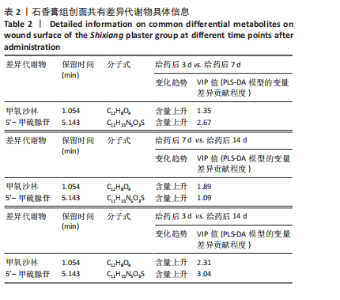
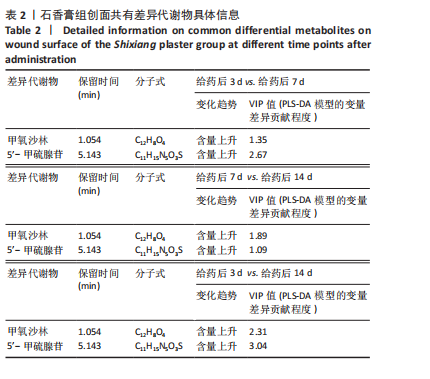
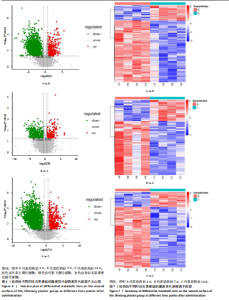
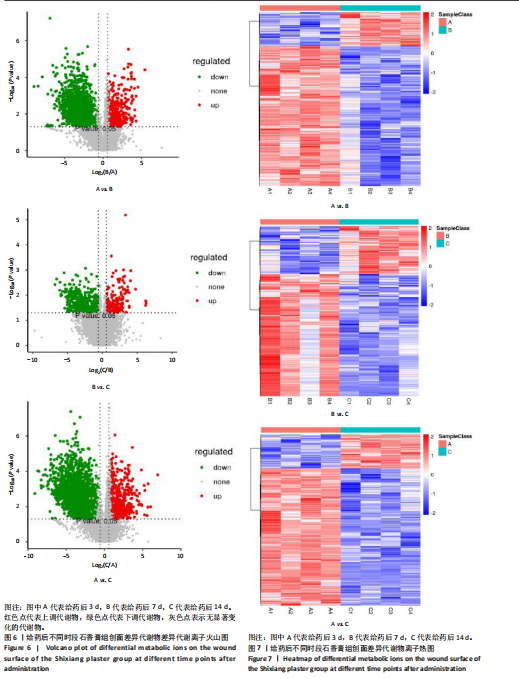
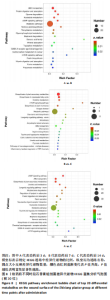
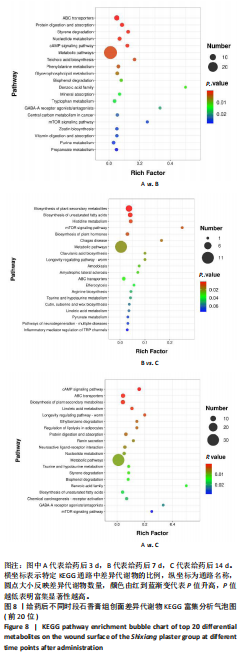
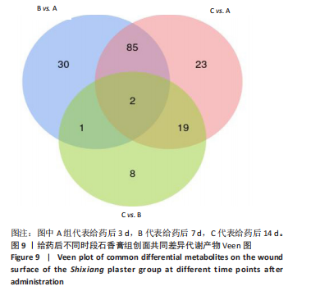
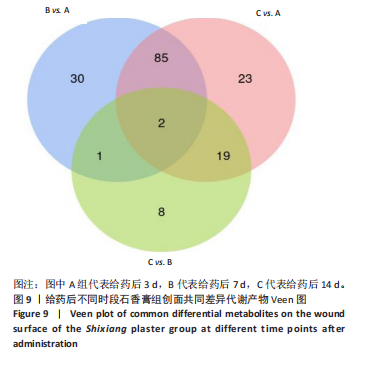
2.7 单变量统计分析及差异代谢物筛选 此次研究中差异代谢物的筛选基于单变量分析中的倍数变化和t检验,进而进行BH校正以获得q值。同时,参考偏最小二乘判别分析结果中的VIP值确定了差异表达的代谢离子。在给药后3 d与给药后7 d的比较中,共识别出1 214个差异代谢离子,包括273个上调和941个下调的代谢离子,对应128个差异代谢物,最终确定为118个独特差异代谢物。在给药后3 d与给药后14 d的比较中,共识别了1 526个差异代谢离子(330个上调,1 196个下调),对应143个差异代谢物,最终归纳为129个独特差异代谢物。在给药后7 d与给药后14 d的比较中,共识别出357个差异代谢离子(102个上调,255个下调),共35个差异代谢物,最终识别为30个独特差异代谢物。 另外,这些差异代谢物的火山图展示了不同样品中的表达情况,如图6,7所示,图中横坐标表示代谢离子的差异倍数,纵坐标为-log10(q-value),红色点代表上调代谢物,绿色点代表下调代谢物,灰色点表示无显著变化的代谢物。代谢物的强度值在热图中进行了归一化处理,以直观地展示其在各样本中的表达差异。 2.8 差异代谢物KEGG气泡图 根据差异代谢物的分析结果,使用ggplot2软件对KEGG富集分析结果进行了散点图展示,图中的Rich Factor指的是在特定KEGG路径中差异代谢物的比例,即该路径中差异代谢物的个数与该路径中总代谢物数的比值,P值降低指示了KEGG富集程度的提高,如图8所示,分析结果揭示了ABC转运蛋白、mTOR(哺乳动物雷帕霉素靶蛋白)、cAMP(环磷腺苷)等为关键代谢信号通路,说明石香膏可能通过调节这些代谢通路促进了慢性难愈性创面的愈合。 2.9 共同显著性差异代谢物分析 为寻找参与创面愈合这一生物进程的差异代谢产物以及可能的信号通路,通过Veen关联分析给药后不同时段石香膏组创面共有差异代谢物(图9)。Veen关联分析显示,石香膏组给药后3,7,14 d的创面分泌物中有2个共有差异代谢物:甲氧沙林和5’-甲硫腺苷,见表2。"
"
"
"
"
"
| [1] 谭谦,徐晔.慢性创面治疗的理论和策略[J].中华烧伤杂志,2020, 36(9):798-802. [2] HAALBOOM M. Chronic Wounds: Innovations in Diagnostics and Therapeutics. Curr Med Chem. 2018;25(41):5772-5781. [3] 陈鏖宇,王一兵.慢性创面的病因及发病机制的研究进展[J].临床医学进展,2023,13(3):2958-2966. [4] ZHAO R, LIANG H, CLARKE E, et al. Inflammation in Chronic Wounds. Int J Mol Sci. 2016;17(12):2085. [5] 吕阳.慢性难愈性创面的临床与基础研究[D].合肥:安徽医科大学, 2022. [6] LENSELINK EA. Role of fibronectin in normal wound healing. Int Wound J. 2015;12(3):313-316. [7] JOHNSON MB, PANG B, GARDNER DJ, et al. Topical Fibronectin Improves Wound Healing of Irradiated Skin. Sci Rep. 2017;7(1):3876. [8] 董云青.重组类人胶原蛋白及重组类人纤连蛋白促进小鼠急性创面愈合的研究[D].广州:南方医科大学,2022. [9] VAHIDINIA Z, AZAMI TAMEH A, BARATI S, et al. Nrf2 activation: a key mechanism in stem cell exosomes-mediated therapies. Cell Mol Biol Lett. 2024;29(1):30. [10] JERE SW, HOURELD NN, ABRAHAMSE H. Role of the PI3K/AKT (mTOR and GSK3β) signalling pathway and photobiomodulation in diabetic wound healing. Cytokine Growth Factor Rev. 2019; 50:52-59. [11] ZHANG H, KONG Q, WANG J, et al. Complex roles of cAMP-PKA-CREB signaling in cancer. Exp Hematol Oncol. 2020;9(1):32. [12] YAN L, WANG Y, FENG J, et al. Mechanism and application of fibrous proteins in diabetic wound healing: a literature review. Front Endocrinol (Lausanne). 2024;15:1430543. [13] PATTEN J, WANG K. Fibronectin in development and wound healing. Adv Drug Deliv Rev. 2021;170:353-368. [14] ZHANG X, LI H, CHEN L, et al. NRF2 in age-related musculoskeletal diseases: Role and treatment prospects. Genes Dis. 2023;11(6): 101180. [15] JUNG KA, KWAK MK. The Nrf2 system as a potential target for the development of indirect antioxidants. Molecules. 2010;15(10):7266-7291. [16] 王鹏飞,陈奕.甲硫氨酸腺苷转移酶2A在肿瘤发生中的作用及其抑制剂研发现状[J].药学进展,2022,46(12):884-897. [17] LI Y, WANG Y, WU P. 5’-Methylthioadenosine and Cancer: old molecules, new understanding. J Cancer. 2019;10(4):927-936. [18] 费冀,张开伟,周一夫,等.石香膏干预糖尿病溃疡创面模型大鼠创面组织晚期糖基化终产物及其受体与内皮型一氧化氮合成酶表达的变化[J].中国组织工程研究,2022,26(20):3196-3201. [19] 刘志伦,关智宇,蒋太平,等. 石香膏干预大鼠感染难愈创面的愈合机制[J].中国组织工程研究,2023,27(26):4126-4131. [20] FEI J, WANG LL, LIU M, et al. Study on the effect of Shixiang plaster on the expression of CD31, serum FN, and VEGF in a rat model with chronic wounds. Tradit Med Res. 2024;9(12):70. [21] 李文华.慢性难愈合创面动物模型制备方法的评价与选择[A].中国中西医结合学会烧伤专业委员会.第15届全国烧伤创疡学术会议论文汇编[C].中国中西医结合学会烧伤专业委员会,2018:6. [22] VAN DE VYVER M, IDENSOHN PJ, NIESLER CU. A regenerative approach to the pharmacological management of hard-to-heal wounds. Biochimie. 2022;194:67-78. [23] FEI J, LING YM, ZENG MJ, et al. Shixiang Plaster, a Traditional Chinese Medicine, Promotes Healing in a Rat Model of Diabetic Ulcer Through the receptor for Advanced Glycation End Products (RAGE)/Nuclear Factor kappa B (NF-κB) and Vascular Endothelial Growth Factor (VEGF)/Vascular Cell Adhesion Molecule-1 (VCAM-1)/Endothelial Nitric Oxide Synthase (eNOS) Signaling Pathways. Med Sci Monit. 2019;25:9446-9457. [24] MUSIIME M, CHANG J, HANSEN U, et al. Collagen Assembly at the Cell Surface: Dogmas Revisited. Cells. 2021;10(3):662. [25] DUBEY S, DUBEY PK, UMESHAPPA CS, et al. Inhibition of RUNX1 blocks the differentiation of lung fibroblasts to myofibroblasts. J Cell Physiol. 2022;237(4):2169-2182. [26] KURACH Ł, KULCZYCKA-MAMONA S, KOWALCZYK J, et al. Mechanisms of the Procognitive Effects of Xanthotoxin and Umbelliferone on LPS-Induced Amnesia in Mice. Int J Mol Sci. 2021;22(4):1779. [27] SAHA S, BUTTARI B, PANIERI E, et al. An Overview of Nrf2 Signaling Pathway and Its Role in Inflammation. Molecules. 2020;25(22):5474. [28] HU B, WEI H, SONG Y, et al. NF-κB and Keap1 Interaction Represses Nrf2-Mediated Antioxidant Response in Rabbit Hemorrhagic Disease Virus Infection. J Virol. 2020;94(10):e00016-e00020. [29] CHU CT, URUNO A, KATSUOKA F, et al. Role of NRF2 in Pathogenesis of Alzheimer’s Disease. Antioxidants (Basel). 2024;13(12):1529. [30] KIM JH, CHOI YK, LEE KS, et al. Functional dissection of Nrf2-dependent phase II genes in vascular inflammation and endotoxic injury using Keap1 siRNA. Free Radic Biol Med. 2012;53(3):629-40. [31] 岑丽君,左远娟,唐乾利.NRF2信号通路对慢性难愈合创面修复影响的研究进展[J].右江民族医学院学报,2022,44(5):749-753. [32] KONDRATENKO ND, ZINOVKINA LA, ZINOVKIN RA. [Transcription Factor NRF2 in Endothelial Functions]. Mol Biol (Mosk). 2023;57(6):1058-1076. [33] JOMOVA K, ALOMAR SY, ALWASEL SH, et al. Several lines of antioxidant defense against oxidative stress: antioxidant enzymes, nanomaterials with multiple enzyme-mimicking activities, and low-molecular-weight antioxidants. Arch Toxicol. 2024;98(5): 1323-1367. [34] MA Q. Role of nrf2 in oxidative stress and toxicity. Annu Rev Pharmacol Toxicol. 2013;53:401-426. [35] NGUYEN VN, ZHAO Z, TANG BZ, et al. Organic photosensitizers for antimicrobial phototherapy. Chem Soc Rev. 2022;51(9):3324-3340. [36] AVILA MA, GARCIA-TREVIJANO ER, LU SC, et al. Methylthioadenosine. Int J Biochem Cell Biol. 2004;36:2125-2130. [37] DUCATI RG, HARIJAN RK, CAMERON SA, et al. Transition-State Analogues of Campylobacter jejuni 5’-Methylthioadenosine Nucleosidase. ACS Chem Biol. 2018;13(11):3173-3183. [38] ZHANG H, LIU Y, LIU J, et al. cAMP-PKA/EPAC signaling and cancer: the interplay in tumor microenvironment. J Hematol Oncol. 2024; 17(1):5. [39] 张瑜,解文浩,翟笑妍.PI3K/AKT/mTOR信号通路在EMT发生发展过程中的研究进展[J].临床医学进展,2024,14(4):3005-3011. [40] FAN J, TO KKW, CHEN ZS, et al. ABC transporters affects tumor immune microenvironment to regulate cancer immunotherapy and multidrug resistance. Drug Resist Updat. 2023;66:100905. [41] 陈福暖,黄瑜,蔡佳,等.ABC转运蛋白结构及其在细菌致病性中的研究进展[J].生物技术通报,2022,38(6):43-52. [42] SIMCOX J, LAMMING DW. The central moTOR of metabolism. Dev Cell. 2022;57(6):691-706. |
| [1] | Pan Hongfei, Zhuang Zhenbing, Xu Baiyun, Yang Zhangyang, Lin Kairui, Zhan Bingqing, Lan Jinghan, Gao Heng, Zhang Nanbo, Lin Jiayu. Inhibitory effects of different concentrations of auranofin on M1 macrophage function and its therapeutic potential in diabetic wound healing [J]. Chinese Journal of Tissue Engineering Research, 2026, 30(6): 1390-1397. |
| [2] | Peng Zhiwei, Chen Lei, Tong Lei. Luteolin promotes wound healing in diabetic mice: roles and mechanisms [J]. Chinese Journal of Tissue Engineering Research, 2026, 30(6): 1398-1406. |
| [3] | Sun Yajie, Zhao Xinchen, Bo Shuangling. Spatiotemporal expression of bone morphologic protein 7 in mouse kidney development [J]. Chinese Journal of Tissue Engineering Research, 2026, 30(5): 1156-1161. |
| [4] | Yang Zeyu, Zhi Liang, Wang Jia, Zhang Jingyi, Zhang Qingfang, Wang Yulong, Long Jianjun. A visualized analysis of research hotspots in high-frequency repetitive transcranial magnetic stimulation from the macroscopic perspective [J]. Chinese Journal of Tissue Engineering Research, 2026, 30(5): 1320-1330. |
| [5] | Wang Mingqi, Feng Shiya, Han Yinhe, Yu Pengxin, Guo Lina, Jia Zixuan, Wang Xiuli. Construction and evaluation of a neuralized intestinal mucosal tissue engineering model in vitro [J]. Chinese Journal of Tissue Engineering Research, 2026, 30(4): 892-900. |
| [6] | Wang Jie, Huang Rui, Zhang Ye, Shou Zhaoxi, Yao Jie, Liu Chenxi, Liao Jian. Role and mechanism of probiotics in peri-implantitis [J]. Chinese Journal of Tissue Engineering Research, 2026, 30(4): 901-907. |
| [7] | Yang Xiao, Bai Yuehui, Zhao Tiantian, Wang Donghao, Zhao Chen, Yuan Shuo. Cartilage degeneration in temporomandibular joint osteoarthritis: mechanisms and regenerative challenges [J]. Chinese Journal of Tissue Engineering Research, 2026, 30(4): 926-935. |
| [8] | Wang Ziheng, Wu Shuang. Oxidative stress-related genes and molecular mechanisms after spinal cord injury: data analysis and verification based on GEO database [J]. Chinese Journal of Tissue Engineering Research, 2025, 29(32): 6893-6904. |
| [9] | Wang Wanchun, , Yi Jun, Yan Zhangren, Yang Yue, Dong Degang, Li Yumei. 717 Jiedu Decoction remodels homeostasis of extracellular matrix and promotes repair of local injured tissues in rats after Agkistrodon halys bite [J]. Chinese Journal of Tissue Engineering Research, 2025, 29(30): 6457-6465. |
| [10] | Hu Shujuan, Liu Dang, Ding Yiting, Liu Xuan, Xia Ruohan, Wang Xianwang. Ameliorative effect of walnut oil and peanut oil on atherosclerosis [J]. Chinese Journal of Tissue Engineering Research, 2025, 29(30): 6482-6488. |
| [11] | Xu Zhi, Chen Yundong, Sun Yujie, Gong Xiaonan, Li Yuwan. Data of spinal osteosarcoma patients in United States based on SEER database: construction and validation of a prediction model for treatment outcomes and prognosis [J]. Chinese Journal of Tissue Engineering Research, 2025, 29(30): 6583-6590. |
| [12] | Chen Jiayong, Tang Meiling, Lu Jianqi, Pang Yan, Yang Shangbing, Mao Meiling, Luo Wenkuan, Lu Wei. Causal association between metabolites and sarcopenia: a big data analysis of genome-wide association studies in the European population [J]. Chinese Journal of Tissue Engineering Research, 2025, 29(29): 6369-6380. |
| [13] | Sun Yahui, Wang Yufeng, Guo Chao, Yao Junjie, Ji Yuanyuan, Li Zhongxu, Lou Huijuan, Jiang Jinglei, Sun Yiping, Xu Jing, Cong Deyu. Effect of massage on extracellular matrix collagen deposition in skeletal muscle of type 2 diabetic rats [J]. Chinese Journal of Tissue Engineering Research, 2025, 29(26): 5549-5555. |
| [14] | Zhao Zhenning, , , Li Kaiying, , , Yang Nan, , , Sun Wenjing, , , Wei Xiaoge, , , Mu Jing, Ma Huisheng, , . Regulatory mechanism of electroacupuncture on hypothalamic-pituitary-testicular axis in oligospermic rats [J]. Chinese Journal of Tissue Engineering Research, 2025, 29(26): 5563-5571. |
| [15] | Yang Jun, Yin Peng, Zheng Zhonghua. Mechanism of stachydrine-induced autophagy in improving atherosclerosis in high-fat-fed mice [J]. Chinese Journal of Tissue Engineering Research, 2025, 29(24): 5140-5147. |
| Viewed | ||||||
|
Full text |
|
|||||
|
Abstract |
|
|||||