Chinese Journal of Tissue Engineering Research ›› 2026, Vol. 30 ›› Issue (31): 8047-8053.doi: 10.12307/2026.849
Previous Articles Next Articles
Hypoxia preconditioning of bone marrow mesenchymal stem cells promotes angiogenesis in human umbilical vein endothelial cells through paracrine cytokines
Liu Lei, Mao Wen, Qi Fu, Li Hong, Zhang Minghuan
- Department of Orthopedics for Joint Trauma, Wuhan Third Hospital, Wuhan 430071, Hubei Province, China
-
Received:2025-10-29Accepted:2026-01-15Online:2026-11-08Published:2026-05-21 -
Contact:Zhang Minghuan, Associate chief physician, Department of Orthopedics for Joint Trauma, Wuhan Third Hospital, Wuhan 430071, Hubei Province, China -
About author:Liu Lei, MS, Attending physician, Department of Orthopedics for Joint Trauma, Wuhan Third Hospital, Wuhan 430071, Hubei Province, China -
Supported by:2022 Knowledge Innovation Special Program-Shuguang Project of Wuhan Municipal Science and Technology Bureau, No. 2022020801020550 (to LL)

CLC Number:
Cite this article
Liu Lei, Mao Wen, Qi Fu, Li Hong, Zhang Minghuan. Hypoxia preconditioning of bone marrow mesenchymal stem cells promotes angiogenesis in human umbilical vein endothelial cells through paracrine cytokines[J]. Chinese Journal of Tissue Engineering Research, 2026, 30(31): 8047-8053.
share this article
Add to citation manager EndNote|Reference Manager|ProCite|BibTeX|RefWorks
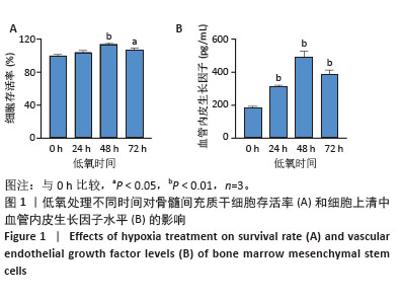
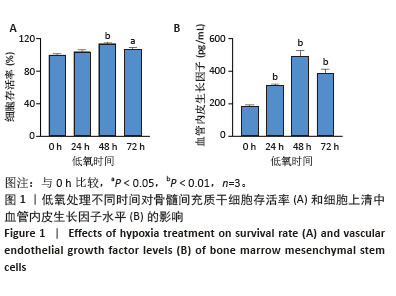
2.1 低氧处理不同时间对骨髓间充质干细胞存活率和血管内皮生长因子水平的影响 低氧处理24 h后骨髓间充质干细胞存活率升高,但差异不显著(P=0.087 2),而低氧处理48 h(P < 0.000 1)和72 h(P=0.011 1)均可显著升高骨髓间充质干细胞的存活率。ELISA检测结果显示,低氧处理24,48,72 h均可显著升高细胞上清中血管内皮生长因子水平(P < 0.01)。值得注意的是,低氧处理48 h后骨髓间充质干细胞存活率最高,细胞上清中血管内皮生长因子水平最高,因此后续选择48 h作为骨髓间充质干细胞的最佳低氧处理时间,见图1。 "
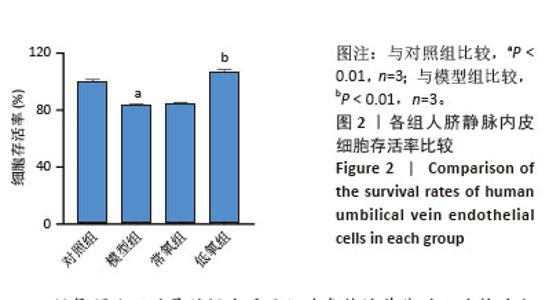
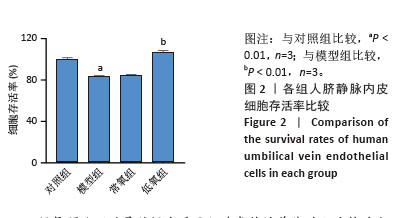
2.2 低氧预处理的骨髓间充质干细胞条件培养基对人脐静脉内皮细胞存活率的影响 与对照组比较,模型组细胞存活率显著降低(P < 0.000 1);与模型组比较,常氧组细胞存活率无明显变化(P > 0.05),而低氧组细胞增殖能力显著升高(P < 0.000 1),见图2。 "
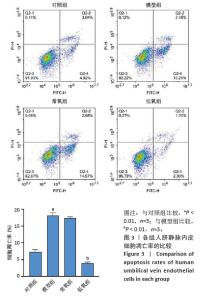
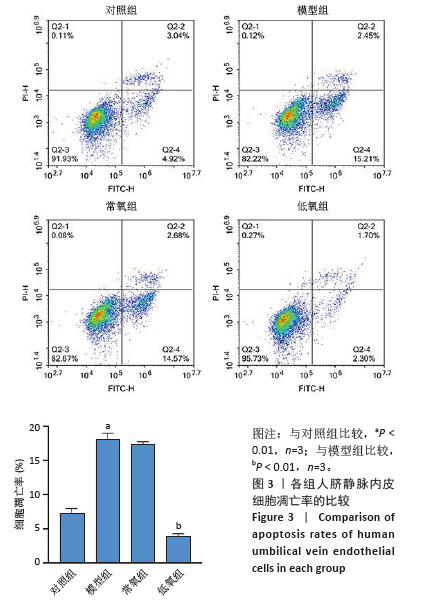
2.3 低氧预处理的骨髓间充质干细胞条件培养基对人脐静脉内皮细胞凋亡的影响 与对照组比较,模型组细胞凋亡率显著升高(P < 0.000 1);与模型组比较,常氧组细胞凋亡率无明显变化(P=0.606 4),而低氧组细胞凋亡率显著降低(P < 0.000 1),见图3。"
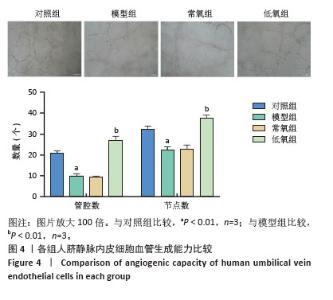
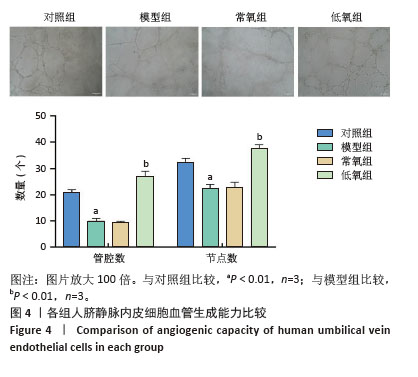
2.4 低氧预处理的骨髓间充质干细胞条件培养基对人脐静脉内皮细胞血管生成能力的影响 与对照组比较,模型组管腔数和节点数均显著降低(P < 0.001,P < 0.001);与模型组比较,常氧组管腔数和节点数无明显变化(P=0.945 4,P=0.992 5),而低氧组管腔数和节点数显著升高(P < 0.001,P < 0.001),见图4。 "
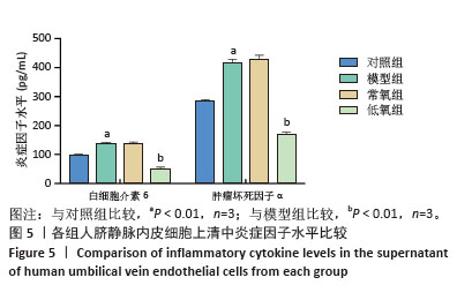
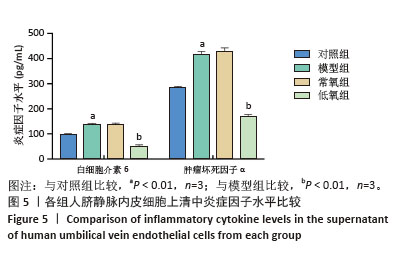
2.5 低氧预处理的骨髓间充质干细胞条件培养基对人脐静脉内皮细胞炎症反应的影响 与对照组比较,模型组细胞上清中白细胞介素6和肿瘤坏死因子α水平均显著升高(P < 0.001,P < 0.001);与模型组比较,常氧组细胞上清中白细胞介素6和肿瘤坏死因子α水平无明显变化(P=0.997 9,P=0.222 1),而低氧组细胞上清中白细胞介素6和肿瘤坏死因子α水平显著降低(P < 0.001,P < 0.001),见图5。"
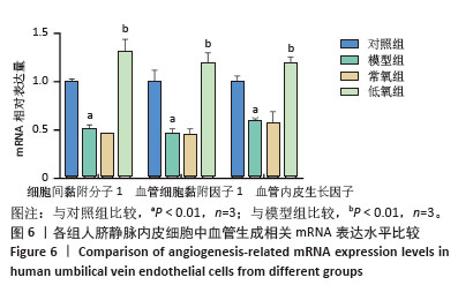
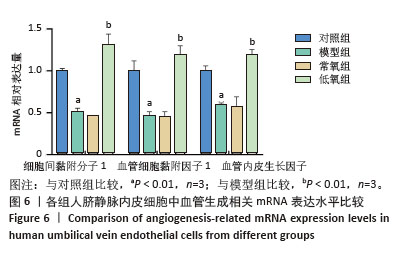
2.6 低氧预处理的骨髓间充质干细胞条件培养基对人脐静脉内皮细胞血管生成相关mRNA表达的影响 与对照组比较,模型组细胞中细胞间黏附分子1、血管细胞黏附因子1和血管内皮生长因子 mRNA表达水平均显著降低(P < 0.001,P < 0.001,P < 0.001);与模型组比较,常氧组细胞中细胞间黏附分子1、血管细胞黏附因子1和血管内皮生长因子 mRNA表达水平无明显变化(P=0.857 3,P=0.997 6,P=0.991 4),而低氧组细胞中细胞间黏附分子1、血管细胞黏附因子1和血管内皮生长因子 mRNA表达水平显著升高(P < 0.001,P < 0.001,P < 0.001),见图6。 "
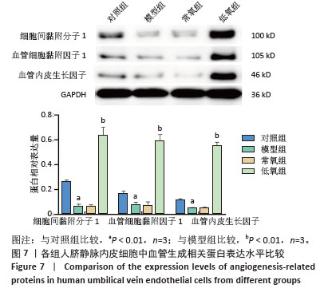
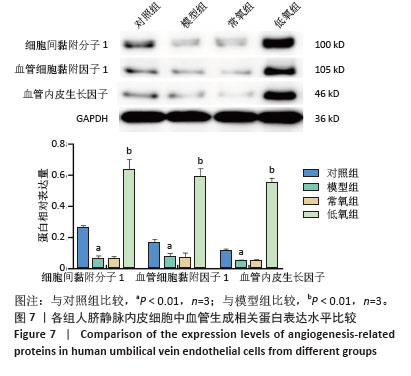
2.7 低氧预处理的骨髓间充质干细胞条件培养基对人脐静脉内皮细胞血管生成相关蛋白表达的影响 与对照组比较,模型组细胞中细胞间黏附分子1、血管细胞黏附因子1和血管内皮生长因子蛋白表达水平显著降低(P < 0.001,P=0.003 4,P=0.037 6);与模型组比较,常氧组细胞中细胞间黏附分子1、血管细胞黏附因子1和血管内皮生长因子蛋白表达水平无明显变化(P=0.999 4,P=0.990 8,P=0.999 8),而低氧组细胞中细胞间黏附分子1、血管细胞黏附因子1和血管内皮生长因子蛋白表达水平显著升高(P < 0.001,P < 0.001,P < 0.001),见图7。 "
| [1] WILDEMANN B, IGNATIUS A, LEUNG F, et al. Non-union bone fractures. Nat Rev Dis Primers. 2021;7(1):57. [2] MICK P, FISCHER C. Delayed Fracture Healing. Semin Musculoskelet Radiol. 2022; 26(3):329-337. [3] LANDES EK, KONDA SR, LEUCHT P, et al. Fixed-angle plate fixation and autogenous iliac crest graft for repair of distal metaphyseal femoral nonunion. Eur J Orthop Surg Traumatol. 2023;33(5):1835-1839. [4] RODDY E, DAVIS JH, FIROOZABADI R, et al. Routine Use of Autograft Is Not Necessary for Treatment of Humeral Shaft Nonunions and Anticipated Nonunions After Failed Nonoperative Treatment. J Orthop Trauma. 2025;39(10):542-548. [5] VIVACQUA T, ROCHA T, ROCHA DE FARIA JL, et al. Fresh Osteochondral Allograft in a Complex Hoffa Fracture - Case Report. Rev Bras Ortop (Sao Paulo). 2022; 59(Suppl 2):e264-e268. [6] R S, W MD YUSOF WY, JS A, et al. Massive Allograft Reconstruction in Limb Salvage Surgery: Insights From a Single-Institution Case Series in Malaysia. Cureus. 2025;17(6):e85217. [7] KUMAR A, VENKATARAMAN S, S NJ, et al. Functional and Radiological Outcomes of Allograft Application in Distal Femur Fractures: A Retrospective Study. Cureus. 2025;17(4):e82473. [8] GE CY, DONG L, XU ZW, et al. Avulsion fracture of the anterior superior iliac crest following autograft for anterior lumbar fusion: case report and literature review. Front Surg. 2024;11:1327028. [9] MA Y, YANG W, LIN Q, et al. High-speed centrifugation reduces immune rejection by removing bone marrow elements from fresh osteochondral allografts. J Orthop Translat. 2025;51:37-50. [10] SPAGNOLI A. Mesenchymal stem cells and fracture healing. Orthopedics. 2008; 31(9):855-856. [11] MATTEI V, SANTILLI F, PULCINI F, et al. Validated methods for isolation and qualification of mesenchymal stromal/stem cells from different sources. J Transl Med. 2025;23(1):975. [12] 于淼瑛,宋晓东,王艳辉,等.骨髓间充质干细胞衰老研究进展[J].中国骨质疏松杂志,2023,29(12):1844-1850. [13] JIANG Y, XIN N, XIONG Y, et al. αCGRP Regulates Osteogenic Differentiation of Bone Marrow Mesenchymal Stem Cells Through ERK1/2 and p38 MAPK Signaling Pathways. Cell Transplant. 2022;31:9636897221107636. [14] DONNELLY EM, KUBELICK KP, DUMANI DS, et al. Photoacoustic Image-Guided Delivery of Plasmonic-Nanoparticle-Labeled Mesenchymal Stem Cells to the Spinal Cord. Nano Lett. 2018;18(10):6625-6632. [15] ZHANG X, WANG G, WANG W, et al. Bone marrow mesenchymal stem cells paracrine TGF-β1 to mediate the biological activity of osteoblasts in bone repair. Cytokine. 2023;164:156139. [16] ZENG Q, XIAO H, CHEN Y, et al. Decellularized small intestinal hydrogel-encapsulated BMSCs attenuate dextran sulfate sodium-induced colitis in mice via immunomodulation and tissue repair. J Mater Chem B. 2025;13(29):8819-8832. [17] GE S, HE W, ZHANG L, et al. Ghrelin pretreatment enhanced the protective effect of bone marrow-derived mesenchymal stem cell-conditioned medium on lipopolysaccharide-induced endothelial cell injury. Mol Cell Endocrinol. 2022;548:111612. [18] ZHANG Q, LI J, JIA J, et al. Topology scaffolds-enhanced paracrine of BMSCs through mechanotransduction-related metabolism reprogramming for burn wounds healing. Biomaterials. 2026;324:123518. [19] XU J, CHEN C, GAN S, et al. Low-Intensity pulsed ultrasound enhances paracrine secretion of IGF and VEGF by bmscs, promoting osteogenesis and angiogenesis. BMC Musculoskelet Disord. 2025;26(1):828. [20] YUAN F, LIU J, ZHONG L, et al. Enhanced therapeutic effects of hypoxia-preconditioned mesenchymal stromal cell-derived extracellular vesicles in renal ischemic injury. Stem Cell Res Ther. 2025;16(1):39. [21] JARABA-ÁLVAREZ WV, USCANGA-PALOMEQUE AC, SANCHEZ-GIRALDO V, et al. Hypoxia-induced metabolic reprogramming in mesenchymal stem cells: unlocking the regenerative potential of secreted factors. Front Cell Dev Biol. 2025;13:1609082. [22] WANG Z, FANG B, TAN Z, et al. Hypoxic preconditioning increases the protective effect of bone marrow mesenchymal stem cells on spinal cord ischemia/reperfusion injury. Mol Med Rep. 2016;13(3):1953-1960. [23] YUAN X, LUO Q, SHEN L, et al. Hypoxic preconditioning enhances the differentiation of bone marrow stromal cells into mature oligodendrocytes via the mTOR/HIF-1α/VEGF pathway in traumatic brain injury. Brain Behav. 2020;10(7):e01675. [24] WANG W, HUANG X, LIN W, et al. Hypoxic preconditioned bone mesenchymal stem cells ameliorate spinal cord injury in rats via improved survival and migration. Int J Mol Med. 2018;42(5):2538-2550. [25] HUANG J, HAN Q, CAI M, et al. Effect of Angiogenesis in Bone Tissue Engineering. Ann Biomed Eng. 2022;50(8):898-913. [26] KIM MS, KIM DC, JO YK. Near-infrared-activatable angiogenic proteinaceous nanomicelles for sequential augmentation of bone repair in periodontal defects. Dent Mater. 2025;41(8):955-964. [27] KUTLU Z, GULABOGLU M, HALICI Z, et al. Biochemical Research of the Effects of Essential Oil Obtained from the Fruit of Myrtus communis L. on Cell Damage Associated with Lipopolysaccharide-Induced Endotoxemia in a Human Umbilical Cord Vein Endothelial Cells. Biochem Genet. 2021;59(1):315-334. [28] XIANG J, ZHOU L, XIE Y, et al. Mesh-like electrospun membrane loaded with atorvastatin facilitates cutaneous wound healing by promoting the paracrine function of mesenchymal stem cells. Stem Cell Res Ther. 2022;13(1):190. [29] THURAIRAJAH K, BRIGGS GD, BALOGH ZJ. Stem cell therapy for fracture non-union: The current evidence from human studies. J Orthop Surg (Hong Kong). 2021;29(3):23094990211036545. [30] SANGHANI-KERAI A, MCCREARY D, LANCASHIRE H, et al. Stem Cell Interventions for Bone Healing: Fractures and Osteoporosis. Curr Stem Cell Res Ther. 2018; 13(5):369-377. [31] LU GD, CHENG P, LIU T, et al. BMSC-Derived Exosomal miR-29a Promotes Angiogenesis and Osteogenesis. Front Cell Dev Biol. 2020;8:608521. [32] YOSHIDA S, MIYAGAWA S, TOYOFUKU T, et al. Syngeneic Mesenchymal Stem Cells Reduce Immune Rejection After Induced Pluripotent Stem Cell-Derived Allogeneic Cardiomyocyte Transplantation. Sci Rep. 2020;10(1):4593. [33] DUBOSE CO, DAUM JR, SANSAM CL, et al. Dynamic Features of Chromosomal Instability during Culture of Induced Pluripotent Stem Cells. Genes (Basel). 2022;13(7):1157. [34] PENG J, MAO Z, LIU Y, et al. 12-Epi-Napelline regulated TGF-β/BMP signaling pathway mediated by BMSCs paracrine acceleration against osteoarthritis. Int Immunopharmacol. 2022;113(Pt A):109307. [35] SHAO LT, LUO L, QIU JH, et al. PTH (1-34) enhances the therapeutic effect of bone marrow mesenchymal stem cell-derived exosomes by inhibiting proinflammatory cytokines expression on OA chondrocyte repair in vitro. Arthritis Res Ther. 2022; 24(1):96. [36] LIAO X, WU C, SHAO Z, et al. SETD4 in the Proliferation, Migration, Angiogenesis, Myogenic Differentiation and Genomic Methylation of Bone Marrow Mesenchymal Stem Cells. Stem Cell Rev Rep. 2021;17(4):1374-1389. [37] WU D, CHANG X, TIAN J, et al. Bone mesenchymal stem cells stimulation by magnetic nanoparticles and a static magnetic field: release of exosomal miR-1260a improves osteogenesis and angiogenesis. J Nanobiotechnology. 2021;19(1):209. [38] TANG Y, XU H, HE S, et al. Ultrasound-Stimulated BMSCs Promote Regenerative Healing in Refractory Foot Ulcer by Paracrine Effect. Ultrasound Med Biol. 2025; 51(12):2292-2302. [39] MOIRANGTHEM RD, SINGH S, ADSUL A, et al. Hypoxic niche-mediated regeneration of hematopoiesis in the engraftment window is dominantly affected by oxygen tension in the milieu. Stem Cells Dev. 2015;24(20):2423-2436. [40] LI D, LIU H, ZHAO J, et al. Porous lithium-doped hydroxyapatite scaffold seeded with hypoxia-preconditioned bone-marrow mesenchymal stem cells for bone-tissue regeneration. Biomed Mater. 2018;13(5):055002. [41] TIAN H, YANG X, ZHAO J, et al. Hypoxia-Preconditioned Bone Marrow Mesenchymal Stem Cells Improved Cerebral Collateral Circulation and Stroke Outcome in Mice. Arterioscler Thromb Vasc Biol. 2023;43(7):1281-1294. [42] LANGSTON W, CHIDLOW JH JR, BOOTH BA, et al. Regulation of endothelial glutathione by ICAM-1 governs VEGF-A-mediated eNOS activity and angiogenesis. Free Radic Biol Med. 2007;42(5):720-729. [43] KIM TK, PARK CS, NA HJ, et al. Ig-like domain 6 of VCAM-1 is a potential therapeutic target in TNFα-induced angiogenesis. Exp Mol Med. 2017;49(2):e294. [44] SALHOTRA A, SHAH HN, LEVI B, et al. Mechanisms of bone development and repair. Nat Rev Mol Cell Biol. 2020;21(11):696-711. [45] LIU W, WANG X, ZHANG X, et al. Shear stress-mediated downregulation of miR-423-5p in M2 macrophage exosomes promotes osteogenic differentiation of bone marrow mesenchymal stem cells. Int Immunopharmacol. 2025;164:115298. [46] MARUYAMA M, RHEE C, UTSUNOMIYA T, et al. Modulation of the Inflammatory Response and Bone Healing. Front Endocrinol (Lausanne). 2020;11:386. [47] CHEN P, ZHANG G, JIANG S, et al. Mechanosensitive Piezo1 in endothelial cells promotes angiogenesis to support bone fracture repair. Cell Calcium. 2021;97:102431. [48] ZHANG L, JIAO G, REN S, et al. Exosomes from bone marrow mesenchymal stem cells enhance fracture healing through the promotion of osteogenesis and angiogenesis in a rat model of nonunion. Stem Cell Res Ther. 2020;11(1):38. [49] JIANG X, ZHAO J, WANG S, et al. Mandibular repair in rats with premineralized silk scaffolds and BMP-2-modified bMSCs. Biomaterials. 2009;30(27):4522-4532. [50] DONG J, DONG W, RAN H, et al. BMSCs-targeting piezoelectric stimulation and immunomodulatory dual-functional hydrogel for promoting diabetic bone regeneration. Mater Today Bio. 2025;33:102015. [51] ZHANG E, MIRAMINI S, ZHANG L. The impact of osteoporosis and diabetes on fracture healing under different loading conditions. Comput Methods Programs Biomed. 2024;244:107952. |
| [1] | Wu Yanting, Li Yu, Liao Jinfeng. Magnesium oxide nanoparticles regulate osteogenesis- and angiogenesis-related gene expressions to promote bone defect healing [J]. Chinese Journal of Tissue Engineering Research, 2026, 30(8): 1885-1895. |
| [2] | Han Teng, Ma Hong, Yang Ruoyi, Luo Yi, Li Chao. Oral squamous cell carcinoma-derived exosomal delivery of angiopoietin-2 is involved in tumor angiogenesis [J]. Chinese Journal of Tissue Engineering Research, 2026, 30(7): 1755-1767. |
| [3] | Cao Yong, Teng Hongliang, Tai Pengfei, Li Junda, Zhu Tengqi, Li Zhaojin. Interactions between cytokines and satellite cells in muscle regeneration [J]. Chinese Journal of Tissue Engineering Research, 2026, 30(7): 1808-1817. |
| [4] | Cai Ziming, Yu Qinghe, Ma Pengfei, Zhang Xin, Zhou Longqian, Zhang Chongyang, Lin Wenping. Heme oxygenase-1 alleviates lipopolysaccharide-induced inflammatory response in nucleus pulposus mesenchymal stem cells [J]. Chinese Journal of Tissue Engineering Research, 2026, 30(7): 1624-1631. |
| [5] | He Jiale, Huang Xi, Dong Hongfei, Chen Lang, Zhong Fangyu, Li Xianhui. Acellular dermal matrix combined with adipose-derived stem cell exosomes promotes burn wound healing [J]. Chinese Journal of Tissue Engineering Research, 2026, 30(7): 1699-1710. |
| [6] | Xia Linfeng, Wang Lu, Long Qianfa, Tang Rongwu, Luo Haodong, Tang Yi, Zhong Jun, Liu Yang. Human umbilical cord mesenchymal stem cell-derived exosomes alleviate blood-brain barrier damage in mice with septic encephalopathy [J]. Chinese Journal of Tissue Engineering Research, 2026, 30(7): 1711-1719. |
| [7] | Cui Lianxu, Li Haomin, Xu Junrong, Tan Baodong, Lu Dahong, Peng Siwei, Wang Jinhui. Effect of umbilical cord mesenchymal stem cell conditioned medium on tissue repair after traumatic craniocerebral injury in miniature pigs [J]. Chinese Journal of Tissue Engineering Research, 2026, 30(7): 1730-1735. |
| [8] | Hou Chaowen, Li Zhaojin, Kong Jianda, Zhang Shuli. Main physiological changes in skeletal muscle aging and the multimechanism regulatory role of exercise [J]. Chinese Journal of Tissue Engineering Research, 2026, 30(6): 1464-1475. |
| [9] | You Huijuan, Wu Shuzhen, Rong Rong, Chen Liyuan, Zhao Yuqing, Wang Qinglu, Ou Xiaowei, Yang Fengying. Macrophage autophagy in lung diseases: two-sided effects [J]. Chinese Journal of Tissue Engineering Research, 2026, 30(6): 1516-1526. |
| [10] | Zhang Di, Zhao Jun, Ma Guangyue, Sun Hui, Jiang Rong. Mechanism of depression-like behavior in chronic social defeat stress mice based on high-throughput sequencing [J]. Chinese Journal of Tissue Engineering Research, 2026, 30(5): 1139-1146. |
| [11] | Li Haojing, Wang Xin, Song Chenglin, Zhang Shengnan, Chen Yunxin. Therapeutic efficacy of extracorporeal shock wave therapy in the upper trapezius muscle area combined with exercise control training in patients with chronic non-specific neck pain [J]. Chinese Journal of Tissue Engineering Research, 2026, 30(5): 1162-1170. |
| [12] | Liu Yu, Lei Senlin, Zhou Jintao, Liu Hui, Li Xianhui. Mechanisms by which aerobic and resistance exercises improve obesity-related cognitive impairment [J]. Chinese Journal of Tissue Engineering Research, 2026, 30(5): 1171-1183. |
| [13] | Yu Huifen, Mo Licun, Cheng Leping. The position and role of 5-hydroxytryptamine in the repair of tissue injury [J]. Chinese Journal of Tissue Engineering Research, 2026, 30(5): 1196-1206. |
| [14] | Wen Xiaolong, Weng Xiquan, Feng Yao, Cao Wenyan, Liu Yuqian, Wang Haitao. Effects of inflammation on serum hepcidin and iron metabolism related parameters in patients with type 2 diabetes mellitus: a meta-analysis [J]. Chinese Journal of Tissue Engineering Research, 2026, 30(5): 1294-1301. |
| [15] | Yin Yongcheng, Zhao Xiangrui, Yang Zhijie, Li Zheng, Li Fang, Ning Bin. Effect and mechanism of peroxiredoxin 1 in microglial inflammation after spinal cord injury [J]. Chinese Journal of Tissue Engineering Research, 2026, 30(5): 1106-1113. |
| Viewed | ||||||
|
Full text |
|
|||||
|
Abstract |
|
|||||