Chinese Journal of Tissue Engineering Research ›› 2026, Vol. 30 ›› Issue (26): 6719-6728.doi: 10.12307/2026.361
Previous Articles Next Articles
Osteogenic and antibacterial properties of polyether ether ketone modified by multifunctional composite coating
Zhang Huifang1, 2, 3, Li Hankai1, 2, 3, Huang Haozhe1, 2, 3, Liu Min1, 2, 3, Wang Pin1, 2, 3, Huang Haixia1, 2, 3, Sun Libo4, Lan Yuyan1, 2, 3
- 1Department of Prosthodontics, The Affiliated Stomatological Hospital, Southwest Medical University, Luzhou 646000, Sichuan Province, China; 2Luzhou Key Laboratory of Oral & Maxillofacial Reconstruction and Regeneration, Southwest Medical University, Luzhou 646000, Sichuan Province, China; 3Institute of Stomatology, Southwest Medical University, Luzhou 646000, Sichuan Province, China; 4Department of Stomatology, Luzhou People’s Hospital, Luzhou 646000, Sichuan Province, China
-
Accepted:2025-08-30Online:2026-09-18Published:2026-03-10 -
Contact:Lan Yuyan, MS, Associate professor, Department of Prosthodontics, The Affiliated Stomatological Hospital, Southwest Medical University, Luzhou 646000, Sichuan Province, China; Luzhou Key Laboratory of Oral & Maxillofacial Reconstruction and Regeneration, Southwest Medical University, Luzhou 646000, Sichuan Province, China; Institute of Stomatology, Southwest Medical University, Luzhou 646000, Sichuan Province, China Sun Libo, MS, Associate professor, Associate chief physician, Department of Stomatology, Luzhou People’s Hospital, Luzhou 646000, Sichuan Province, China -
About author:Zhang Huifang, Master candidate, Department of Prosthodontics, The Affiliated Stomatological Hospital, Southwest Medical University, Luzhou 646000, Sichuan Province, China; Luzhou Key Laboratory of Oral & Maxillofacial Reconstruction and Regeneration, Southwest Medical University, Luzhou 646000, Sichuan Province, China; Institute of Stomatology, Southwest Medical University, Luzhou 646000, Sichuan Province, China -
Supported by:Youth Innovation Research Project of Sichuan Medical Association, No. Q22064 (to LYY); Luzhou Science and Technology Bureau Applied Research Basic Project, No. 2023JYJ053 (to LYY); Luzhou Science and Technology Plan Funding Project, No. 2024JYJ087 (to SLB); Scientific Research Project of Luzhou Medical Association, No. 2024-YXXM-010 (to SLB)

CLC Number:
Cite this article
Zhang Huifang, Li Hankai, Huang Haozhe, Liu Min, Wang Pin, Huang Haixia, Sun Libo, Lan Yuyan. Osteogenic and antibacterial properties of polyether ether ketone modified by multifunctional composite coating[J]. Chinese Journal of Tissue Engineering Research, 2026, 30(26): 6719-6728.
share this article
Add to citation manager EndNote|Reference Manager|ProCite|BibTeX|RefWorks
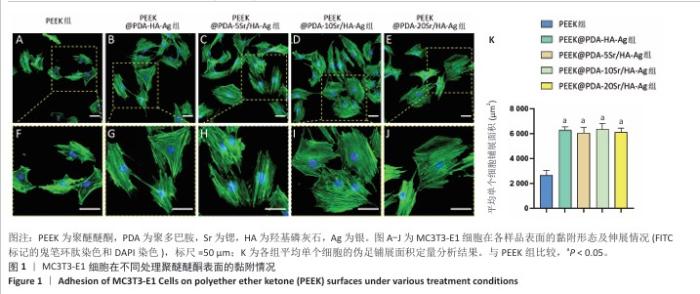
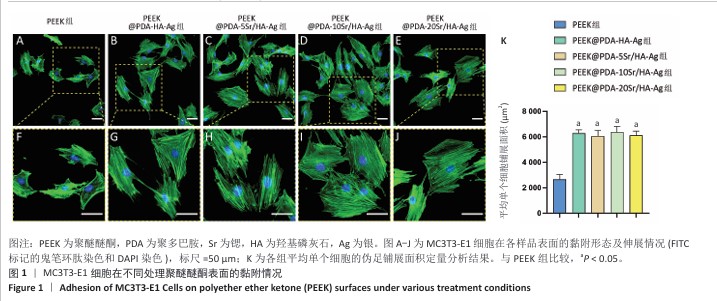
2.1 聚醚醚酮改性前后的生物相容性评估结果 2.1.1 细胞黏附 倒置荧光显微镜下可见MC3T3-E1细胞在不同样品表面的黏附形态及伸展情况,在未改性聚醚醚酮上黏附的细胞伸展情况较差,伪足较少,肌动蛋白微丝表达有限;MC3T3-E1细胞在改性后聚醚醚酮表面展现出饱满舒展形态,细胞质分散,可见较多板状、丝状伪足突起,肌动蛋白微丝清晰明显,见图1。"
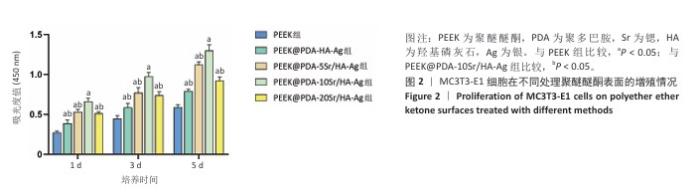
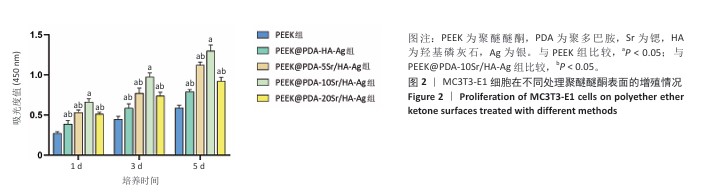
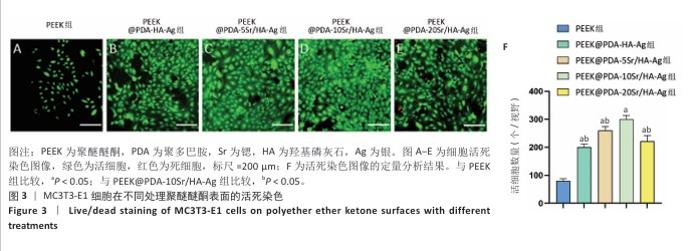
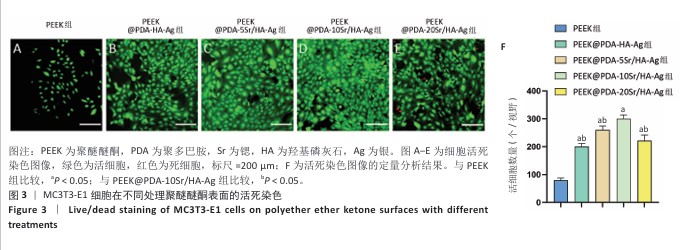
2.1.2 细胞增殖与活性 CCK-8检测结果显示,相同培养时间下,与其他4组相比,PEEK@PDA-10Sr/HA-Ag组细胞增殖多于其他4组(P < 0.05),见图2。细胞活死染色结果显示,与聚醚醚酮组相比,改性后聚醚醚酮组表面活细胞数量均明显增加,其中PEEK@PDA-10Sr/HA-Ag组活细胞数量最多,见图3。 根据细胞增殖、活死染色与黏附检测结果,最终确定PEEK@PDA-10Sr/HA-Ag用于后续实验。"
"
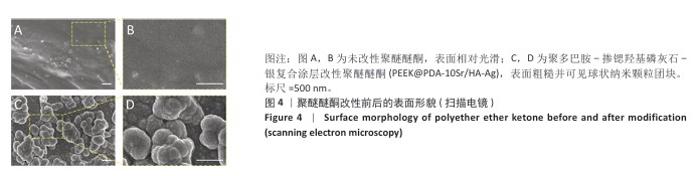
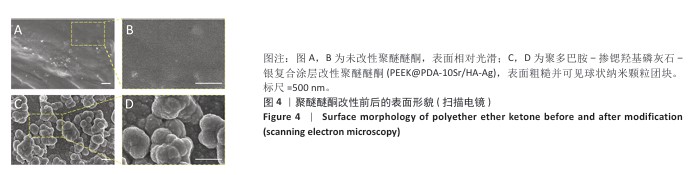
2.2 聚醚醚酮改性前后的表面形貌 扫描电镜观察显示,未改性聚醚醚酮表面较为光滑,仅有少量经砂纸打磨的痕迹(图4A,B);PEEK@PDA-10Sr/HA-Ag组表面粗糙、凹凸不平,可见大量球状纳米颗粒团块附着在表面(图4C,D)。"
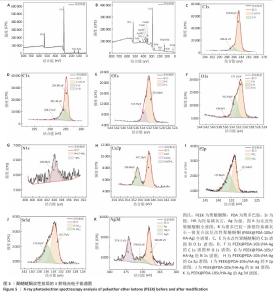
2.3 聚醚醚酮改性前后的X射线光电子能谱分析结果 未改性聚醚醚酮和PEEK@PDA-10Sr/HA-Ag的X射线电子能谱分析,如图5所示。未改性聚醚醚酮样品只检测到C、O元素,PEEK@PDA-10Sr/HA-Ag样品检测到了C、O、N、Ca、P、Sr、Ag 7种元素,两种样品的全谱图中均可见少量经硅砂纸打磨样品后留下的Si元素。 从2种样品的全谱图可明显观察到PEEK@PDA-10Sr/HA-Ag具有多种元素的信号特征峰。具体来看,在C 1s谱图中,与未改性聚醚醚酮相比,PEEK@PDA-10Sr/HA-Ag除了在284.8 eV处有C-C/C-H特征峰,285.4 eV处有C-O峰,还在288.23 eV处有C=O峰。在O 1s图谱中,未改性聚醚醚酮在532.04 eV和533.55 eV处分别有O=C特征峰和O-C特征峰,PEEK@PDA-10Sr/HA-Ag可见C-H(531.13 eV)特征峰。另外,在改性后的PEEK@PDA-10Sr/HA-Ag样品还检测到了N 1s峰(399.79 eV)、P 2p峰(133.64,135.86 eV)、Sr 3d峰(133.62,135.77 eV)以及Ag 3d特征峰(368.09,370.62,374.14 eV)。"
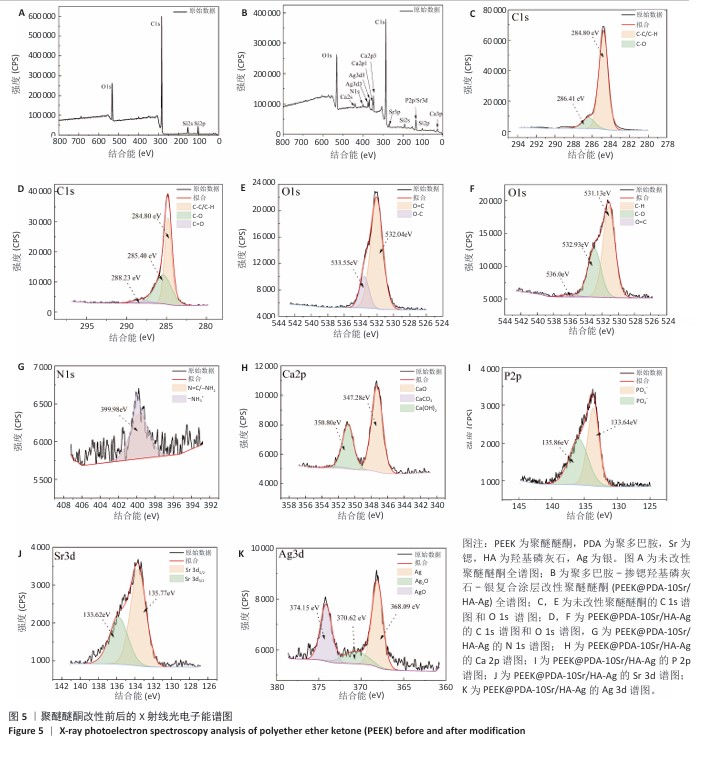
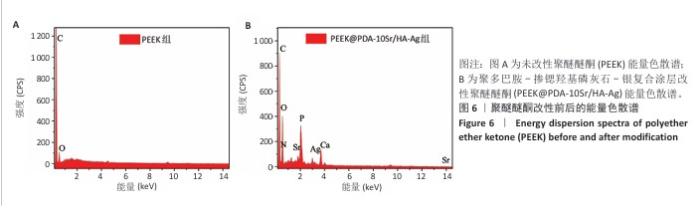
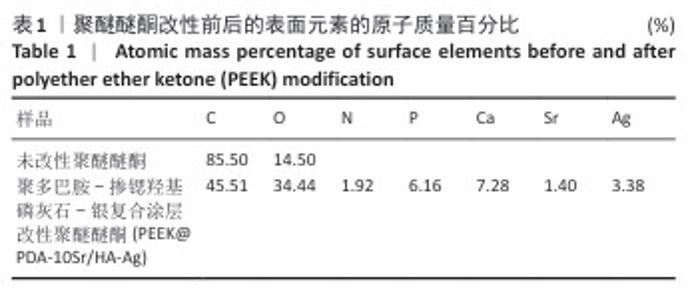
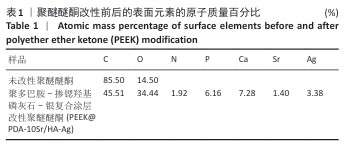
2.4 聚醚醚酮改性前后的能量色散谱仪测定结果 与未改性聚醚醚酮样品相比,PEEK@PDA-10Sr/HA-Ag样品C、O元素的质量比降低,同时还检测到了N、P、Ca、Ag、Sr 5种元素,见图6。结果显示,PEEK@PDA-10Sr/HA-Ag样品中N含量为1.92%,P含量为6.16%,Ca含量为7.28%,Sr含量为1.4%,Ag含量为3.38%,见表1。"
"
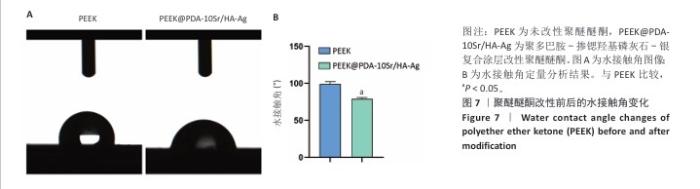
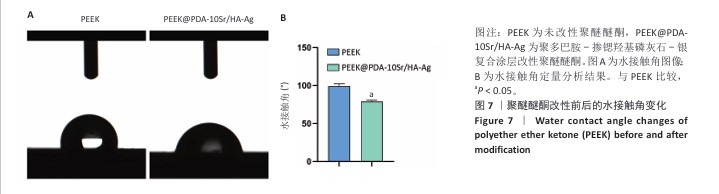
2.5 聚醚醚酮改性前后的水接触角测量结果 未改性聚醚醚酮、PEEK@PDA-10Sr/HA-Ag的水接触角如图7所示。未改性聚醚醚酮的水接触角为(98.9±3.14)°,表现为疏水,PEEK@PDA-10Sr/HA-Ag的水接触角为(78.6±1.92)°,亲水性明显增强。"
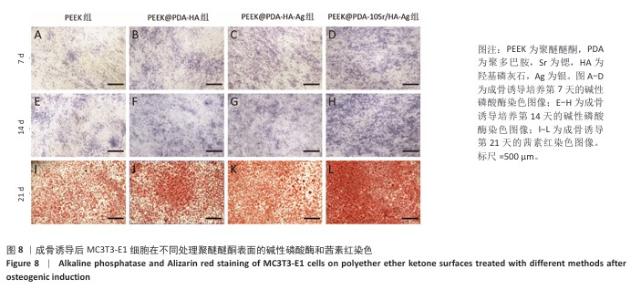
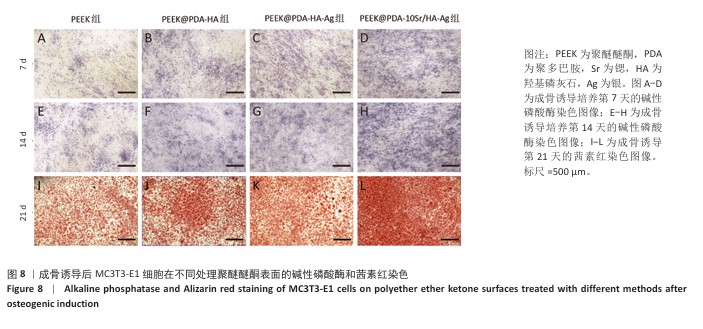
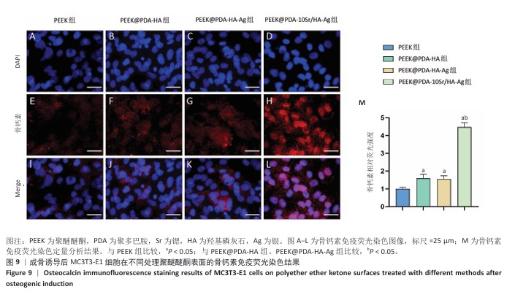
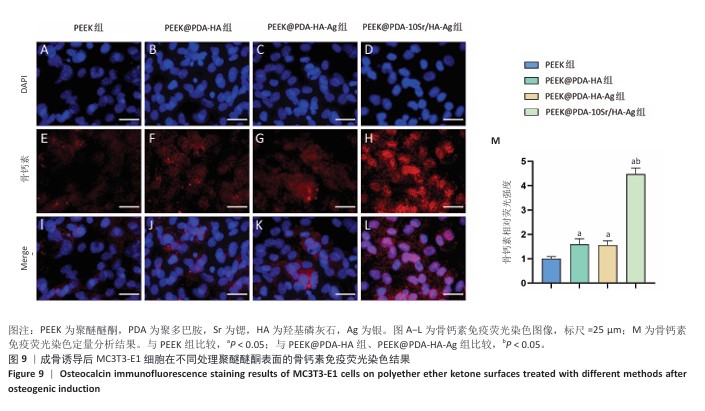
2.6 聚醚醚酮改性前后的促成骨性能检测结果 碱性磷酸酶染色结果显示,成骨诱导培养7,14 d后,PEEK@PDA-10Sr/HA-Ag组MC3T3-E1细胞表现出最高的碱性磷酸酶表达水平,见图8A-H。茜素红染色结果显示,成骨诱导培养21 d后,PEEK@PDA-10Sr/HA-Ag组MC3T3-E1细胞矿化水平最高,见图8I-L。免疫荧光染色结果显示,PEEK@PDA-10Sr/HA-Ag组骨钙素表达高于其他3组,见图9。结果表明PEEK@PDA-Sr/HA-Ag具有优异的成骨诱导作用。"
"
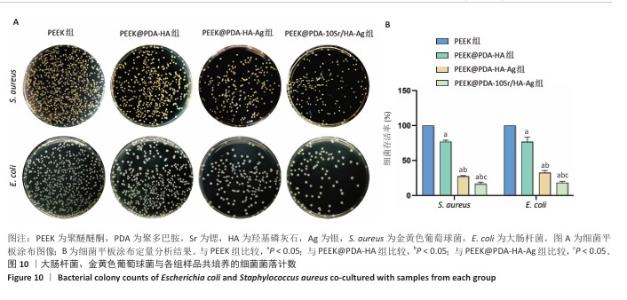
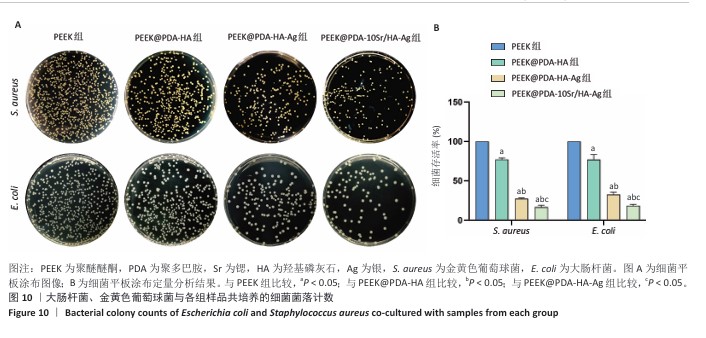
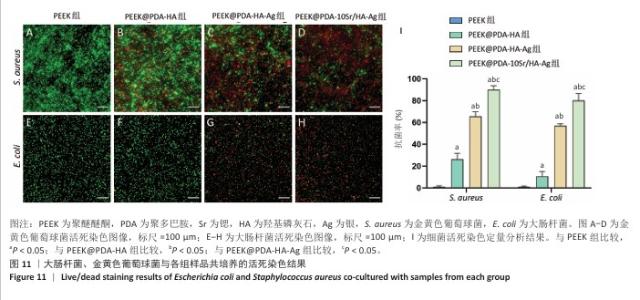
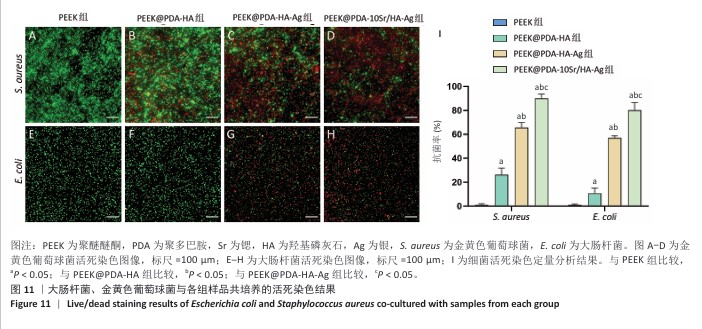
2.7 聚醚醚酮改性前后的抗菌性能检测结果 平板计数实验显示PEEK@PDA-HA具有一定的抗菌活性,PEEK@PDA-HA-Ag和PEEK@PDA-Sr/HA-Ag具有较强的抗菌活性,见图10,说明Sr2+和Ag+的共同修饰显著改善了聚醚醚酮的抗菌性能。细菌活死染色结果显示,聚醚醚酮组大肠杆菌与金黄色葡萄球菌基本保持活性,而其他3组死细菌(红色荧光)比例均增加,其中PEEK@PDA-10Sr/HA-Ag组抗菌率最高,见图11。"
"
| [1] HE M, HUANG Y, XU H, et al. Modification of polyetheretherketone implants: From enhancing bone integration to enabling multi-modal therapeutics. Acta Biomater. 2021;129:18-32. [2] AREVALO S, ARTHURS C, MOLINA MIE, et al. An overview of the tribological and mechanical properties of PEEK and CFR-PEEK for use in total joint replacements. J Mech Behav Biomed Mater. 2023;145:105974. [3] LIU Y, FANG M, ZHAO R, et al. Clinical Applications of Polyetheretherketone in Removable Dental Prostheses: Accuracy, Characteristics, and Performance. Polymers (Basel). 2022;14(21):4615. [4] YU D, LEI X, ZHU H. Modification of polyetheretherketone (PEEK) physical features to improve osteointegration. J Zhejiang Univ-Sci B. 2022;23(3):189-203. [5] CHEN T, JINNO Y, ATSUTA I, et al. Current surface modification strategies to improve the binding efficiency of emerging biomaterial polyetheretherketone (PEEK) with bone and soft tissue: A literature review. J Prosthodont Res. 2022; 67(3):337-347. [6] CHEN M, QIAO Y, YU L, et al. A microenvironment responsive polyetheretherketone implant with antibacterial and osteoimmunomodulatory properties facilitates osseointegration. Bioact Mater. 2025;43:273-291. [7] SUN Y, LIU X, TAN J, et al. Strontium ranelate incorporated 3D porous sulfonated PEEK simulating MC3T3-E1 cell differentiation. Regen Biomater. 2021;8(1): rbaa043. [8] MANZOOR F, GOLBANG A, DIXON D, et al. 3D Printed Strontium and Zinc Doped Hydroxyapatite Loaded PEEK for Craniomaxillofacial Implants. Polymers (Basel). 2022;14(7):1376. [9] YANG X, XIONG S, ZHOU J, et al. Coating of manganese functional polyetheretherketone implants for osseous interface integration. Front Bioeng Biotechnol. 2023;11:1182187. [10] LIU X, GAN K, LIU H, et al. Antibacterial properties of nano-silver coated PEEK prepared through magnetron sputtering. Dent Mater. 2017;33(9):e348-e360. [11] YILMAZ B, ALSHEMARY AZ, EVIS Z. Co-doped hydroxyapatites as potential materials for biomedical applications. Microchem J. 2019;144:443-453. [12] YU Y, LIU K, WEN Z, et al. Double-edged effects and mechanisms of Zn2+ microenvironments on osteogenic activity of BMSCs: osteogenic differentiation or apoptosis. RSC Adv. 2020;10(25):14915-14927. [13] BERNHARDT A, SCHAMEL M, GBURECK U, et al. Osteoclastic differentiation and resorption is modulated by bioactive metal ions Co2+, Cu2+ and Cr3+ incorporated into calcium phosphate bone cements. PLoS One. 2017;12(8):e0182109. [14] 齐军强,郭超,牛东阳,等.金属离子掺杂羟基磷灰石骨修复材料的特性及应用[J].中国组织工程研究,2023,27(21):3415-3422. [15] CUI X, ZHANG Y, WANG J, et al. Strontium modulates osteogenic activity of bone cement composed of bioactive borosilicate glass particles by activating Wnt/β-catenin signaling pathway. Bioact Mater. 2020;5(2):334-347. [16] SHENG X, LI C, WANG Z, et al. Advanced applications of strontium-containing biomaterials in bone tissue engineering. Mater Today Bio. 2023;20:100636. [17] GRAZIANI G, GHEZZI D, BOI M, et al. Ionized jet deposition of silver nanostructured coatings: Assessment of chemico-physical and biological behavior for application in orthopedics. Biomater Adv. 2024;159:213815. [18] GARCÍA I, TROBAJO C, AMGHOUZ Z, et al. Ag- and Sr-enriched nanofibrous titanium phosphate phases as potential antimicrobial cement and coating for a biomedical alloy. Mater Sci Eng C. 2021;126:112168. [19] KOKUBO T, TAKADAMA H. How useful is SBF in predicting in vivo bone bioactivity? Biomaterials. 2006;27(15):2907-2915. [20] GAO C, WANG Y, HAN F, et al. Antibacterial activity and osseointegration of silver-coated poly(ether ether ketone) prepared using the polydopamine-assisted deposition technique. J Mater Chem B. 2017;5(47):9326-9336. [21] YANG X, WANG Q, ZHANG Y, et al. A dual-functional PEEK implant coating for anti-bacterial and accelerated osseointegration. Colloids Surf B Biointerfaces. 2023;224:113196. [22] HAO Y, SHI C, ZHANG Y, et al. The research status and future direction of polyetheretherketone in dental implant —A comprehensive review. Dent Mater J. 2024;43(5):609-620. [23] LI D, LI Y, SHRESTHA A, et al. Effects of Programmed Local Delivery from a Micro/Nano‐Hierarchical Surface on Titanium Implant on Infection Clearance and Osteogenic Induction in an Infected Bone Defect. Adv Healthc Mater. 2019;8(11):1900002. [24] ARCIOLA CR, CAMPOCCIA D, EHRLICH GD, et al. Biofilm-Based Implant Infections in Orthopaedics. Adv Exp Med Biol. 2015;830:29-46. [25] FU K, YANG LL, GAO N, et al. Modified five times simulated body fluid for efficient biomimetic mineralization. Heliyon. 2024;10(12):e32850. [26] KOKUBO T, YAMAGUCHI S. Simulated body fluid and the novel bioactive materials derived from it. J Biomed Mater Res A. 2019;107(5):968-977. [27] PUPO YM, LEITE LMB, SENEGAGLIA AC, et al. Effect of Hydroxyapatite Microspheres, Amoxicillin–Hydroxyapatite and Collagen–Hydroxyapatite Composites on Human Dental Pulp-Derived Mesenchymal Stem Cells. Materials (Basel). 2021;14(24):7515. [28] HUANG Y, DING Q, HAN S, et al. Characterisation, corrosion resistance and in vitro bioactivity of manganese-doped hydroxyapatite films electrodeposited on titanium. J Mater Sci Mater Med. 2013;24(8):1853-1864. [29] LIU L, YU F, LI L, et al. Bone marrow stromal cells stimulated by strontium-substituted calcium silicate ceramics: release of exosomal miR-146a regulates osteogenesis and angiogenesis. Acta Biomater. 2021;119:444-457. [30] CHENG D, DING R, JIN X, et al. Strontium Ion-Functionalized Nano-Hydroxyapatite/Chitosan Composite Microspheres Promote Osteogenesis and Angiogenesis for Bone Regeneration. ACS Appl Mater Interfaces. 2023;15(16):19951-19965. [31] LU W, ZHOU C, MA Y, et al. Improved osseointegration of strontium-modified titanium implants by regulating angiogenesis and macrophage polarization. Biomater Sci. 2022;10(9):2198-2214. [32] GHORBANI F, ZAMANIAN A, BEHNAMGHADER A, et al. A facile method to synthesize mussel-inspired polydopamine nanospheres as an active template for in situ formation of biomimetic hydroxyapatite. Mater Sci Eng C. 2019;94: 729-739. [33] PEETSCH A, GREULICH C, BRAUN D, et al. Silver-doped calcium phosphate nanoparticles: Synthesis, characterization, and toxic effects toward mammalian and prokaryotic cells. Colloids Surf B Biointerfaces. 2013;102:724-729. [34] BRUNA T, MALDONADO-BRAVO F, JARA P, et al. Silver Nanoparticles and Their Antibacterial Applications. Int J Mol Sci. 2021;22(13):7202. [35] HOU Y, XIE W, YU L, et al. Surface Roughness Gradients Reveal Topography‐Specific Mechanosensitive Responses in Human Mesenchymal Stem Cells. Small. 2020;16(10):1905422. [36] SILVA GAF, FAOT F, DA SILVA WJ, et al. Does implant surface hydrophilicity influence the maintenance of surface integrity after insertion into low-density artificial bone? Dent Mater. 2021;37(2): e69-e84. [37] NAKAMURA M, HORI N, ANDO H, et al. Surface free energy predominates in cell adhesion to hydroxyapatite through wettability. Mater Sci Eng C. 2016;62: 283-292. [38] JOSE J, SULTAN S, KALARIKKAL N, et al. Fabrication and functionalization of 3D-printed soft and hard scaffolds with growth factors for enhanced bioactivity. RSC Adv. 2020;10(62):37928-37937. [39] TSAI WB, CHEN WT, CHIEN HW, et al. Poly(dopamine) coating of scaffolds for articular cartilage tissue engineering. Acta Biomater. 2011;7(12):4187-4194. [40] SAIDIN S, CHEVALLIER P, ABDUL KADIR MR, et al. Polydopamine as an intermediate layer for silver and hydroxyapatite immobilisation on metallic biomaterials surface. Mater Sci Eng C. 2013;33(8):4715-4724. [41] TAVARES DDS, RESENDE CX, QUITAN MP, et al. Incorporation of strontium up to 5 Mol. (%) to hydroxyapatite did not affect its cytocompatibility. Mater Res. 2011;14(4):456-460. [42] YUAN P, CHEN M, LU X, et al. Application of advanced surface modification techniques in titanium-based implants: latest strategies for enhanced antibacterial properties and osseointegration. J Mater Chem B. 2024;12(41):10516-10549. [43] WANG H, ZHANG Y, ZHANG Y, et al. Activating Macrophage Continual Efferocytosis via Microenvironment Biomimetic Short Fibers for Reversing Inflammation in Bone Repair. Adv Mater. 2024;36(30):2402968. [44] ZHAO Q, NI Y, WEI H, et al. Ion incorporation into bone grafting materials. Periodontol 2000. 2024;94(1):213-230. [45] RAN L, LIU L, GAO J, et al. Strontium-doped hydroxyapatite and its role in osteogenesis and angiogenesis. Int J Dev Biol. 2023;67(4):137-146. [46] MA F, ZHANG Y, HU L, et al. Strontium Laminarin polysaccharide modulates osteogenesis-angiogenesis for bone regeneration. Int J Biol Macromol. 2021; 181:452-461. [47] PARK JE, JANG YS, SEO JM, et al. Facilitated osteogenesis of magnesium implant by coating of strontium incorporated calcium phosphate. Biointerphases. 2023;18(3):031002. [48] HETRICK EM, SCHOENFISCH MH. Reducing implant-related infections: active release strategies. Chem Soc Rev. 2006;35(9):780. [49] SALLÉ MR, DELUIZ D, FLETCHER P, et al. Decontamination and Repair Protocol Promotes Positive Outcomes in Implants Affected by Peri-implantitis: A Human Case Series. Int J Periodontics Restorative Dent. 2023;43(6):699-705. [50] KUNKALEKAR RK, PRABHU MS, NAIK MM, et al. Silver-doped manganese dioxide and trioxide nanoparticles inhibit both Gram positive and Gram negative pathogenic bacteria. Colloids Surf B Biointerfaces. 2014;113:429-434. [51] SOLGI M. Evaluation of plant-mediated Silver nanoparticles synthesis and its application in postharvest Physiology of cut Flowers. Physiol Mol Biol Plants. 2014;20(3):279-285. [52] BAHEIRAEI N, EYNI H, BAKHSHI B, et al. Effects of strontium ions with potential antibacterial activity on in vivo bone regeneration. Sci Rep. 2021;11(1):8745. |
| [1] | Min Changqin, Huang Ying. Construction of pH/near-infrared laser stimuli-responsive drug delivery system and its application in treatment of oral squamous cell carcinoma [J]. Chinese Journal of Tissue Engineering Research, 2026, 30(8): 1940-1951. |
| [2] | Shao Ziyu, Li Qian, Qumanguli·Abudukelimu, Han Youjun, Hu Yang. Preparation and characterization properties of three different ratios of biphasic calcium phosphate [J]. Chinese Journal of Tissue Engineering Research, 2026, 30(8): 1952-1961. |
| [3] | Hu Zhizhao, Liu Zhaoyong, Guo Jing, Jin Shengnan, Zhou Qiqi, Hu Yang. Preparation and characterization of beta-tricalcium phosphate/polyvinyl alcohol and hydroxyapatite/polyvinyl alcohol bone substitute materials [J]. Chinese Journal of Tissue Engineering Research, 2026, 30(26): 6729-6735. |
| [4] | Pi Zhilong, Li Jiayuan, Tan Zhichao, Lu Xiaomei, Zhang Zhiqiang, Ye Xiangling. 3D printed neobavaisoflavone-coated scaffolds promote bone regeneration by regulating osteoblast/osteoclast activities [J]. Chinese Journal of Tissue Engineering Research, 2026, 30(26): 6736-6743. |
| [5] | Sun Danhe, Guo Xiaoling, Zhao Lingzhou. Construction and osteogenic activity of titanium dioxide nanotube and polydopamine composite coating on titanium implants [J]. Chinese Journal of Tissue Engineering Research, 2026, 30(20): 5167-5177. |
| [6] | Zhan Lei, Wu Lina, Li Huan, Liu Min, Chen Tao, Pu Xiaobing, Zhou Changchun. Silk fibroin hydrogel loaded with icariin to promote tendon-bone healing [J]. Chinese Journal of Tissue Engineering Research, 2026, 30(20): 5178-5787. |
| [7] | Li Congcong, Wufanbieke·Baheti, Zhao Li, Chen Xiaotao, Kong Chuifan, Yu Min. Physicochemical properties and biocompatibility of hydroxyapatite/graphene oxide/interleukin-4 composite coating materials [J]. Chinese Journal of Tissue Engineering Research, 2026, 30(2): 404-413. |
| [8] | Wu Tianyi, Miao Yiming, Wan Kaichen, Teng Yun, Zou Jun. Protective effect of mesoporous ZLN005@polydopamine nanoparticles on chondrocytes in osteoarthritis [J]. Chinese Journal of Tissue Engineering Research, 2026, 30(14): 3576-3585. |
| Viewed | ||||||
|
Full text |
|
|||||
|
Abstract |
|
|||||