Chinese Journal of Tissue Engineering Research ›› 2026, Vol. 30 ›› Issue (31): 8282-8292.doi: 10.12307/2026.354
Previous Articles Next Articles
Body mass index and knee osteoarthritis: a bibliometric analysis based on the Web of Science Core Collection database
Huang Jie1, Zeng Hao1, Zhang Zhenhao1, Wang Wenchi1, Cui Xianqin1, Zhu Lifeng1, Cui Wei2
- 1Guangxi University of Chinese Medicine, Nanning 530000, Guangxi Zhuang Autonomous Region, China; 2Ruikang Hospital Affiliated to Guangxi University of Chinese Medicine, Nanning 530000, Guangxi Zhuang Autonomous Region, China
-
Received:2025-06-06Accepted:2025-08-18Online:2026-11-08Published:2026-05-26 -
Contact:Cui Wei, Chief physician, Professor, Master's supervisor, Ruikang Hospital Affiliated to Guangxi University of Chinese Medicine, Nanning 530000, Guangxi Zhuang Autonomous Region, China -
About author:Huang Jie, MS candidate, Guangxi University of Chinese Medicine, Nanning 530000, Guangxi Zhuang Autonomous Region, China -
Supported by:Guangxi University of Chinese Medicine Gui-Style Traditional Chinese Medicine Inheritance and Innovation Team Project, No. 2022A004 (to CW [project participant]); Self-Funded Research Project of Guangxi Zhuang Autonomous Region Administration of Traditional Chinese Medicine, No. 20210579 (to CW); Project of China Medical Association of Minorities, No. 2020MZ-040701 (to CW)

CLC Number:
Cite this article
Huang Jie, Zeng Hao, Zhang Zhenhao, Wang Wenchi, Cui Xianqin, Zhu Lifeng, Cui Wei. Body mass index and knee osteoarthritis: a bibliometric analysis based on the Web of Science Core Collection database[J]. Chinese Journal of Tissue Engineering Research, 2026, 30(31): 8282-8292.
share this article
Add to citation manager EndNote|Reference Manager|ProCite|BibTeX|RefWorks
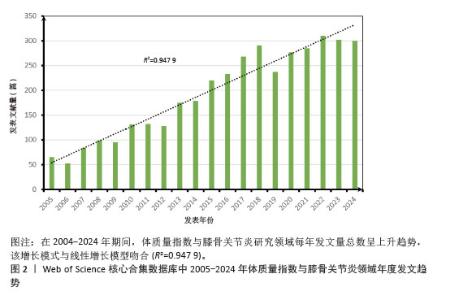
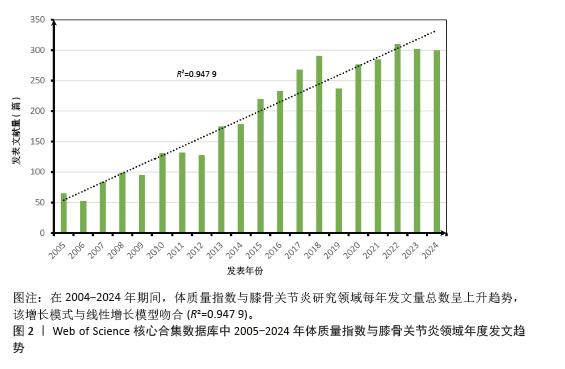
2.1 年度发文量分析 数据分析结果显示,在体质量指数与膝骨关节炎领域发文量最多的年份是2022年(310篇),最少的年份是2006年(53篇),详见图2。在2005-2024年间总体上呈上升趋势,该增长模型与线性增长模型吻合(R2=0.947 9)。2005-2018年间发文量呈持续上升状态,2015-2024年发文量保持在一定水平以上(年均200篇),说明在该领域的研究投入逐年增加。2019年发文量下降,这可能与当年所爆发的COVID-19肺炎有关,影响了当年的科研产出,之后又恢复了增长趋势。以上结果表明,在体质量指数与膝骨关节炎领域的科研活动和产出逐年增长,并且保持着良好的上升趋势和热度。 "
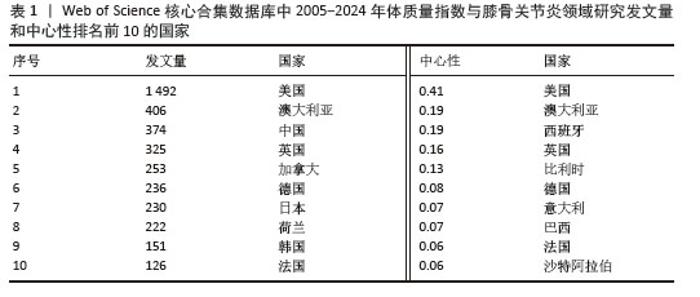
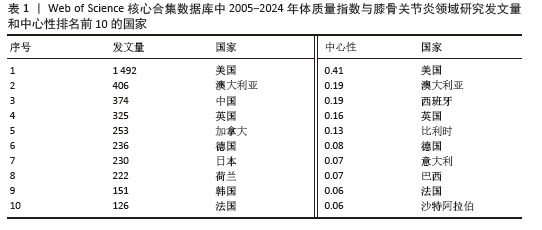
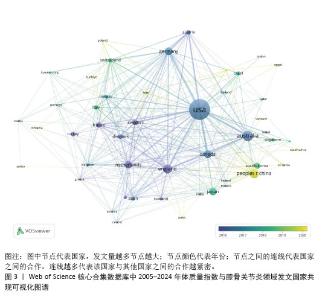
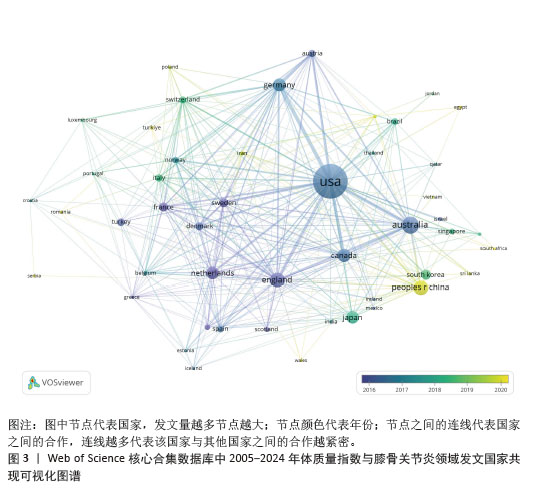
2.2 研究国家分布 通过对国家共现分析发现共包含91个国家和地区。2005-2024年间,体质量指数与膝骨关节炎领域发文量排名前10的国家分别是美国、澳大利亚、中国、英国、加拿大、德国、日本、荷兰、韩国和法国,美国为发文量最多的国家,共1 492篇,占整体发文量的1/3,领先排名第二的澳大利亚(发文量406篇),其次是发文量为374篇的中国,排名第三;另外,网络中心性最高的国家也是美国,为0.41,紧随其后的是澳大利亚和西班牙,中心性都是0.19,详见表1。通过可视化图谱可知,美国、澳大利亚和英国等欧美国家最早开展该领域的相关研究,并且形成了以其为主导的世界化合作网络;近年来,中国、沙特阿拉伯和埃及等国家相继投入更多的科研力量和资金,在时间上属于该研究领域中起步较晚的国家,详见图3。 综上所述,美国是该领域内贡献最为突出的国家,在业内处于领先地位。随着时间的推移,更多的国家相继加入到该领域的研究中,尤其是以中国为主的发展中国家,形成了紧密合作的世界研究格局。 "
"
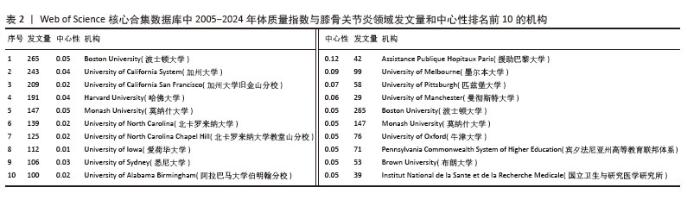
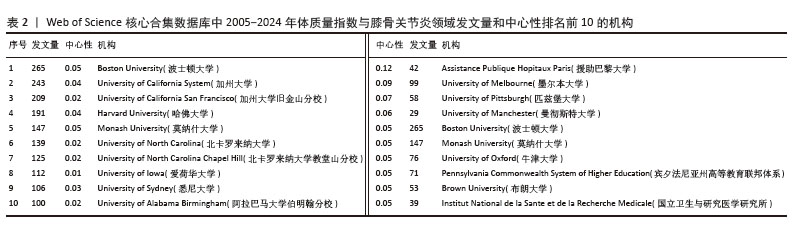
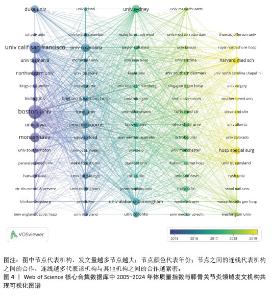
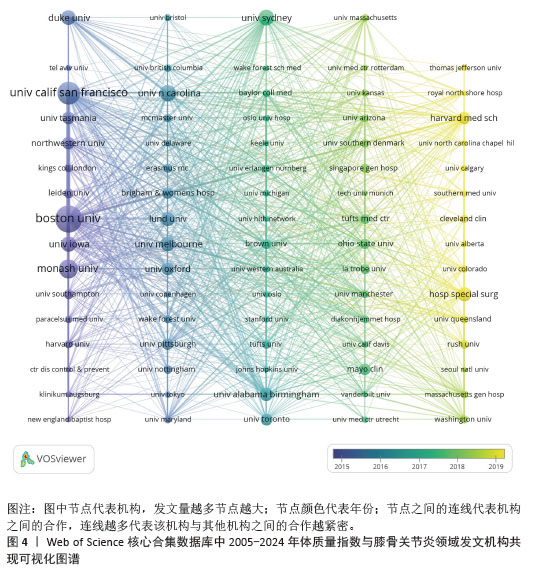
2.3 发文机构分析 通过对发文机构共现分析发现共包含4 176个机构或组织。发文量排名前10的机构分别是波士顿大学(265篇)、加州大学(243篇)、加州大学旧金山分校(209篇)、哈佛大学(191篇)、莫纳什大学(147篇)、北卡罗来纳大学(139篇)、北卡罗来纳大学教堂山分校(125篇)、爱荷华大学(112篇)、悉尼大学(106篇)、阿拉巴马大学伯明翰分校(100篇),网络中心性排名前3的机构分别是援助巴黎大学(0.12)、墨尔本大学(0.09)和匹兹堡大学(0.07),详见表2。通过可视化图谱可知,波士顿大学、杜克大学和加州大学旧金山分校等机构为较早开展该领域研究的机构,而纽约特种外科医院、哈佛医学院和克利夫兰诊所等机构则起步较晚;此外,该领域内的研究机构以院校为主,各个单位之间均保持着尤为紧密的合作研究关系,详见图4。 "
"

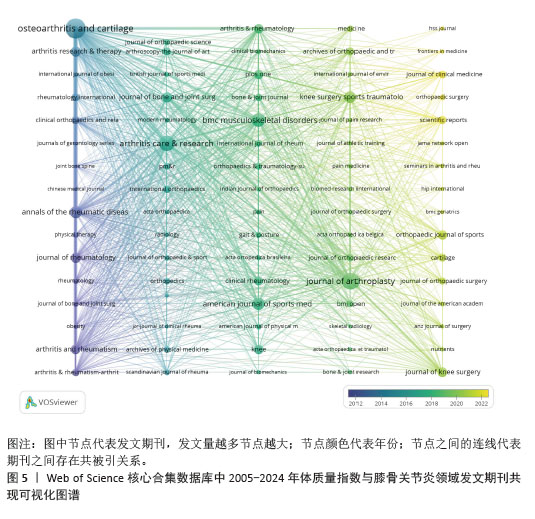
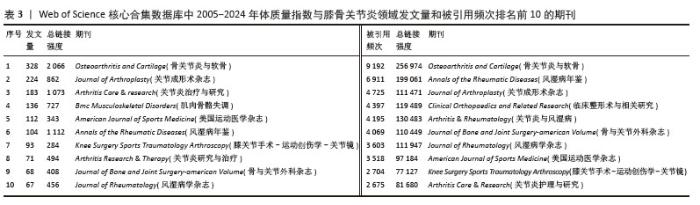
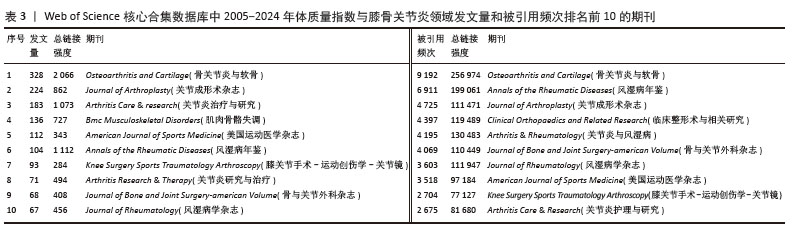
2.4 发文期刊分析 通过对发文期刊分析发现,此次研究所纳入的文献来源于568本期刊,其中刊载体质量指数与膝骨关节炎领域相关文献数量大于10篇的期刊共计68本。发文量前3的分别是《Osteoarthritis and Cartilage》(328篇)、《Journal of Arthroplasty》(224篇)和《Arthritis Care & Research》(183篇)。被引用频次排名前3的分别是《Osteoarthritis and Cartilage》(9 192次)、《Annals of the Rheumatic Diseases》(6 911次)和《Journal of Arthroplasty》(4 725次),这说明《Osteoarthritis and Cartilage》不论在学术界的影响力还是权威性上均是该领域内的顶级期刊,为大多数学者所认可,详见表3。通过可视化图谱可知,《Osteoarthritis and Cartilage》不仅是该领域内的权威期刊,而且也是该领域内较早接收与之相关文献的期刊;此外,还有《Journal of Rheumatology》《Annals of the Rheumatic Diseases》和《Arthritis and Rheumatism》等,详见图5。 "
"
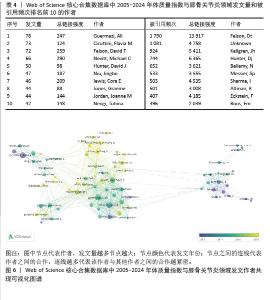
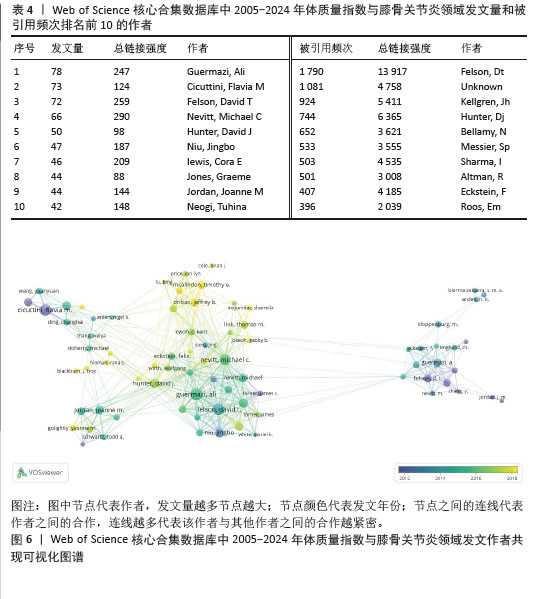
2.5 发文作者分析 对发文作者及被引作者进行分析,依据普莱斯定律N=0.749×(Nmax)1/2,Nmax为该领域内发文量最多作者的发文量,因此计算得N=29.211,即该领域内核心作者发文量应大于30篇。发文量前10名均为该领域内核心作者,其中Guermazi, Ali教授发文量为78篇,排名第一,说明作者在该领域内做出了巨大研究贡献;其次是Cicuttini, Flavia M(发文量73篇)和Felson, David T(发文量72篇);Felson, Dt教授以被引频次1 790次遥遥领先,说明作者的研究成果为广大研究人员所认可,详见表4。 通过可视化图谱可知,Cicuttini, Flavia M、Felson, D.T和Jordan, J.M等为早期研究者,并且建立了以自己为核心的研究团队;而Guermazi, Ali和Driban, Jeffrey B等为中晚期研究者的代表,虽然拥有自己的科研团队,但是与早期研究者之间的建立的合作研究关系较少,目前该领域尚未形成紧密合作的全球性研究格局,详见图6。 "
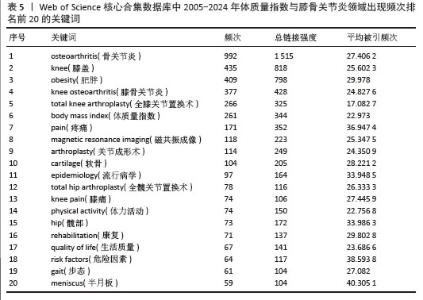
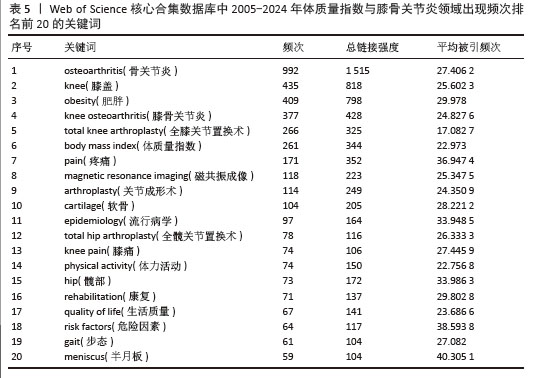
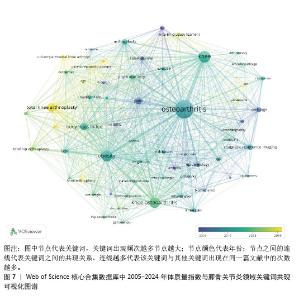
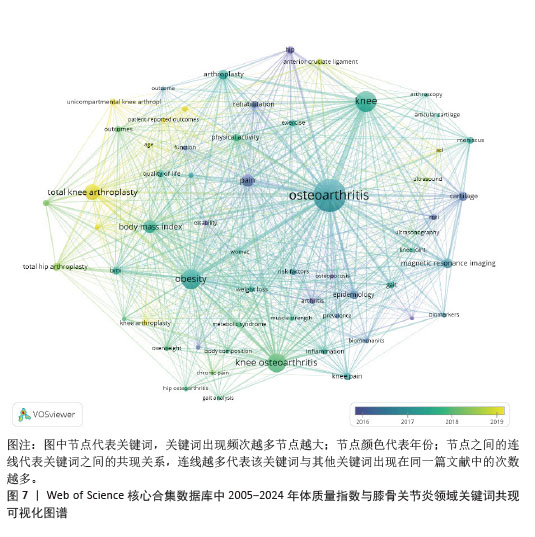
2.6 关键词分析 2.6.1 关键词共现分析 通过对关键词共现分析发现,所有文献共总结出4 521个关键词,其中出现频次大于25次的关键词有60个。通过整理,将英文全称与缩写合并可知,检索词体质量指数和膝骨关节炎分别出现261次和377次,排名第6和第4。排名前3的关键词分别是骨关节炎(992次)、膝关节(435次)和肥胖(409次),由此可以推断骨关节炎的高发部位为膝关节,而与之相联系的高危因素是肥胖,最佳治疗方法则是全膝关节置换术;此外,MRI成像在膝骨关节炎的诊断中其重要作用,详见表5。通过可视化图谱可知疼痛、髋部和修复是最早出现的关键词,随着时间的推演,膝骨关节炎和肥胖等逐渐成为核心关键词,目前该领域内的最热门、最前沿的关键词为全膝关节置换术、膝关节单髁置换术、患者报告结局和年龄等,详见图7。 "
"
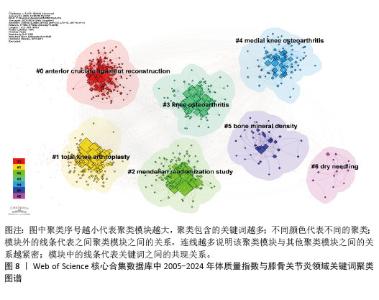
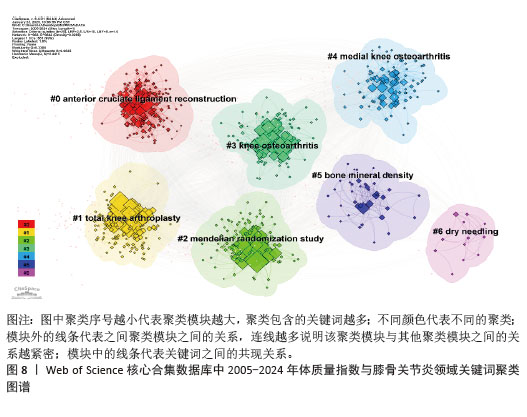
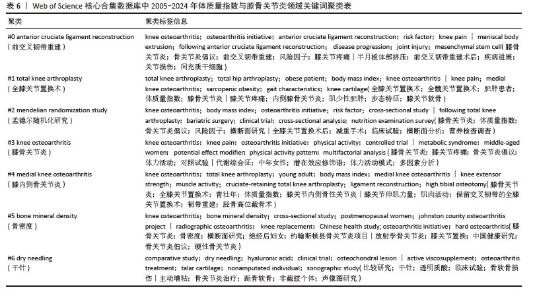
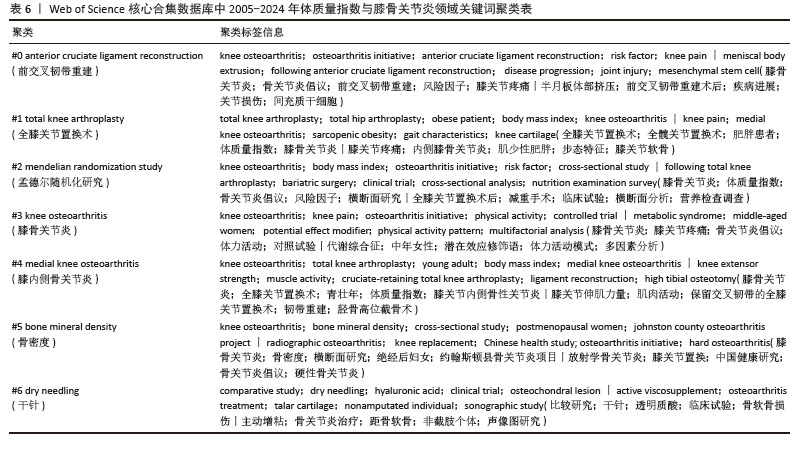
2.6.2 关键词聚类分析 通过使用Citespace软件对体质量指数和膝骨关节炎领域的关键词进行聚类分析并生成聚类图谱,详见图8,该聚类模块的Q=0.330 8,平均轮廓值S=0.663 5,由于Q > 0.3且S > 0.5,可以认为关键词聚类结构显著且聚类结果同质性可。共形成#0 anterior cruciate ligament reconstruction(前交叉韧带重建)、#1 total knee arthroplasty(全膝关节置换术)、#2 mendelian randomization study(孟德尔随机化研究)、#3 knee osteoarthritis(膝骨关节炎)、#4 medial knee osteoarthritis(膝内侧骨关节炎)、#5 bone mineral density(骨密度)和#6 dry needling(干针)7个有意义聚类模块。#0、#1和#4反映了膝骨关节炎在手术治疗方面的研究,#6反映了中医针灸结合现代医学的治疗膝骨关节炎的研究,#2反映了该领域内的相关研究方法和手段,#3和#5反映了膝骨关节炎在发病、好发人群和预防方面的研究,详见表6。 通过可视化图谱可知各聚类模块之间连线密集,说明各聚类之间存在着紧密联系,但需要注意的是,#6相对独立于其他聚类模块,这说明中医在治疗膝骨关节炎方面存在着得天独厚的优势,但这种优势与其他模块之间联系较少,有望在今后的研究中加强。 "
"
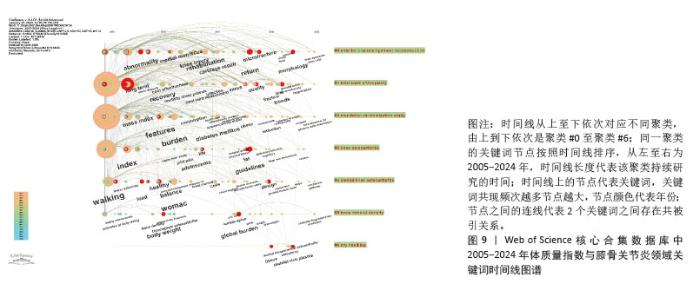
2.6.3 关键词时间线分析 根据聚类分析生成体质量指数与膝骨关节炎领域的关键词时间线图,按照时间线观察不同聚类下的研究进展可知,体质量指数与#1 total knee arthroplasty(全膝关节置换术)、#2 mendelian randomization study(孟德尔随机化研究)和#4 medial knee osteoarthritis(膝内侧骨关节炎)3个聚类的关系在近20年来被广泛研究,说明体质量指数在膝骨关节炎的研究、发病、治疗和康复中均起着重要作用,已经成为该领域内持续的研究热点;而肥胖、体质量、脂肪量、糖尿病、久坐行为和日常活动等与体质量指数相关的关键词标签,与膝骨关节炎的联系也在近20年的科学研究中被广泛提及;此外,#6 dry needling(干针)虽然是持续时间最短的聚类,但不可否认的是该治疗具有的独特疗效,也许是未来的潜在研究方向,详见图9。 "
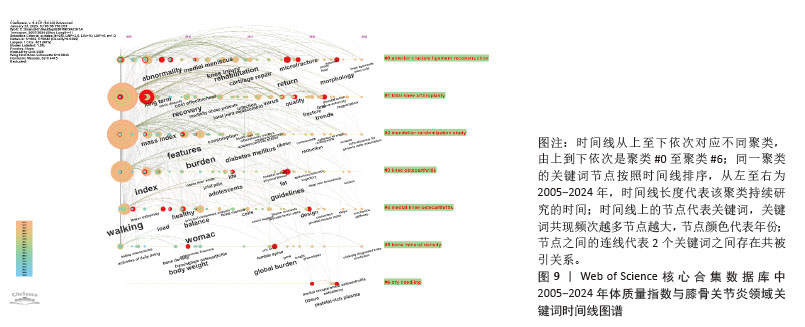

2.6.4 关键词突现分析 通过使用Citespace软件生成体质量指数和膝骨关节炎领域的关键词突现图,分析在某一段时间内该领域内的研究热门话题可知,共生成25个突现关键词,见图10。 "
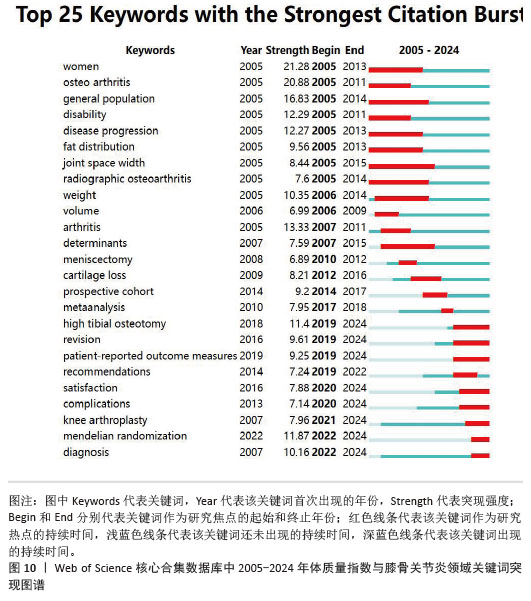
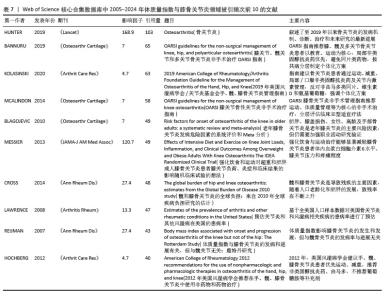
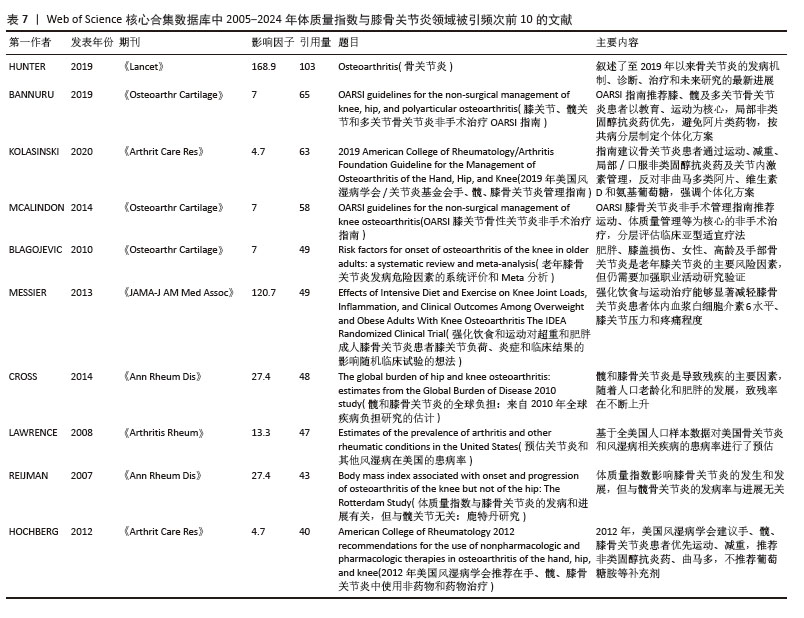
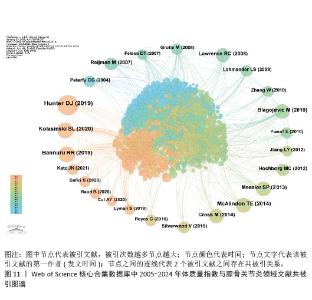
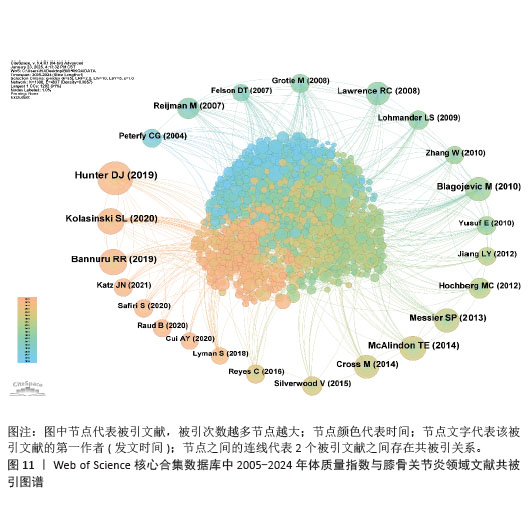
其中,突现强度最大的关键词是女性,持续时间为2005-2013年,说明这段时间内科研人员聚焦于女性膝骨关节炎的研究,可能原因是膝骨关节炎的好发人群为老年女性。突现持续时间最长的关键词为关节间隙宽度,持续时间为2005-2015年,表明它在长达10年的时间中展现了突现强度,成为该领域内的研究热点。孟德尔随机化和诊断为突现时间最晚的关键词,这表明二者在未来可能会出现更多的相关研究,并且是以孟德尔随机化为主要研究方法与膝骨关节炎诊断为相关主题的文章居多。另外,胫骨高位截骨、患者报告结局指标、修订、满意度、并发症和膝关节置换术共6个关键词,自展现突现强度以来一直持续到此次研究所纳入文献的最终检索日期,表明上述关键词在体质量指数与膝骨关节炎领域将会是持续的研究热点和话题。 2.7 文献共被引分析 通过文献共被引分析得到1 308个节点、4 837条连线、密度为0.005 7的被引文献可视化图谱,详见图11。在被引频次排名前10的文章中,有4篇探讨关于膝骨关节炎的治疗和管理指南,4篇探讨了膝骨关节炎发病与影响疾病进展的相关因素,2篇探讨了膝骨关节炎的发病率与全球负担,其中有2篇文章发表在世界顶级期刊上,具有较高的影响力和研究价值,详见表7。 "
"
| [1] LIU X, WANG X, ZHAO Z, et al. Clinical application of musculoskeletal ultrasound in the evaluation of pathological features of osteoarthritis of the knee. Asian J Surg. 2024;47(3):1688-1689. [2] LI S, SI H, YANG J. A neglected risk factor of knee osteoarthritis: The developmental dysplasia. Asian J Surg. 2024;47(2):1312-1313. [3] LIU Z, SONG S, ZHANG Q, et al. Research progress on treatment measures for joint function in non-surgical patients with knee osteoarthritis. J Orthop. 2025;64:64-67. [4] IDA R, KUROYANAGI G, UEKI Y, et al. Total knee arthroplasty improves energy conversion efficiency during walking in patients with knee osteoarthritis. Knee. 2025;53:42-48. [5] ZHANG H. [Standardized diagnosis-therapy and stepwise treatment for knee osteoarthritis]. Zhongguo Gu Shang. 2019;32(5):391-395. [6] LV H, WANG Y, ZHANG G, et al. Association between obesity measurement indexes and symptomatic knee osteoarthritis among the Chinese population: analysis from a nationwide longitudinal study. BMC Musculoskelet Disord. 2024;25(1):986. [7] RICE PE, PATE GA, HILL RD, et al. The association between obesity, knee pain, and gait during stair descent in older adults with knee osteoarthritis. Clin Biomech (Bristol). 2024;114:106228. [8] MIKI T, COORAY U, KANAI M, et al. Effects of hypothetical low versus moderate-to-high intensity weight management regimens on knee replacements. Am J Epidemiol. 2024. doi:10.1093/aje/kwae446. [9] BARIA M, GEORGE R, BARKER T, et al. Relationship of Body Mass Index on Patient-Reported Outcomes After Platelet-Rich Plasma Versus Microfragmented Adipose Tissue for Knee Osteoarthritis: A Secondary Analysis of a Randomized Controlled Trial. Am J Phys Med Rehabil. 2024;103(11):1006-1011. [10] SCHMERLER J, HARRIS AB, SRIKUMARAN U, et al. Body Mass Index and Revision Total Knee Arthroplasty: Does Cause for Revision Vary by Underweight or Obese Status? J Arthroplasty. 2023;38(12):2504-2509. [11] SALIS Z, GALLEGO B, NGUYEN TV, et al. Association of Decrease in Body Mass Index With Reduced Incidence and Progression of the Structural Defects of Knee Osteoarthritis: A Prospective Multi-Cohort Study. Arthritis Rheumatol. 2023; 75(4):533-543. [12] YANG S, ZHOU L, GONG W, et al. Global burden of osteoarthritis from 1990 to 2019 attributable to high body mass index. Arch Med Sci. 2024;20(6): 1841-1853. [13] DI J, BAI J, ZHANG J, et al. Regional disparities, age-related changes and sex-related differences in knee osteoarthritis. BMC Musculoskelet Disord. 2024;25(1):66. [14] AWAN U N, WARAICH RS, NANGREJO R, et al. RAGE signalling contributes to oxidative stress and inflammation in knee osteoarthritis patients with metabolic syndrome. Clin Exp Rheumatol. 2024;42(11):2258-2264. [15] WEI Z, LI F, PI G. Association Between Gut Microbiota and Osteoarthritis: A Review of Evidence for Potential Mechanisms and Therapeutics. Front Cell Infect Microbiol. 2022; 12:812596. [16] WANG MG, SEALE P, FURMAN D. The infrapatellar fat pad in inflammaging, knee joint health, and osteoarthritis. NPJ Aging. 2024;10(1):34. [17] WANG J, YU W, ZHANG Y, et al. Mechanism of hyperbaric oxygen therapy downregulating H-type angiogenesis in subchondral bone of knee osteoarthritis through the PHD2/HIF-1alpha pathway. J Orthop Surg Res. 2025;20(1):79. [18] FERREIRA RM, MARTINS PN, GONCALVES RS. Non-pharmacological and non-surgical interventions to manage patients with knee osteoarthritis: An umbrella review 5-year update. Osteoarthr Cartil Open. 2024;6(3):100497. [19] WANG Y, LI Y, ZHUGE J, et al. Meta-analysis of the efficacy of lateral unicompartmental knee arthroplasty and total knee arthroplasty in the treatment of isolated lateral compartment knee osteoarthritis. J Orthop Surg Res. 2025;20(1):49. [20] SURAKANTI A, DEMORY BECKLER M, KESSELMAN MM. Surgical Versus Non-Surgical Treatments for the Knee: Which Is More Effective? Cureus. 2023;15(2):e34860. [21] KAWAI T, AUTIERI MV, SCALIA R. Adipose tissue inflammation and metabolic dysfunction in obesity. Am J Physiol Cell Physiol. 2021;320(3):C375-C391. [22] ARELLANO-PEREZ-VERTTI RD, GONZALEZ-GALARZA FF, PRONE-OLAZABAL D, et al. The rs1477196 SNP of the FTO Gene is Associated with Primary Knee Osteoarthritis in a Female Population from Northern Mexico. Rev Invest Clin. 2024;76(1):37-44. [23] SHUMNALIEVA R, KOTOV G, MONOV S. Obesity-Related Knee Osteoarthritis-Current Concepts. Life (Basel). 2023;13(8):1650. [24] ZHANG C, TAN L, LI J, et al. REV-ERBalpha Inhibits Osteoclastogenesis and Protects against Alveolar Bone Loss. J Dent Res. 2025;104(2):193-203. [25] HOSOKAWA H, AKAGI R, WATANABE S, et al. Nuclear receptor subfamily 1 group D member 1 in the pathology of obesity-induced osteoarthritis progression. J Orthop Res. 2023;41(5):930-941. [26] GELBER AC. Knee Osteoarthritis. Ann Intern Med. 2024;177(9):ITC129-ITC144. [27] PENG C, SUN R. Understanding the pain in knee osteoarthritis: insights from the semi-quantitative mri osteoarthritis knee score analysis. J Mech Med Biol. 2024;24(9).doi:10.1142/S0219519424400736. [28] SAX OC, GESHEFF MG, MAHAJAN A, et al. A Novel Mobile App-Based Neuromuscular Electrical Stimulation Therapy for Improvement of Knee Pain, Stiffness, and Function in Knee Osteoarthritis: A Randomized Trial. Arthroplast Today. 2022;15:125-131. [29] LEE SH, CHOI HH, KWAK SG, et al. Effectiveness of Radiofrequency Ablation of the Genicular Nerves of the Knee for the Management of Intractable Pain from Knee Osteoarthritis. Pain Physician. 2024;27(4):E419-E429. [30] ARMSHAW B, VAIDYA M, MEHTA S. Surface electromyography-based biofeedback can facilitate recovery from total knee arthroplasty. J Appl Behav Anal. 2024;57(3):560-573. [31] MAMAN D, MAHAMID A, YONAI Y, et al. Comparing Complication Rates, Costs, and Length of Stay between Unicompartmental and Total Knee Arthroplasty: Insights from a Big Data Analysis Using the National Inpatient Sample Dataset. J Clin Med. 2024;13(13):10. [32] BASAVARAJ CM, RAJU KP, MADHUCHANDRA PDS. Computer-Assisted Surgery in Total Knee Arthroplasty: Our Experience. Indian J Orthop. 2024;58(5):503-509. [33] LU J, WEI B, XU J, et al. The impact of metabolic syndrome on clinical outcomes following total knee arthroplasty in osteoarthritis patients. Ann Jt. 2024;9:22. [34] BLEACHER J, MANSFIELD CJ, WILGING S, et al. A novel dry needling approach treating subacromial pain syndrome to significantly improve function and reduce pain following plateau with progress using conventional physical therapy interventions: A case report. J Bodyw Mov Ther. 2024;40: 1561-1566. [35] WANG X, SUN Q, WANG M, et al. Electrical Dry Needling Plus Corticosteroid Injection for Osteoarthritis of the Knee: A Randomized Controlled Trial. Arch Phys Med Rehabil. 2022; 103(5):858-866. [36] XIN S, LIU J, YANG Z, et al. Comparative Effectiveness of Moxibustion and Acupuncture for the Management of Osteoarthritis Knee: A Systematic Review and Meta-Analysis. Heliyon. 2023;9(7):e17805. [37] CHIU P, FU Z, SUN J, et al. Fu’s Subcutaneous Needling for Knee Osteoarthritis Pain. J Vis Exp. 2023;(193). doi: 10.3791/65299. [38] GUO Y, XU Y, HE M, et al. Acupotomy Improves Synovial Hypoxia, Synovitis and Angiogenesis in KOA Rabbits. J Pain Res. 2023;16:749-760. [39] 陈威,苏耀辉,周明旺,等.雌激素及其受体在骨关节炎中的研究进展[J].中国矫形外科杂志, 2022,30(3):235-239. [40] LIU X, NIE L, ZHANG Y, et al. Actin Cytoskeleton Vulnerability to Disulfide Stress Mediates Disulfidptosis. Nat Cell Biol. 2023;25(3):404-414. [41] XIAO F, LI, YANG B, et al. Disulfidptosis: A New Type of Cell Death. Apoptosis. 2024;29(9-10):1309-1329. [42] TAN L, REGISTER TC, YAMMANI RR. Age-Related Decline in Expression of Molecular Chaperones Induces Endoplasmic Reticulum Stress and Chondrocyte Apoptosis in Articular Cartilage. Aging Dis. 2020;11(5):1091-1102. [43] LEE S, SHIN J, KWON M, et al. Transglutaminase 2 Prevents Premature Senescence and Promotes Osteoblastic Differentiation of Mesenchymal Stem Cells Through NRF2 Activation. Stem Cells Int. 2023;2023:8815888. [44] HOLZAPFEL GA, HUMPHREY JD, OGDEN RW. Biomechanics of Soft Biological Tissues and Organs, Mechanobiology, Homeostasis and Modelling. J R Soc Interface. 2025;22:20240361. [45] SANCHEZ-LOPEZ E, CORAS R, TORRES A, et al. Synovial Inflammation in Osteoarthritis Progression. Nat Rev Rheumatol. 2022;18:258-275. [46] JAHN J, EHLEN QT, HUANG C. Finding the Goldilocks Zone of Mechanical Loading: A Comprehensive Review of Mechanical Loading in the Prevention and Treatment of Knee Osteoarthritis. Bioengineering (Basel). 2024;11(2):110. [47] YAMAGATA M, KIMURA T, CHANG AH, et al. Sex Differences in Ambulatory Biomechanics: A Meta-Analysis Providing a Mechanistic Insight into Knee Osteoarthritis. Med Sci Sports Exerc. 2025;57(1):144-153. |
| [1] | Xu Canli, He Wenxing, Wang Yuping, Ba Yinying, Chi Li, Wang Wenjuan, Wang Jiajia. Research context and trend of TBK1 in autoimmunity, signaling pathways, gene expression, tumor prevention and treatment [J]. Chinese Journal of Tissue Engineering Research, 2026, 30(在线): 1-11. |
| [2] | Chen Qiuhan, Yang Long, Yuan Daizhu, Wu Zhanyu, Zou Zihao, Ye Chuan. Peri-knee osteotomy for treatment of knee osteoarthritis: optimization of treatment strategies [J]. Chinese Journal of Tissue Engineering Research, 2026, 30(9): 2303-2312. |
| [3] | Zhu Xiaolong, Zhang Wei, Yang Yang. Visualization analysis of research hotspots and cutting-edge information in the field of intervertebral disc regeneration and repair [J]. Chinese Journal of Tissue Engineering Research, 2026, 30(9): 2391-2402. |
| [4] | Wen Fayan, Li Yan, Qiang Tianming, Yang Chen, Shen Linming, Li Yadong, Liu Yongming. Unilateral biportal endoscopic technology for treatment of lumbar degenerative diseases: global research status and changing trends [J]. Chinese Journal of Tissue Engineering Research, 2026, 30(9): 2380-2390. |
| [5] | Lai Yu, Chen Yueping, Zhang Xiaoyun. Research hotspots and frontier trends of bioactive materials in treating bone infections [J]. Chinese Journal of Tissue Engineering Research, 2026, 30(8): 2132-2144. |
| [6] | Huang Jie, Zeng Hao, Wang Wenchi, Lyu Zhucheng, Cui Wei. Visualization analysis of literature on the effect of lipid metabolism on osteoporosis [J]. Chinese Journal of Tissue Engineering Research, 2026, 30(6): 1558-1568. |
| [7] | Li Linzhen, Jiao Hongzhuo, Chen Weinan, Zhang Mingzhe, Wang Jianlong, Zhang Juntao. Effect of icariin-containing serum on lipopolysaccharide-induced inflammatory damage in human chondrocytes [J]. Chinese Journal of Tissue Engineering Research, 2026, 30(6): 1368-1374. |
| [8] | He Qiwang, , , Chen Bo, Liang Fuchao, Kang Zewei, Zhou Yuan, Ji Anxu, Tang Xialin, . Relationship between Alzheimer’s disease and sarcopenia and body mass index: analysis of GWAS datasets for European populations [J]. Chinese Journal of Tissue Engineering Research, 2026, 30(4): 1036-1046. |
| [9] | Gu Fucheng, Yang Meixin, Wu Weixin, Cai Weijun, Qin Yangyi, Sun Mingyi, Sun Jian, Geng Qiudong, Li Nan. Effects of Guilu Erxian Glue on gut microbiota in rats with knee osteoarthritis: machine learning and 16S rDNA analysis [J]. Chinese Journal of Tissue Engineering Research, 2026, 30(4): 1058-1072. |
| [10] | Liu Di, Wang Minglei, Li Chun, Wang Duo, Li Long, Wu Yongli. Warm acupuncture inhibits pyroptosis and improves cartilage degeneration in rabbit knee joints [J]. Chinese Journal of Tissue Engineering Research, 2026, 30(36): 9445-9452. |
| [11] | Ma Zhiguo, Zhou Zhengxin, Xue Song, Xiang Xinhong, Zhu Lei. Du Huo Ji Sheng Decoction delays cartilage degeneration in mice with knee osteoarthritis [J]. Chinese Journal of Tissue Engineering Research, 2026, 30(36): 9453-9461. |
| [12] | Bei Chaoyong, Zhu Jialin, Yu Zhengze, Shi Niujin, Li Huarui, Peng Fenglin. Visualization analysis of research hotspots and trends in the treatment of knee osteoarthritis [J]. Chinese Journal of Tissue Engineering Research, 2026, 30(36): 9632-9639. |
| [13] | Wen Xing, Li Mengmeng, Jia Feiyang, Qu Mengjian, Sun Guanghua, Liu Jing, Huang Xiarong, Zhong Peirui, Wang Jinling, Zhou Jun. Transcriptomic analysis of the mechanism of electroacupuncture in alleviating early synovial inflammation in a rat model of knee osteoarthritisbr# [J]. Chinese Journal of Tissue Engineering Research, 2026, 30(35): 9198-9205. |
| [14] | Wang Quan, Tang Zhenglong. Visualization analysis of literature on medication-related osteonecrosis of the jaw [J]. Chinese Journal of Tissue Engineering Research, 2026, 30(35): 9327-9335. |
| [15] | Chen Xiaoxia, Zhao Lihua, Li Taowen, Qin Yimei, Liang Jinyu. Postmenopausal cognitive impairment: a bibliometric analysis of developmental context and hot trends [J]. Chinese Journal of Tissue Engineering Research, 2026, 30(35): 9336-9344. |
| Viewed | ||||||
|
Full text |
|
|||||
|
Abstract |
|
|||||