Chinese Journal of Tissue Engineering Research ›› 2026, Vol. 30 ›› Issue (31): 8190-8196.doi: 10.12307/2026.854
Previous Articles Next Articles
Cytidine/uridine monophosphate kinase 2 regulates ferroptosis of human gingival fibroblasts induced by lipopolysaccharide
He Jiaqi1, 2, Shen Hengyu1, 2, Xu Mingzhang1, 2, 3, Yan Xin1, 2, Zhang Ruifeng1, 2, Yu Ke1, 2, 3
- 1Luzhou Key Laboratory of Oral & Maxillofacial Reconstruction and Regeneration, Affiliated Stomatological Hospital, Southwest Medical University, Luzhou 646000, Sichuan Province, China; 2Institute of Stomatology, Southwest Medical University, Luzhou 646000, Sichuan Province, China; 3Department of Implantology, Affiliated Stomatological Hospital, Southwest Medical University, Luzhou 646000, Sichuan Province, China
-
Received:2025-10-17Accepted:2026-01-22Online:2026-11-08Published:2026-05-25 -
Contact:Yu Ke, MD, Associate professor, Luzhou Key Laboratory of Oral & Maxillofacial Reconstruction and Regeneration, Affiliated Stomatological Hospital, Southwest Medical University, Luzhou 646000, Sichuan Province, China; Institute of Stomatology, Southwest Medical University, Luzhou 646000, Sichuan Province, China; Department of Implantology, Affiliated Stomatological Hospital, Southwest Medical University, Luzhou 646000, Sichuan Province, China -
About author:He Jiaqi, Luzhou Key Laboratory of Oral & Maxillofacial Reconstruction and Regeneration, Affiliated Stomatological Hospital, Southwest Medical University, Luzhou 646000, Sichuan Province, China; Institute of Stomatology, Southwest Medical University, Luzhou 646000, Sichuan Province, China -
Supported by:Medical Research Project of Sichuan Medical Association, No. S2024053 (to YK)

CLC Number:
Cite this article
He Jiaqi, Shen Hengyu, Xu Mingzhang, Yan Xin, Zhang Ruifeng, Yu Ke. Cytidine/uridine monophosphate kinase 2 regulates ferroptosis of human gingival fibroblasts induced by lipopolysaccharide[J]. Chinese Journal of Tissue Engineering Research, 2026, 30(31): 8190-8196.
share this article
Add to citation manager EndNote|Reference Manager|ProCite|BibTeX|RefWorks
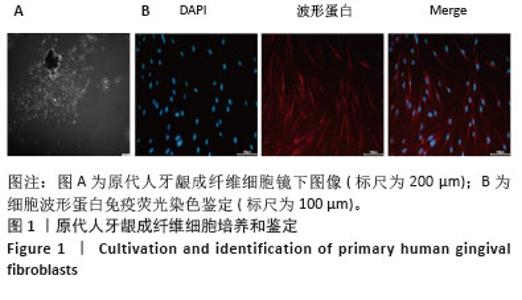
2.1 人牙龈成纤维细胞的分离与鉴定结果 倒置显微镜下见大部分细胞呈梭形或纺锤形,细胞核呈卵圆形,部分细胞可见2-4个细胞突起(图1A)。细胞免疫荧光检测结果显示细胞波形蛋白染色呈阳性,红色荧光均匀分布在胞浆内(图1B),细胞核呈蓝色荧光(图1B)。"
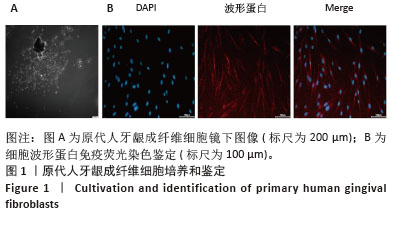
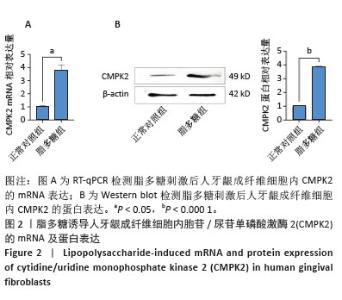
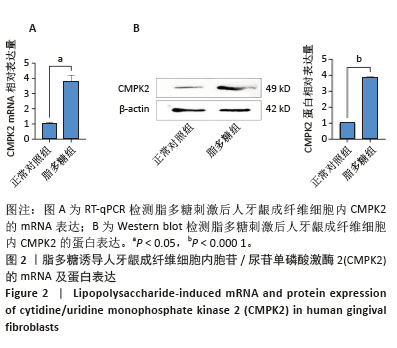
2.2 脂多糖诱导人牙龈成纤维细胞铁死亡及胞苷/尿苷单磷酸激酶2表达 2.2.1 脂多糖上调人牙龈成纤维细胞中胞苷/尿苷单磷酸激酶2表达 RT-qPCR和Western blot结果显示,与正常对照组比较,10 μg/mL脂多糖作用人牙龈成纤维细胞12 h后胞苷/尿苷单磷酸激酶2的mRNA和蛋白表达显著提高(P < 0.05,P < 0.000 1)(图 2)。 "
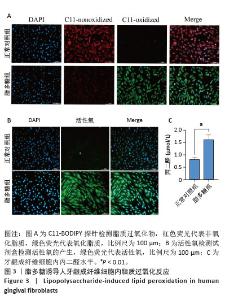
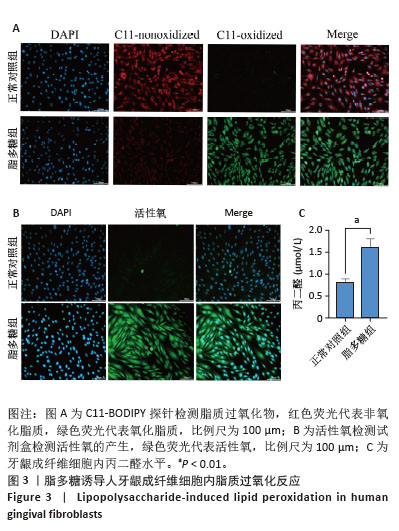
2.2.2 脂多糖促进人牙龈成纤维细胞内脂质过氧化反应 C11-Bodipy 581/591染色结果显示,正常对照组人牙龈成纤维细胞胞质以还原型脂质为主并被均匀染色呈现为红色荧光,少量人牙龈成纤维细胞胞质内存在脂质过氧化产物积累并呈现为绿色荧光;脂多糖组人牙龈成纤维细胞胞质以氧化型脂质为主并均匀染色呈现为绿色荧光(图 3A)。活性氧染色结果显示,脂多糖处理显著增加了人牙龈成纤维细胞内活性氧释放(图 3B)。丙二醛检测结果显示脂多糖组人牙龈成纤维细胞内丙二醛生成增加(P < 0.01)(图 3C)。 "
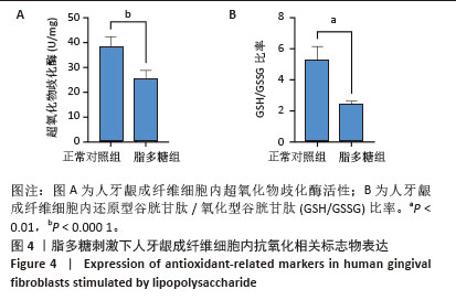
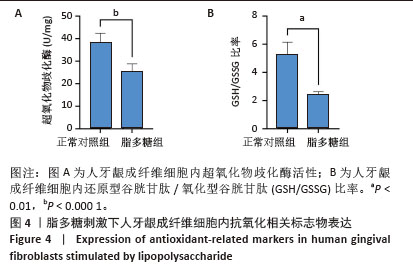
2.2.3 脂多糖下调人牙龈成纤维细胞中超氧化物歧化酶表达 与正常对照组比较,脂多糖组人牙龈成纤维细胞内超氧化物歧化酶水平及还原性谷胱甘肽/氧化型谷胱甘肽比率降低(P < 0.000 1,P < 0.01)(图 4)。 "
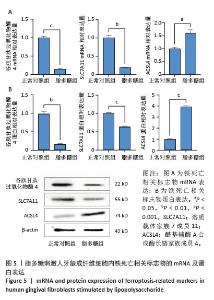
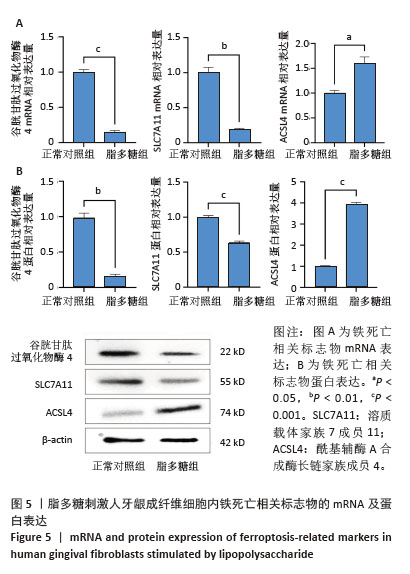
2.2.4 脂多糖诱导人牙龈成纤维细胞铁死亡相关标志物表达 RT-qPCR结果显示,与正常对照组比较,脂多糖组人牙龈成纤维细胞内铁死亡负性调控因子谷胱甘肽过氧化物酶4和溶质载体家族7成员11 mRNA表达降低(P < 0.001,P < 0.01),而酰基辅酶A合成酶长链家族成员4 mRNA表达升高(P < 0.05)(图 5A)。Western blot与RT-qPCR结果一致,与正常对照组比较,脂多糖组人牙龈成纤维细胞内谷胱甘肽过氧化物酶4和溶质载体家族7成员11蛋白表达降低(P < 0.01,P < 0.001),而酰基辅酶A合成酶长链家族成员4蛋白表达升高(P < 0.001)(图 5B)。 "
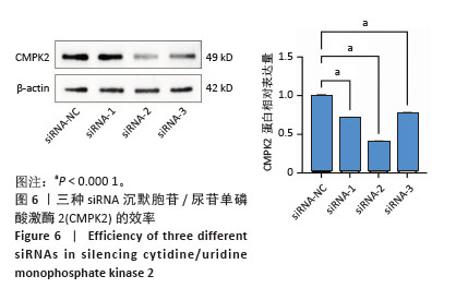
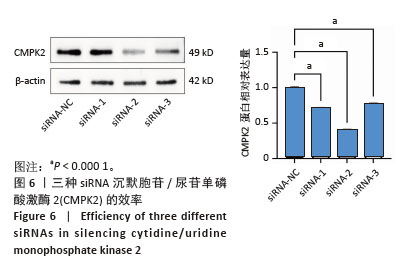
2.3 沉默胞苷/尿苷单磷酸激酶2抑制脂多糖诱导的人牙龈成纤维细胞铁死亡 2.3.1 siRNA降低人牙龈成纤维细胞内胞苷/尿苷单磷酸激酶2蛋白表达 与空载体质粒(siRNA-NC)比较,siRNA-2和siRNA-3降低了人牙龈成纤维细胞内胞苷/尿苷单磷酸激酶2蛋白表达且siRNA-2转染效率最高,差异有显著性意义(P < 0.000 1),在下一步实验中均使用siRNA-2进行沉默转染(图 6)。 "
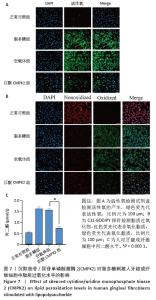
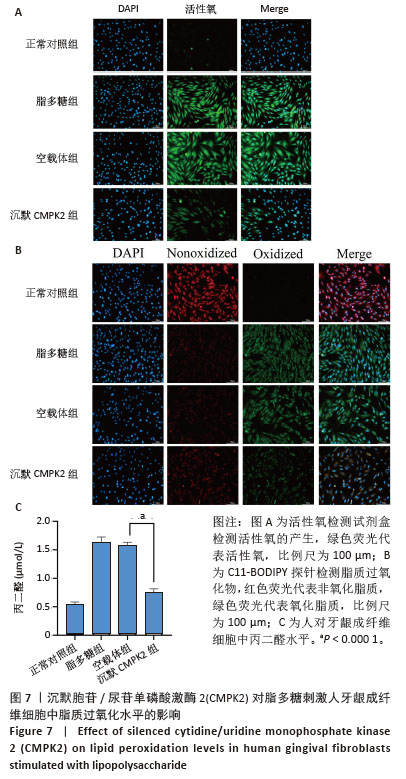
2.3.2 沉默胞苷/尿苷单磷酸激酶2抑制了脂多糖诱导的人牙龈成纤维细胞脂质过氧化反应 与空载体组比较,沉默胞苷/尿苷单磷酸激酶2组人牙龈成纤维细胞活性氧荧光强度降低,细胞内过氧化脂质产物积累水平降低;脂多糖组与空载体组之间无显著差异(图 7A,B)。与空载体组比较,沉默胞苷/尿苷单磷酸激酶2组丙二醛水平降低(P < 0.000 1);脂多糖组与空载体组之间无显著差异(图 7C)。"
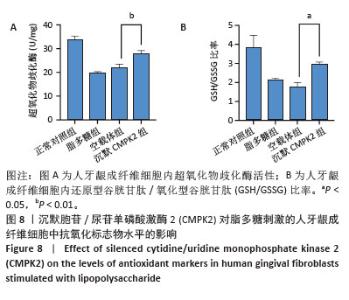
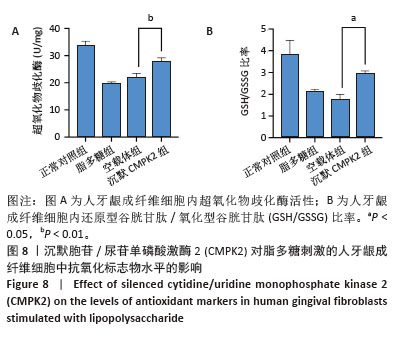
2.3.3 沉默胞苷/尿苷单磷酸激酶2上调脂多糖诱导的人牙龈成纤维细胞中超氧化物歧化酶表达 与空载体组比较,沉默胞苷/尿苷单磷酸激酶2组人牙龈成纤维细胞内超氧化物歧化酶水平升高(P < 0.01)及还原型谷胱甘肽/氧化型谷胱甘肽比率升高(P < 0.05),脂多糖组与空载体组超氧化物歧化酶水平及还原型谷胱甘肽/氧化型谷胱甘肽比率无明显差异(图 8)。 "
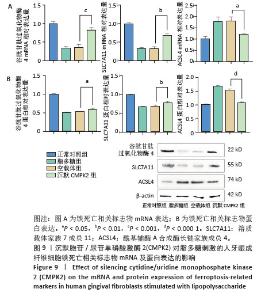
2.3.4 沉默胞苷/尿苷单磷酸激酶2抑制脂多糖诱导的人牙龈成纤维细胞铁死亡相关标志物的表达 RT-qPCR结果显示,与空载体组比较,沉默胞苷/尿苷单磷酸激酶2组人牙龈成纤维细胞内铁死亡负性调控因子谷胱甘肽过氧化物酶4和溶质载体家族7成员11 mRNA表达升高(P < 0.001,P < 0.01),而酰基辅酶A合成酶长链家族成员4 mRNA表达降低(P < 0.05);脂多糖组与空载体组之间铁死亡相关标志物的mRNA表达无显著差异(图 9A)。Western blot与RT-qPCR结果一致,与空载体组比较,沉默胞苷/尿苷单磷酸激酶2组人牙龈成纤维细胞内铁死亡负性调控因子谷胱甘肽过氧化物酶4和溶质载体家族7成员11蛋白表达升高(P < 0.05,P < 0.01),而酰基辅酶A合成酶长链家族成员4蛋白表达降低(P < 0.000 1);脂多糖组与空载体组之间铁死亡相关标志物蛋白表达无显著差异(图 9B)。 "
| [1] SCHWARZ F, JEPSEN S, OBREJA K, et al. Surgical therapy of peri-implantitis. Periodontology 2000. 2022;88(1):145-181. [2] AlVES CH, RUSSI KL, ROCHA NC, et al. Host-microbiome interactions regarding peri-implantitis and dental implant loss. J Transl Med. 2022;20(1):425. [3] BROWN GC, HENEKA MT. The endotoxin hypothesis of Alzheimer’s disease. Mol Neurodegener. 2024;19(1):30. [4] MENG M, HUO R, WANG Y, et al. Lentinan inhibits oxidative stress and alleviates LPS-induced inflammation and apoptosis of BMECs by activating the Nrf2 signaling pathway. Int J Biol Macromol. 2022;222(Pt B):2375-2391. [5] ZHANG K, CHEN X, ZHOU R, et al. Inhibition of gingival fibroblast necroptosis mediated by RIPK3/MLKL attenuates periodontitis. J Clin Periodontol. 2023;50(9):1264-1279. [6] QIAO S, LI B, CAI Q, et al. Involvement of ferroptosis in Porphyromonas gingivalis lipopolysaccharide-stimulated periodontitis in vitro and in vivo. Oral Dis. 2023;29(8):3571-3582. [7] KARATAS O, BALCI YUCE H, TASKAN MM, et al. Histological evaluation of peri-implant mucosal and gingival tissues in peri-implantitis, peri-implant mucositis and periodontitis patients: a cross-sectional clinical study. Acta Odontol Scand. 2020;78(4):241-249. [8] DIXON SJ, LEMBERG KM, LAMPRECHT MR, et al. Ferroptosis: an iron-dependent form of nonapoptotic cell death. Cell. 2012;149(5):1060-1072. [9] 马臣杰,张雯,曾瑾,等.铁死亡调控机制的研究进展[J].生物学杂志,2021,38(4):109-113. [10] LIANG D, MINIKES AM, JIANG X. Ferroptosis at the intersection of lipid metabolism and cellular signaling. Mol Cell. 2022;82(12):2215-2227. [11] ZENG F, NIJIATI S, TANG L, et al. Ferroptosis Detection: From Approaches to Applications. Angew Chem Int Ed Engl. 2023;62(35):e202300379. [12] 周文博,孔晨飞,秦高伟,等.铁死亡发生机制的研究进展[J].生物化学与生物物理进展, 2018,45(1):16-22. [13] CHEN X, KANG R, KROEMER G, et al. Ferroptosis in infection, inflammation, and immunity. J Exp Med. 2021;218(6):e20210518. [14] DING K, LIU C, LI L, et al. Acyl-CoA synthase ACSL4: an essential target in ferroptosis and fatty acid metabolism. Chin Med J (Engl). 2023;136(21):2521-2537. [15] LIAO P, WANG W, WANG W, et al. CD8+ T cells and fatty acids orchestrate tumor ferroptosis and immunity via ACSL4. Cancer Cell. 2022;40(4):365-378.e6. [16] LIU J, KANG R, TANG D. Signaling pathways and defense mechanisms of ferroptosis. FEBS J. 2022;289(22):7038-7050. [17] GAWEŁ S, WARDAS M, NIEDWOROK E, et al. Malondialdehyde (MDA) as a lipid peroxidation marker. Wiad Lek. 2004;57(9-10):453-455. [18] TSIKAS D. Assessment of lipid peroxidation by measuring malondialdehyde (MDA) and relatives in biological samples: Analytical and biological challenges. Anal Biochem. 2017;524:13-30. [19] LEVIN ED. Extracellular superoxide dismutase (EC-SOD) quenches free radicals and attenuates age-related cognitive decline: opportunities for novel drug development in aging. Curr Alzheimer Res. 2005;2(2):191-196. [20] WEN F, TAN ZG, XIANG J. Cu-Zn SOD suppresses epilepsy in pilocarpine-treated rats and alters SCN2A/Nrf2/HO-1 expression. Epileptic Disord. 2022;24(4):647-656. [21] 程峰,张庸,王祥,等.谷胱甘肽过氧化物酶GPX4在铁死亡中的作用与机制研究进展[J].现代肿瘤医学,2021,29(7):1254-1258. [22] LIANG D, FENG Y, ZANDKARIMI F, et al. Ferroptosis surveillance independent of GPX4 and differentially regulated by sex hormones. Cell. 2023;186(13):2748-2764.e22. [23] ZHANG W, LIU Y, LIAO Y, et al. GPX4, ferroptosis, and diseases. Biomed Pharmacother. 2024; 174:116512. [24] URSINI F, MAIORINO M. Lipid peroxidation and ferroptosis: The role of GSH and GPx4. Free Radic Biol Med. 2020;152:175-185. [25] XU Y, LI Y, LI J, et al. Ethyl carbamate triggers ferroptosis in liver through inhibiting GSH synthesis and suppressing Nrf2 activation. Redox Biol. 2022;53:102349. [26] HUANG J, ZOU Y, DENG H, et al. Integration of Bioinformatics and Machine Learning Strategies Identifies Ferroptosis and Immune Infiltration Signatures in Peri-Implantitis. Int J Mol Sci. 2025;26(9):4306. [27] XU Y, JOHANSSON M, KARLSSON A. Human UMP-CMP kinase 2, a novel nucleoside monophosphate kinase localized in mitochondria. J Biol Chem. 2008;283(3):1563-1571. [28] 谭亚楠,蒋格格,金莉,等.CMPK2通过NLRP3促进系统性红斑狼疮患者CD4+ T细胞焦亡[J].安徽医科大学学报,2024,59(12):2215-2221. [29] CHEN Y, WU L, SHI M, et al. Electroacupuncture Inhibits NLRP3 Activation by Regulating CMPK2 After Spinal Cord Injury. Front Immunol. 2022;13:788556. [30] GUAN X, ZHU S, SONG J, et al. Microglial CMPK2 promotes neuroinflammation and brain injury after ischemic stroke. Cell Rep Med. 2024;5(5):101522. [31] QI X, LIN W, WU Y, et al. CBD Promotes Oral Ulcer Healing via Inhibiting CMPK2-Mediated Inflammasome. J Dent Res. 2022;101(2):206-215. [32] SAILER I, KARASAN D, TODOROVIC A, et al. Prosthetic failures in dental implant therapy. Periodontol 2000. 2022;88(1):130-144. [33] MORA ROJAS M, CHAUCA BAJAÑA L, RODRÍGUEZ TATES M, et al. Oral Health-Related Quality of Life in Patients Rehabilitated with Dental Implants. Healthcare (Basel). 2025;13(7):813. [34] ROCCUZZO M, MIRRA D, ROCCUZZO A. Surgical treatment of peri-implantitis. Br Dent J. 2024; 236(10):803-808. [35] SMEETS R, HENNINGSEN A, JUNG O, et al. Definition, etiology, prevention and treatment of peri-implantitis--a review. Head Face Med. 2014;10:34. [36] SUN Y, CHEN P, ZHAI B, et al. The emerging role of ferroptosis in inflammation. Biomed Pharmacother. 2020;127:110108. [37] YUAN S, XI S, WENG H, et al. YTHDC1 as a tumor progression suppressor through modulating FSP1-dependent ferroptosis suppression in lung cancer. Cell Death Differ. 2023;30(12): 2477-2490. [38] ZHOU X, ZHENG Y, SUN W, et al. D-mannose alleviates osteoarthritis progression by inhibiting chondrocyte ferroptosis in a HIF-2α-dependent manner. Cell Prolif. 2021;54(11):e13134. [39] CAI W, LIU L, SHI X, et al. Alox15/15-HpETE Aggravates Myocardial Ischemia-Reperfusion Injury by Promoting Cardiomyocyte Ferroptosis. Circulation. 2023;147(19):1444-1460. [40] CUI Y, ZHANG Y, ZHAO X, et al. ACSL4 exacerbates ischemic stroke by promoting ferroptosis-induced brain injury and neuroinflammation. Brain Behav Immun. 2021;93:312-321. [41] YANG Q, ZUO Z, ZENG Y, et al. Autophagy-mediated ferroptosis involved in nickel-induced nephrotoxicity in the mice. Ecotoxicol Environ Saf. 2023;259:115049. [42] DENG L, HE S, GUO N, et al. Molecular mechanisms of ferroptosis and relevance to inflammation. Inflamm Res. 2023;72(2):281-299. [43] PAN S, HU B, SUN J, et al. Identification of cross-talk pathways and ferroptosis-related genes in periodontitis and type 2 diabetes mellitus by bioinformatics analysis and experimental validation. Front Immunol. 2022;13:1015491. [44] HUANG Z, CHEN G, WU H, et al. Ebselen restores peri-implantitis-induced osteogenic inhibition via suppressing BMSCs ferroptosis. Exp Cell Res. 2023;427(2):113612. [45] XIAO Z, LA FONTAINE S, BUSH AI, et al. Molecular Mechanisms of Glutaredoxin Enzymes: Versatile Hubs for Thiol-Disulfide Exchange between Protein Thiols and Glutathione. J Mol Biol. 2019;431(2):158-177. [46] FUJII J, HOMMA T, KOBAYASHI S. Ferroptosis caused by cysteine insufficiency and oxidative insult. Free Radic Res. 2020;54(11-12):969-980. [47] LEI P, BAI T, SUN Y. Mechanisms of Ferroptosis and Relations With Regulated Cell Death: A Review. Front Physiol. 2019;10:139. [48] BANNAI S, KITAMURA E. Transport interaction of L-cystine and L-glutamate in human diploid fibroblasts in culture. J Biol Chem. 1980;255(6):2372-6237. [49] MANDAL PK, SEILER A, PERISIC T, et al. System x(c)- and thioredoxin reductase 1 cooperatively rescue glutathione deficiency. J Biol Chem. 2010;285(29):22244-22253. [50] DIETRICH C, HOFMANN TG. Ferroptosis Meets Cell-Cell Contacts. Cells. 2021;10(9):2462. [51] TU H, TANG LJ, LUO XJ, et al. Insights into the novel function of system Xc- in regulated cell death. Eur Rev Med Pharmacol Sci. 2021;25(3):1650-1662. [52] YANG WY, MENG X, WANG YR, et al. PRDX6 alleviates lipopolysaccharide-induced inflammation and ferroptosis in periodontitis. Acta Odontol Scand. 2022;80(7):535-546. [53] LUO Y, ZHENG D, MOU T, et al. CMPK2 accelerates liver ischemia/reperfusion injury via the NLRP3 signaling pathway. Exp Ther Med. 2021;22(6):1358. [54] NATARAJAN N, FLORENTIN J, JOHNY E, et al. Aberrant mitochondrial DNA synthesis in macrophages exacerbates inflammation and atherosclerosis. Nat Commun. 2024;15(1):7337. [55] ZHENG Y, XIE Y, LI J, et al. CMPK2 promotes NLRP3 inflammasome activation via mtDNA-STING pathway in house dust mite-induced allergic rhinitis. Clin Transl Med. 2025;15(1):e70180. [56] SUN ZL, YOU T, ZHANG BH, et al. Bone marrow mesenchymal stem cell-derived exosomes miR-202-5p inhibited pyroptosis to alleviate lung ischemic-reperfusion injury by targeting CMPK2. Kaohsiung J Med Sci. 2023;39(7):688-698. |
| [1] | Chen Haojie, Wang Dai, Shen Shan. Immune inflammatory microenvironment mechanisms in peri-implantitis [J]. Chinese Journal of Tissue Engineering Research, 2026, 30(8): 2054-2062. |
| [2] | Liu Dawei, Cui Yingying, Wang Fanghui, Wang Zixuan, Chen Yuhan, Li Yourui, Zhang Ronghe. Epigallocatechin gallate-mediated bidirectional regulation of reactive oxygen species and its application in nanomaterials [J]. Chinese Journal of Tissue Engineering Research, 2026, 30(8): 2101-2112. |
| [3] | Wang Songpeng, Liu Yusan, Yu Huanying, Gao Xiaoli, Xu Yingjiang, Zhang Xiaoming, Liu Min. Bidirectional regulation of reactive oxygen species based on zeolitic imidazolate framework-8 nanomaterials: from tumor therapy and antibacterial activity to cytoprotection [J]. Chinese Journal of Tissue Engineering Research, 2026, 30(8): 2033-2013. |
| [4] | Cai Ziming, Yu Qinghe, Ma Pengfei, Zhang Xin, Zhou Longqian, Zhang Chongyang, Lin Wenping. Heme oxygenase-1 alleviates lipopolysaccharide-induced inflammatory response in nucleus pulposus mesenchymal stem cells [J]. Chinese Journal of Tissue Engineering Research, 2026, 30(7): 1624-1631. |
| [5] | Zou Yulian, Chen Chaopei, Huang Haixia, Lan Yuyan, Liu Min, Huang Ting. Resveratrol promotes osteogenic differentiation of bone marrow mesenchymal stem cells in an inflammatory microenvironment [J]. Chinese Journal of Tissue Engineering Research, 2026, 30(7): 1669-1678. |
| [6] | Xia Linfeng, Wang Lu, Long Qianfa, Tang Rongwu, Luo Haodong, Tang Yi, Zhong Jun, Liu Yang. Human umbilical cord mesenchymal stem cell-derived exosomes alleviate blood-brain barrier damage in mice with septic encephalopathy [J]. Chinese Journal of Tissue Engineering Research, 2026, 30(7): 1711-1719. |
| [7] | Wen Guangwei, Zhen Yinghao, Zheng Taikeng, Zhou Shuyi, Mo Guoye, Zhou Tengpeng, Li Haishan, Lai Yiyi. Effects and mechanisms of isoginkgetin on osteoclastogenesis [J]. Chinese Journal of Tissue Engineering Research, 2026, 30(6): 1348-1358. |
| [8] | Lyu Guoqing, Aizimaitijiang·Rouzi, Xiong Daohai. Irisin inhibits ferroptosis in human articular chondrocytes: roles and mechanisms [J]. Chinese Journal of Tissue Engineering Research, 2026, 30(6): 1359-1367. |
| [9] | Hu Jing, Zhu Ling, Xie Juan, Kong Deying, Liu Doudou. Autophagy regulates early embryonic development in mice via affecting H3K4me3 modification [J]. Chinese Journal of Tissue Engineering Research, 2026, 30(5): 1147-1155. |
| [10] | Yin Yongcheng, Zhao Xiangrui, Yang Zhijie, Li Zheng, Li Fang, Ning Bin. Effect and mechanism of peroxiredoxin 1 in microglial inflammation after spinal cord injury [J]. Chinese Journal of Tissue Engineering Research, 2026, 30(5): 1106-1113. |
| [11] | Zou Rongji, Yu Fangfang, Wang Maolin, Jia Zhuopeng. Triptolide inhibits ferroptosis and improves cerebral ischemia-reperfusion injury in a rat model of cerebral artery occlusion/reperfusion [J]. Chinese Journal of Tissue Engineering Research, 2026, 30(4): 873-881. |
| [12] | Wang Jie, Huang Rui, Zhang Ye, Shou Zhaoxi, Yao Jie, Liu Chenxi, Liao Jian. Role and mechanism of probiotics in peri-implantitis [J]. Chinese Journal of Tissue Engineering Research, 2026, 30(4): 901-907. |
| [13] | Yang Xiao, Bai Yuehui, Zhao Tiantian, Wang Donghao, Zhao Chen, Yuan Shuo. Cartilage degeneration in temporomandibular joint osteoarthritis: mechanisms and regenerative challenges [J]. Chinese Journal of Tissue Engineering Research, 2026, 30(4): 926-935. |
| [14] | Liu Yunjia, Yue Xiaolei, Wu Liming, Zhou Huanglei, Lan Xiang, Cui Jiayu, Bai Lin, Liao Yanbo, Liang Jing, Li Mingxing, He Guozhen, Yang Sufang. Ban’s Culuan Zhuyun Decoction alleviates oxidative stress injury in vitrified ovarian tissue [J]. Chinese Journal of Tissue Engineering Research, 2026, 30(36): 9580-9588. |
| [15] | Su Xu, Zhang Xiaoxi, Yang Yaqing, Fu Zhenyi, Liu Jiaxin. Mechanism by which non-apoptotic regulated cell death induces neuronal injury in ischemic stroke [J]. Chinese Journal of Tissue Engineering Research, 2026, 30(35): 9281-9293. |
| Viewed | ||||||
|
Full text |
|
|||||
|
Abstract |
|
|||||