Chinese Journal of Tissue Engineering Research ›› 2026, Vol. 30 ›› Issue (24): 6373-6381.doi: 10.12307/2026.230
Previous Articles Next Articles
Non-invasive brain stimulation for core symptoms in children with autism spectrum disorder: a network meta-analysis
Fang Enhui, Guan Hui, Ma Lihong
- School of Rehabilitation Medicine, Shandong University of Traditional Chinese Medicine, Jinan 250355, Shandong Province, China
-
Received:2025-07-04Revised:2025-10-19Online:2026-08-28Published:2026-02-04 -
Contact:Ma Lihong, Professor, Master’s supervisor, School of Rehabilitation Medicine, Shandong University of Traditional Chinese Medicine, Jinan 250355, Shandong Province, China -
About author:Fang Enhui, MS candidate, School of Rehabilitation Medicine, Shandong University of Traditional Chinese Medicine, Jinan 250355, Shandong Province, China -
Supported by:Research Planning Project of Shandong Higher Medical Education Research Center, No. YJKT202112 (to MLH)

CLC Number:
Cite this article
Fang Enhui, Guan Hui, Ma Lihong. Non-invasive brain stimulation for core symptoms in children with autism spectrum disorder: a network meta-analysis[J]. Chinese Journal of Tissue Engineering Research, 2026, 30(24): 6373-6381.
share this article
Add to citation manager EndNote|Reference Manager|ProCite|BibTeX|RefWorks
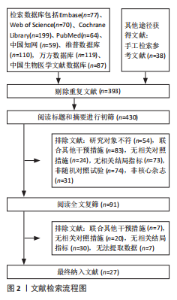
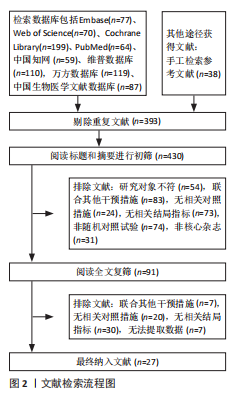
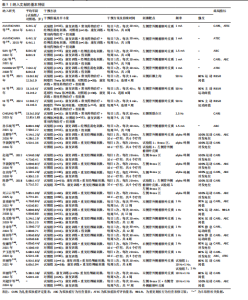
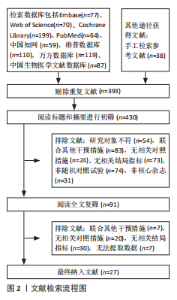
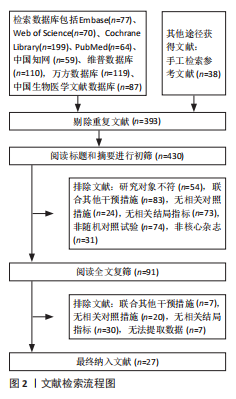
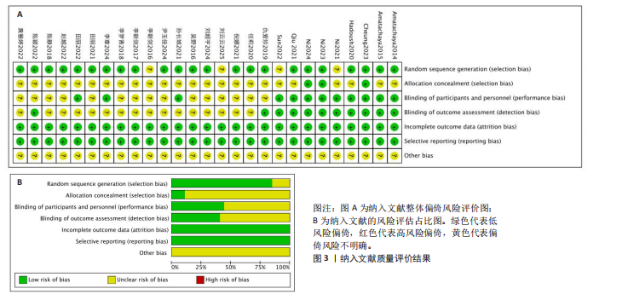
2.1 文献检索结果 初次检索共获得823篇文献,其中包括通过人工检索参考文献得到的38篇相关文献,通过剔除393篇重复文献后最终纳入27篇文献。文献筛选流程见图2。 2.2 纳入研究基本特征 共纳入27篇文献[18-44],涉及1 701例孤独症儿童,其中包括试验组845例和对照组856例。纳入研究的刺激方案中刺激频率> 1 Hz为高频,≤1 Hz为低频,刺激靶点包括背外侧前额叶皮质、布罗卡(Broca)区、右颞顶联合区和后颞上沟。共涉及10种非侵入性脑刺激干预方案,具体包括经颅直流电刺激背外侧前额叶皮质6项研究[18-22,27]、高频重复经颅磁刺激背外侧前额叶皮质2项研究[28-29]、高频重复经颅磁刺激Broca区5项研究[30-34]、低频重复经颅磁刺激背外侧前额叶皮质7项研究[35-41]、高频重复经颅磁刺激背外侧前额叶皮质联合低频重复经颅磁刺激背外侧前额叶皮质2项研究[42-43],高频重复经颅磁刺激Broca区联合低频重复经颅磁刺激背外侧前额叶皮质[44]、经颅脉冲刺激右颞顶联合区[26]、间歇性Theta脉冲刺激背外侧前额叶皮质[25]、连续性Theta脉冲刺激背外侧前额叶皮质[24]、间歇性Theta脉冲刺激后颞上沟各1项研究[23]。纳入研究的基本特征见表1。 2.3 文献质量评价结果 所有文献均报告了随机分组,其中23篇文献说明了随机序列的产生方法[18-19,21-22,24-28,30-33,35-44],如简单随机化(随机数字表法、计算机随机法)、区组随机化;仅3篇文献具体说明分配隐藏措施[24-26];12篇文献对参与者和研究者实施盲法[18-27,38,43];11篇文献对评估者实施盲法[18-26,37,39];所有文献的结局数据保持完整性,选择性报告的偏倚风险均较低。具体评价结果见图3。"
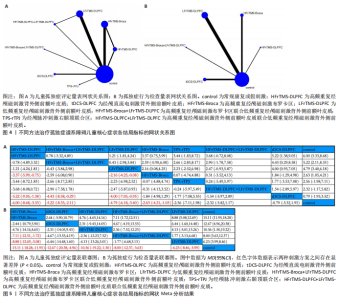
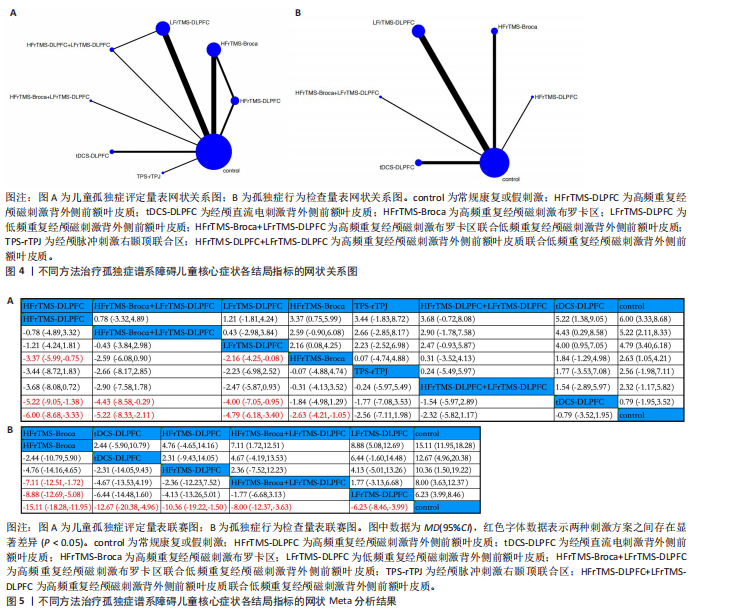
2.4 Meta分析结果 2.4.1 儿童孤独症评定量表评分 19篇文献(共1 345例孤独症患儿)进行了儿童孤独症评定量表评定[18,21,26,28-35,37-44]。鉴于研究间异质性显著(I2=82%,P < 0.1),采用随机效应模型分析,结果显示试验组与对照组儿童孤独症评定量表评分存在显著差异[MD=-3.70,95%CI(-4.78,-2.63),P < 0.05]。根据刺激方案进行亚组分析后研究间异质性仍较高,进一步进行敏感性分析,总体效应估计值及其置信区间保持稳健,因此对结果进行描述性分析。高频重复经颅磁刺激背外侧前额叶皮质、高频重复经颅磁刺激Broca区、低频重复经颅磁刺激背外侧前额叶皮质以及高频重复经颅磁刺激Broca区联合低频重复经颅磁刺激背外侧前额叶皮质降低儿童孤独症评定量表评分的效果均显著优于常规康复,见表2。 2.4.2 孤独症行为评定量表评分 14篇文献(共980例孤独症患儿)进行了孤独症行为评定量表评定[20-21,27-28,31-32,34-37,39-41,44]。鉴于研究间异质性显著(I2=93%,P < 0.1),采用随机效应模型分析,结果显示试验组与对照组孤独症行为评定量表评分存在显著差异[MD=-9.89,95%CI(-13.21,-6.56),P < 0.05]。根据刺激方案进行亚组分析后异质性仍较高,进一步进行敏感性分析,总体效应估计值及其置信区间保持稳健,因此对结果进行描述性分析。高频重复经颅磁刺激Broca区、低频重复经颅磁刺激背外侧前额叶皮质、经颅直流电刺激背外侧前额叶皮质、高频重复经颅磁刺激背外侧前额叶皮质以及高频重复经颅磁刺激Broca区联合低频重复经颅磁刺激背外侧前额叶皮质降低孤独症行为评定量表评分的效果均显著优于常规康复,见表2。 2.4.3 孤独症治疗评估量表评分 5篇文献(共182例孤独症患儿)进行了孤独症治疗评估量表评定[18-19,22,38,41]。鉴于研究间异质性不显著(I2=0%,P > 0.1),采用固定效应模型分析,结果显示试验组与对照组孤独症治疗评估量表评分存在显著差异[MD=-11.51,95%CI(-14.78,-8.23),P < 0.05]。根据刺激方式进行亚组分析,结果显示低频重复经颅磁刺激背外侧前额叶皮质和经颅直流电刺激背外侧前额叶皮质降低孤独症治疗评估量表评分的效果均显著优于常规康复,见表2。 2.4.4 重复刻板行为检查表修订版评分 4篇文献(共计190例孤独症患儿)进行了重复刻板行为检查表修订版评定[23-25,36]。鉴于研究间异质性不显著(I2=0%,P > 0.1),采用固定效应模型分析,结果显示试验组与对照组重复刻板行为检查表修订版评分存在显著差异[MD=-1.45,95%CI(-2.51,-0.39),P < 0.05]。根据刺激方式进行亚组分析,结果显示低频重复经颅磁刺激背外侧前额叶皮质降低重复刻板行为检查表修订版评分的效果显著优于常规康复,见表2。 2.5 网状Meta分析结果 2.5.1 儿童孤独症评定量表评分 该结局指标共纳入19项研究[18,21,26,28-35,37-44],涵盖7种刺激方案,包括高频重复经颅磁刺激背外侧前额叶皮质、高频重复经颅磁刺激Broca区、低频重复经颅磁刺激背外侧前额叶皮质、经颅直流电刺激背外侧前额叶皮质、经颅脉冲刺激右颞顶联合区、高频重复经颅磁刺激背外侧前额叶皮质联合低频重复经颅磁刺激背外侧前额叶皮质以及高频重复经颅磁刺激Broca区联合低频重复经颅磁刺激背外侧前额叶皮质,网状关系见图4A。该指标的全局及局部不一致性检验结果均显示P > 0.05,表明直接与间接比较证据一致,因此采用一致性模型。 网状Meta分析结果显示,高频重复经颅磁刺激背外侧前额叶皮质[MD=-6.00,95%CI(-8.68,-3.33),P < 0.05]、高频重复经颅磁刺激Broca区联合低频重复经颅磁刺激背外侧前额叶皮质[MD=-5.22,95%CI(-8.33,-2.11),P < 0.05]、低频重复经颅磁刺激背外侧前额叶皮质[MD=-4.79,95%CI(-6.18,-3.40),P < 0.05]、高频重复经颅磁刺激Broca区[MD=-2.63,95%CI(-4.21,-1.05),P < 0.05]"
"
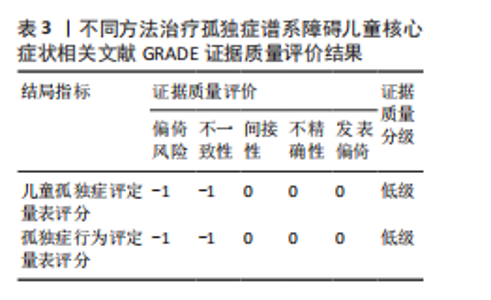
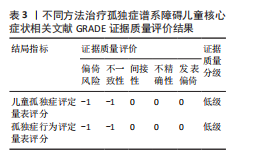
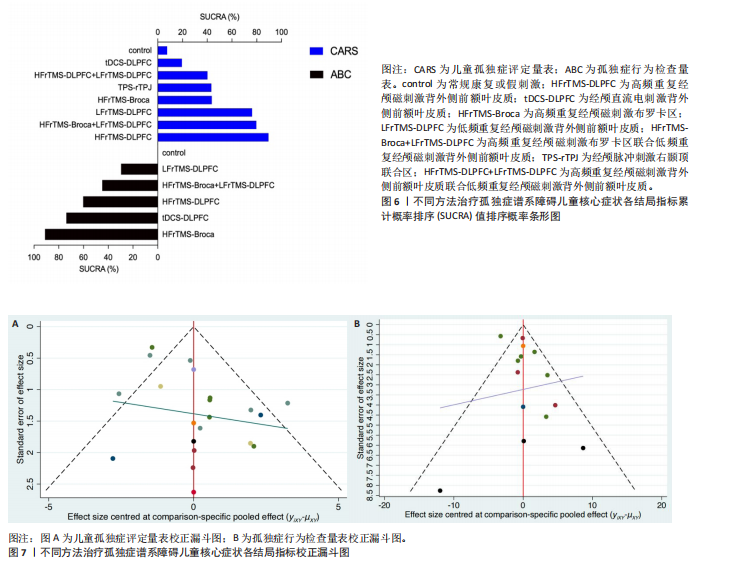
低频重复经颅磁刺激背外侧前额叶皮质与经颅直流电刺激背外侧前额叶皮质[MD=-4.00,95%CI(-7.05,-0.95),P < 0.05]、高频重复经颅磁刺激背外侧前额叶皮质与高频重复经颅磁刺激Broca区[MD=-3.37,95%CI(-5.99,-0.75),P < 0.05]、低频重复经颅磁刺激背外侧前额叶皮质与高频重复经颅磁刺激Broca区[MD=-2.16,95%CI(-4.25,-0.08),P < 0.05]之间均呈现显著差异,其他两两比较结果未呈现显著差异,见图5A。 基于SUCRA值进行疗效排序,7种刺激方案对改善儿童孤独症评定量表评分效果的优劣顺序依次为:高频重复经颅磁刺激背外侧前额叶皮质(89.5%)、高频重复经颅磁刺激Broca区联合低频重复经颅磁刺激背外侧前额叶皮质(79.7%)、低频重复经颅磁刺激背外侧前额叶皮质(76.3%)、高频重复经颅磁刺激Broca区(43.7%)、经颅脉冲刺激右颞顶联合区(43.4%)、高频重复经颅磁刺激背外侧前额叶皮质联合低频重复经颅磁刺激背外侧前额叶皮质(40.2%)、经颅直流电刺激背外侧前额叶皮质(19.5%)、常规康复(7.6%),见图6。 2.5.2 孤独症行为评定量表评分 该结局指标共纳入14项研究[20-21,27-28,31-32,34-37,39-41,44],涉及5种刺激方案,包括高频重复经颅磁刺激背外侧前额叶皮质、高频重复经颅磁刺激Broca区、低频重复经颅磁刺激背外侧前额叶皮质、经颅直流电刺激背外侧前额叶皮质、高频重复经颅磁刺激Broca区联合低频重复经颅磁刺激背外侧前额叶皮质,网状关系见图4B。由于网状关系不存在闭环,故直接采用一致性模型进行分析。 网状Meta分析结果显示,高频重复经颅磁刺激Broca区[MD=-15.11,95%CI(-18.28,-11.95),P < 0.05]、经颅直流电刺激背外侧前额叶皮质[MD=-12.67,95%CI(-20.38,-4.96),P < 0.05]、高频重复经颅磁刺激背外侧前额叶皮质[MD=-10.36,95%CI(-19.22, -1.50),P < 0.05]、高频重复经颅磁刺激Broca区联合低频重复经颅磁刺激背外侧前额叶皮质[MD=-8.00,95%CI(-12.37,-3.63),P < 0.05]、低频重复经颅磁刺激背外侧前额叶皮质[MD=-6.23,95%CI(-8.46,-3.99),P < 0.05]降低孤独症行为评定量表评分的效果均显著优于常规康复。两两比较结果显示,高频重复经颅磁刺激Broca区与高频重复经颅磁刺激Broca区联合低频重复经颅磁刺激背外侧前额叶皮质[MD=-7.11,95%CI(-12.51,-1.72),P < 0.05]、高频重复经颅磁刺激Broca区与低频重复经颅磁刺激背外侧前额叶皮质[MD=-8.88,95%CI(-12.69,-5.08),P < 0.05]之间均呈现显著差异,其他两两比较结果未呈现显著差异,见图5B。 基于SUCRA值进行疗效排序,5种刺激方案对改善孤独症行为评定量表评分效果的优劣顺序依次为:高频重复经颅磁刺激Broca区(91.1%)、经颅直流电刺激背外侧前额叶皮质(73.9%)、高频重复经颅磁刺激背外侧前额叶皮质(60.3%)、高频重复经颅磁刺激Broca区联合低频重复经颅磁刺激背外侧前额叶皮质(44.9%)、低频重复经颅磁刺激背外侧前额叶皮质(29.6%)、常规康复(0.2%),见图6。 2.6 不良反应 5篇文献报道了受试者在干预过程中出现短暂性的轻度头痛、头晕、耳鸣、眼部瘙痒和手部震颤等症状,均在治疗结束后缓解[23-26,37]。整体而言,孤独症儿童接受非侵入性脑刺激治疗的安全性是较高的。 2.7 发表偏倚 校正漏斗图结果显示,儿童孤独症评定量表的漏斗图内散点分布不均匀且有部分落在漏斗之外,见图7A;孤独症行为评定量表的漏斗图基本对称,见图7B。Egger检验结果显示两项结局指标的发表偏倚风险均无显著性意义(P > 0.05),提示两项结局指标出现潜在发表偏倚和小样本效应的概率较低。 2.8 GRADE证据质量评价 由于儿童孤独症评定量表和孤独症行为评定量表两项结局指标的纳入文献中,多数研究未报道分配隐藏的具体措施,部分研究未报道盲法的实施,因此偏倚风险均降一级;由于两项结局指标异质性均较高,因此不一致性均降一级,因而儿童孤独症评定量表和孤独症行为评定量表评分证据质量均为低级,见表3。"
"
"
"
| [1] LORD C, ELSABBAGH M, BAIRD G, et al. Autism spectrum disorder. Lancet. 2018; 392(10146):508-520. [2] MAENNER MJ, WARREN Z, WILLIAMS AR, et al. Prevalence and Characteristics of Autism Spectrum Disorder Among Children Aged 8 Years - Autism and Developmental Disabilities Monitoring Network, 11 Sites, United States, 2020. MMWR Surveill Summ. 2023;72(2):1-14. [3] TURNAGE D, CONNER N. Quality of life of parents of children with Autism Spectrum Disorder: An integrative literature review. J Spec Pediatr Nurs. 2022;27(4):e12391. [4] SHARMA SR, GONDA X, TARAZI FI. Autism Spectrum Disorder: Classification, diagnosis and therapy. Pharmacol Ther. 2018;190:91-104. [5] ZHOU MS, NASIR M, FARHAT LC, et al. Meta-analysis: Pharmacologic Treatment of Restricted and Repetitive Behaviors in Autism Spectrum Disorders. J Am Acad Child Adolesc Psychiatry. 2021;60(1):35-45. [6] SANTOS CLD, BARRETO II, SILVA ACFD, et al. Behavioral therapies for the treatment of autism spectrum disorder: A systematic review. Clinics (Sao Paulo). 2024;80:100566. [7] SCHOEN SA, LANE SJ, MAILLOUX Z, et al. A systematic review of ayres sensory integration intervention for children with autism. Autism Res. 2019;12(1):6-19. [8] KHALEGHI A, ZARAFSHAN H, VAND SR, et al. Effects of Non-invasive Neurostimulation on Autism Spectrum Disorder: A Systematic Review. Clin Psychopharmacol Neurosci. 2020; 18(4):527-552. [9] KESIKBURUN S. Non-invasive brain stimulation in rehabilitation. Turk J Phys Med Rehabil. 2022; 68(1):1-8. [10] GARCÍA-GONZÁLEZ S, LUGO-MARÍN J, SETIEN-RAMOS I, et al. Transcranial direct current stimulation in Autism Spectrum Disorder: A systematic review and meta-analysis. Eur Neuropsycho-pharmacol. 2021;48:89-109. [11] SMITH JR, DISALVO M, GREEN A, et al. Treatment Response of Transcranial Magnetic Stimulation in Intellectually Capable Youth and Young Adults with Autism Spectrum Disorder: A Systematic Review and Meta-Analysis. Neuropsychol Rev. 2023;33(4):834-855. [12] LIU A, GONG C, WANG B, et al. Non-invasive brain stimulation for patient with autism: a systematic review and meta-analysis. Front Psychiatry. 2023; 14:1147327. [13] ZHANG J, ZHANG H. Effects of non-invasive neurostimulation on autism spectrum disorder: A systematic review. Front Psychiatry. 2022;13:989905. [14] CHEN YB, LIN HY, WANG LJ, et al. A network meta-analysis of non-invasive brain stimulation interventions for autism spectrum disorder: Evidence from randomized controlled trials. Neurosci Biobehav Rev. 2024;164:105807. [15] LIM YS, PARK KJ, KIM HW. Autism Spectrum Disorder Diagnosis in Diagnostic and Statistical Manual of Mental Disorders-5 Compared to Diagnostic and Statistical Manual of Mental Disorders-IV. Soa Chongsonyon Chongsin Uihak. 2018;29(4):178-184. [16] STERNE JAC, SAVOVIĆ J, PAGE MJ, et al. RoB 2: a revised tool for assessing risk of bias in randomised trials. BMJ. 2019;366:l4898. [17] ATKINS D, BEST D, BRISS PA, et al. Grading quality of evidence and strength of recommendations. BMJ. 2004;328(7454):1490. [18] AMATACHAYA A, AUVICHAYAPAT N, PATJANASOONTORN N, et al. Effect of anodal transcranial direct current stimulation on autism: a randomized double-blind crossover trial. Behav Neurol. 2014; 2014:173073. [19] AMATACHAYA A, JENSEN MP, PATJANASOONTORN N, et al. The short-term effects of transcranial direct current stimulation on electroencephalography in children with autism: a randomized crossover controlled trial. Behav Neurol. 2015;2015:928631. [20] SUN C, ZHAO Z, CHENG L, et al. Effect of Transcranial Direct Current Stimulation on the Mismatch Negativity Features of Deviated Stimuli in Children With Autism Spectrum Disorder. Front Neurosci. 2022;16:721987. [21] QIU J, KONG X, LI J, et al. Transcranial Direct Current Stimulation (tDCS) over the Left Dorsal Lateral Prefrontal Cortex in Children with Autism Spectrum Disorder (ASD). Neural Plast. 2021; 2021:6627507. [22] HADOUSH H, NAZZAL M, ALMASRI NA, et al. Therapeutic Effects of Bilateral Anodal Transcranial Direct Current Stimulation on Prefrontal and Motor Cortical Areas in Children with Autism Spectrum Disorders: A Pilot Study. Autism Res. 2020;13(5):828-836. [23] NI HC, CHEN YL, CHAO YP, et al. Intermittent theta burst stimulation over the posterior superior temporal sulcus for children with autism spectrum disorder: A 4-week randomized blinded controlled trial followed by another 4-week open-label intervention. Autism. 2021;25(5):1279-1294. [24] NI HC, CHEN YL, CHAO YP, et al. A lack of efficacy of continuous theta burst stimulation over the left dorsolateral prefrontal cortex in autism: A double blind randomized sham-controlled trial. Autism Res. 2023;16(6):1247-1262. [25] NI HC, CHEN YL, LIN HY. Feasibility and Tolerability of Daily Theta Burst Stimulation in Autistic Youth with Intellectual Disabilities and Minimally Speaking Status: A Pilot Double-Blind Randomized Sham-Controlled Trial. J Autism Dev Disord. 2024:1-10. doi: 10.1007/s10803-024-06477-1. [26] CHEUNG T, LI TMH, LAM JYT, et al. Effects of transcranial pulse stimulation on autism spectrum disorder: a double-blind, randomized, sham-controlled trial. Brain Commun. 2023;5(5): fcad226. [27] 孙长城,王春方,田蓉,等.基于失匹配负波的经颅直流电刺激治疗自闭症儿童的疗效观察[J].中华物理医学与康复杂志,2021,43(8):729-734. [28] 吴野,李新剑,金鑫,等.高频经颅磁刺激背外侧前额叶联合康复训练对孤独症谱系障碍儿童的治疗作用[J].中国医药导报,2016,13(27): 119-122. [29] 李新剑,仇爱珍,金鑫,等.经颅重复高频磁刺激联合康复训练治疗小儿孤独症谱系障碍临床观察[J]. 山东医药,2016,56(15):64-66. [30] 赵越.重复经颅磁刺激治疗儿童孤独症的临床观察[J].临床医学,2022,42(10):51-53. [31] 李新剑,仇爱珍,金鑫,等.高频重复经颅磁模式刺激Broca区联合康复训练对孤独症谱系障碍患儿的治疗作用[J].中国医药导报,2016, 13(18):113-116. [32] 任莉,李霞.重复经颅磁刺激治疗儿童孤独症的效果[J].国际精神病学杂志,2020,47(2):322-324,332. [33] 陈静.不同部位经颅重复高频磁刺激治疗孤独症谱系障碍的疗效对比[J].临床研究,2018, 26(8): 55-57. [34] 刘云云,许春梅.经颅磁刺激联合综合康复疗法对自闭症患儿的疗效[J].海军医学杂志,2025, 46(1):99-102. [35] 黄雅婷,李梅,冯君.重复经颅磁刺激联合康复治疗对孤独症儿童行为状态的影响[J].教育生物学杂志,2022,10(3):229-232. [36] 李梦青,姜志梅,李雪梅,等.rTMS结合脑电生物反馈对孤独症谱系障碍儿童刻板行为的疗效[J].中国康复,2018,33(2):114-117. [37] 仇爱珍,刘晓鸣,杨忠秀,等.重复经颅磁刺激联合综合康复训练对自闭症患儿心理及生活质量的影响 [J].中西医结合心脑血管病杂志, 2019,17(18):2843-2847. [38] 李章,吕静,赵晓科,等.经颅磁刺激联合康复训练在孤独症谱系障碍儿童中的疗效及低频振幅分析研究[J].中华全科医学,2024,22(7): 1222-1226. [39] 陈颖,姚春雨,李娟,等.低频重复经颅磁刺激对孤独症谱系障碍儿童睡眠障碍及异常行为的影响[J]. 中华物理医学与康复杂志,2022, 44(1):65-68. [40] 倪娜,刘晓鸣.低频经颅磁刺激结合康复训练治疗儿童孤独症合并睡眠障碍[J].长春中医药大学学报, 2021,37(6):1379-1382. [41] 尹玉佳,李卓聪,廖立夏,等.经颅磁刺激治疗对孤独症伴精神发育迟滞患儿的效果[J].国际精神病学杂志,2024,51(5):1474-1476,1503. [42] 田丽,王宸,宋晓蓉,等.不同刺激参数重复经颅磁刺激治疗孤独症谱系障碍的疗效对比研究[J].神经疾病与精神卫生,2021,21(8):540-545. [43] 田丽,王宸,宋晓蓉,等.重复经颅磁刺激治疗孤独症谱系障碍儿童睡眠问题的疗效分析[J].神经疾病与精神卫生,2022,22(1):40-46. [44] 刘超宇,胡继红,何金华,等.rTMS联合综合康复干预对孤独症谱系障碍患儿临床症状及语言功能康复的影响[J].中国听力语言康复科学杂志,2024,22(2):221-224. [45] ÖZ B, YÜKSEL T, NASIROĞLU S. Depression-Anxiety Symptoms and Stigma Perception in Mothers of Children with Autism Spectrum Disorder. Noro Psikiyatr Ars. 2020;57(1):50-55. [46] LUCKHARDT C, BOXHOORN S, SCHÜTZ M, et al. Brain stimulation by tDCS as treatment option in Autism Spectrum Disorder-A systematic literature review. Prog Brain Res. 2021;264:233-257. [47] VALERO-CABRÉ A, AMENGUAL JL, STENGEL C, et al. Transcranial magnetic stimulation in basic and clinical neuroscience: A comprehensive review of fundamental principles and novel insights. Neurosci Biobehav Rev. 2017;83:381-404. [48] IGLESIAS AH. Transcranial Magnetic Stimulation as Treatment in Multiple Neurologic Conditions. Curr Neurol Neurosci Rep. 2020;20(1):1. [49] KAUR M, MICHAEL JA, HOY KE, et al. Investigating high- and low-frequency neuro-cardiac-guided TMS for probing the frontal vagal pathway. Brain Stimul. 2020;13(3):931-938. [50] ROJAS DC, WILSON LB. γ-band abnormalities as markers of autism spectrum disorders. Biomark Med. 2014;8(3):353-368. [51] CASANOVA MF, SHABAN M, GHAZAL M, et al. Effects of Transcranial Magnetic Stimulation Therapy on Evoked and Induced Gamma Oscillations in Children with Autism Spectrum Disorder. Brain Sci. 2020;10(7):423. [52] CASANOVA MF, SHABAN M, GHAZAL M, et al. Ringing Decay of Gamma Oscillations and Transcranial Magnetic Stimulation Therapy in Autism Spectrum Disorder. Appl Psychophysiol Biofeedback. 2021;46(2):161-173. [53] JANNATI A, RYAN MA, KAYE HL, et al. Biomarkers Obtained by Transcranial Magnetic Stimulation in Neurodevelopmental Disorders. J Clin Neurophysiol. 2022;39(2):135-148. [54] AMEIS SH, BLUMBERGER DM, CROARKIN PE, et al. Treatment of Executive Function Deficits in autism spectrum disorder with repetitive transcranial magnetic stimulation: A double-blind, sham-controlled, pilot trial. Brain Stimul. 2020;13(3):539-547. [55] YAMADA Y, SUMIYOSHI T. Neurobiological Mechanisms of Transcranial Direct Current Stimulation for Psychiatric Disorders; Neurophysiological, Chemical, and Anatomical Considerations. Front Hum Neurosci. 2021;15: 631838. [56] ZHOU T, KANG J, LI Z, et al. Transcranial direct current stimulation modulates brain functional connectivity in autism. Neuroimage Clin. 2020; 28:102500. [57] WANG B, NING H, REED-MALDONADO AB, et al. Low-Intensity Extracorporeal Shock Wave Therapy Enhances Brain-Derived Neurotrophic Factor Expression through PERK/ATF4 Signaling Pathway. Int J Mol Sci. 2017;18(2):433. [58] GOLDSWORTHY MR, VALLENCE AM, HODYL NA, et al. Probing changes in corticospinal excitability following theta burst stimulation of the human primary motor cortex. Clin Neurophysiol. 2016; 127(1):740-747. [59] YANG Y, WANG H, XUE Q, et al. High-Frequency Repetitive Transcranial Magnetic Stimulation Applied to the Parietal Cortex for Low-Functioning Children With Autism Spectrum Disorder: A Case Series. Front Psychiatry. 2019; 10:293. [60] GWYNETTE MF, LOWE DW, HENNEBERRY EA, et al. Treatment of Adults with Autism and Major Depressive Disorder Using Transcranial Magnetic Stimulation: An Open Label Pilot Study. Autism Res. 2020;13(3):346-351. [61] CARLISI CO, NORMAN LJ, LUKITO SS, et al. Comparative Multimodal Meta-analysis of Structural and Functional Brain Abnormalities in Autism Spectrum Disorder and Obsessive-Compulsive Disorder. Biol Psychiatry. 2017; 82(2):83-102. [62] COURCHESNE E, MOUTON PR, CALHOUN ME, et al. Neuron number and size in prefrontal cortex of children with autism. Jama. 2011; 306(18):2001-2010. [63] MAIER S, DÜPPERS AL, RUNGE K, et al. Increased prefrontal GABA concentrations in adults with autism spectrum disorders. Autism Res. 2022;15(7):1222-1236. [64] FRIEDMAN NP, ROBBINS TW. The role of prefrontal cortex in cognitive control and executive function. Neuropsycho-pharmacology. 2022;47(1):72-89. [65] NEJATI V, MAJDI R, SALEHINEJAD MA, et al. The role of dorsolateral and ventromedial prefrontal cortex in the processing of emotional dimensions. Sci Rep. 2021;11(1):1971. [66] FEDORENKO E, BLANK IA. Broca’s Area Is Not a Natural Kind. Trends Cogn Sci. 2020;24(4): 270-284. [67] ZHANG Y, QIN B, WANG L, et al. Sex differences of language abilities of preschool children with autism spectrum disorder and their anatomical correlation with Broca and Wernicke areas. Front Pediatr. 2022;10:762621. |
| [1] | Cao Xinyan, Yu Zifu, Leng Xiaoxuan, Gao Shiai, Chen Jinhui, Liu Xihua. Effect of repetitive transcranial magnetic stimulation and transcranial direct current stimulation on motor function and gait in children with cerebral palsy: a network meta-analysis [J]. Chinese Journal of Tissue Engineering Research, 2026, 30(6): 1539-1548. |
| [2] | Leng Xiaoxuan, Zhao Yuxin, Liu Xihua. Effects of different neuromodulatory stimulation modalities on non-motor symptoms in Parkinson’s patients: a network meta-analysis [J]. Chinese Journal of Tissue Engineering Research, 2026, 30(5): 1282-1293. |
| [3] | Yang Zeyu, Zhi Liang, Wang Jia, Zhang Jingyi, Zhang Qingfang, Wang Yulong, Long Jianjun. A visualized analysis of research hotspots in high-frequency repetitive transcranial magnetic stimulation from the macroscopic perspective [J]. Chinese Journal of Tissue Engineering Research, 2026, 30(5): 1320-1330. |
| [4] | Wang Lejun, Chi Wenxin, Song Xiaoqian, Li Qian, Qiao Minjie, Tao Haifeng. Performance of unstable barbell bench press and changes in electromyographic activity after transcranial direct current stimulation [J]. Chinese Journal of Tissue Engineering Research, 2026, 30(23): 6099-6109. |
| [5] | Chen Jinhui, Yu Zifu, Gao Shiai, Cao Xinyan, Leng Xiaoxuan, Liu Xihua. Effects of central and peripheral rehabilitation therapies on upper extremity function and activities of daily living in stroke patients: a network meta-analysis [J]. Chinese Journal of Tissue Engineering Research, 2026, 30(17): 4457-4471. |
| [6] | Hou Bing, Zhao Hongfei, Che Pengcheng, Wang Ziyi, Gao Zan, Chen Linyu, Wang Jinzhi, Dou Na. Analysis of upper limb motor function and brain function immediately and 3 weeks after transcranial direct current stimulation [J]. Chinese Journal of Tissue Engineering Research, 2026, 30(12): 3066-3074. |
| [7] | Chen Ping, Du Jinchao, Wang Hongying, Zhang Hui, Wang Haixia. Different inspiratory muscle training methods improve exercise and cardiopulmonary function of patients after cardiac surgery: a network meta-analysis [J]. Chinese Journal of Tissue Engineering Research, 2026, 30(12): 3134-3144. |
| [8] | Gao Shiai, Yu Zifu, Chen Jinhui, Cao Xinyan, Leng Xiaoxuan, Liu Xihua. Efficacy of non-invasive neuromodulation techniques on autism spectrum disorder: a network meta-analysis [J]. Chinese Journal of Tissue Engineering Research, 2026, 30(10): 2550-2559. |
| [9] | Wang He, Yu Shaohong, . Meta-analysis of transcranial direct current stimulation in improving lower limb motor dysfunction in stroke patients [J]. Chinese Journal of Tissue Engineering Research, 2025, 29(30): 6556-6565. |
| [10] | Zhao Yuxin, Zhang Deqi, Bi Hongyan. Effect of different stimulation modalities of non-invasive brain stimulation on cognitive function in patients with Parkinson’s disease: a network Meta-analysis [J]. Chinese Journal of Tissue Engineering Research, 2025, 29(24): 5212-5223. |
| [11] | Hu Tong, Li Xuan, Yuan Jing, Wang Wei. Different electromagnetic stimulation programs improve post-stroke dysphagia: a network Meta-analysis [J]. Chinese Journal of Tissue Engineering Research, 2025, 29(24): 5224-5236. |
| [12] | Qian Lei, Yu Hongli, Zhao Xiuzhi, Zhu Yucan. Effect of transcranial magnetic stimulation on potassium channels in the dentate gyrus of the hippocampus of Alzheimer’s disease mice [J]. Chinese Journal of Tissue Engineering Research, 2025, 29(12): 2544-2552. |
| [13] | Yan Jie, Zhou Jing, Zhao Jingpu, Zhang Qingfang, Zhou Mingchao, Wang Yulong. Visual analysis of high-definition transcranial direct current stimulation research [J]. Chinese Journal of Tissue Engineering Research, 2024, 28(32): 5110-5115. |
| [14] | Lin Qinzhao, Wei Mengli, Zhong Yaping, Wu Qian, Zhou Botao, Wang Haifeng. Effect of transcranial direct current stimulation on human single-leg landing stability [J]. Chinese Journal of Tissue Engineering Research, 2024, 28(26): 4209-4215. |
| [15] | Yang Yulin, Chang Wanpeng, Ding Jiangtao, Xu Hongli, Wu Xiao, Xiao Boheng, Ma Lihong. Transcranial direct current stimulation at different targets for Parkinson’s disease: a network Meta-analysis [J]. Chinese Journal of Tissue Engineering Research, 2024, 28(11): 1797-1804. |
| Viewed | ||||||
|
Full text |
|
|||||
|
Abstract |
|
|||||