[1] 文照取,王燕一.根尖周炎的免疫调节机制及治疗研究进展[J].中华医院感染学杂志,2022, 32(17):2716-2720.
[2] 赵娜.根管治疗的适应证、失败原因与注意事项[N].医药养生保健报,2024-10-21(004).doi:10.38281/n.cnki.nyyys.2024.001619.
[3] 王李娜,王恩群.牙源性颌骨囊肿术后自发性骨再生与Bio-oss移植骨再生效果比较[J].医学信息,2022,35(5):91-93.
[4] 王琦,陈晨,邹进.羟基磷灰石生物陶瓷填充骨缺损对根尖切除术疗效影响的回顾分析[J].口腔医学,2021,41(9):805-809.
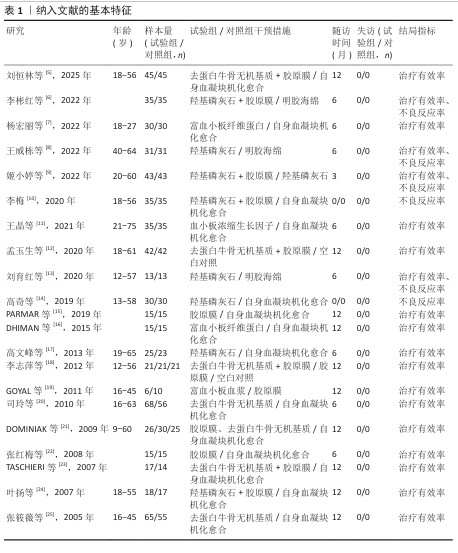
[5] 刘恒林,张艳.Bio-oss骨粉复合胶原膜在上颌根尖囊肿术后患者中的应用效果[J].中国民康医学,2025,37(13):61-63.
[6] 李彬红,李一国.根尖囊肿摘除术中应用不同填塞物的效果评价[J].浙江创伤外科,2022, 27(6):1081-1082.
[7] 杨宏丽,许野,薛莹,等.富血小板纤维蛋白应用于恒牙根尖屏障术中修复骨缺损的临床效果[J].中国医药科学,2022,12(20):169-172.
[8] 王威栋,宋卫健,王利群,等.羟基磷灰石生物陶瓷填充在口腔根尖囊肿切除骨缺损修复中的应用研究[J].中国美容医学,2022,31(12):95-98.
[9] 姬小婷,芦志方.生物膜联合羟基磷灰石生物陶瓷治疗根尖骨缺损临床疗效及安全性研究[J].陕西医学杂志,2022,51(8):957-960.
[10] 李梅.羟基磷灰石充填颌骨囊肿骨腔患者临床疗效及并发症分析[J].系统医学,2020,5(6): 117-119.
[11] 王晶,蒋丽娟,梅国霆,等.CGF对窦道性慢性根尖周炎患者根尖区骨组织缺损修复的影响[J].现代口腔医学杂志,2021,35(2):84-86.
[12] 孟玉生,刘芸,李蕙君,等.iRoot BP Plus根管倒充填联合Bio-oss植骨在治疗慢性根尖周病变中的临床效果[J].中国现代医生,2020,58(10): 77-80,95.
[13] 刘育红,林钊锐,梁伟梅,等.根尖囊肿摘除术后同期植入羟基磷灰石治疗根尖囊肿的疗效观察[J]中国现代药物应用,2020,14(23):108-110.
[14] 高奇,张莉.应用羟基磷灰石充填颌骨囊肿骨腔的临床观察[J].中外医学研究,2019,17(21): 30-32.
[15] PARMAR PD, DHAMIJA R, TEWARI S, et al. 2D and 3D radiographic outcome assessment of the effect of guided tissue regeneration using resorbable collagen membrane in the healing of through-and-through periapical lesions - a randomized controlled trial. Int Endod J. 2019;52(7):935-948.
[16] DHIMAN M, KUMAR S, DUHAN J, et al. Effect of Platelet-rich Fibrin on Healing of Apicomarginal Defects: A Randomized Controlled Trial. J Endod. 2015;41(7):985-991.
[17] 高文峰,钟永荣,曾曙光.根尖囊肿摘除术中应用羟基磷灰石的疗效观察[J].广东牙病防治, 2013,21(10):539-541.
[18] 李志萍,孟箭,张杰,等.引导骨再生膜技术对较大根尖囊肿术后骨腔修复的临床研究[J].口腔医学,2012,32(6):359-361,364.
[19] GOYAL B, TEWARI S, DUHAN J, et al. Comparative Evaluation of Platelet-rich Plasma and Guided Tissue Regeneration Membrane in the Healing of Apicomarginal Defects: A Clinical Study. J Endod. 2011;37(6):773-780.
[20] 司玲,张淅,刘迎飞.囊肿刮治术后骨腔植骨治疗较大根尖囊肿疗效观察[J].中国实用口腔科杂志,2010,3(6):371-372.
[21] DOMINIAK M, LYSIAK-DRWAL K, GEDRANGE T, et al.
Efficacy of healing process of bone defects after apectomy: results after 6 and 12 months. J Physiol Pharmacol. 2009;60(Suppl 8):51-55.
[22] 张红梅,詹斌,叶杨,等.引导组织再生术治疗根尖病变的临床观察[J].四川医学,2008(6): 641-642.
[23] TASCHIERI S, DEL FABBRO M, TESTORI T, et al. Efficacy of xenogeneic bone grafting with guided tissue regeneration in the management of bone defects after surgical endodontics. J Oral Maxillofac Surg. 2007;65(6):1121-1127.
[24] 叶扬,詹斌,周村.膜诱导再生技术与羟基磷灰石联合治疗牙根尖区骨缺损[J].检验医学与临床,2007(6):465,467.
[25] 张筱薇,张强,王扬,等.Bio-oss促进根尖周刮治术后骨缺损修复的临床效果[J].牙体牙髓牙周病学杂志,2005(12):684-686.
[26] 闫福华,袁志瑶.牙周再生的困境、关键要素及研究进展[J].口腔医学研究,2023,39(6):473-478.
[27] SHIRMOHAMMADI A, ROSHANGAR L, CHITSAZI MT, et al. Comparative Study on the Efficacy of Anorganic Bovine Bone (Bio‐Oss) and Nanocrystalline Hydroxyapatite (Ostim) in Maxillary Sinus Floor Augmentation. Int Sch Res Notices. 2014;2014:967091.
[28] 宋小丹,丛可心,周秀婷,等.无机载体在蛋白多肽类药物口服给药系统中的应用进展[J].中国药学杂志,2024,59(11):953-960.
[29] 康文亭,周立伟,钟梅玲,等.口腔胶原膜对两种骨再生相关细胞的作用[J].口腔材料器械杂志,2022,31(3):163-167,173.
[30] REN Y, FAN L, ALKILDANI S, et al. Barrier membranes for guided bone regeneration (GBR): a focus on recent advances in collagen membranes. Int J Mol Sci. 2022;23(23):14987.
[31] 顾安琪,周文洁,王跃平.胶原膜在引导骨再生技术中的应用和改良研究进展[J].中国口腔颌面外科杂志,2023,21(6):615-620.
[32] KIM K, SU Y, KUCINE AJ, et al. Guided bone regeneration using barrier membrane in dental applications. ACS Biomater Sci Eng. 2023;9(10): 5457-5478.
[33] GUI X, ZHANG B, SONG P, et al. 3D printing of biomimetic hierarchical porous architecture scaffold with dual osteoinduction and osteoconduction biofunctions for large size bone defect repair. Appl Mater Today. 2024;37:102085.
[34] SOLOMON SM, SUFARU IG, TESLARU S, et al. Finding the perfect membrane: Current knowledge on barrier membranes in regenerative procedures: A descriptive review. Appl Sci. 2022;12(3):1042.
[35] YINGMAI Z, NAIFA Z, LI F. Research progress of artificial periosteum for bone defect repair. J Clin Pers Med. 2025;4:135.
[36] ZHU H, LIN Z, HE R, et al. Antibacterial and hemostatic properties of chitosan collagen sponge. Chin J Tissue Eng Res. 2023;27(16):2525.
[37] 闫星雨,但年华,陈一宁,等.胶原基复合止血材料的研究进展及展望[J].材料导报,2023, 37(5):240-248.
|